









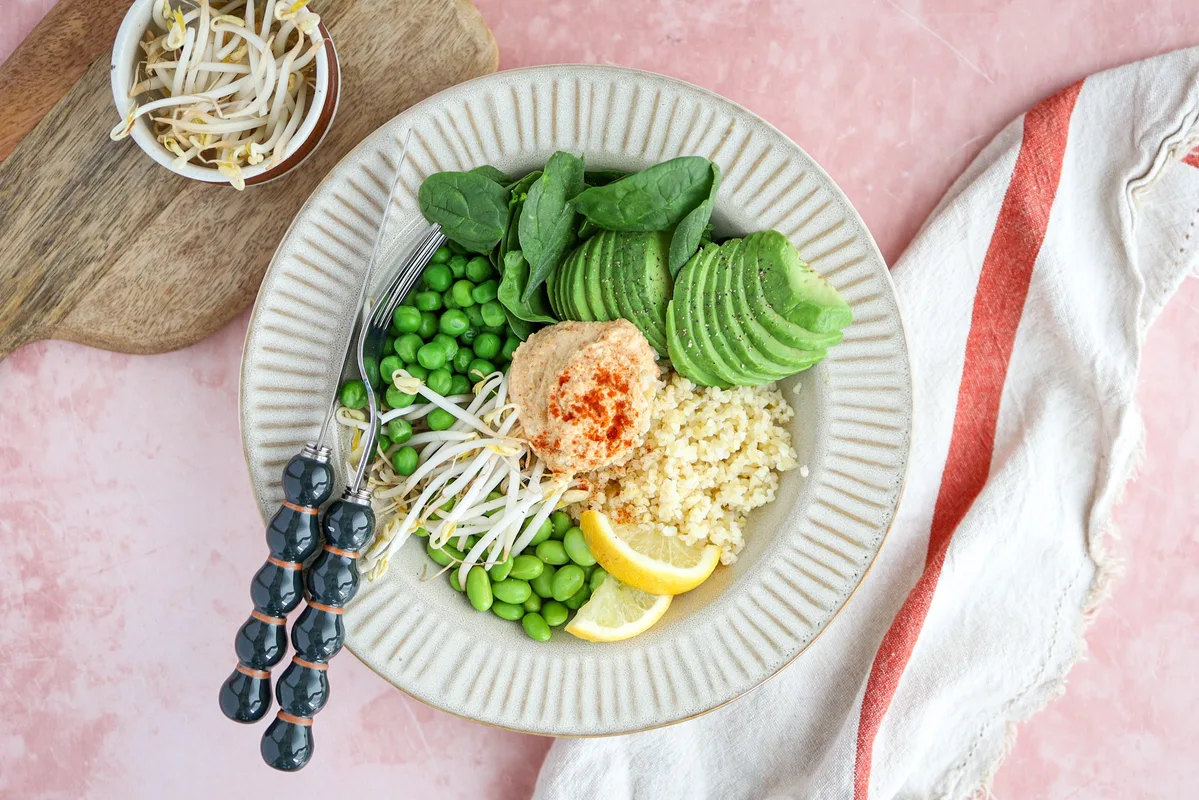
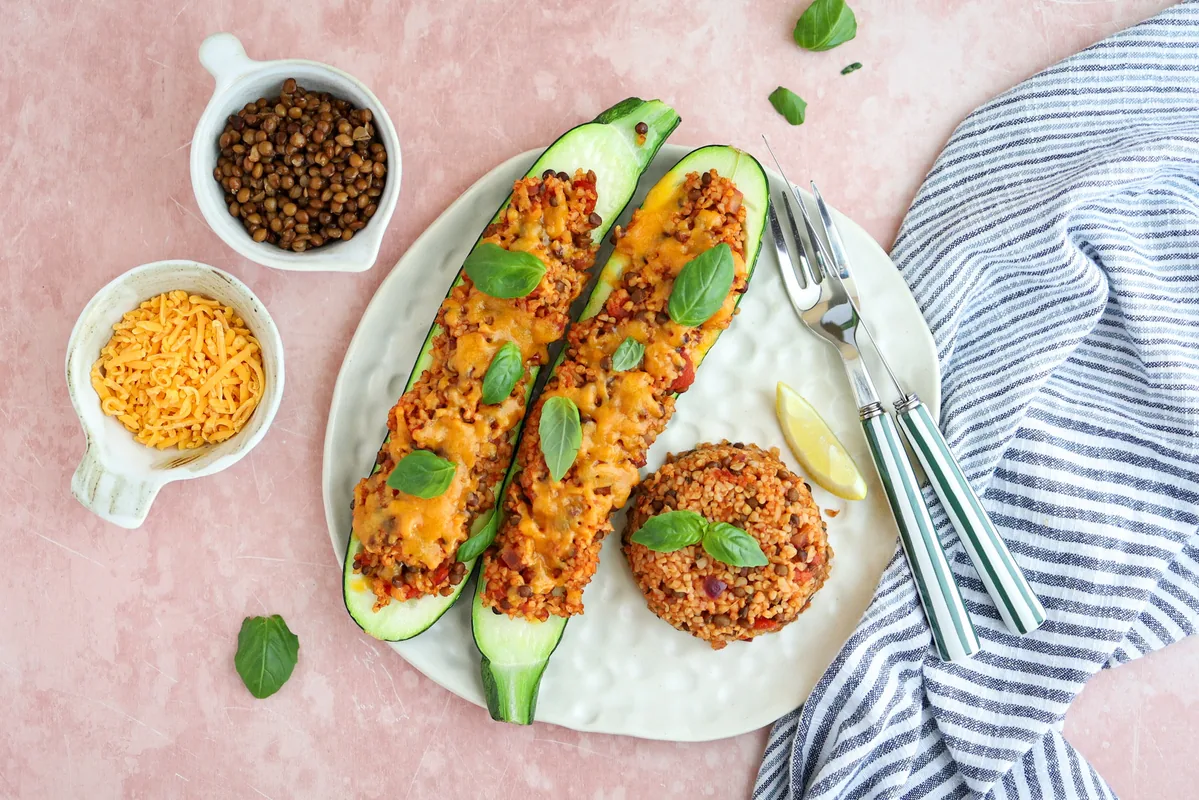
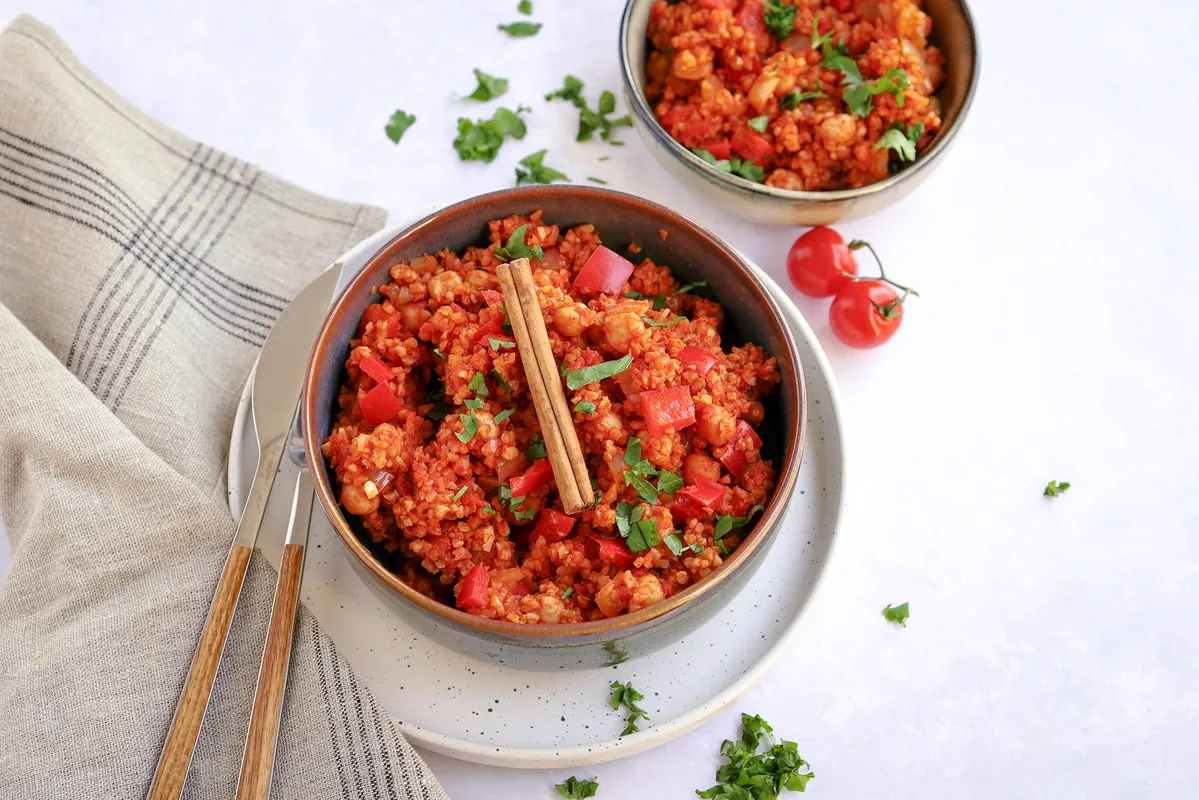
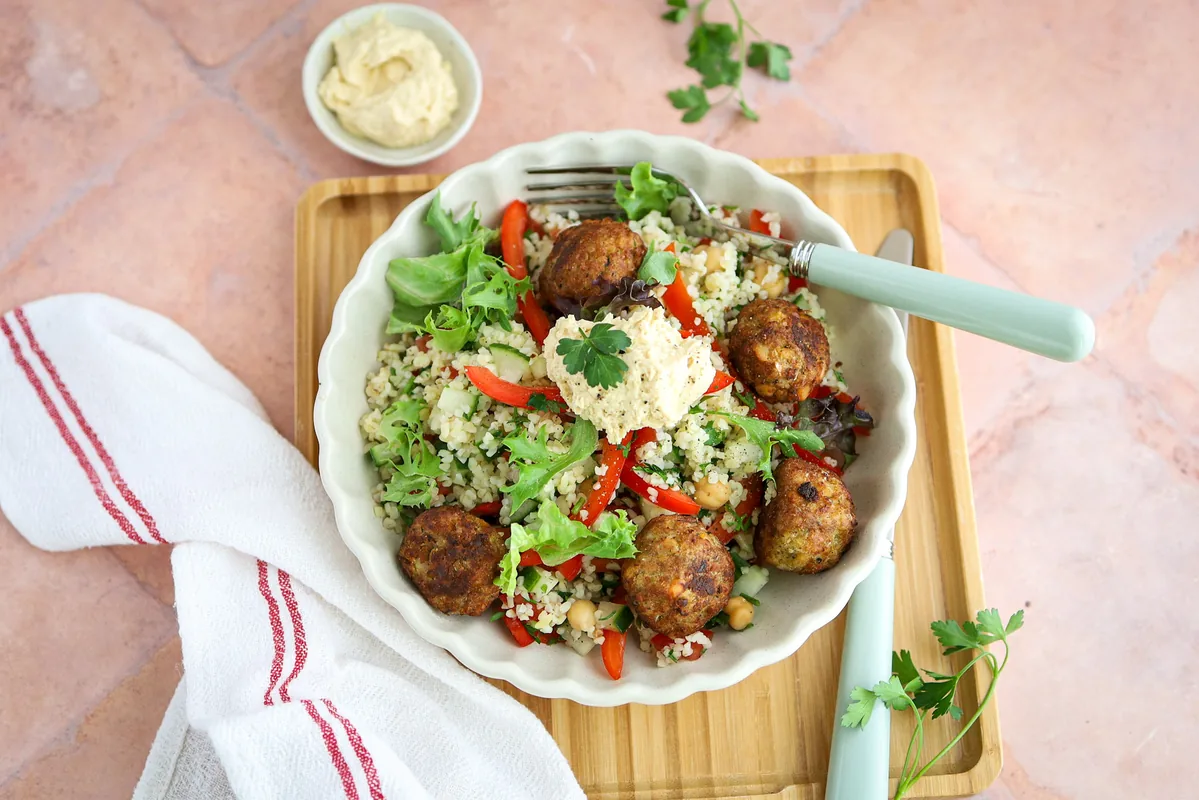
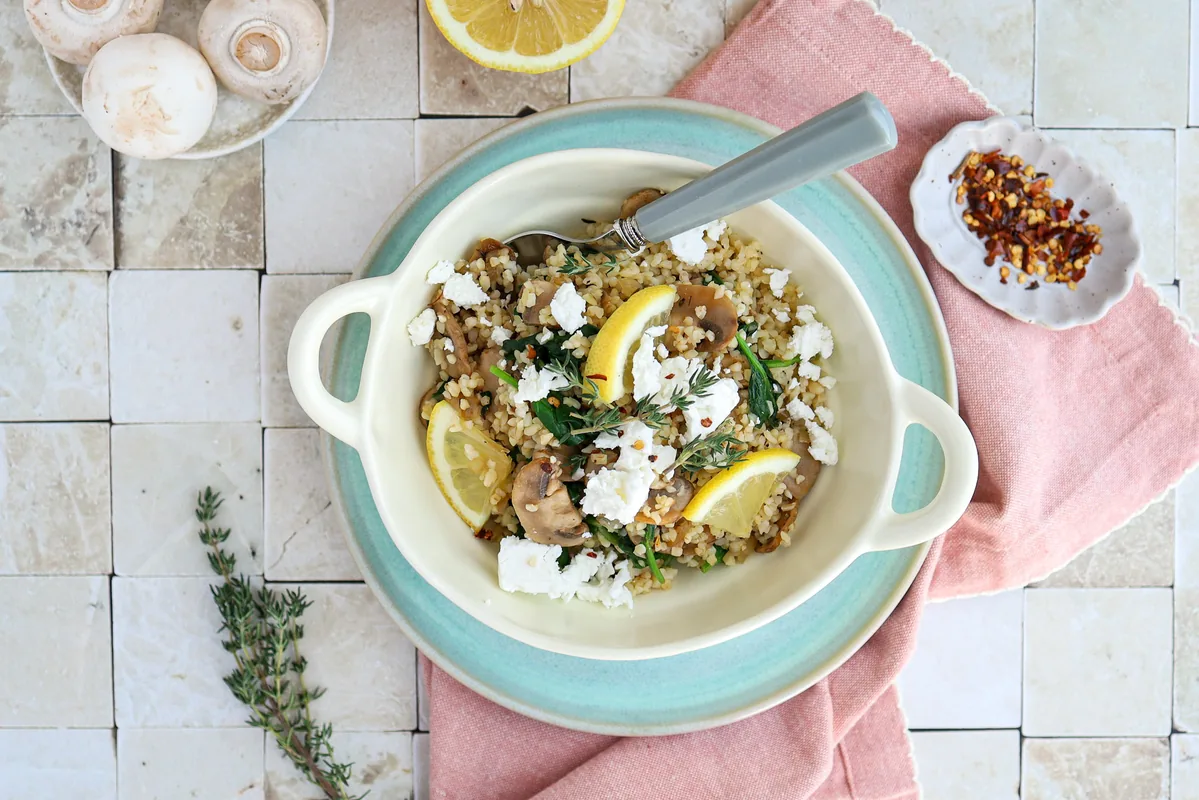

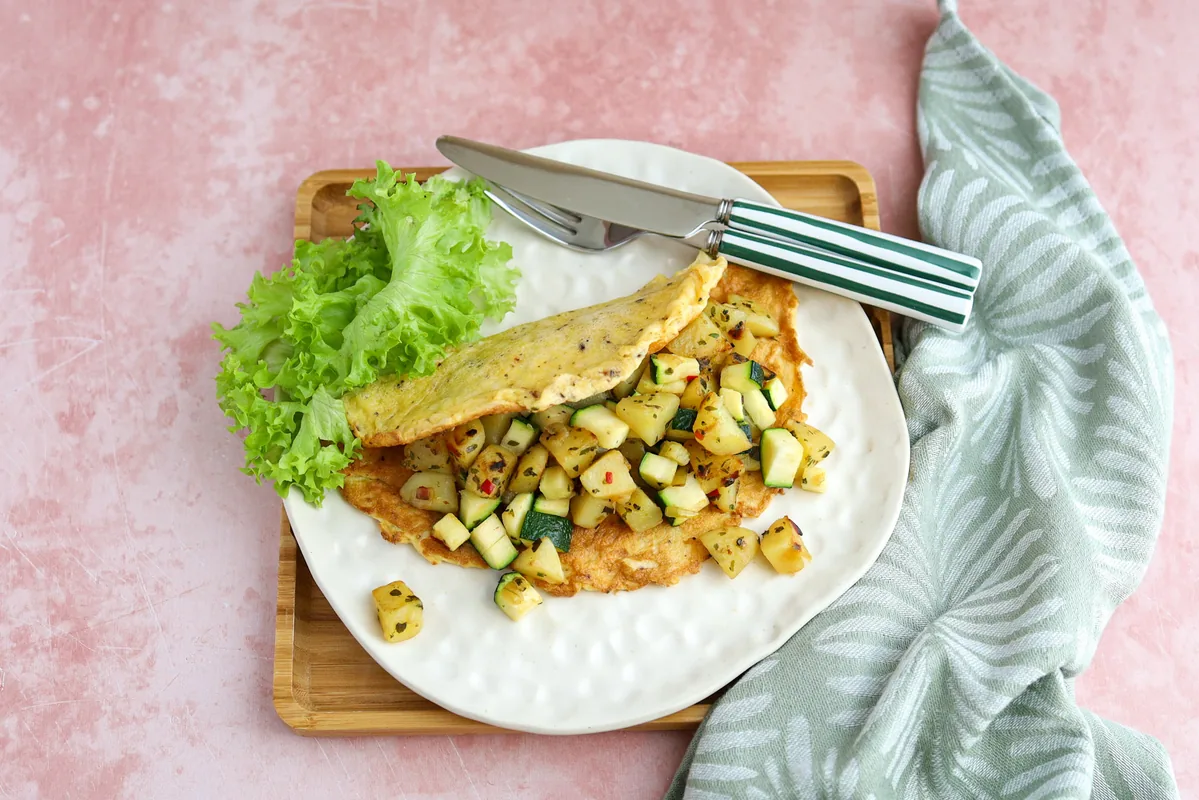

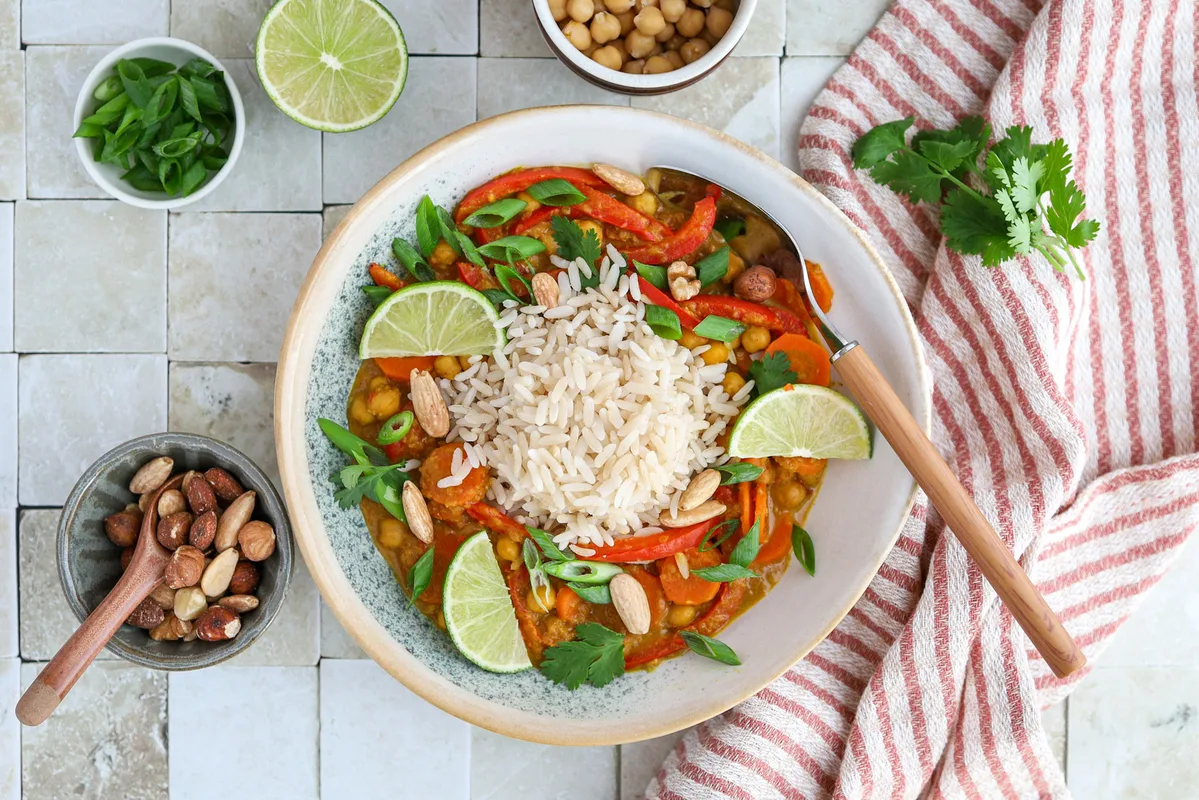
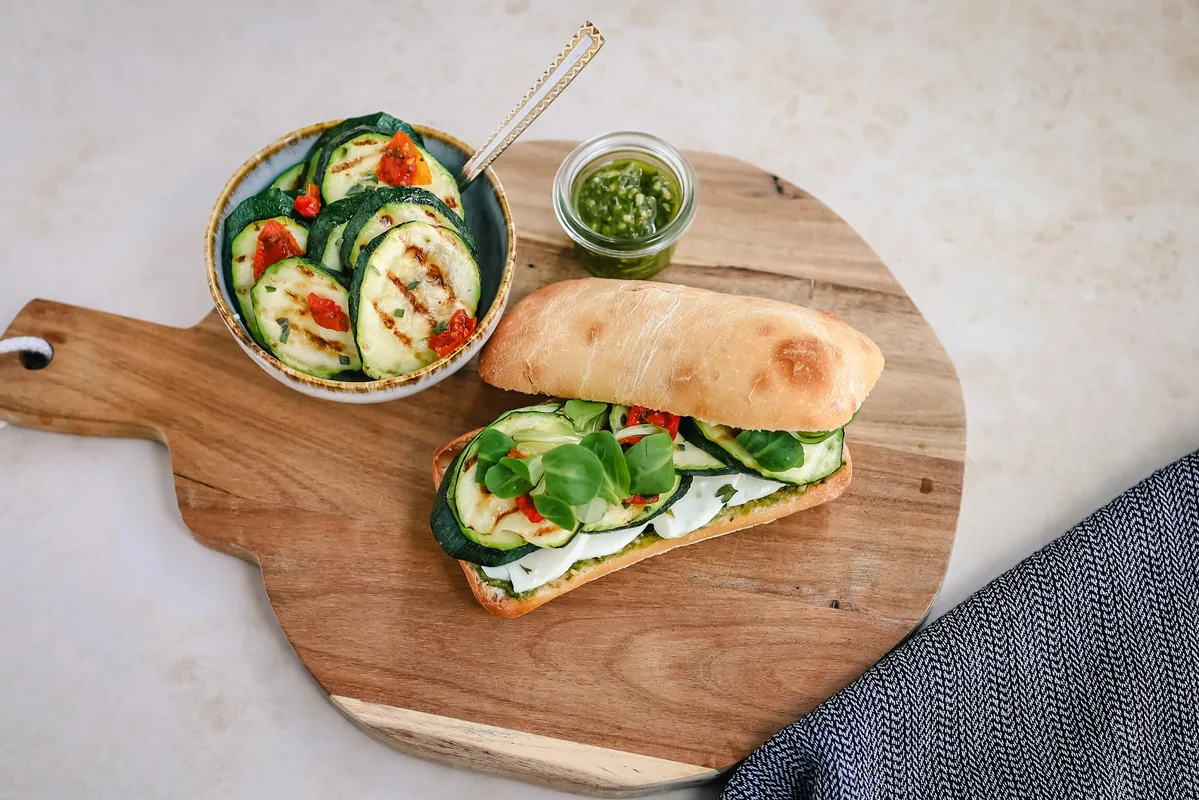
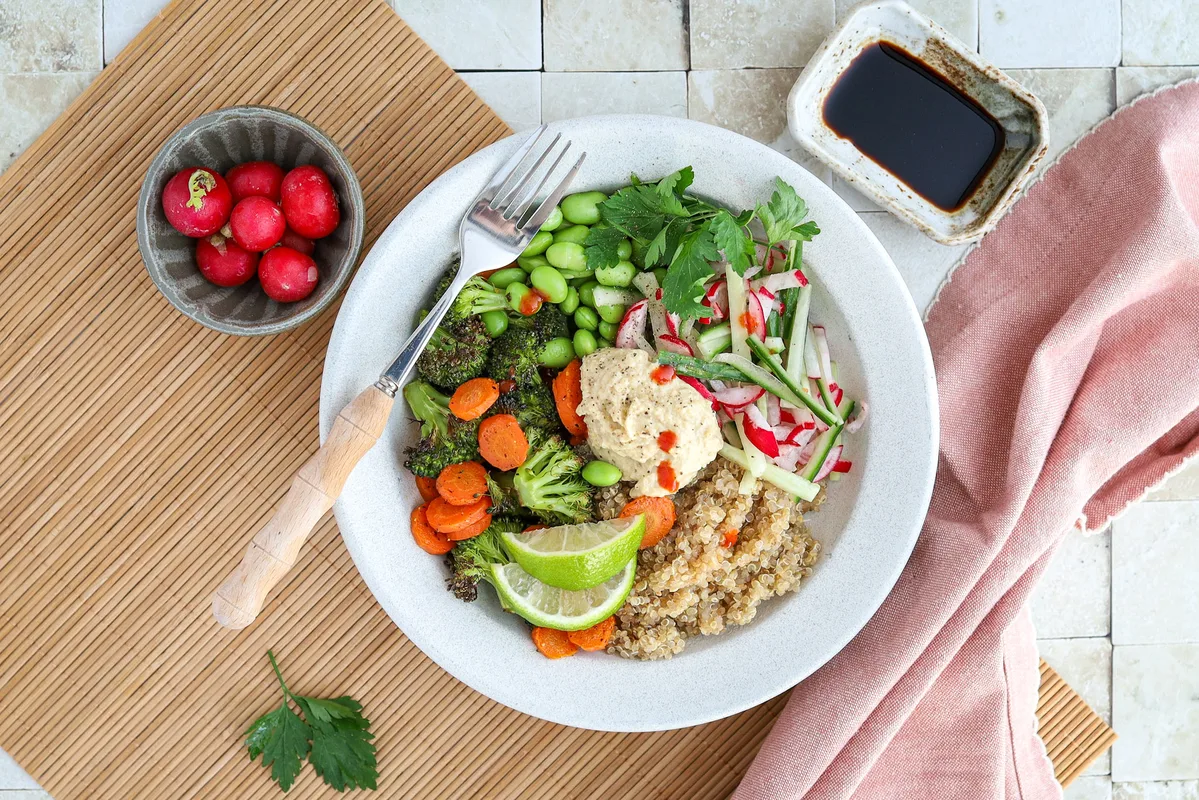
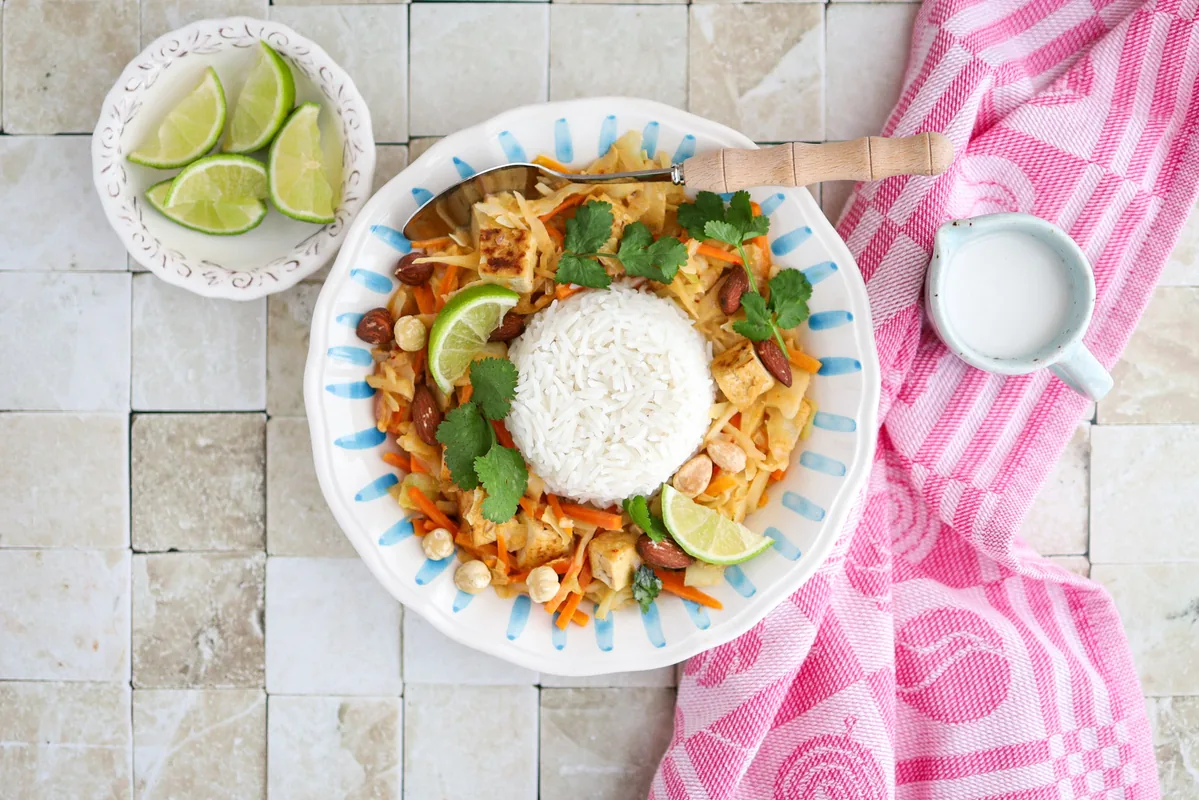
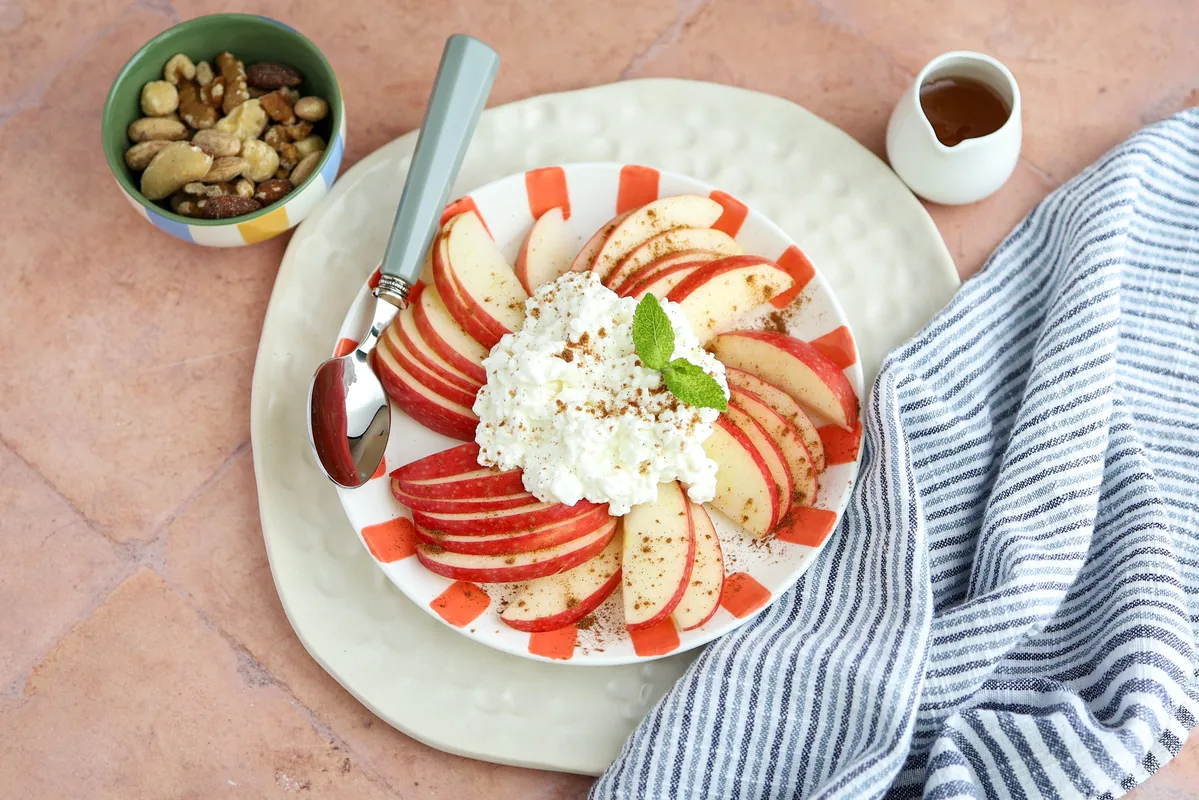
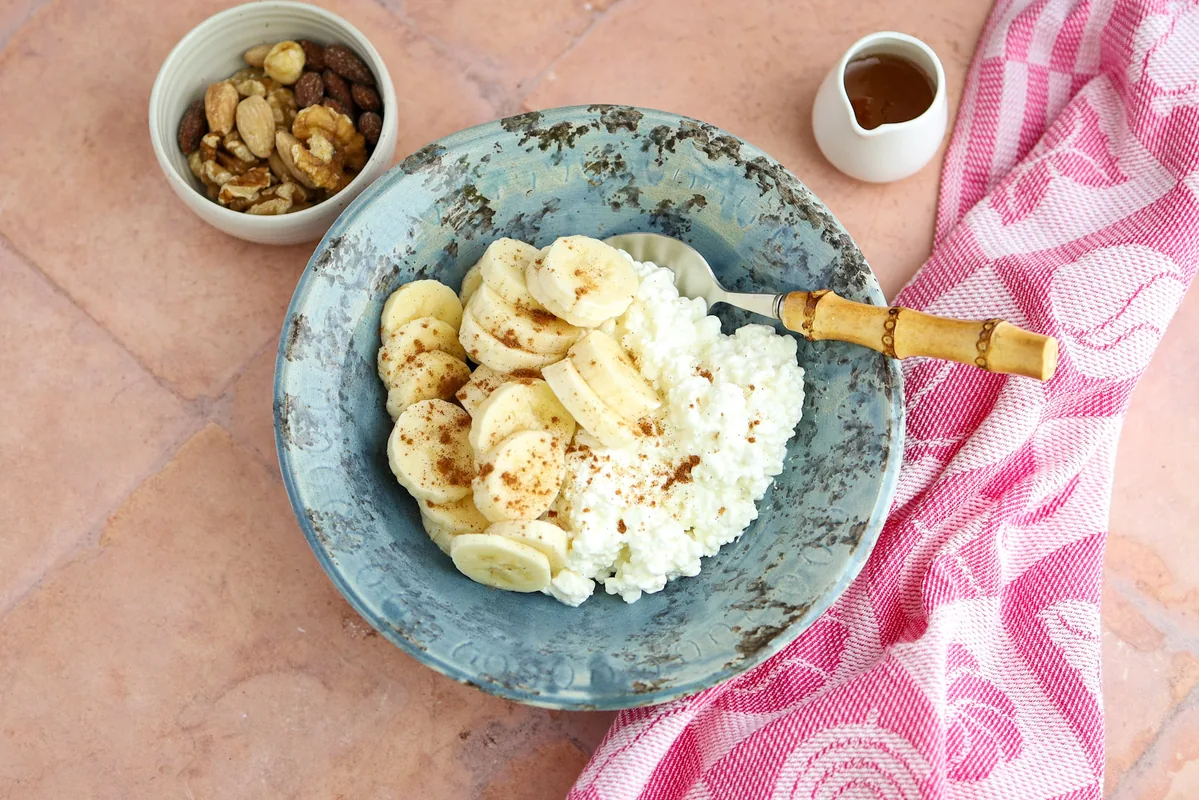


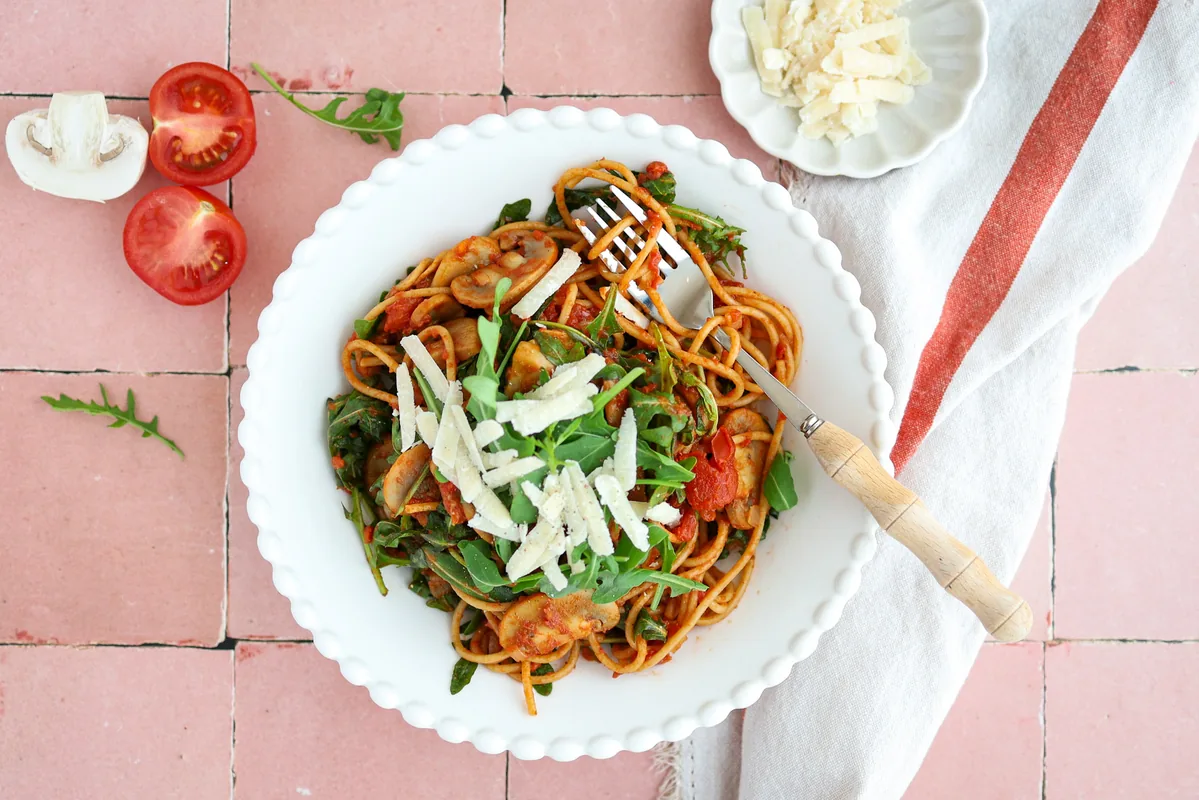
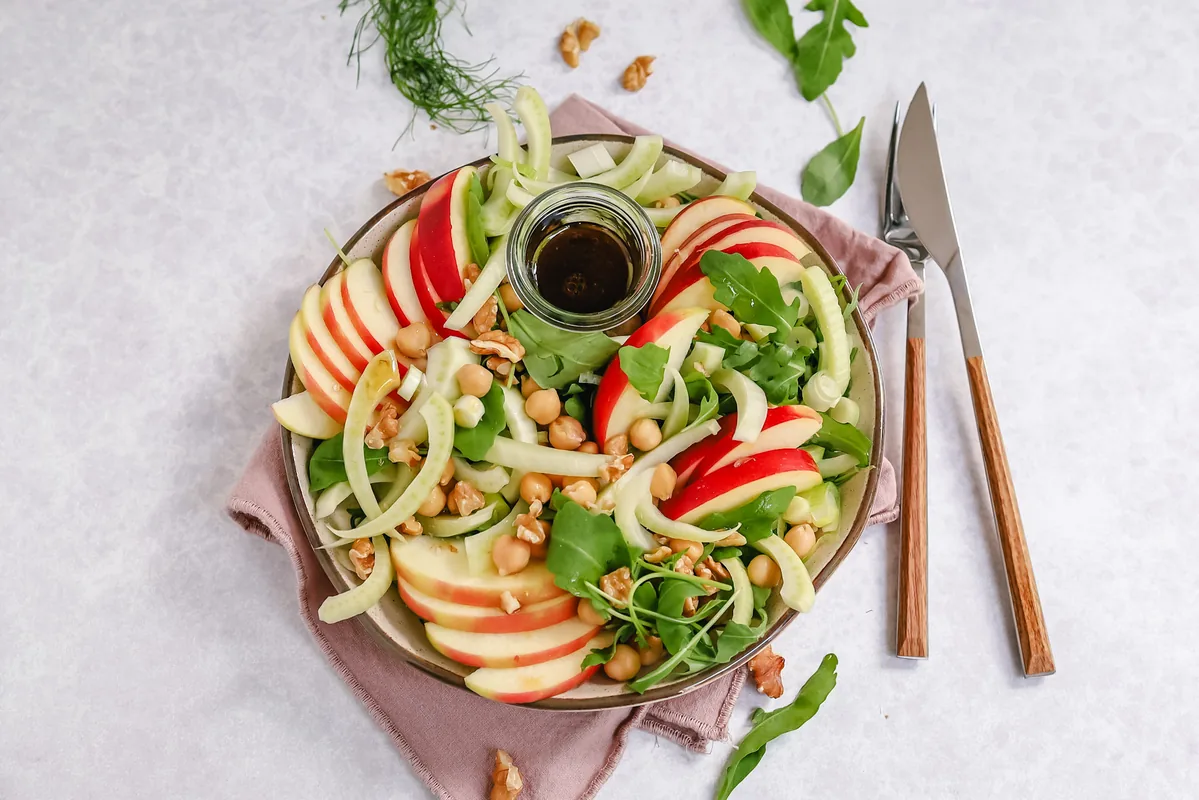
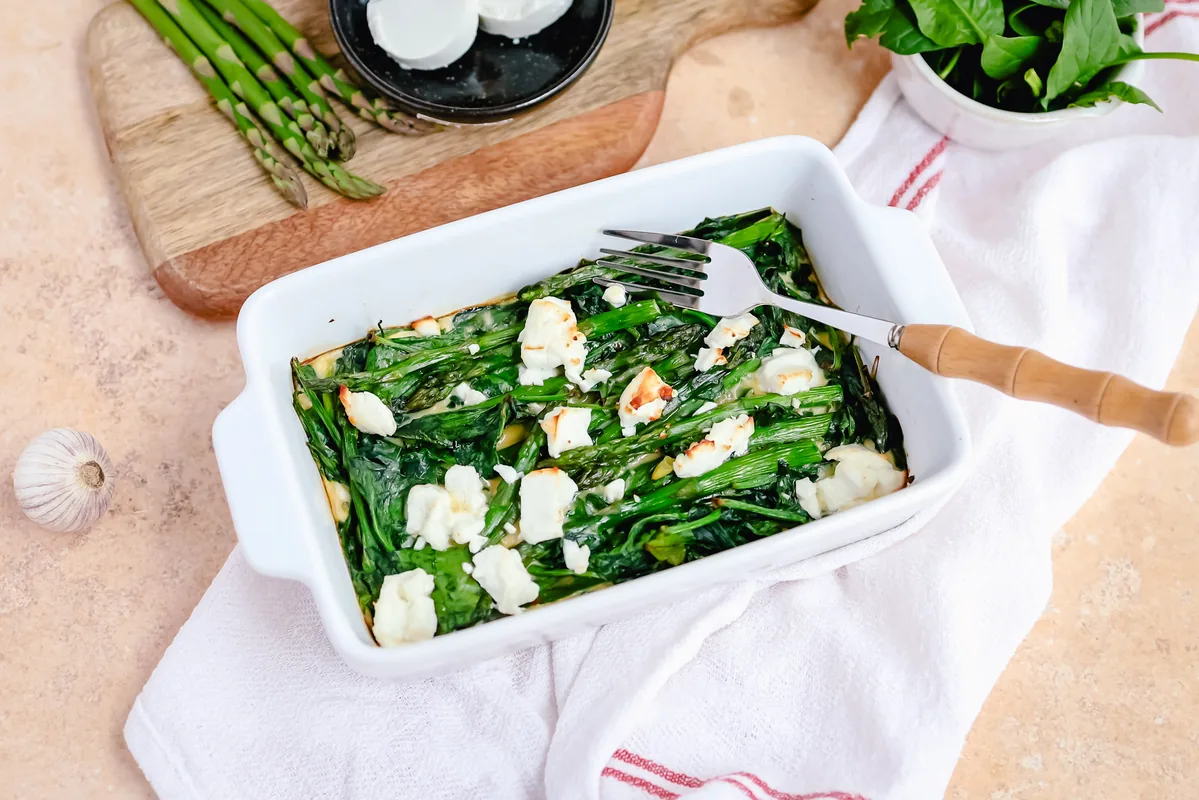

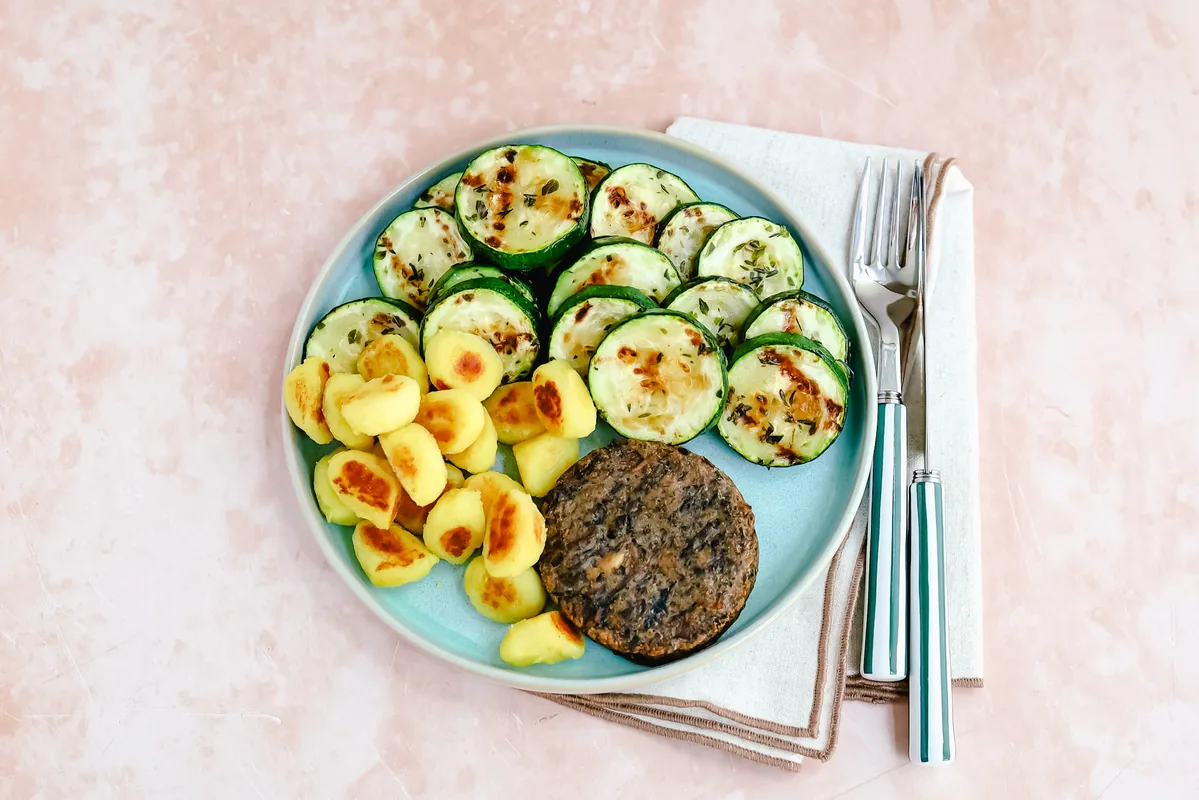




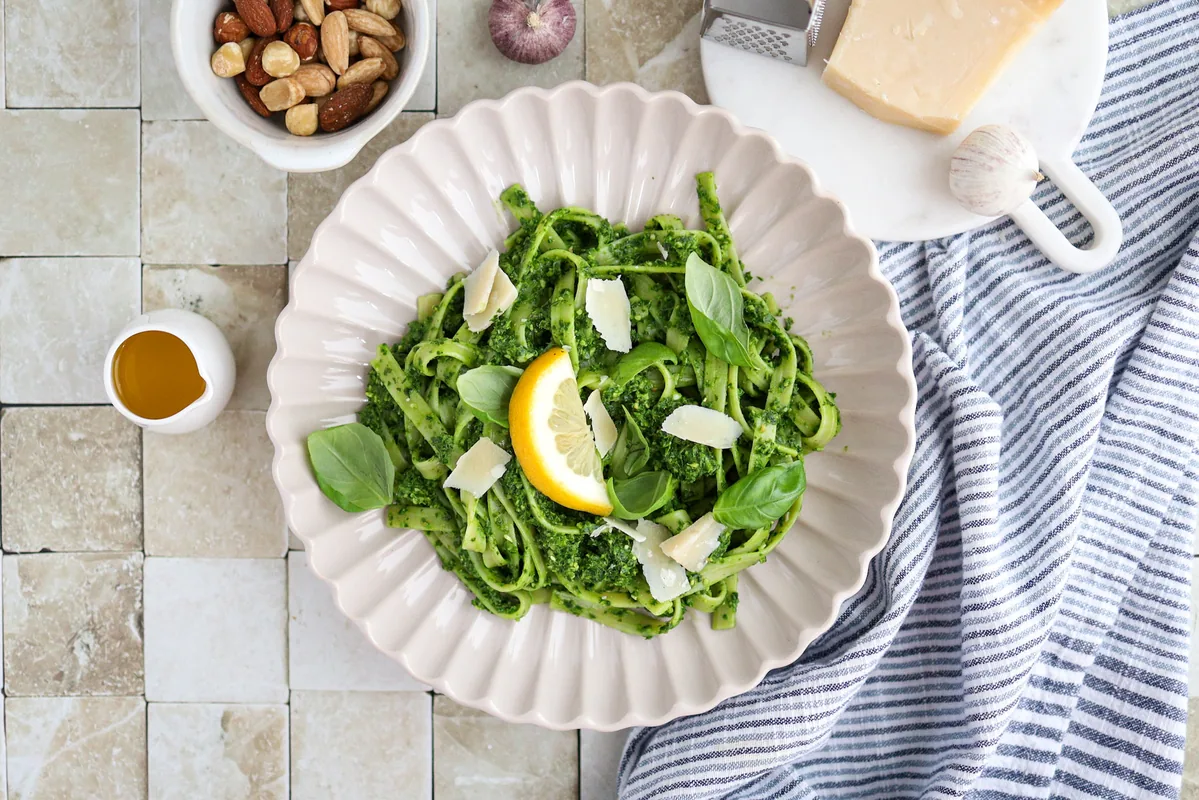
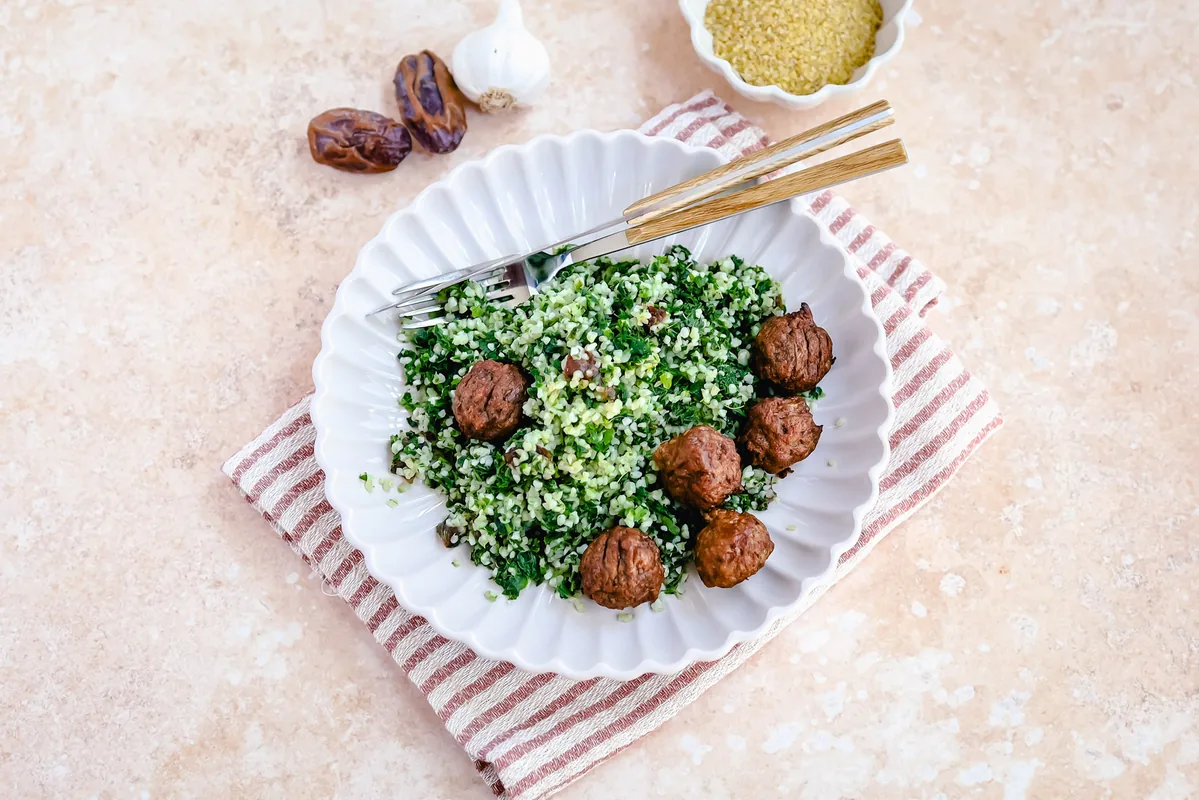
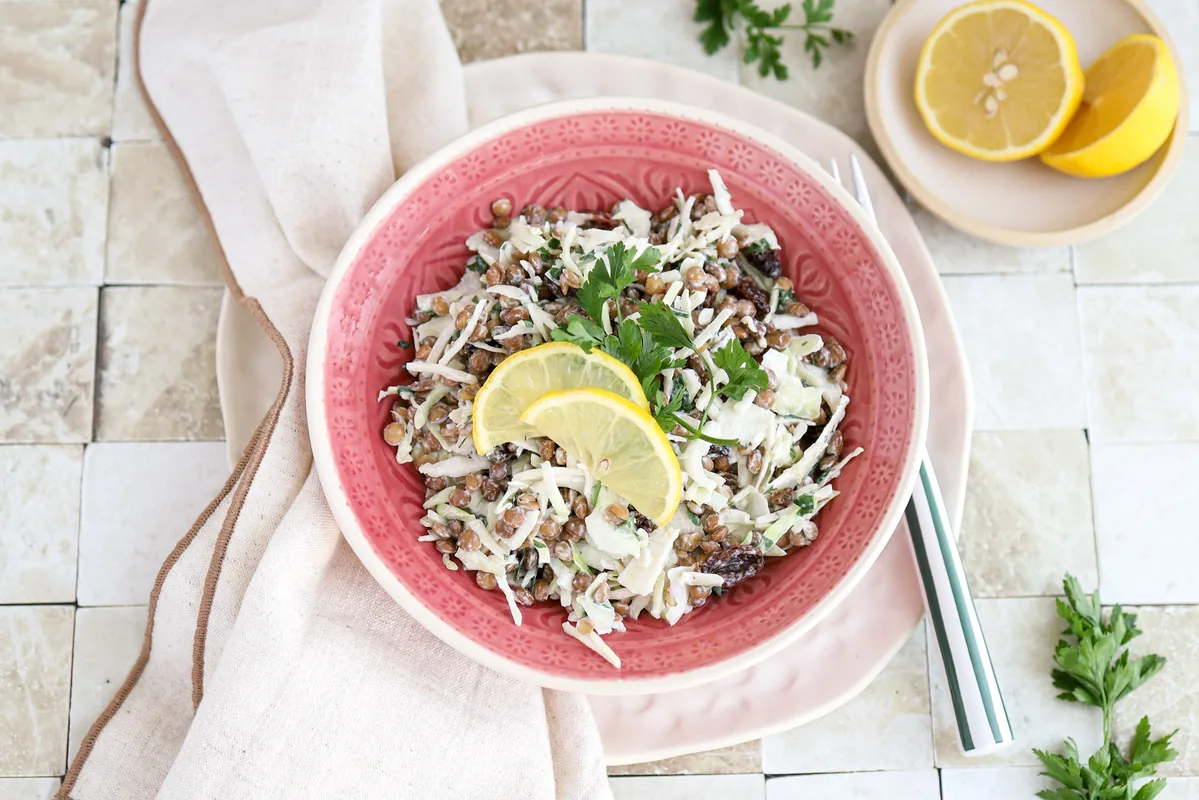
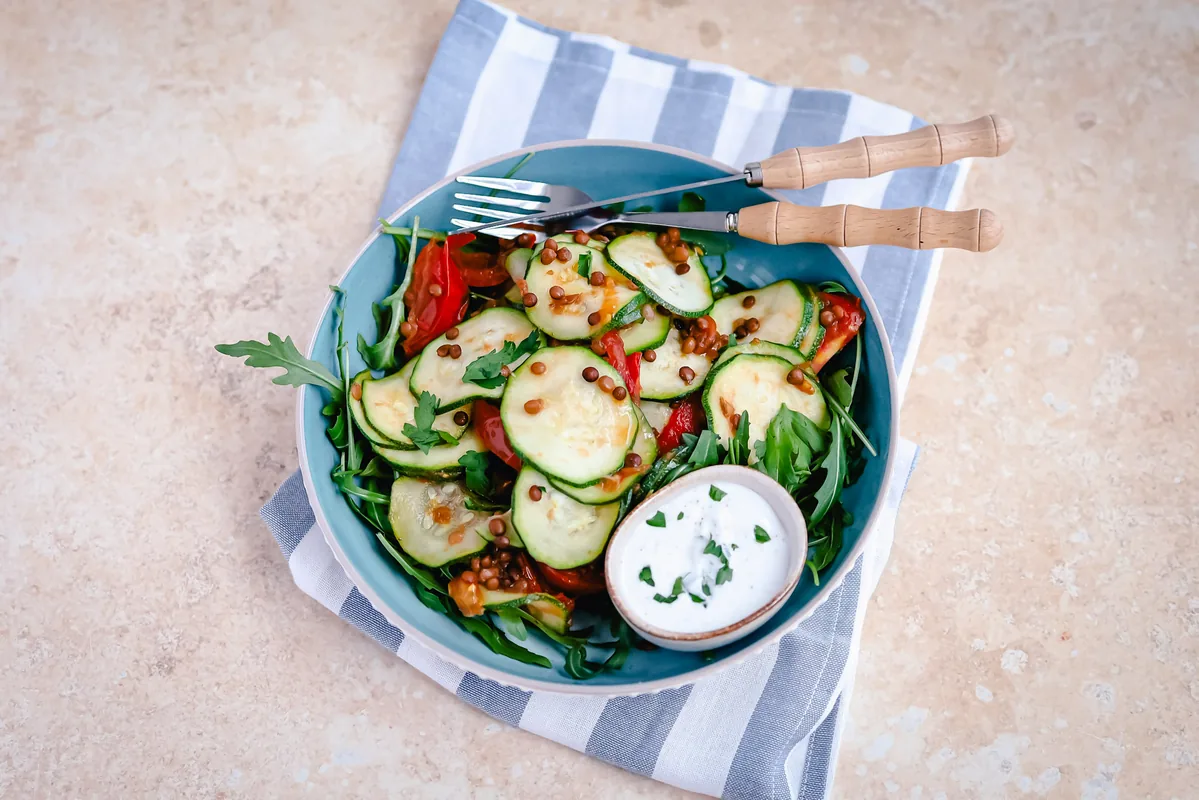

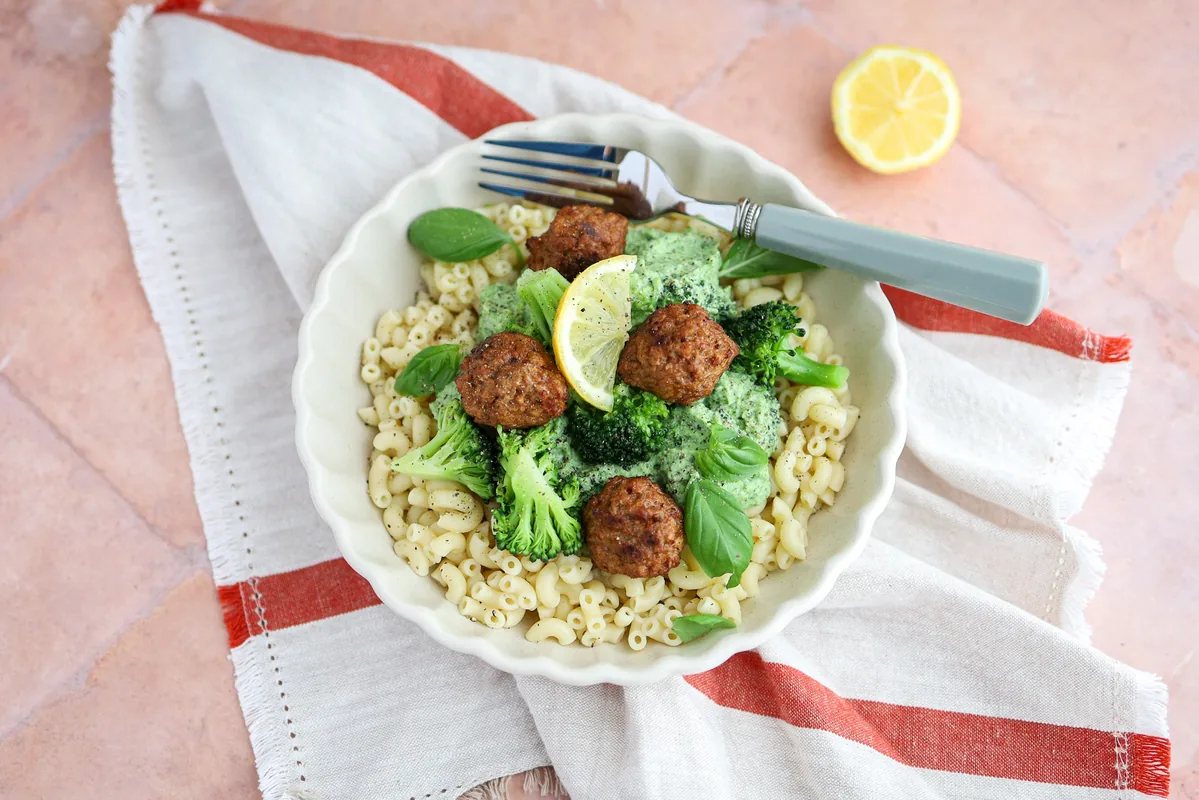
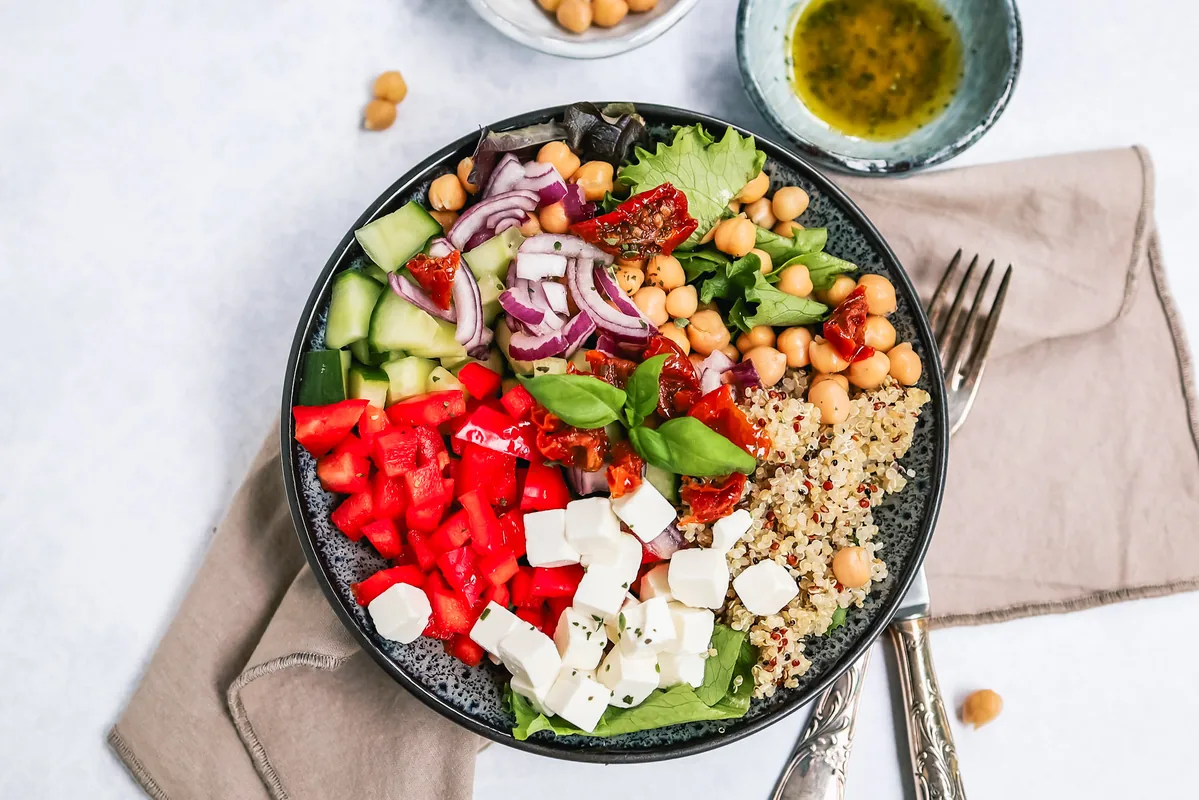
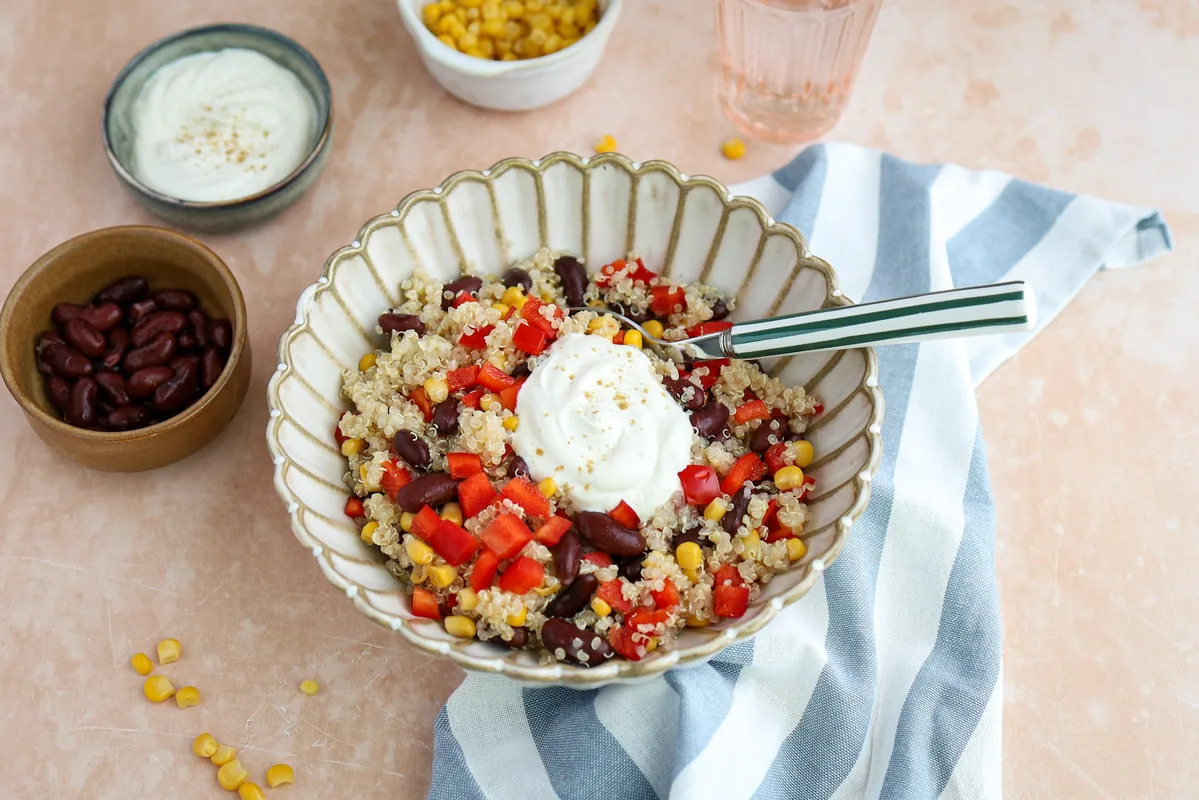
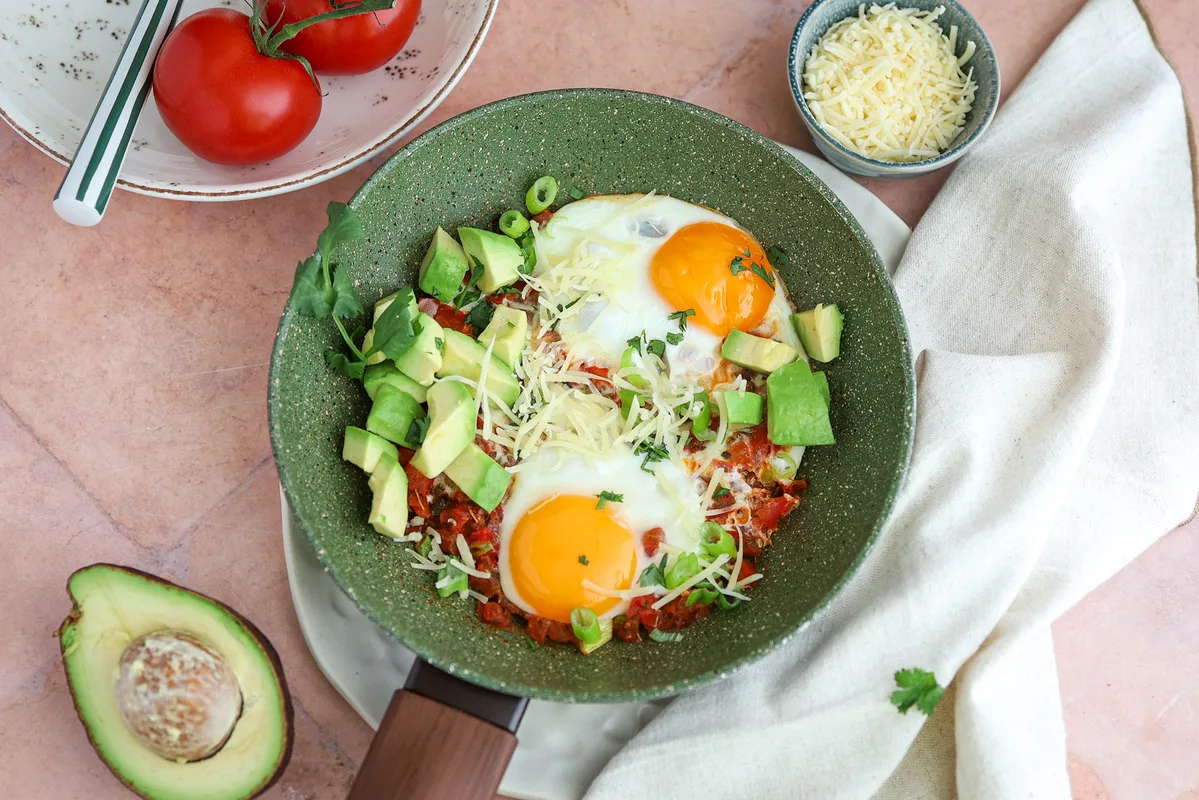


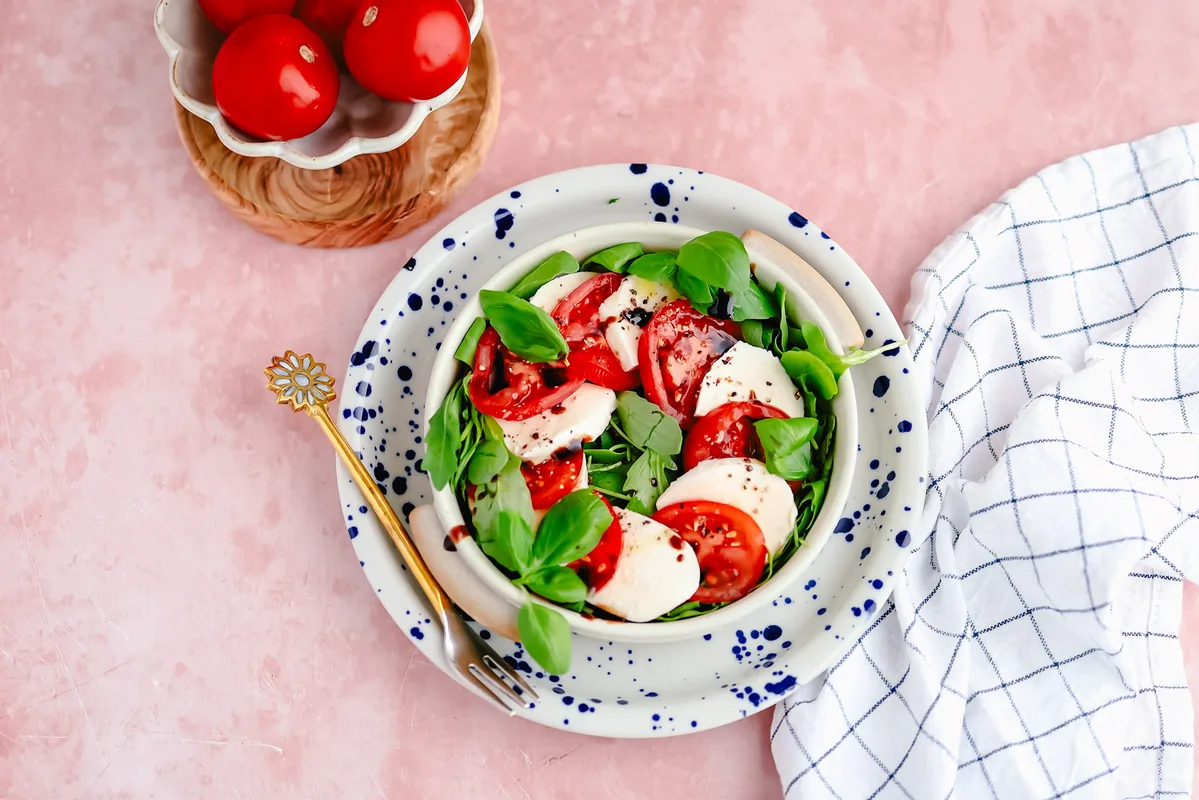

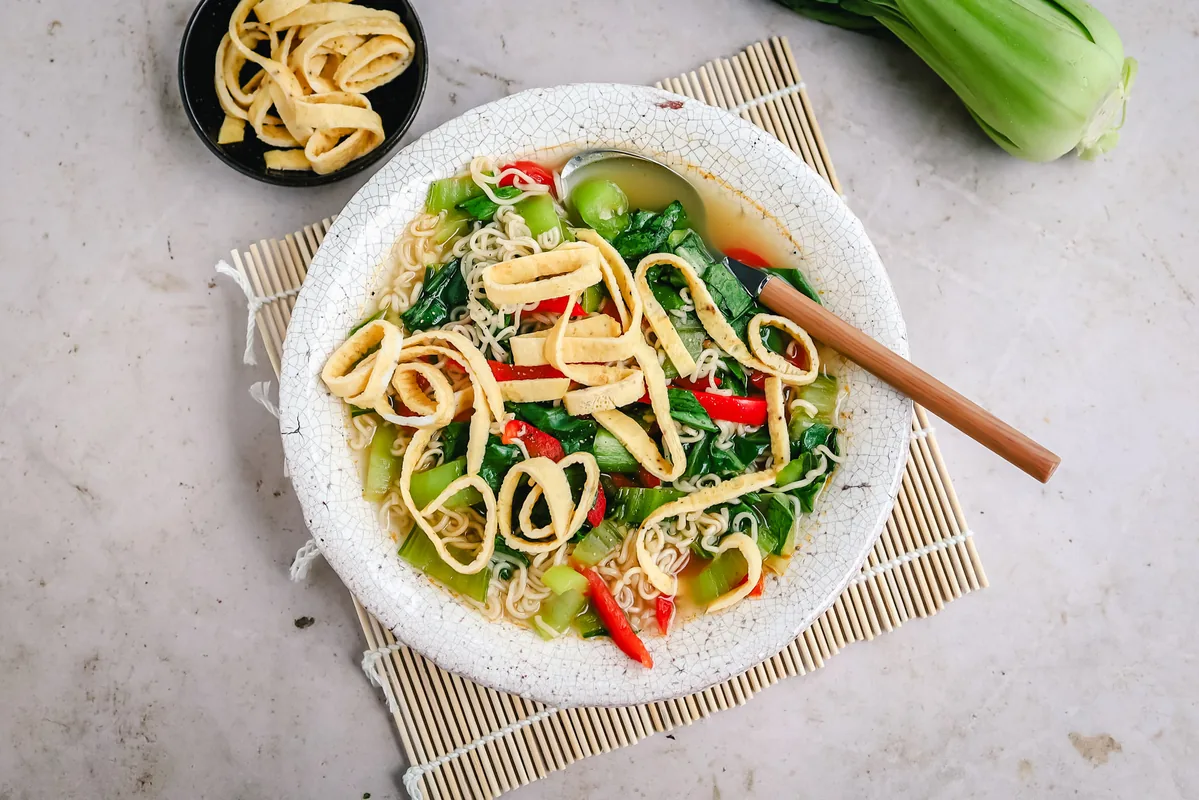
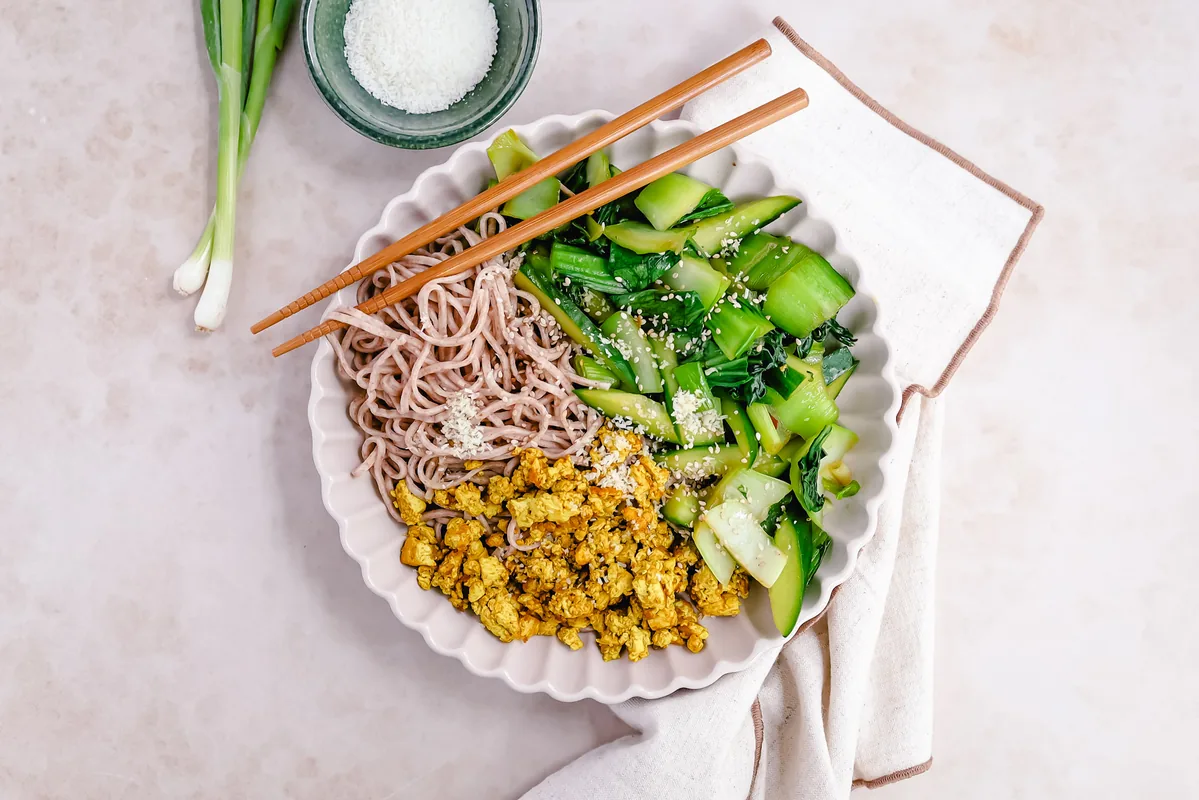
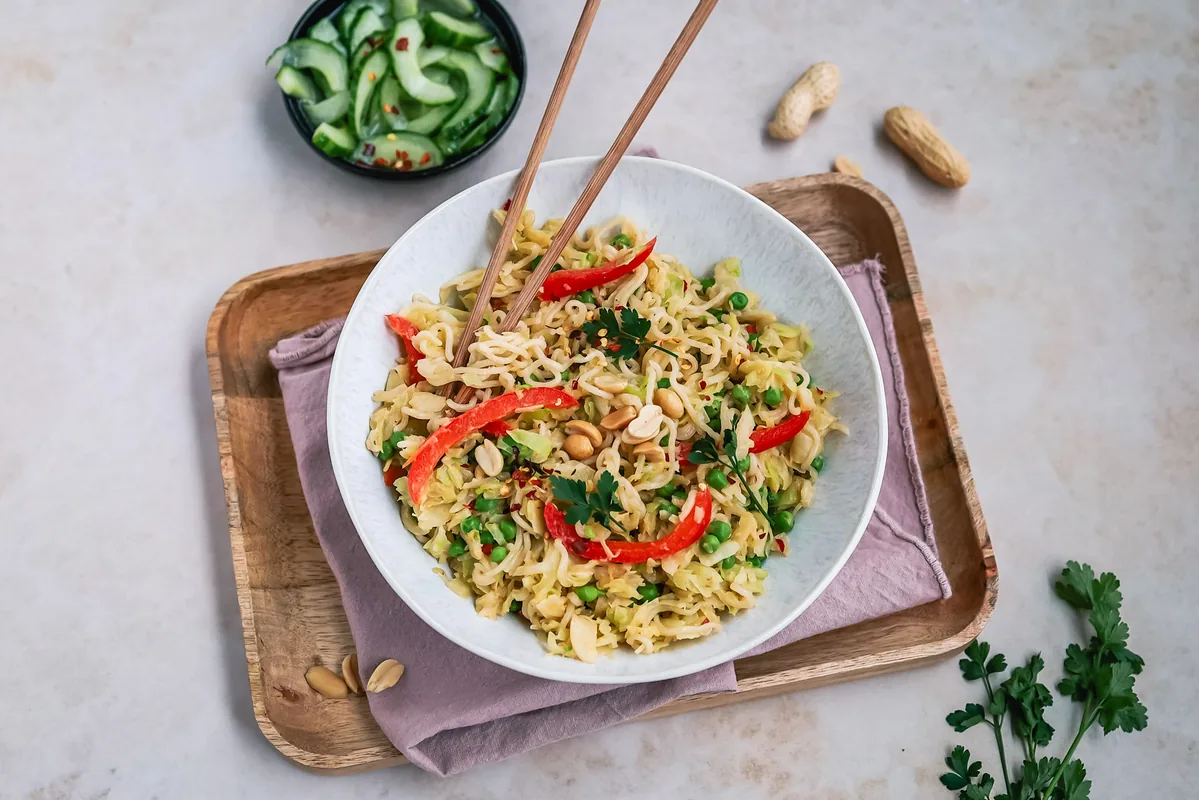
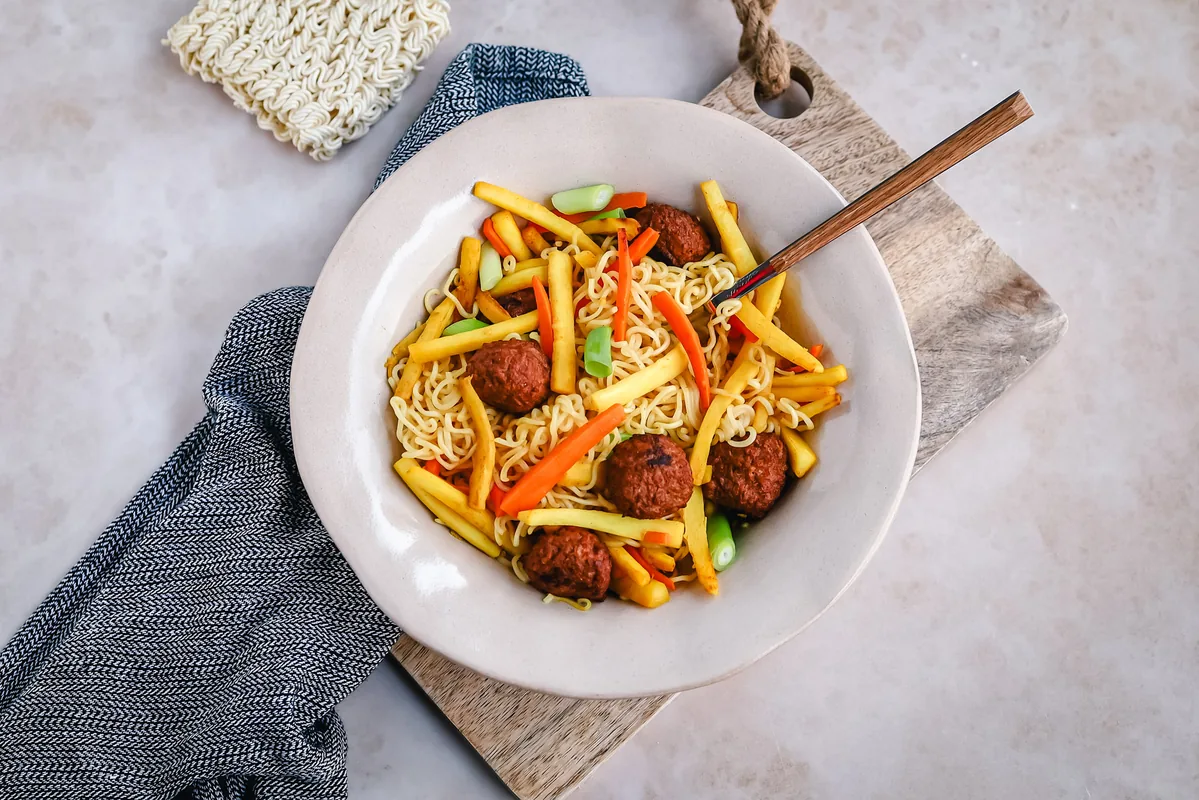

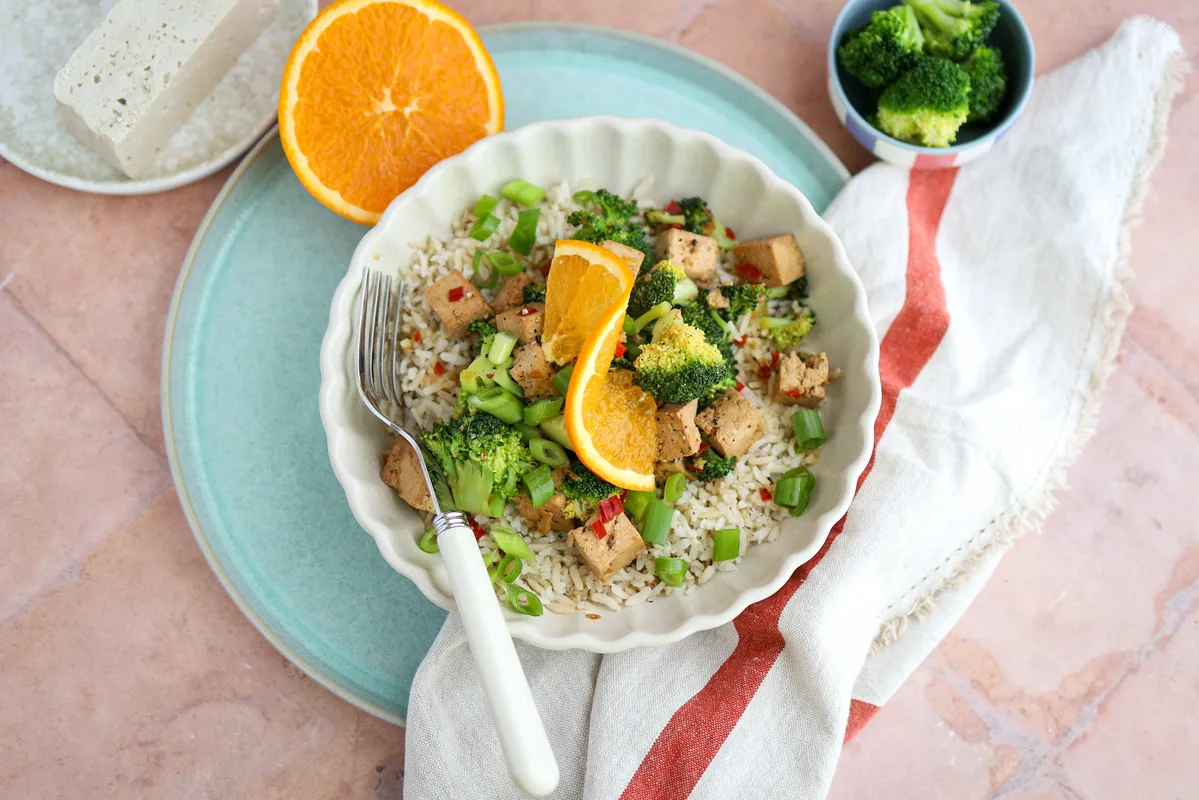


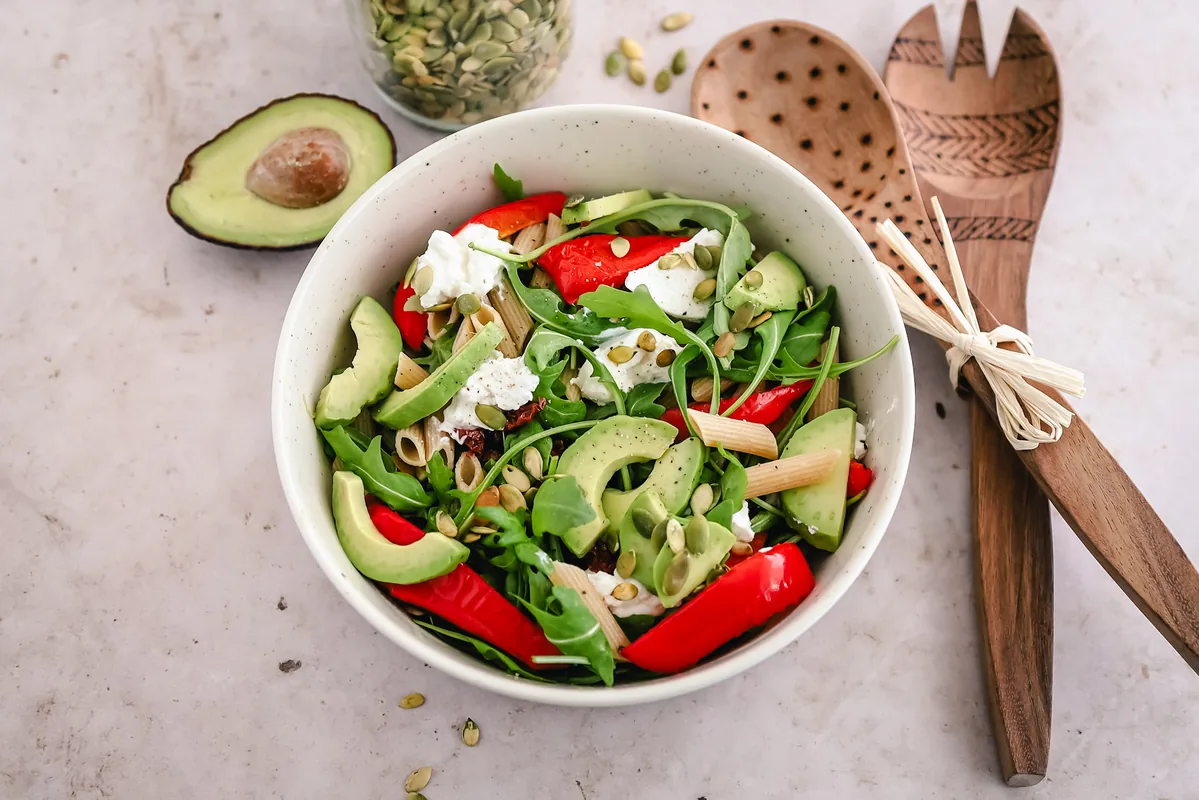
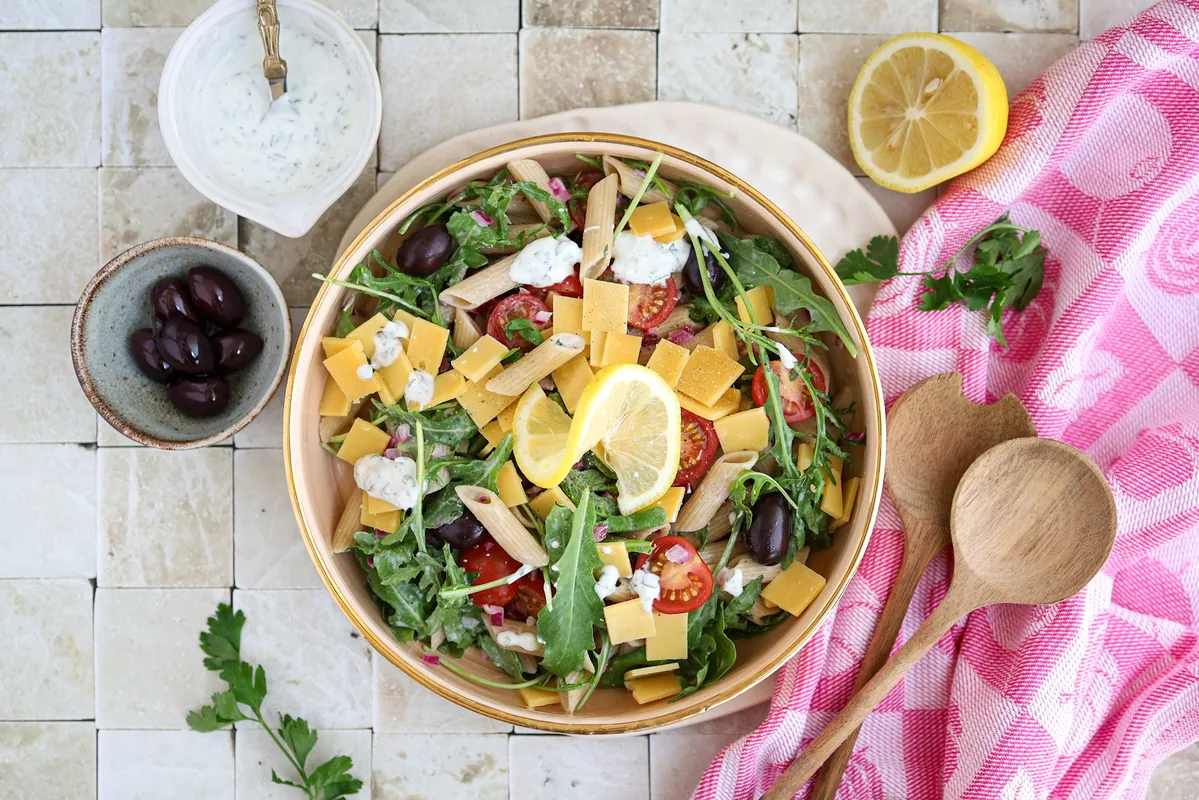
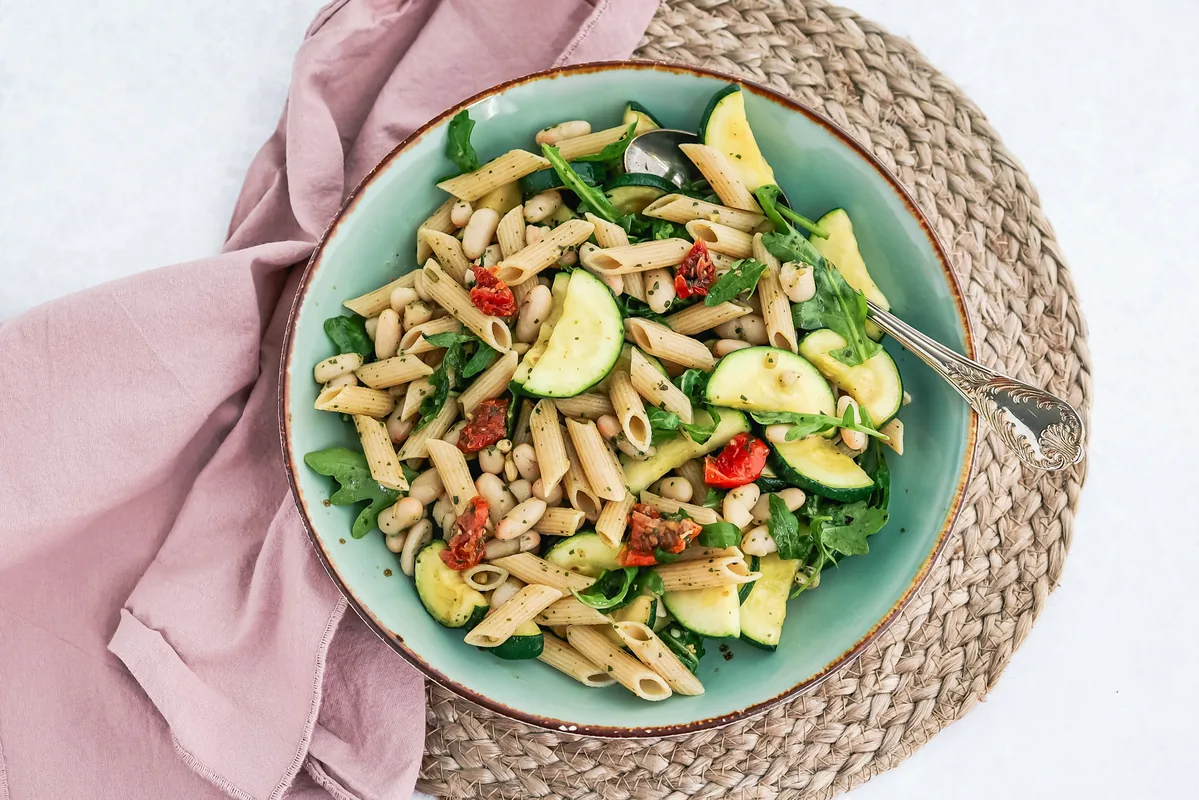

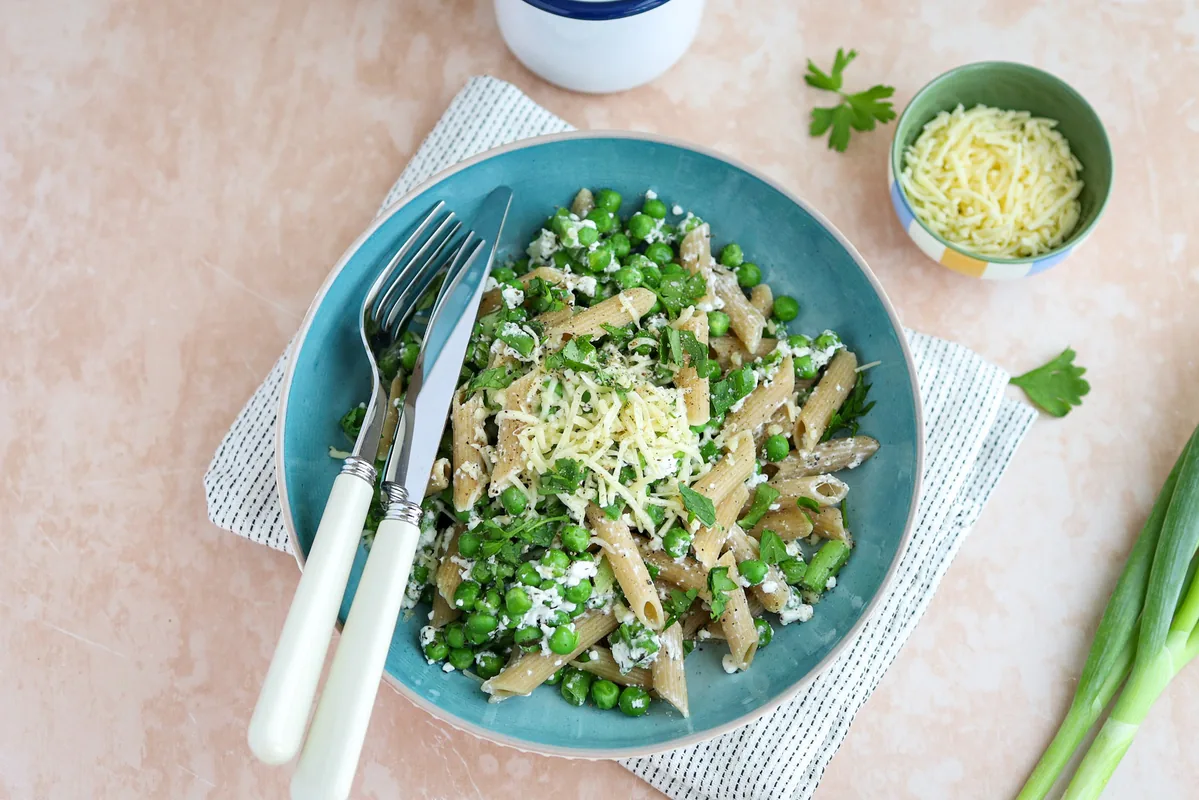
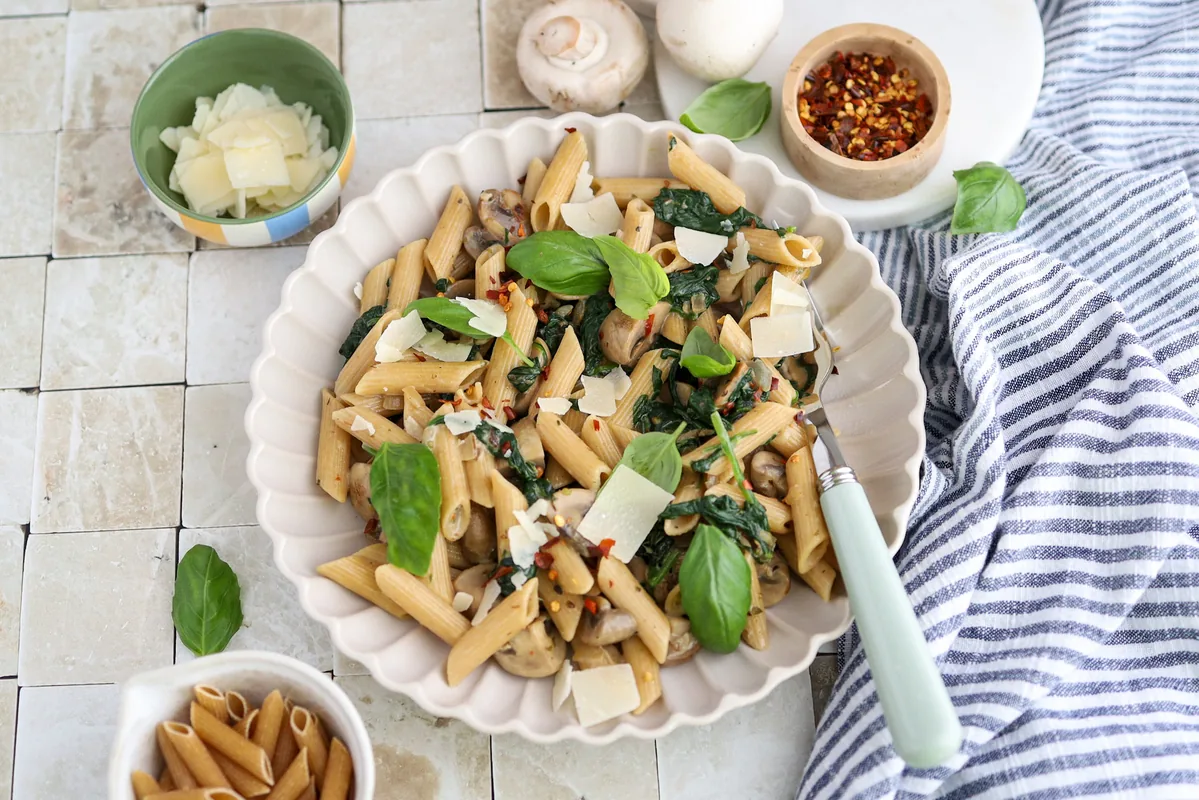

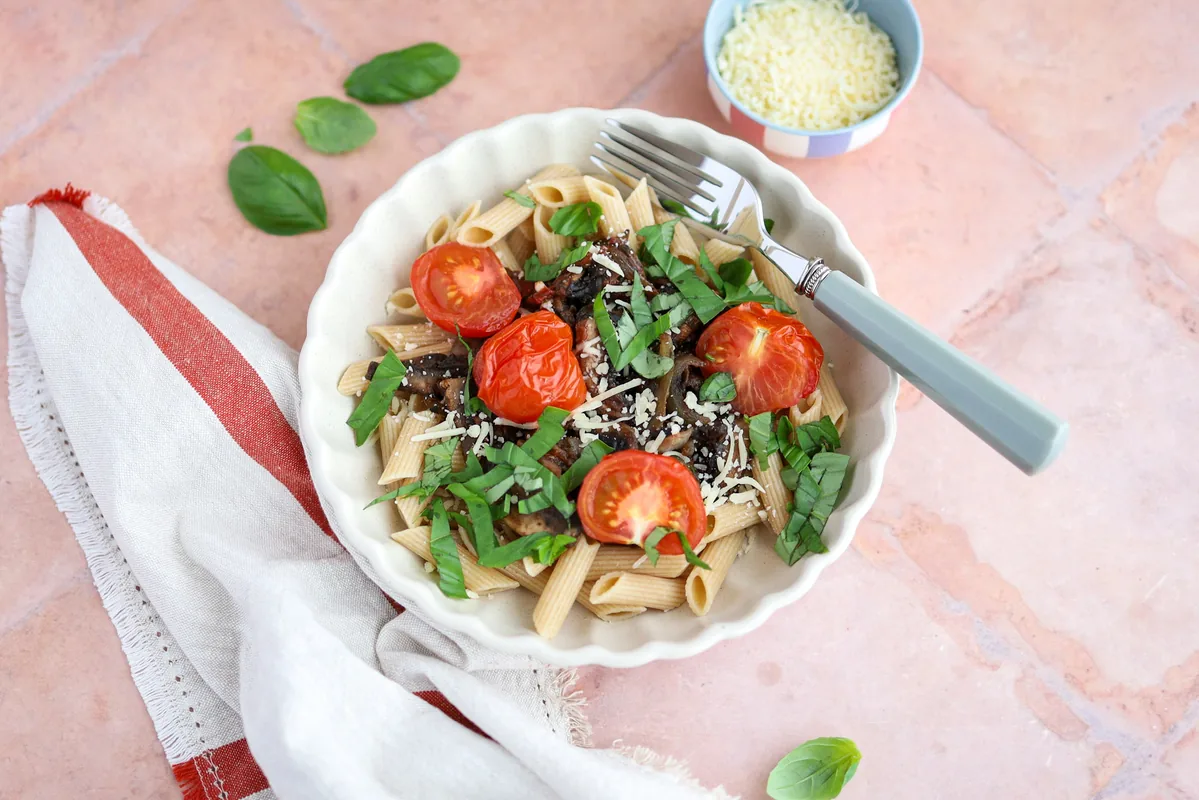


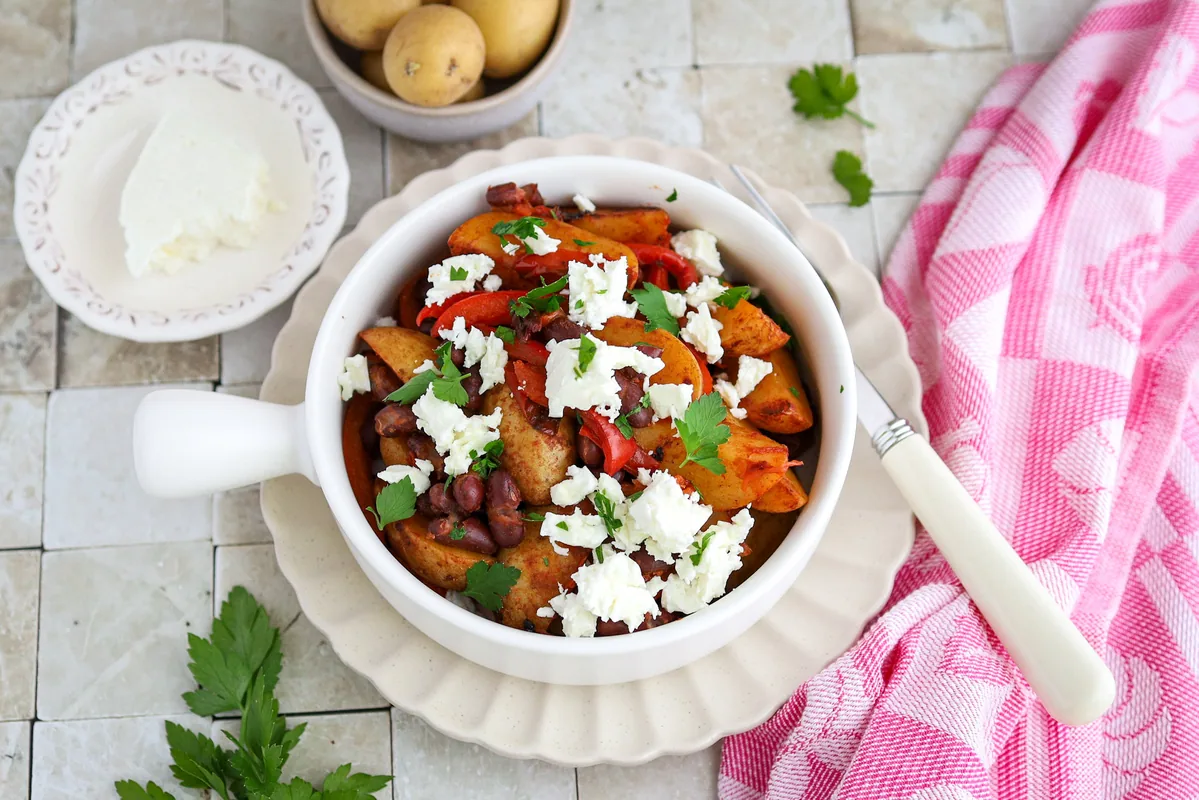
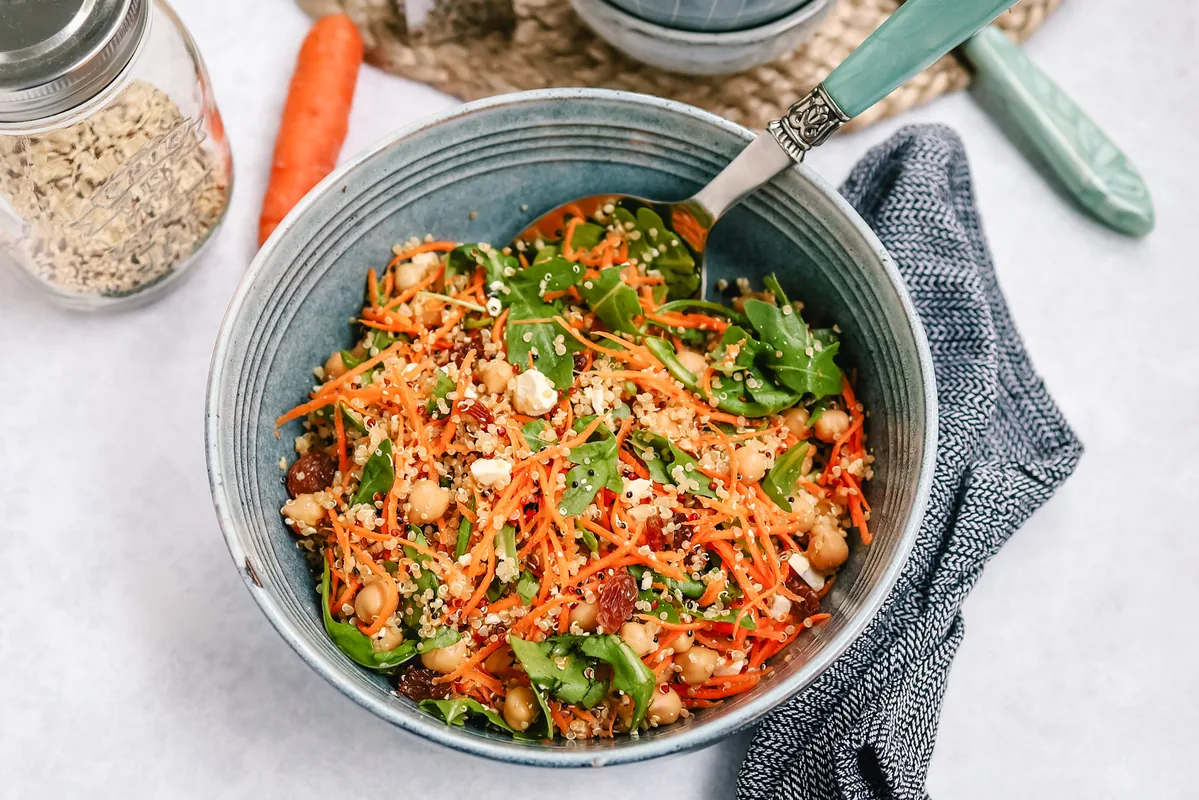
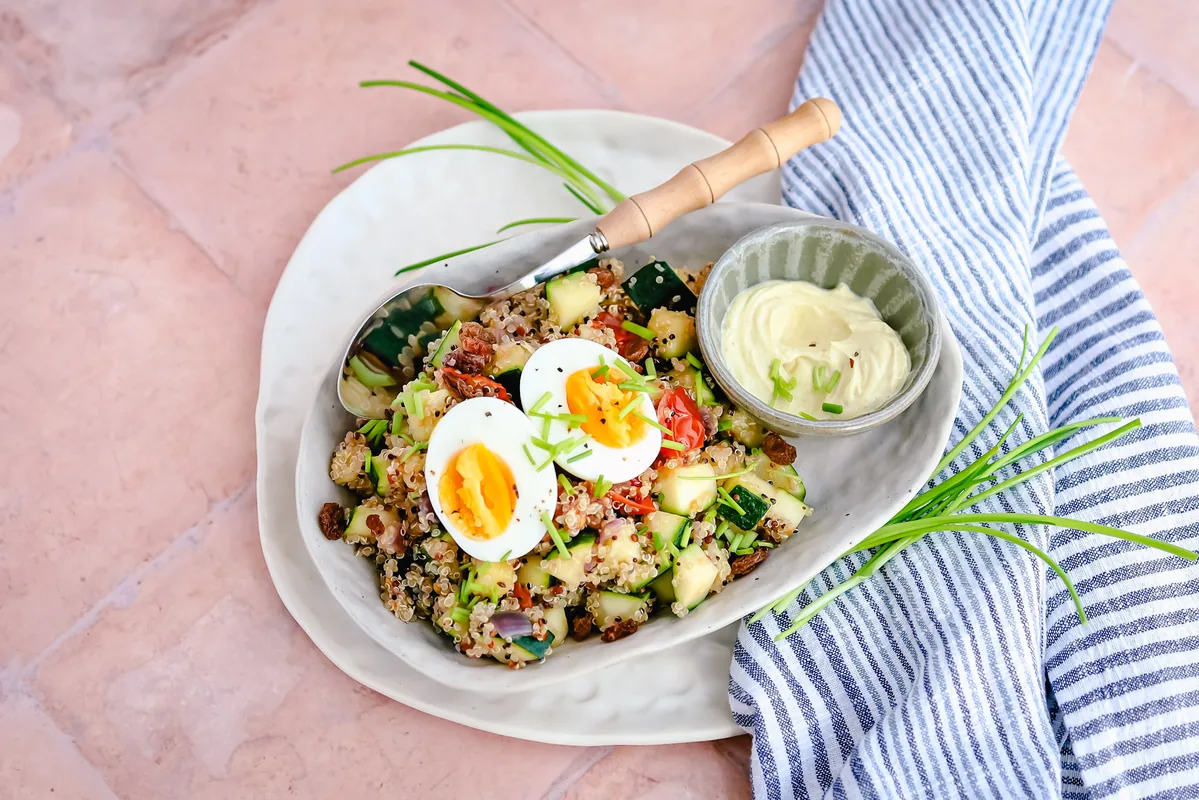
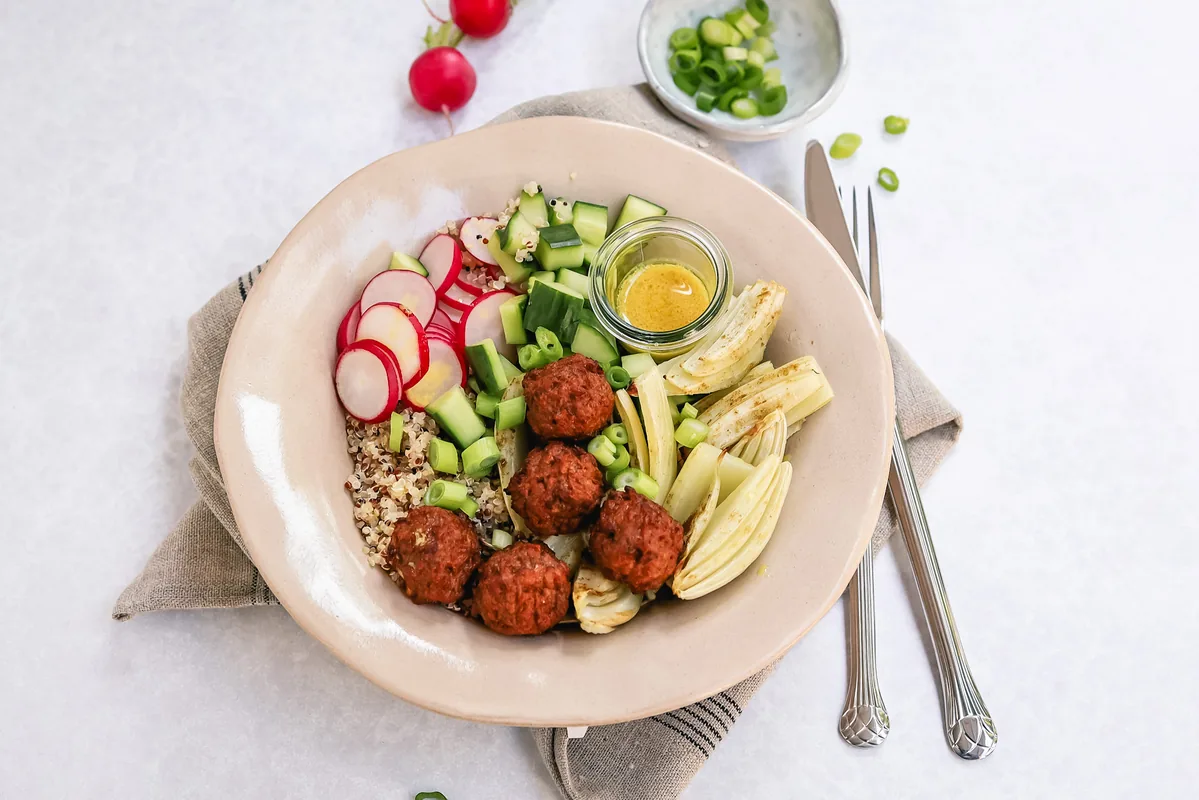
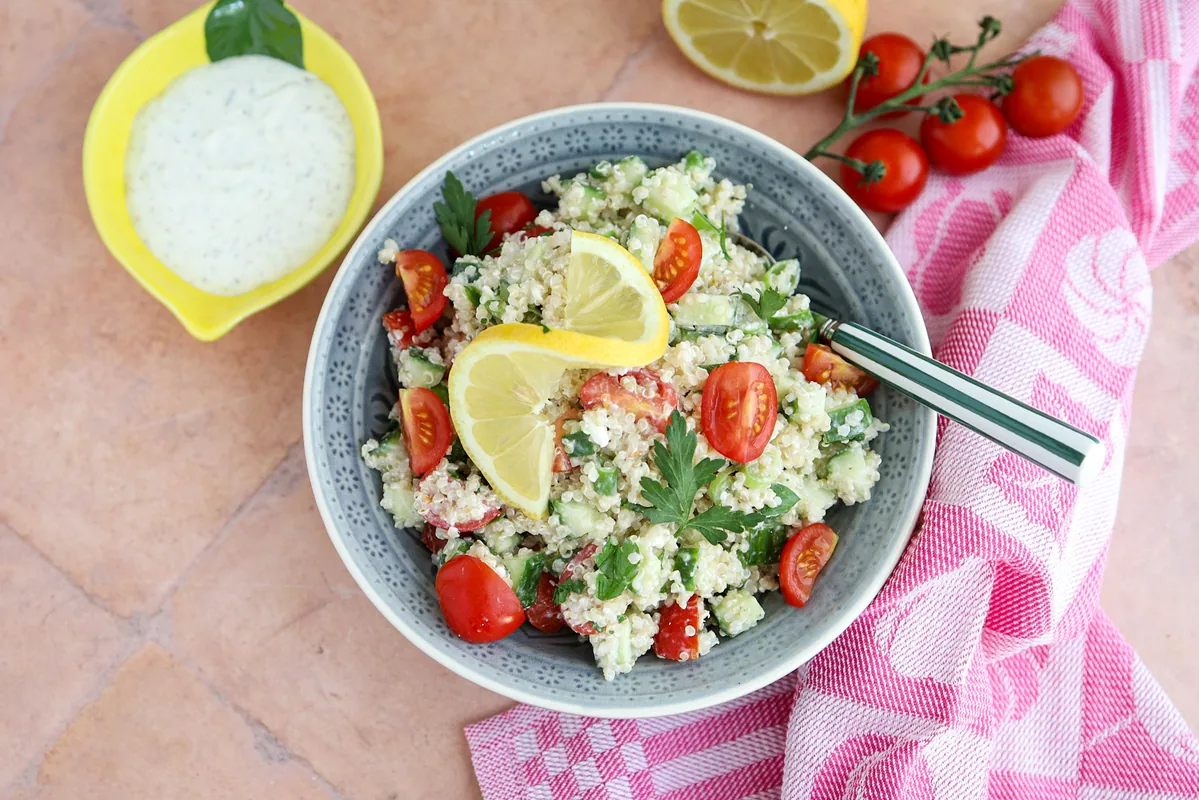
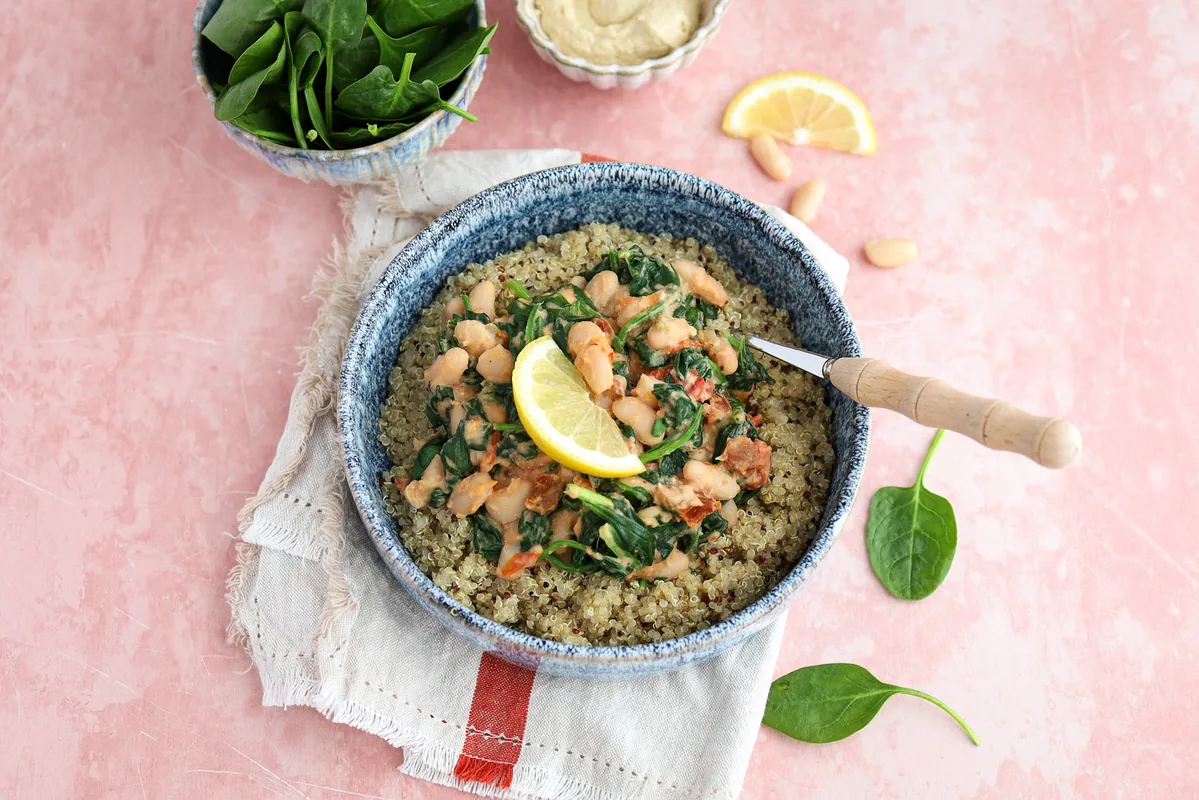
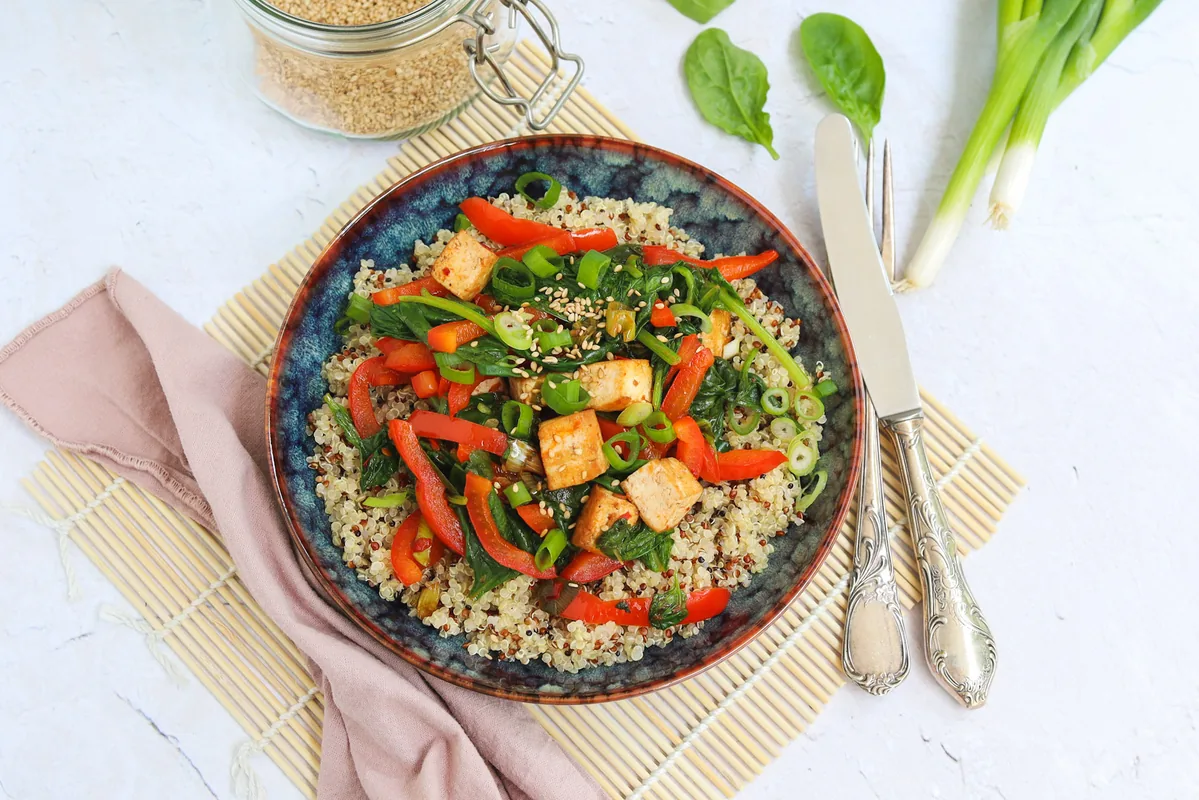
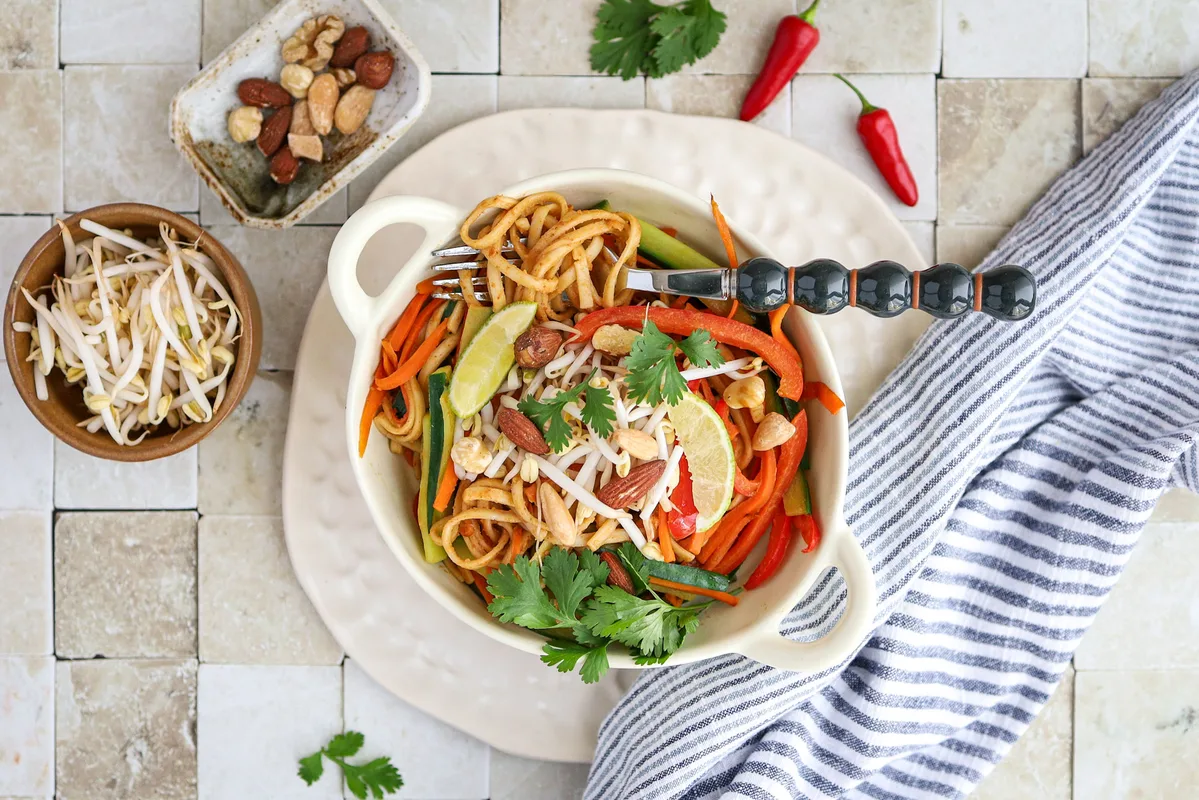

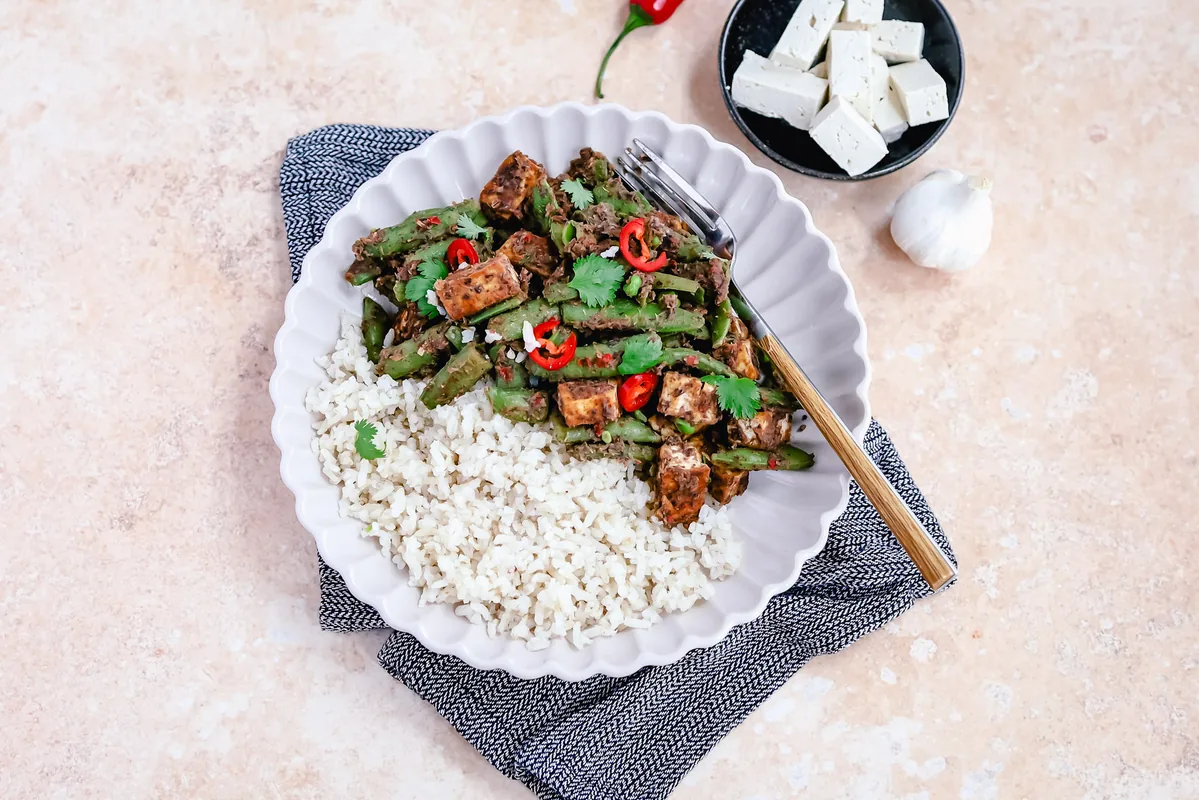

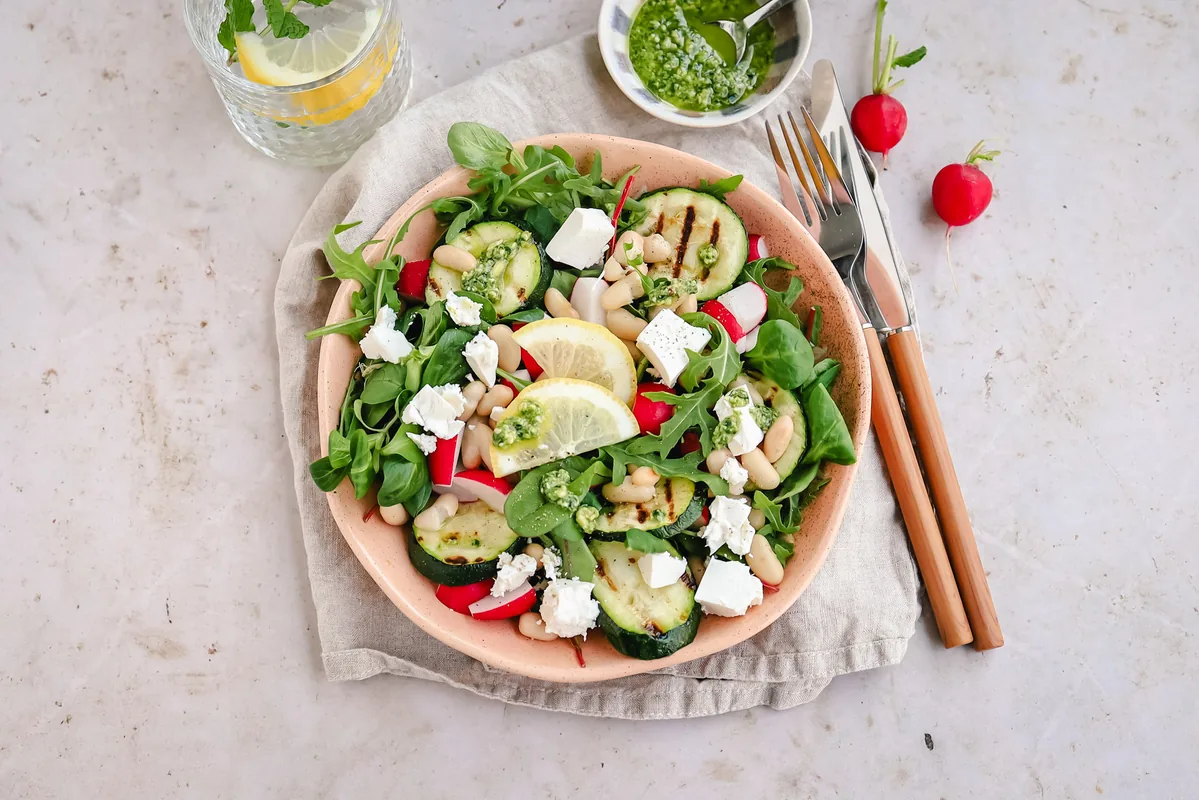
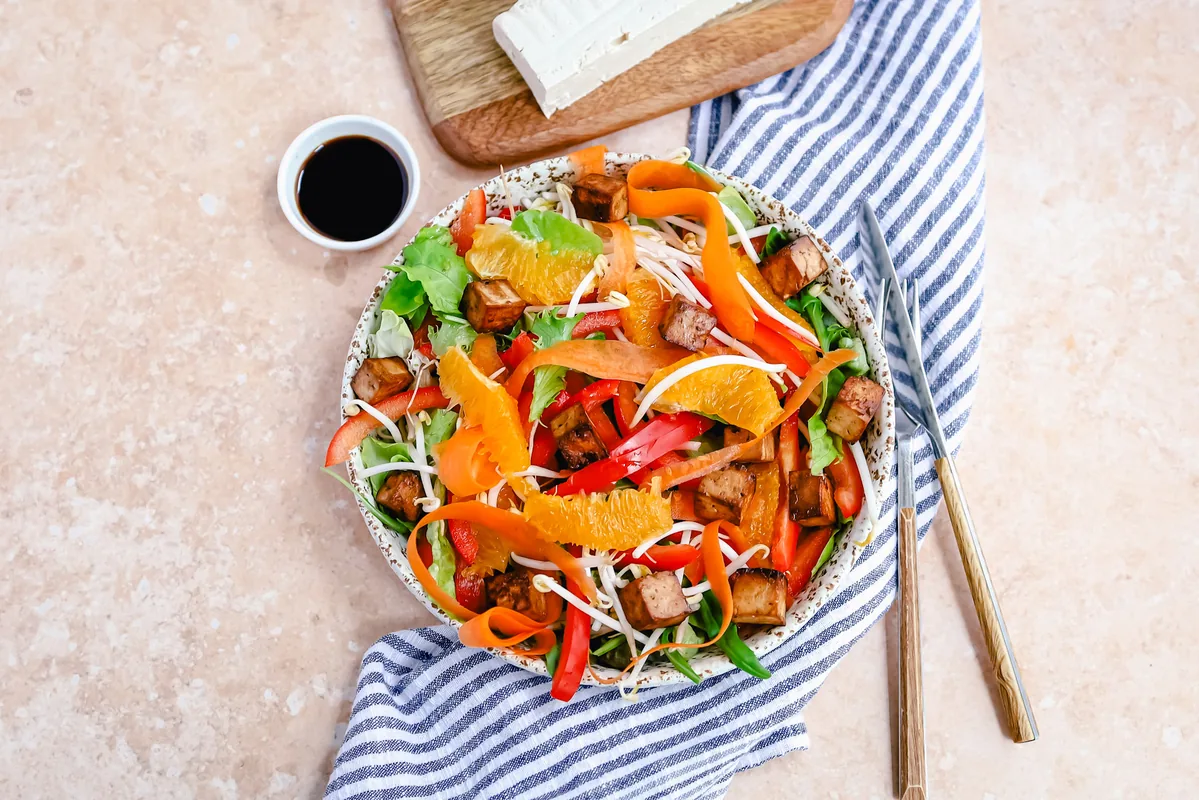
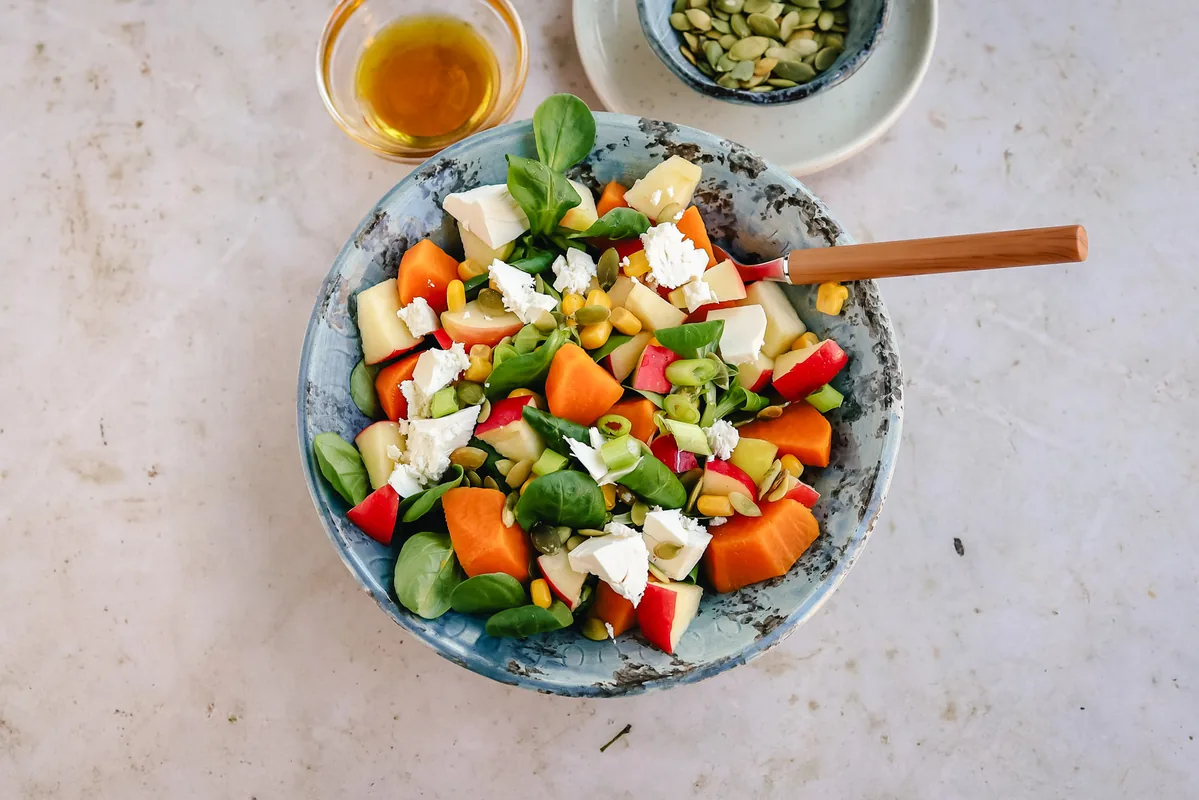
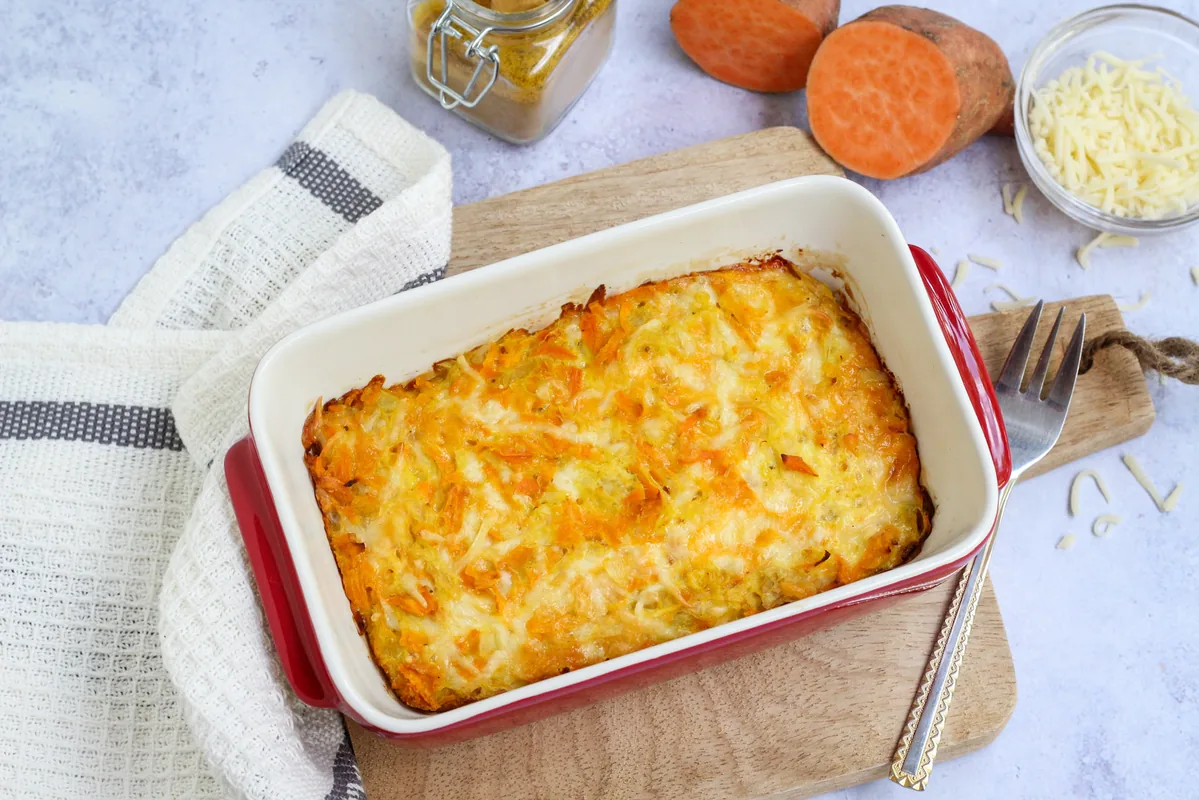
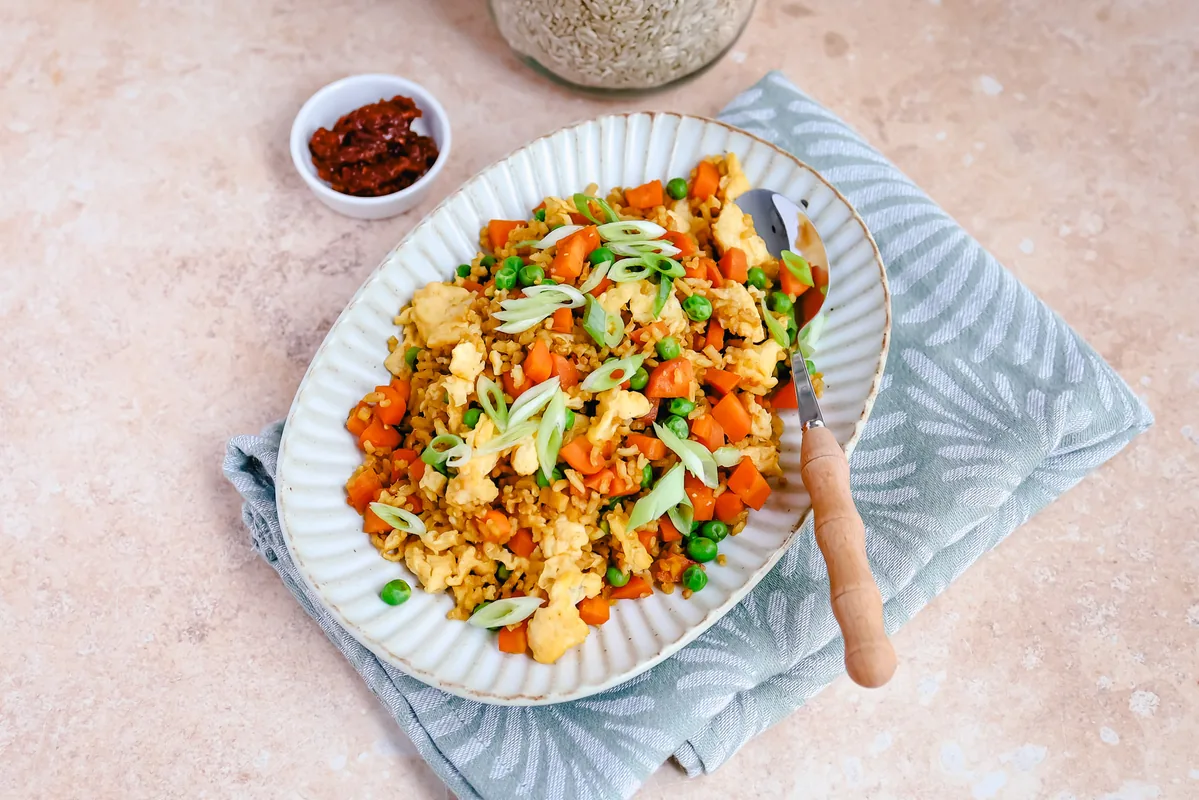
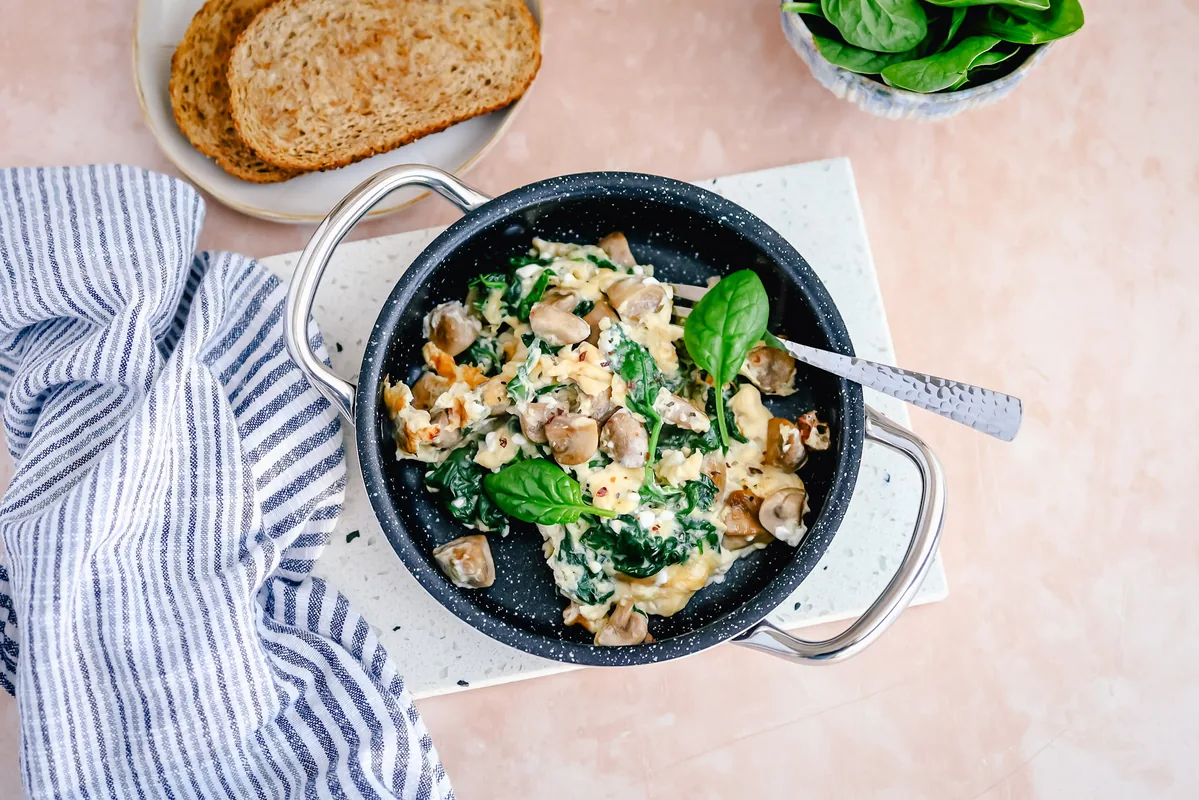
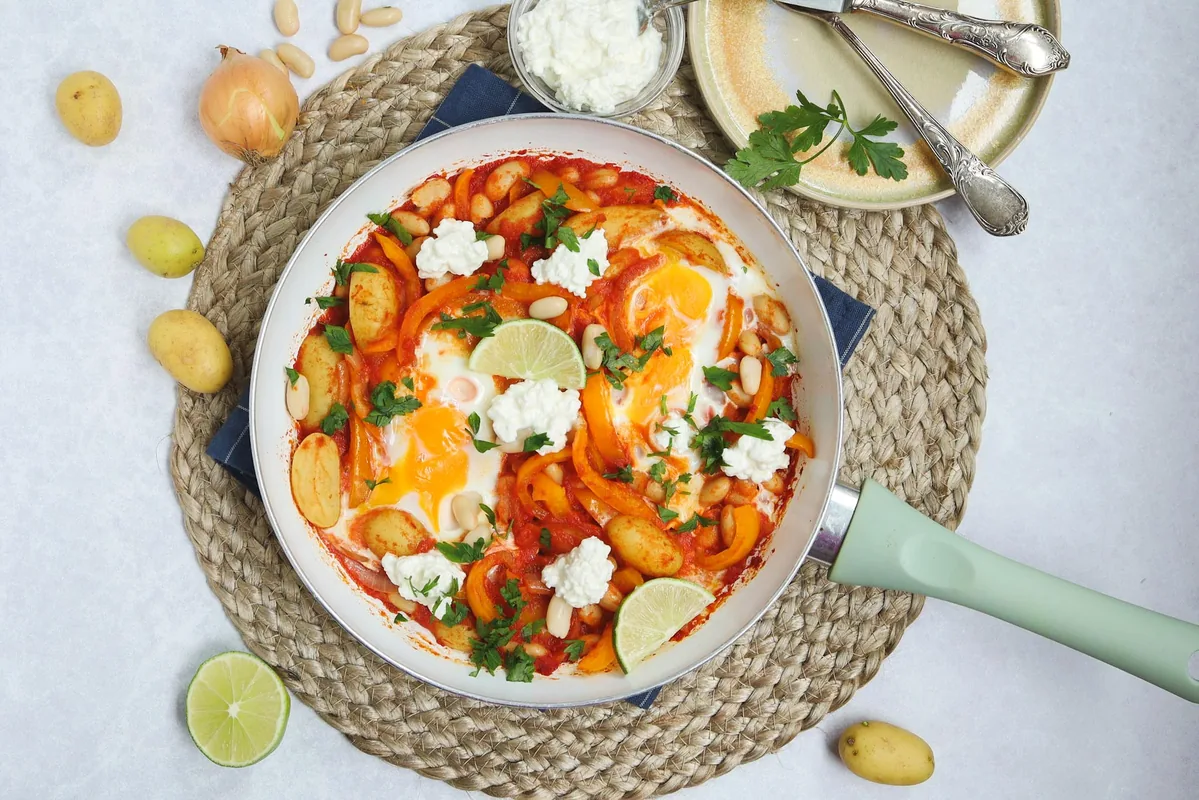
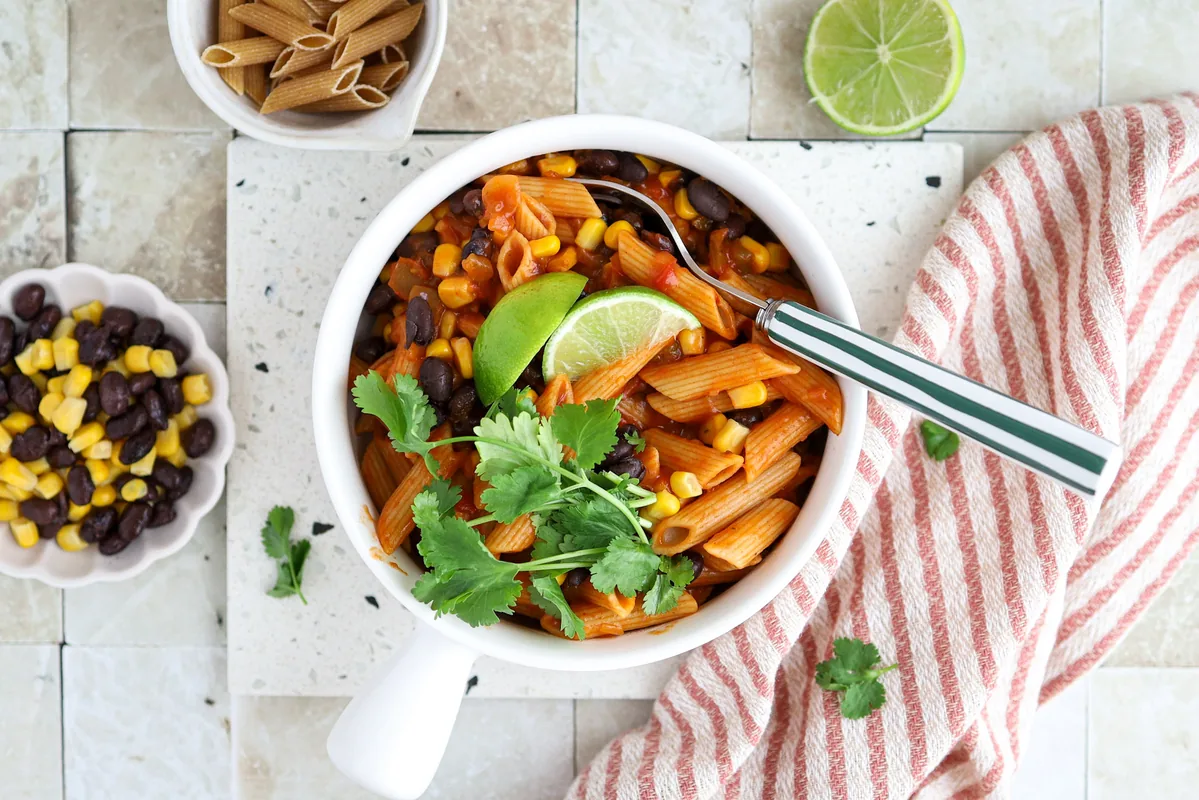
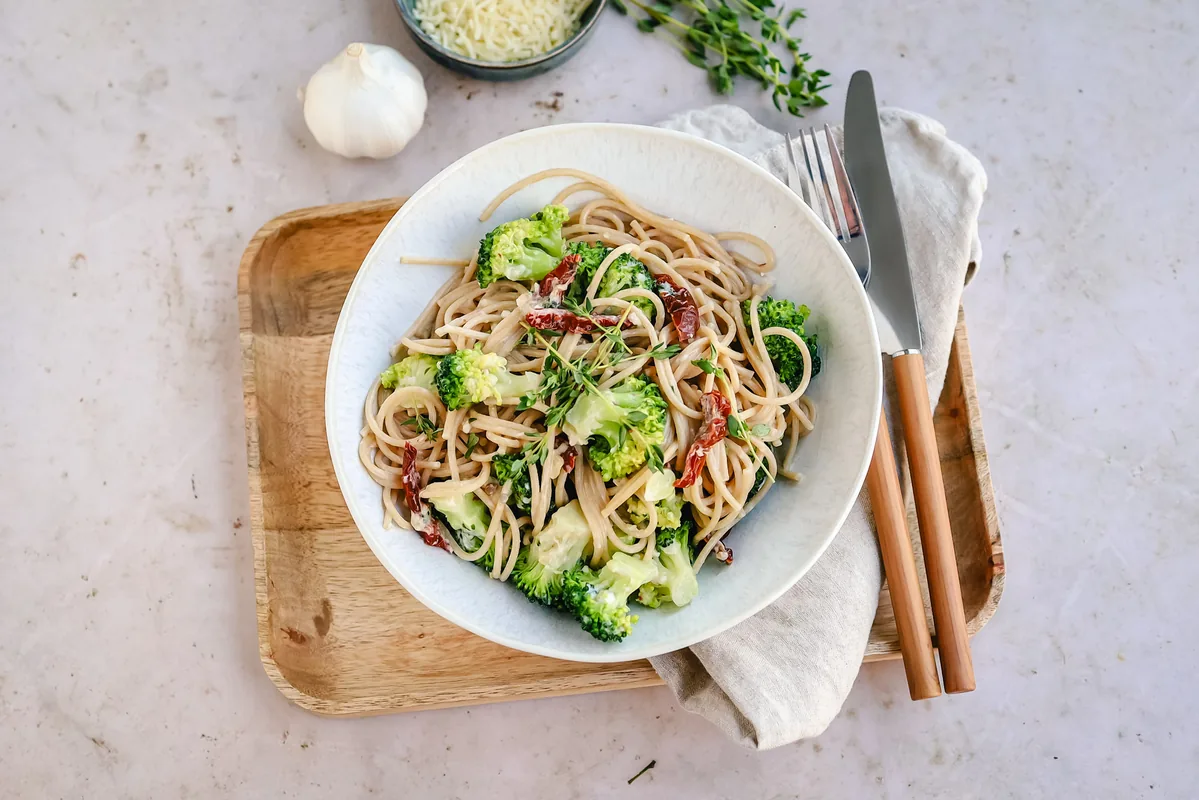

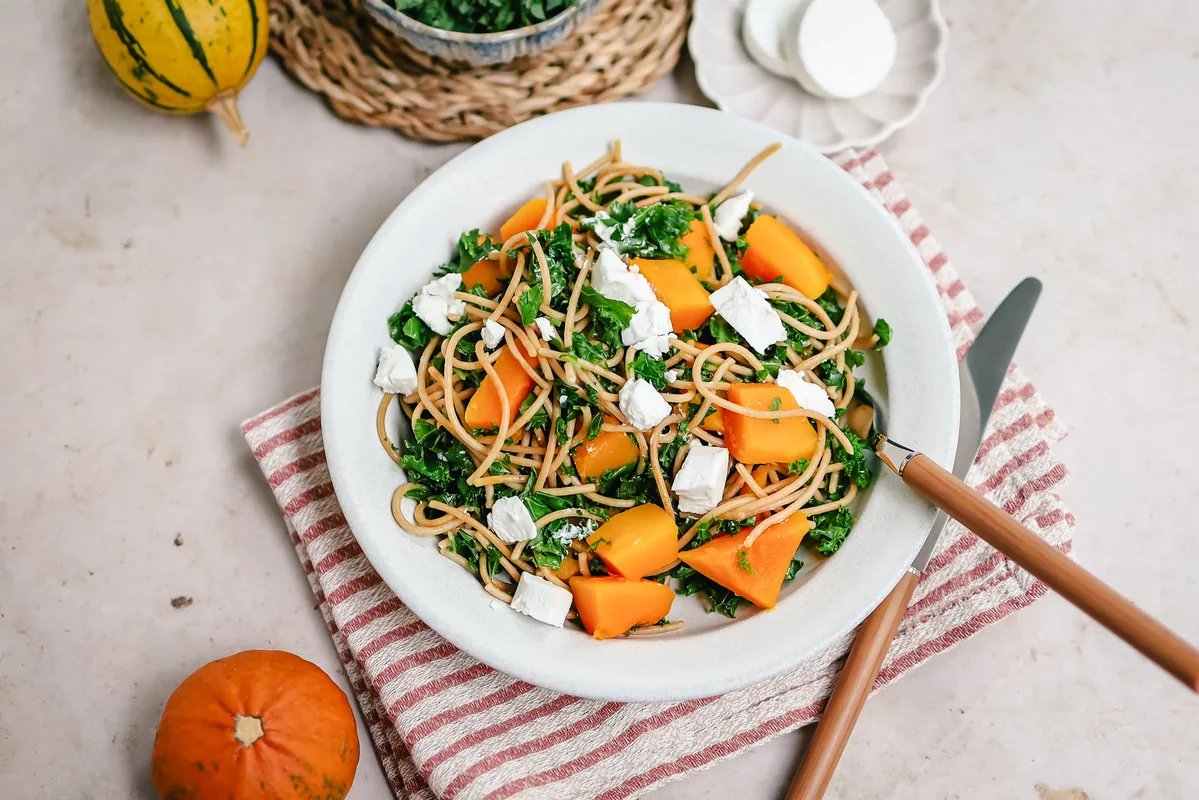
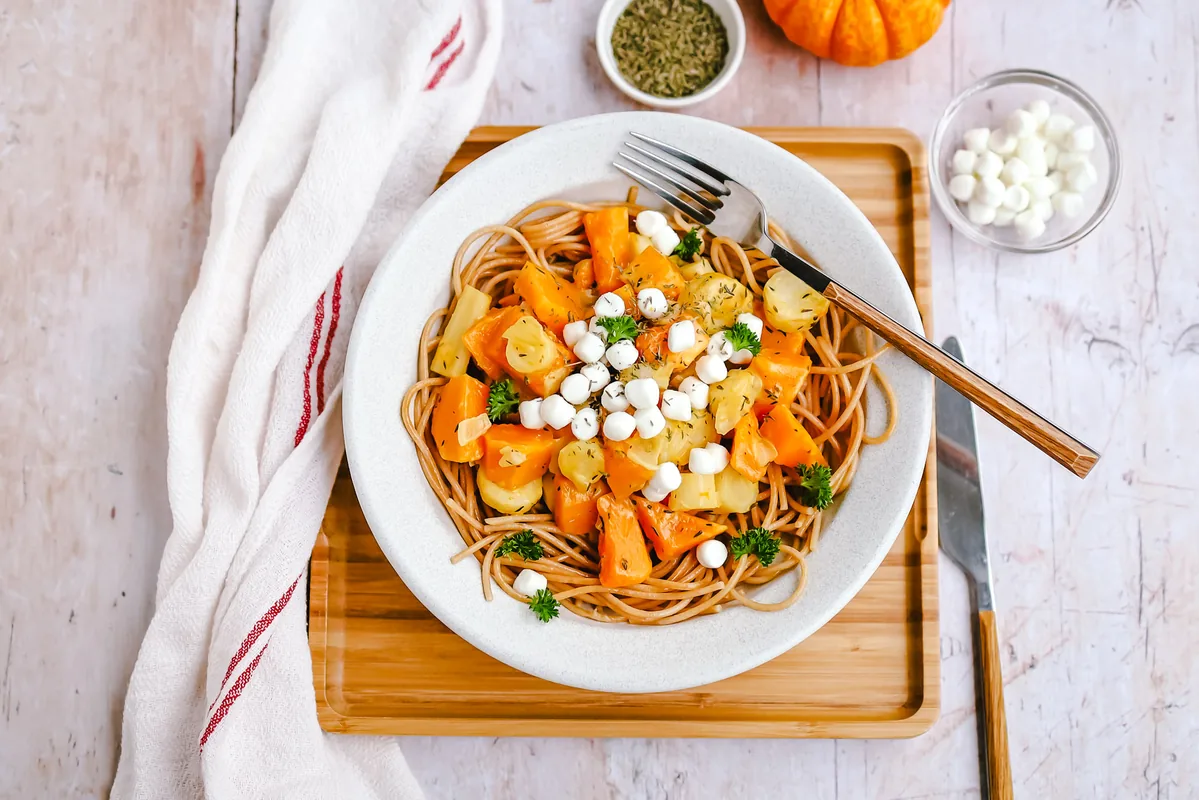
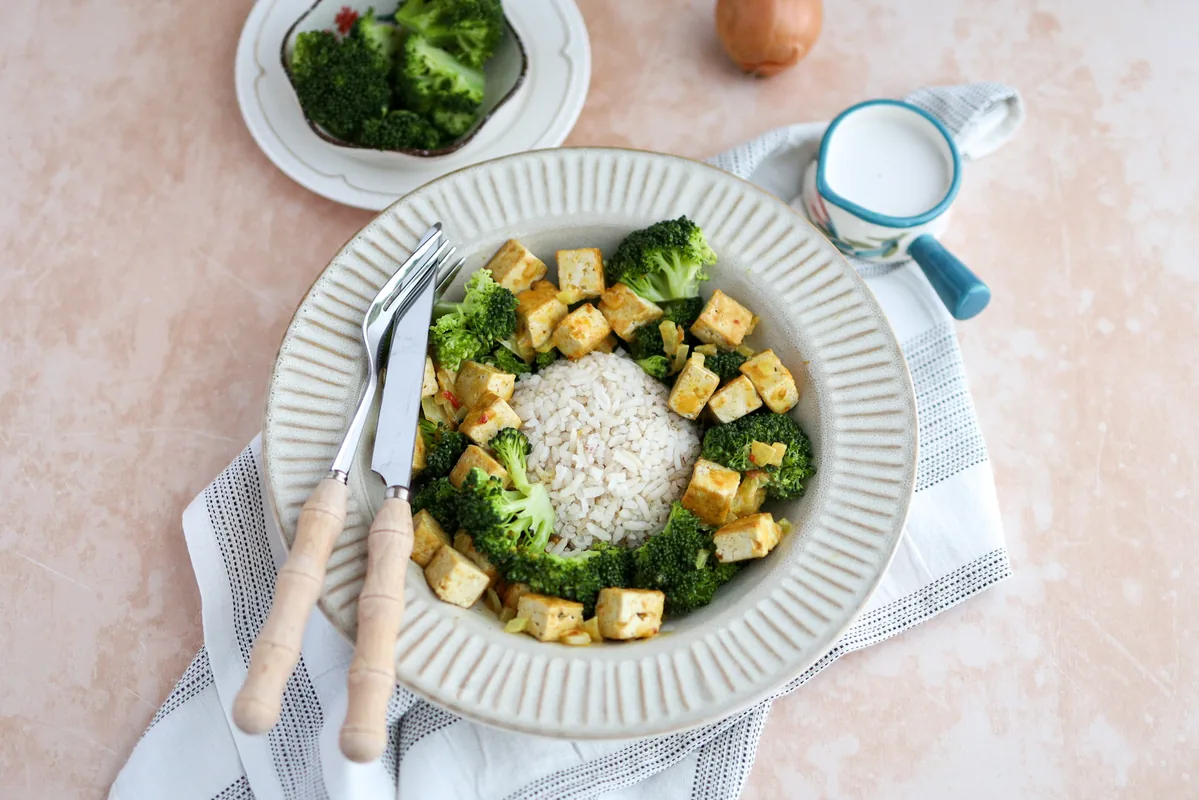


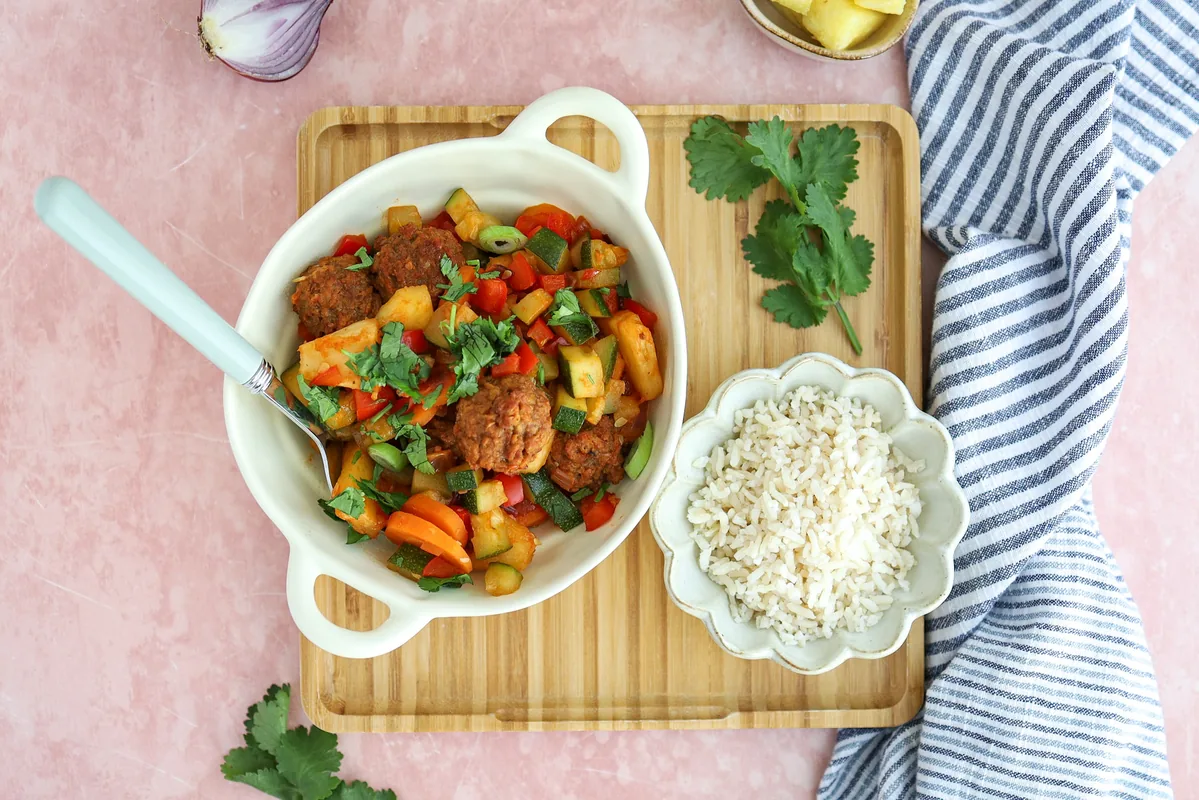
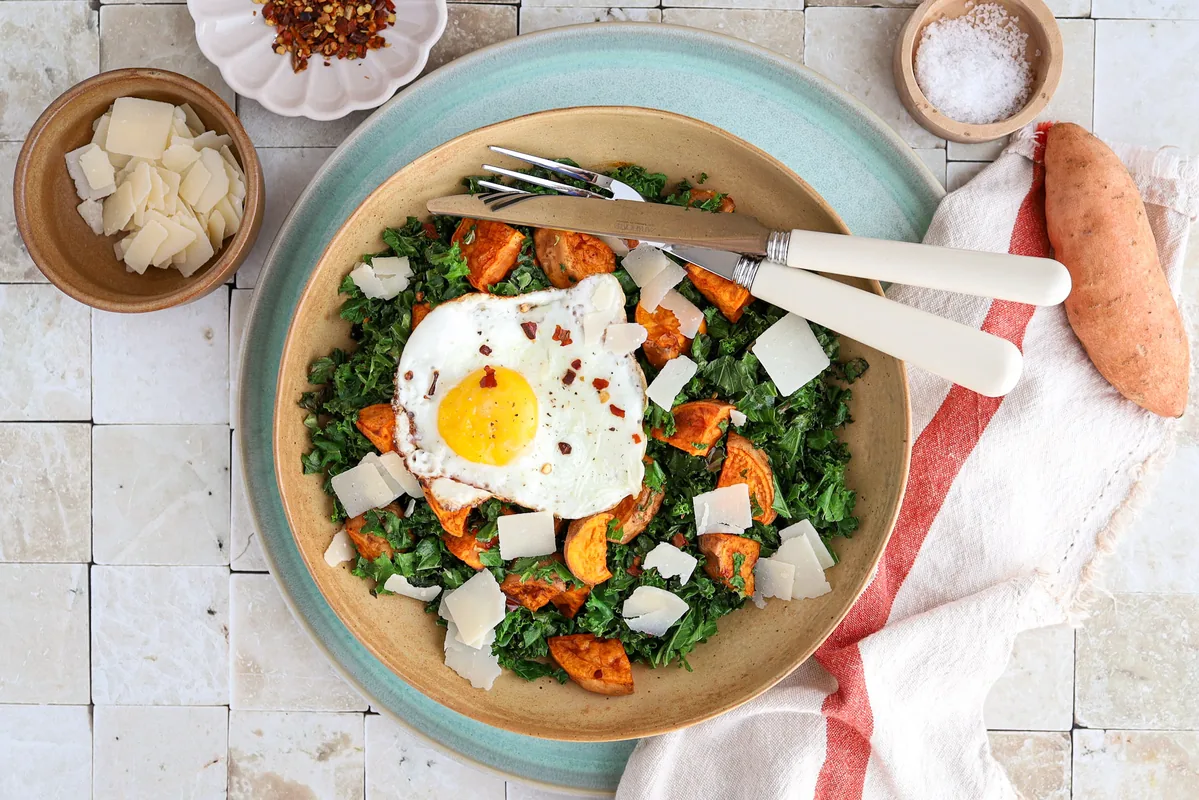
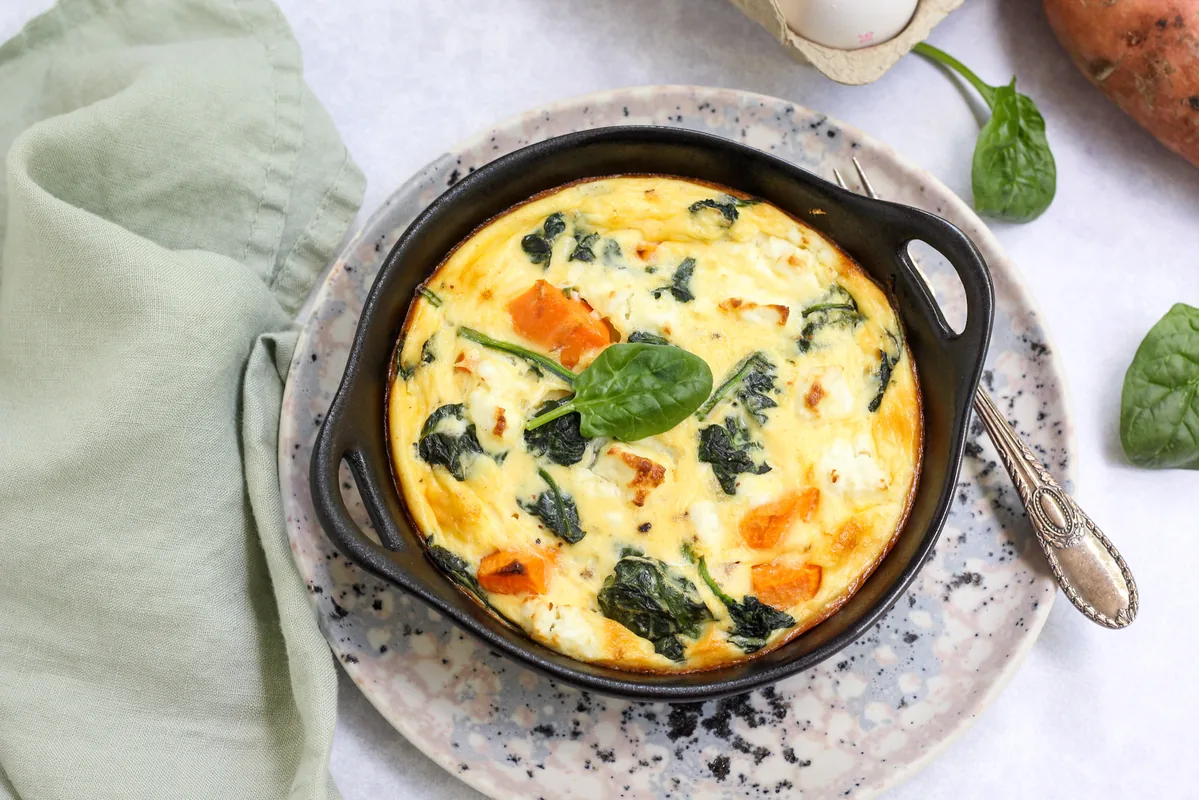
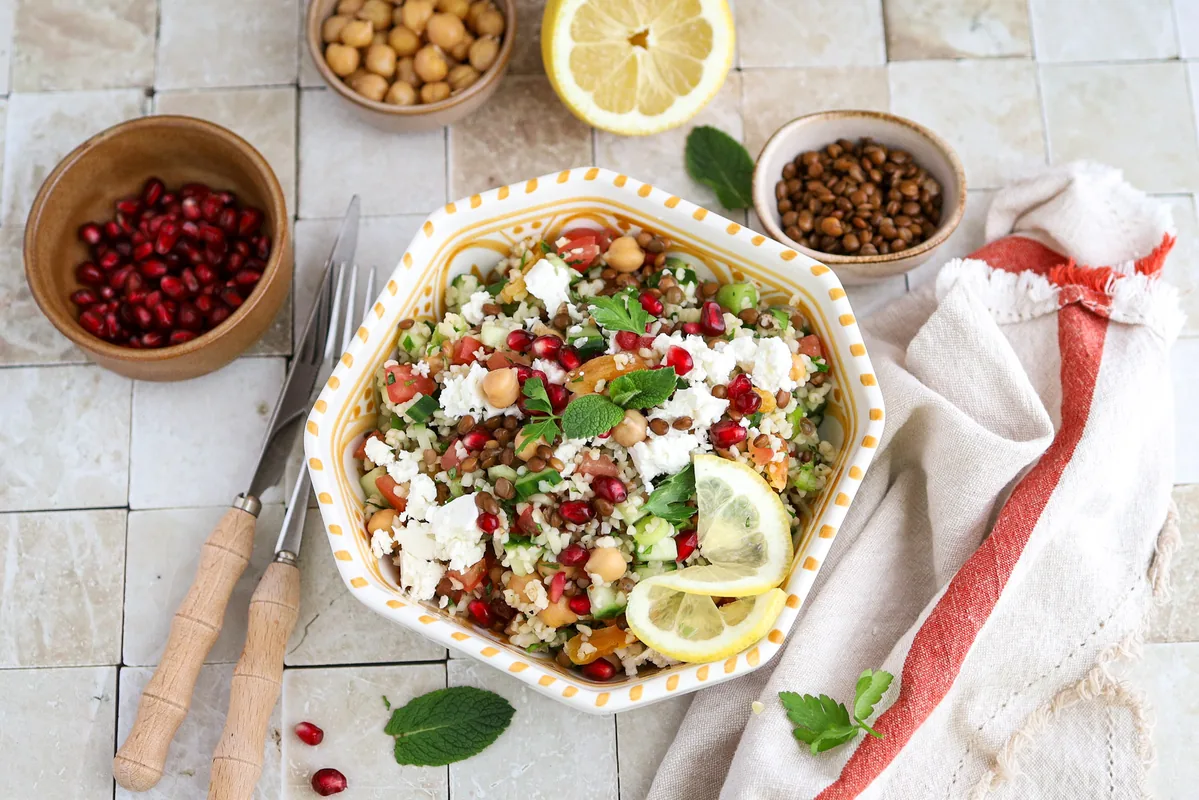
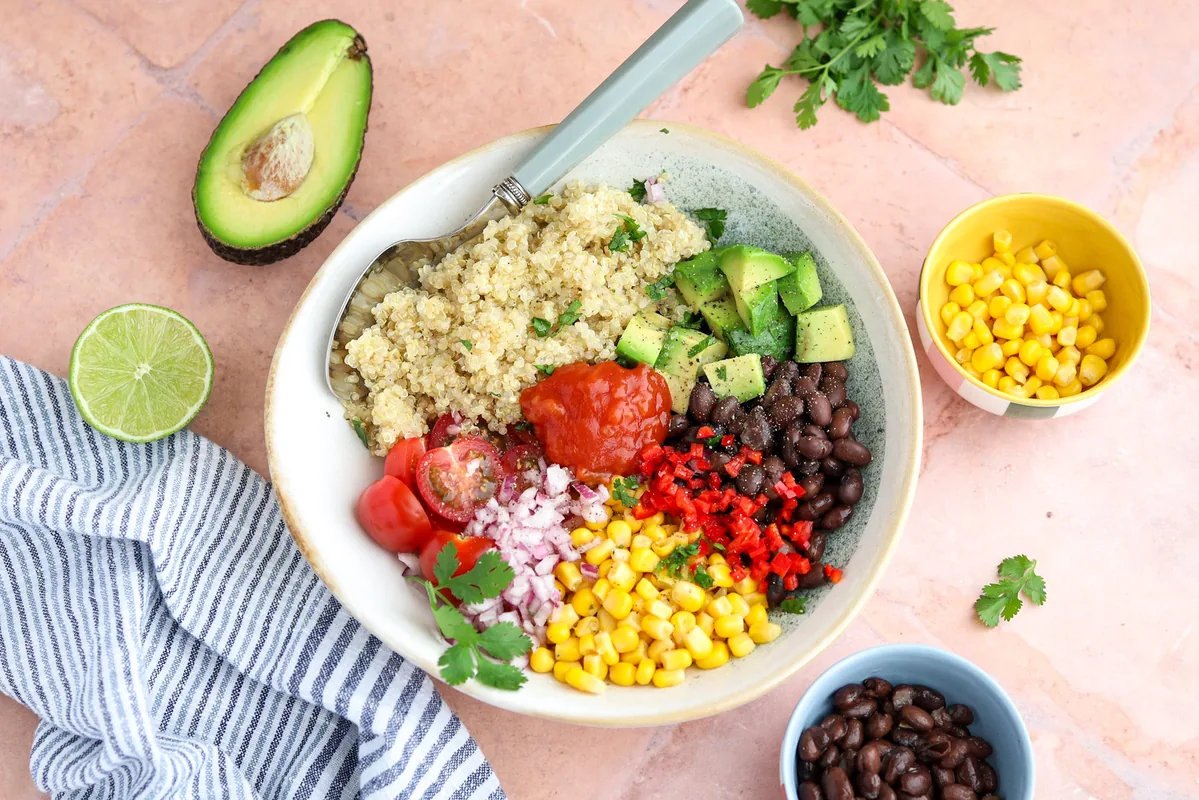
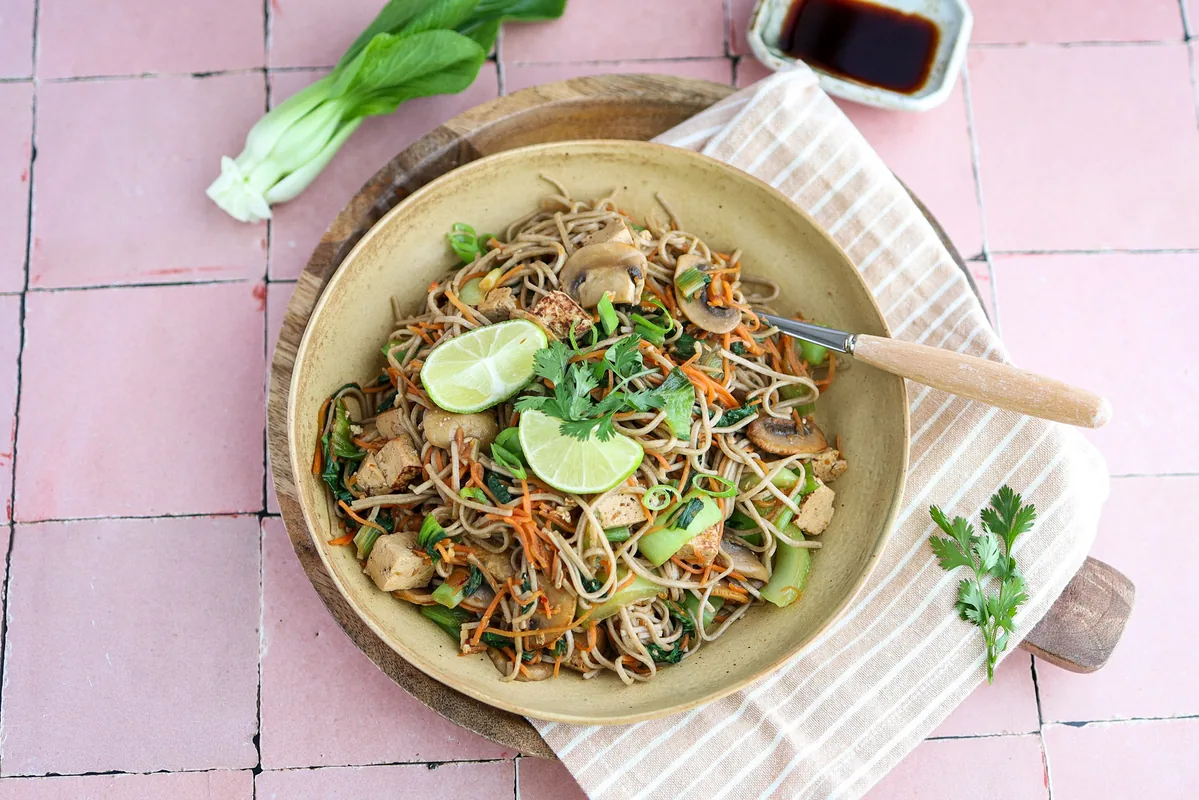
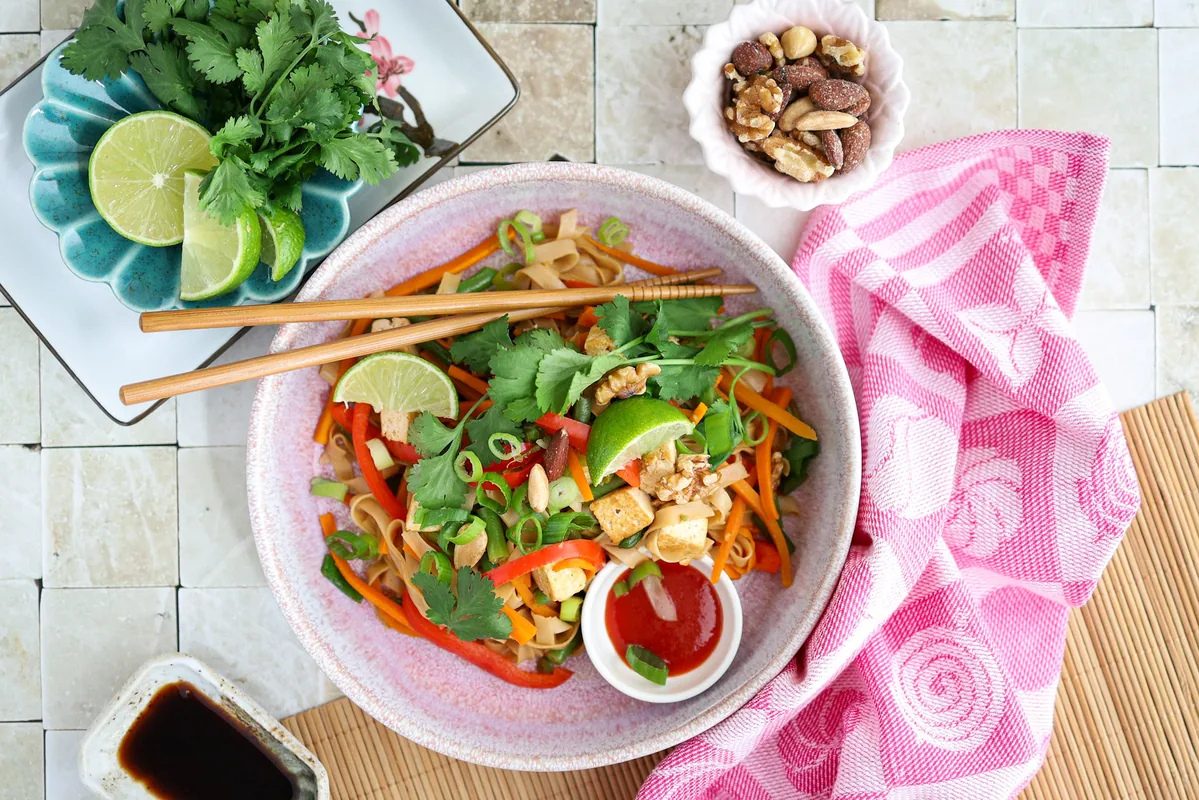
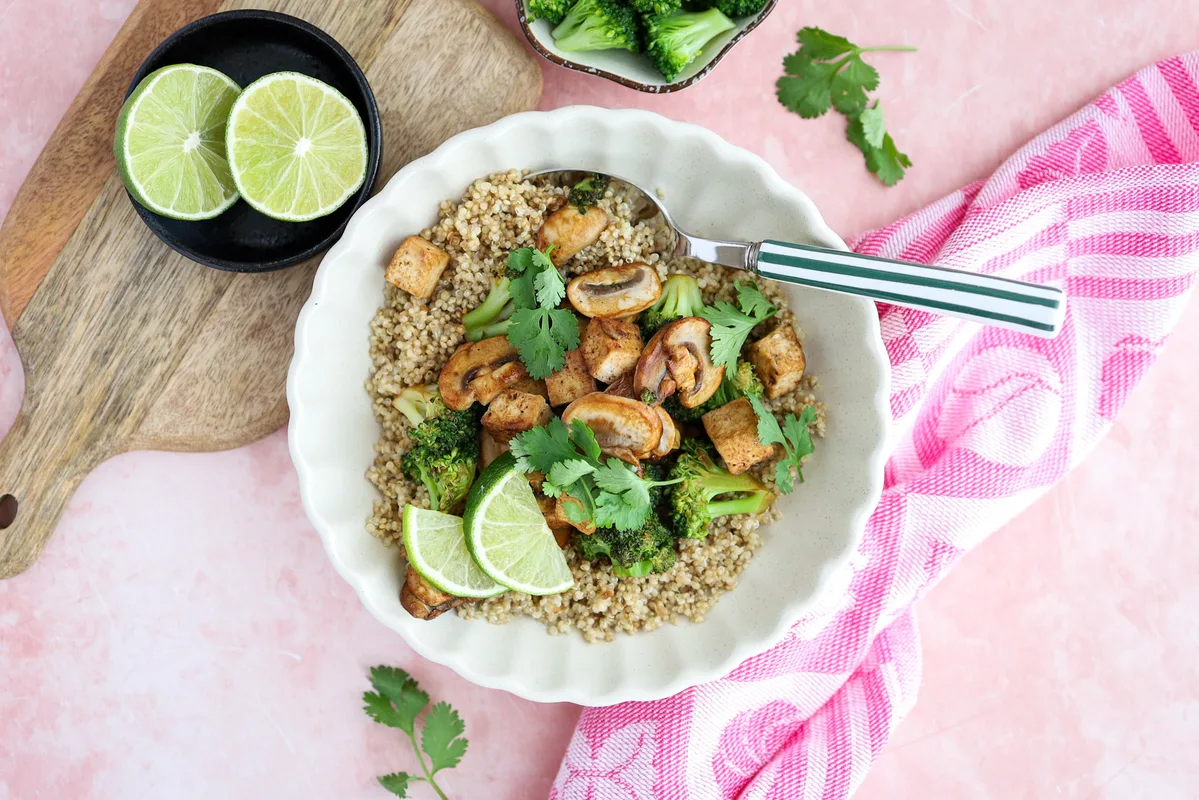
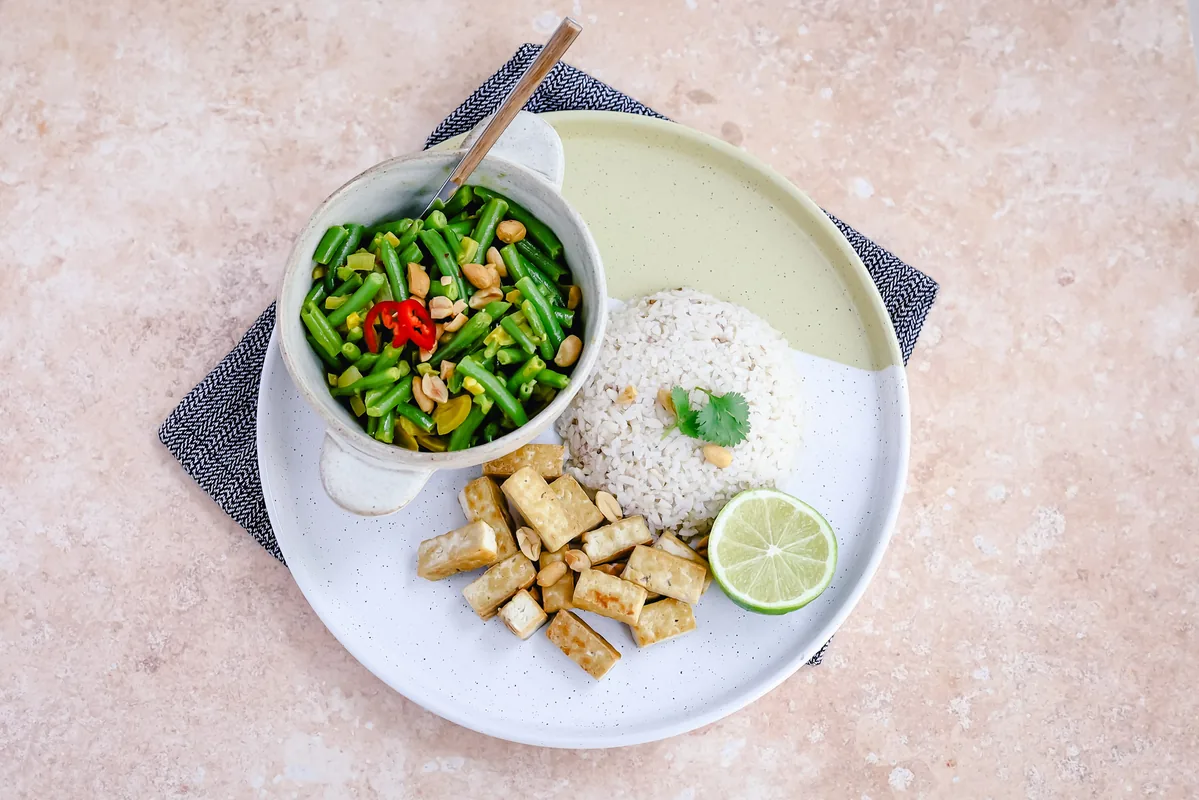
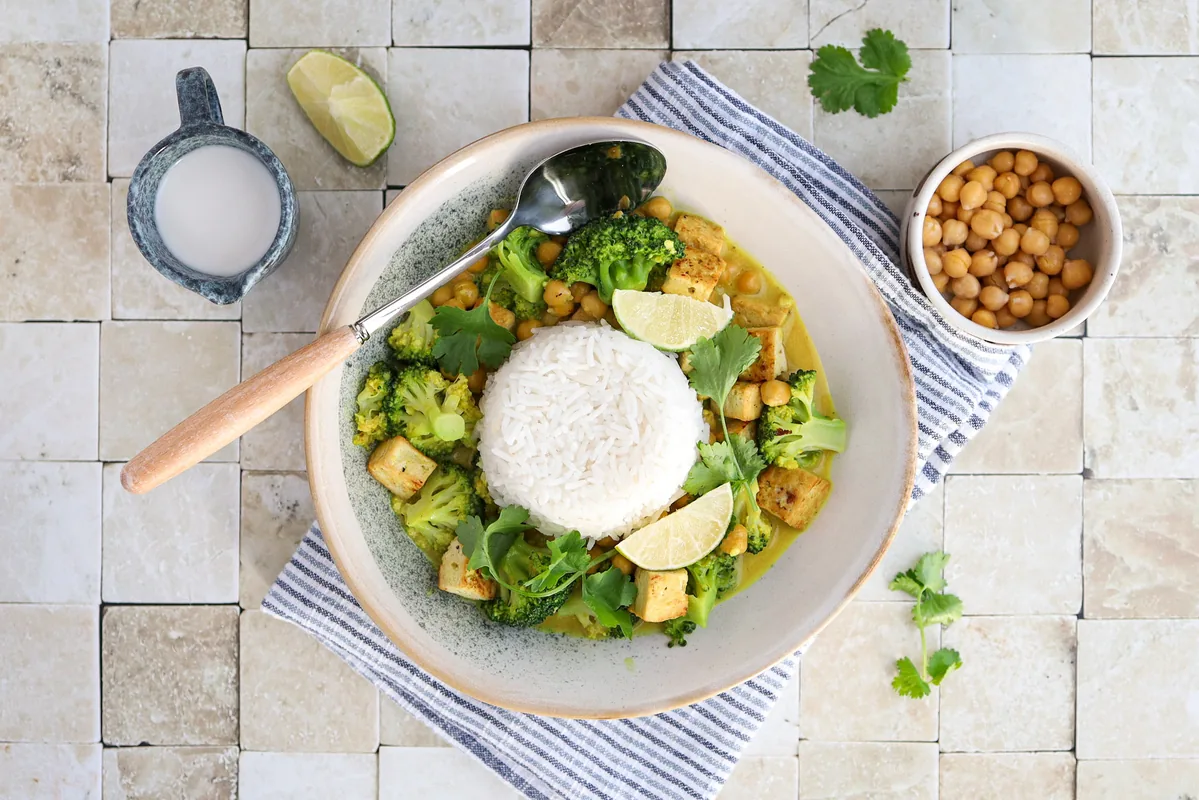

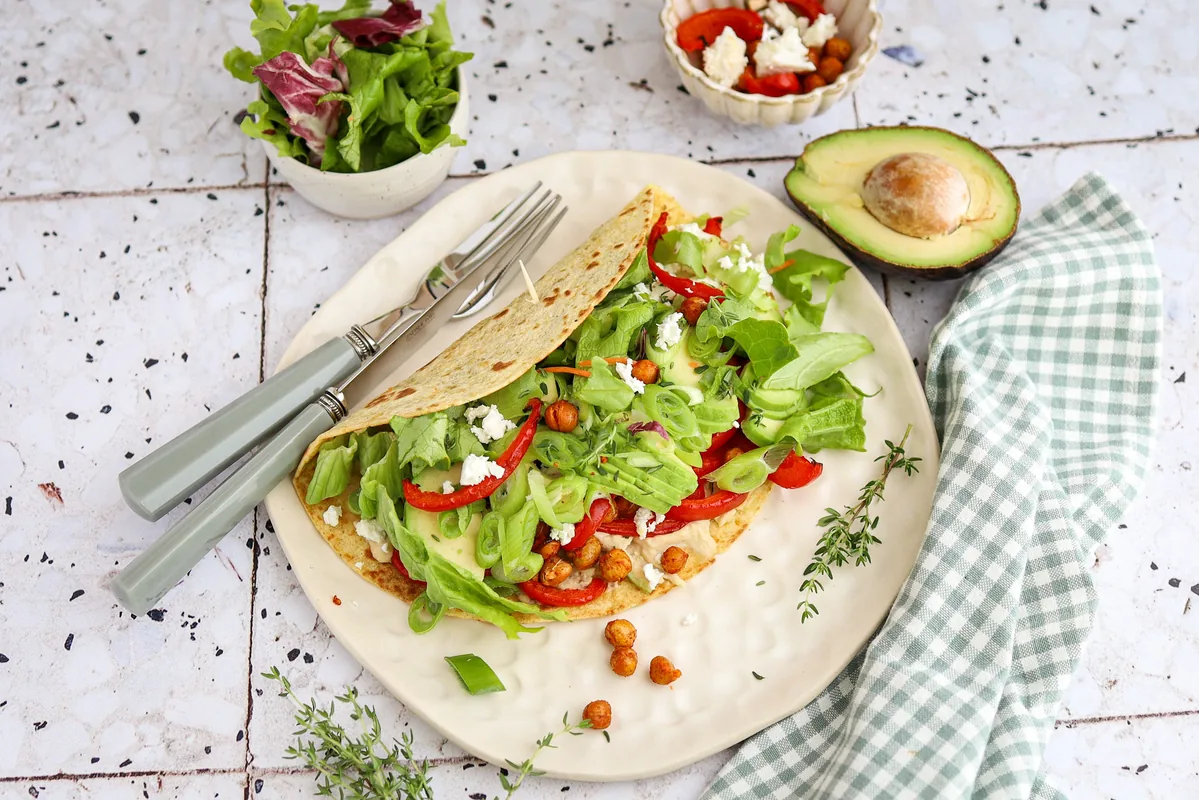
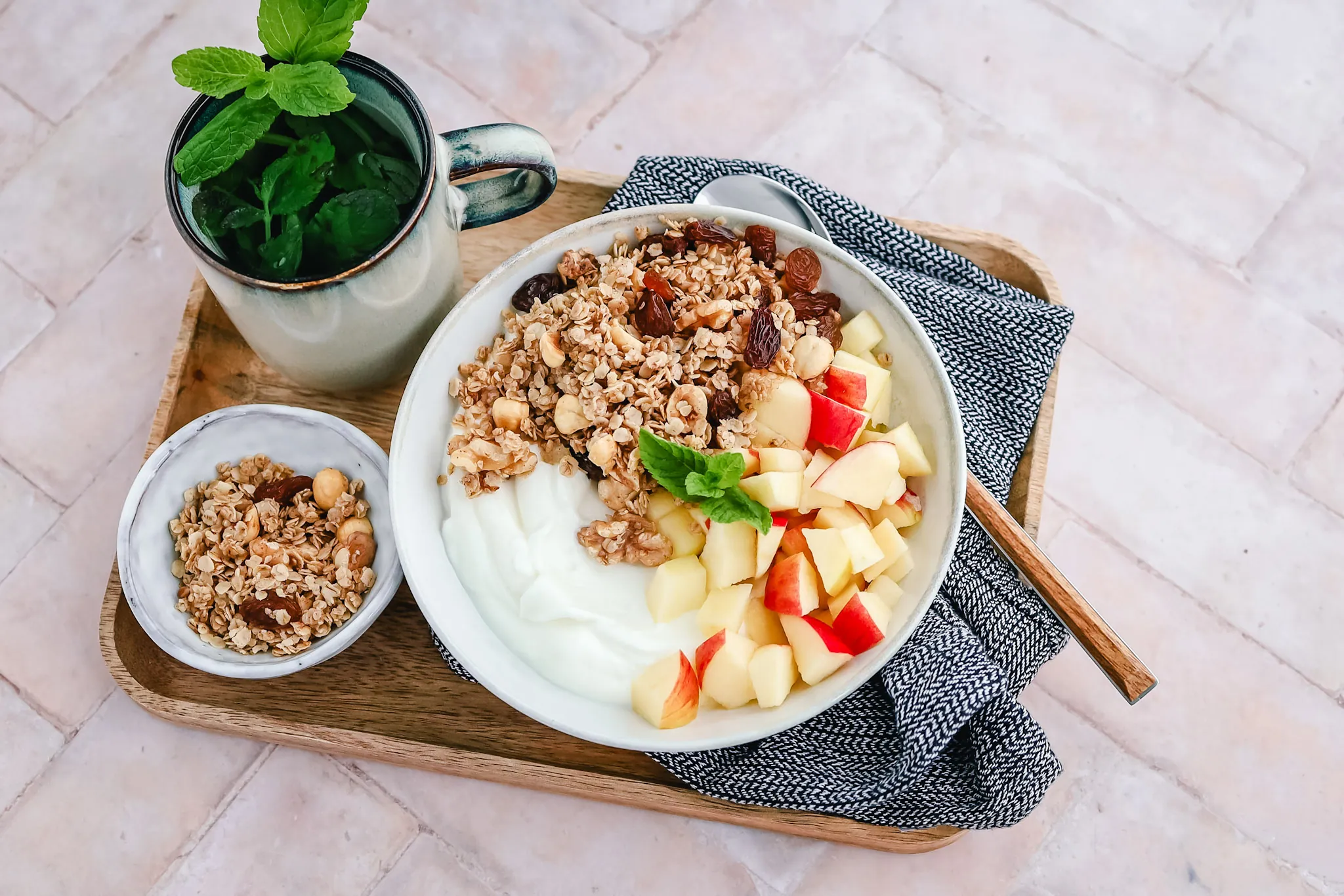



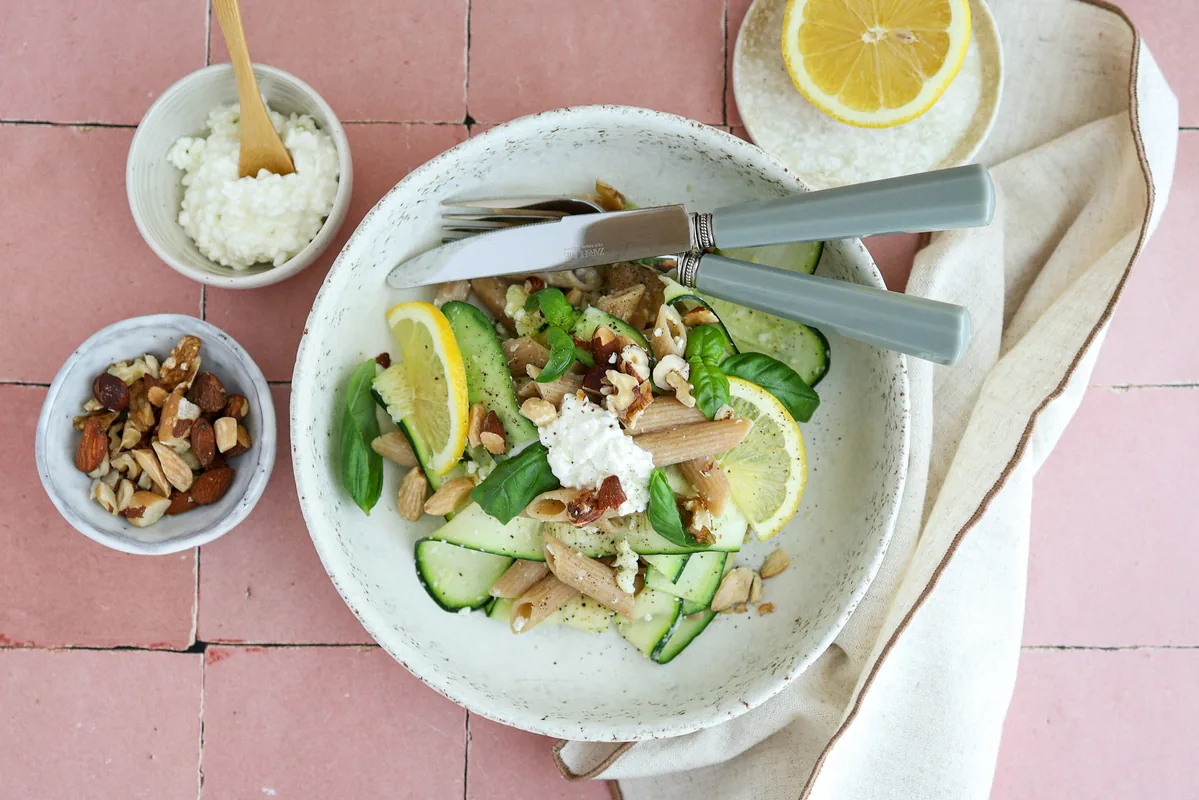

Take every recipe from the high-protein collection and remove the meat. The protein drops four grams per serving. The fiber climbs five. That’s the trade in one line: 29g median protein, 16g median fiber, 15 minutes from a collection of 149 vegetarian meals where 148 are rated easy.
Both sides of that trade sit above the evidence. A 2023 tracer study found a sustained muscle-building response to 100g of milk protein drunk right after a workout, and no per-meal ceiling up to that dose; the median 29g here sits between its 25g and 100g doses. The median fiber of 16g per serving means two meals deliver what 62 clinical trials (3,877 participants) linked to independent fat loss. The protein works. The fiber is a bonus the full collection doesn’t carry.
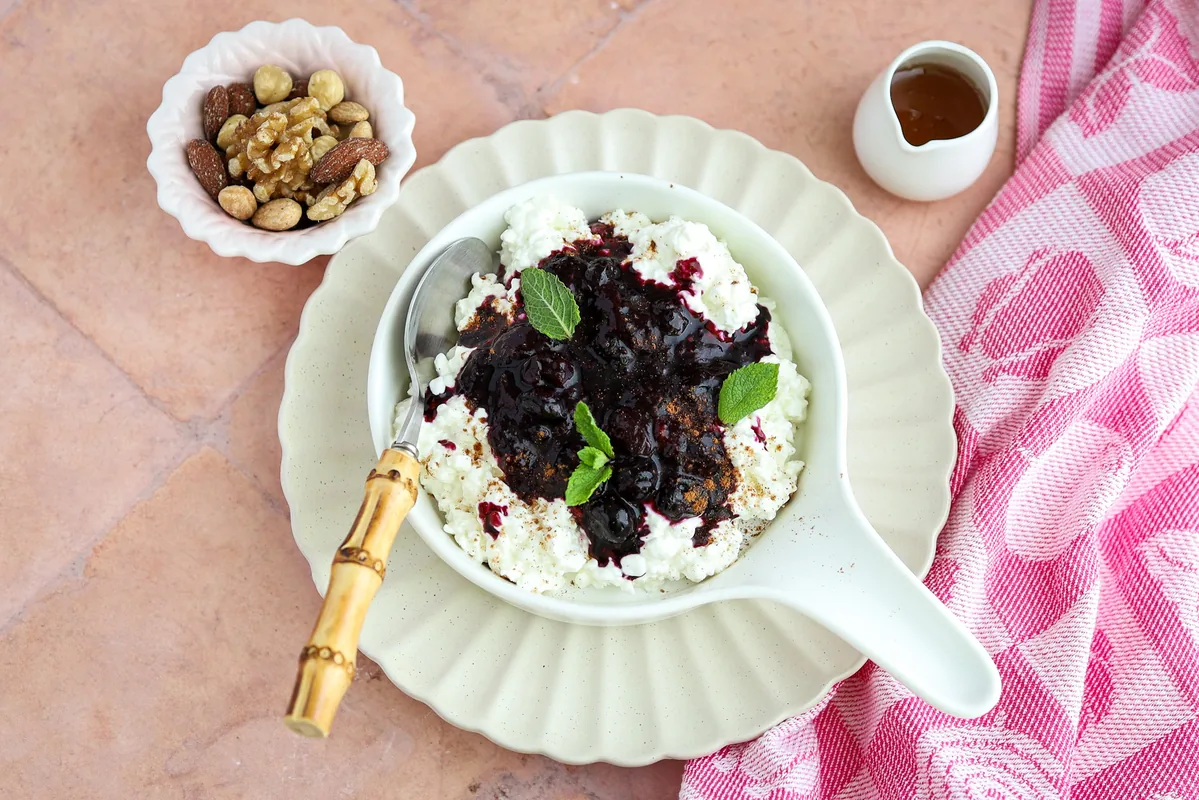
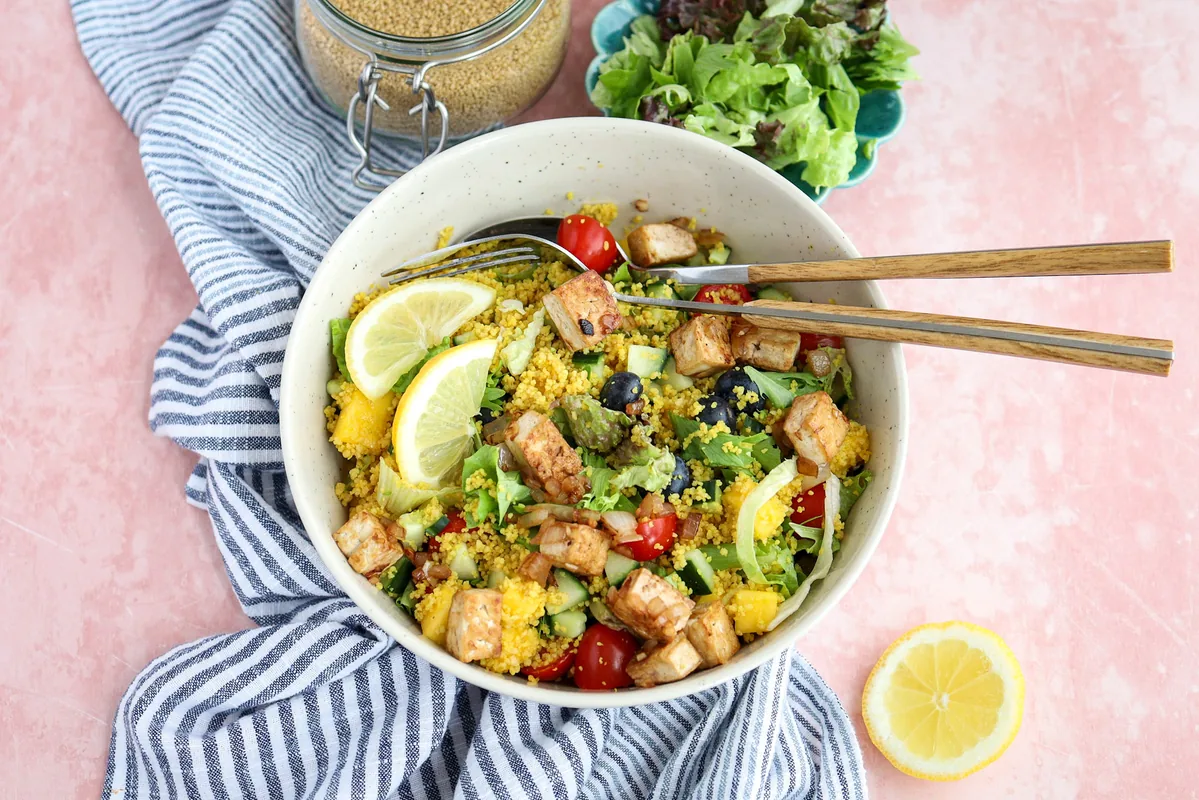
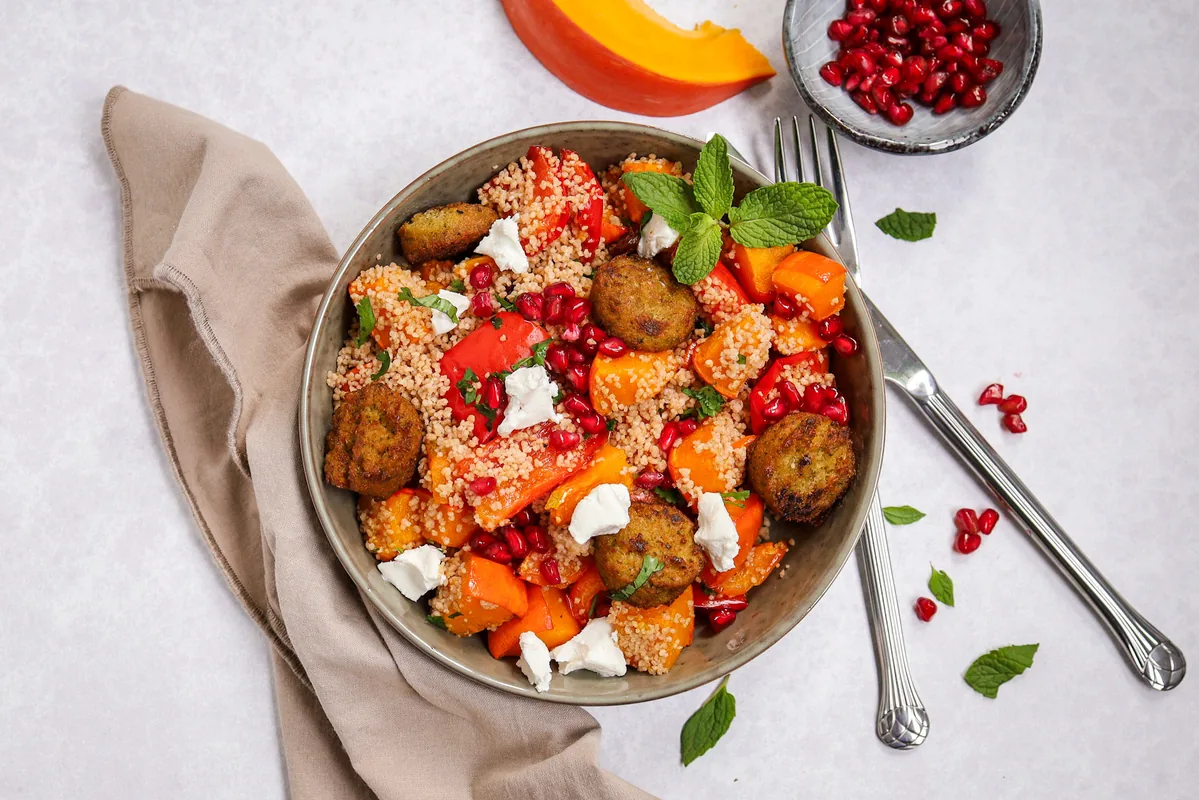
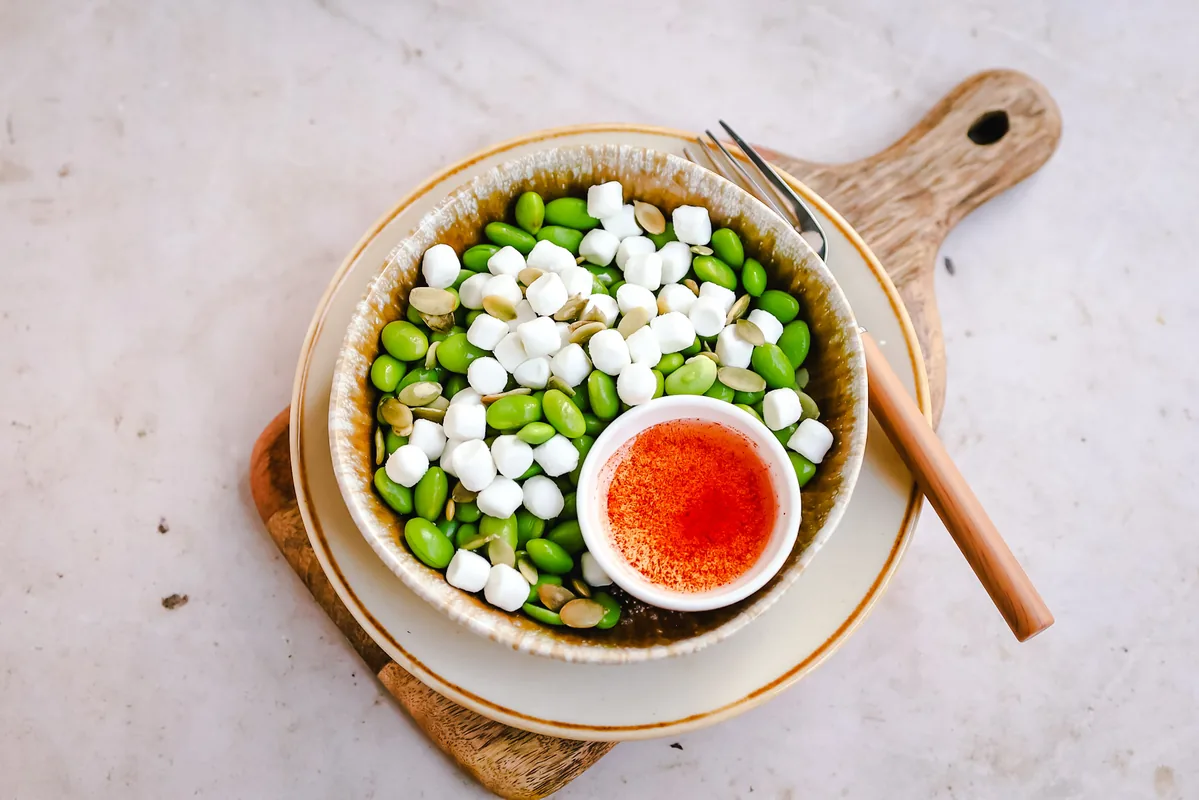
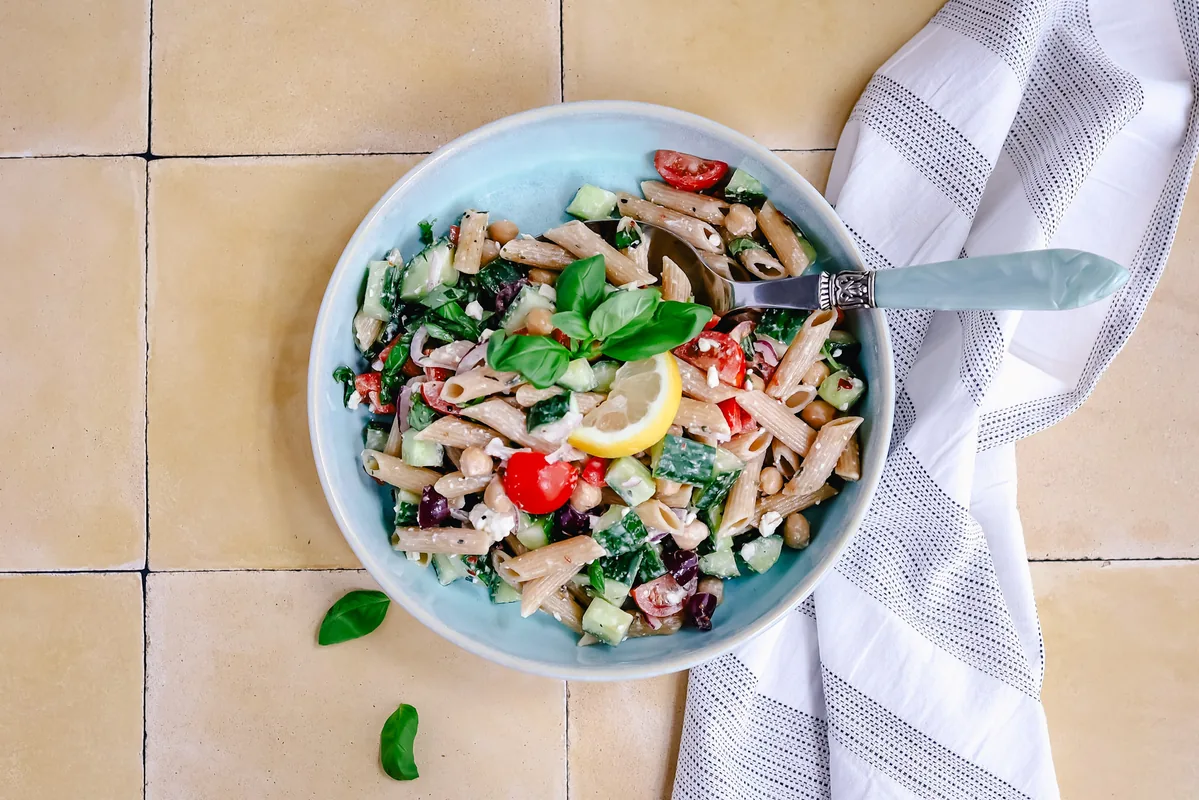
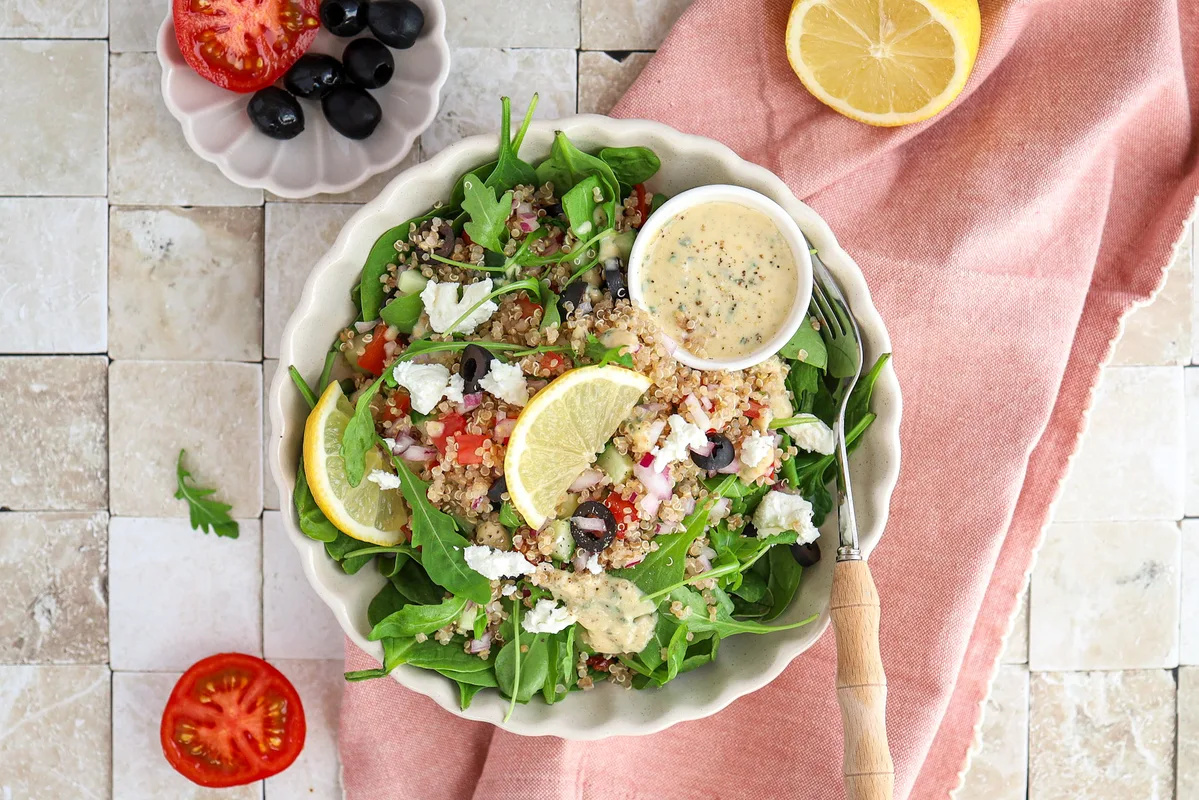
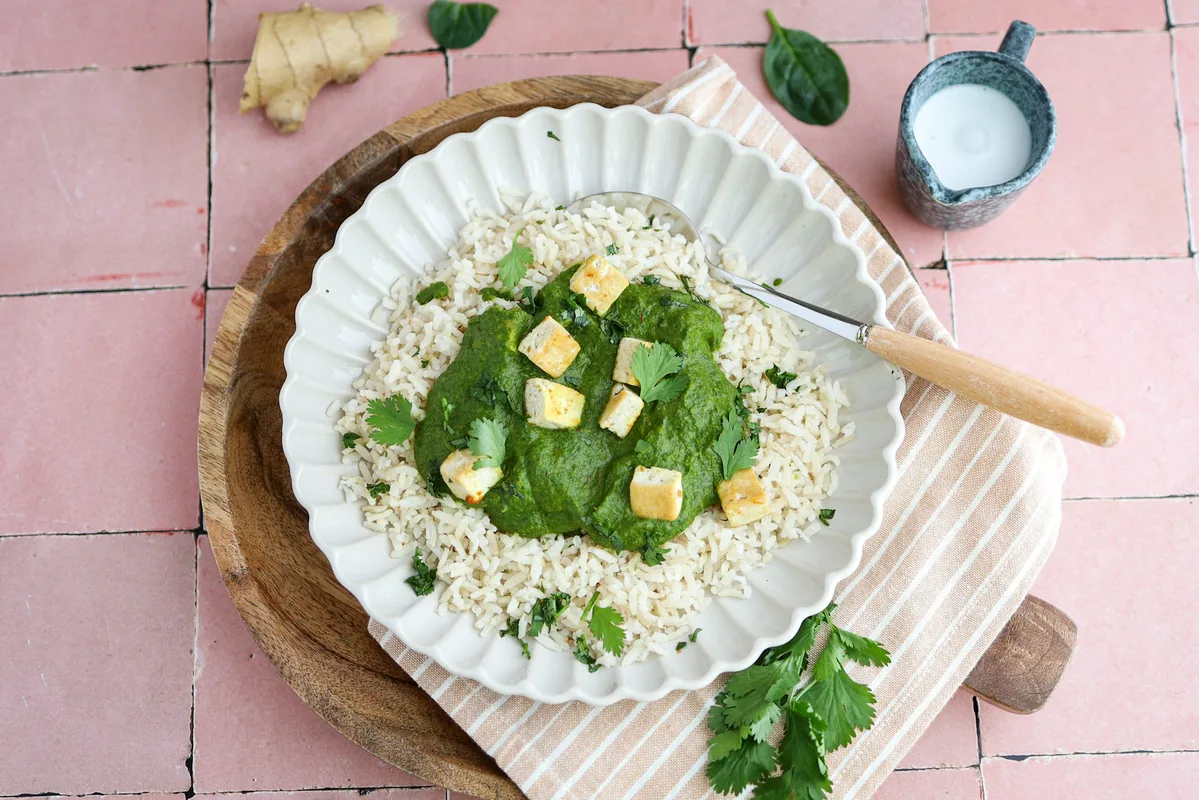
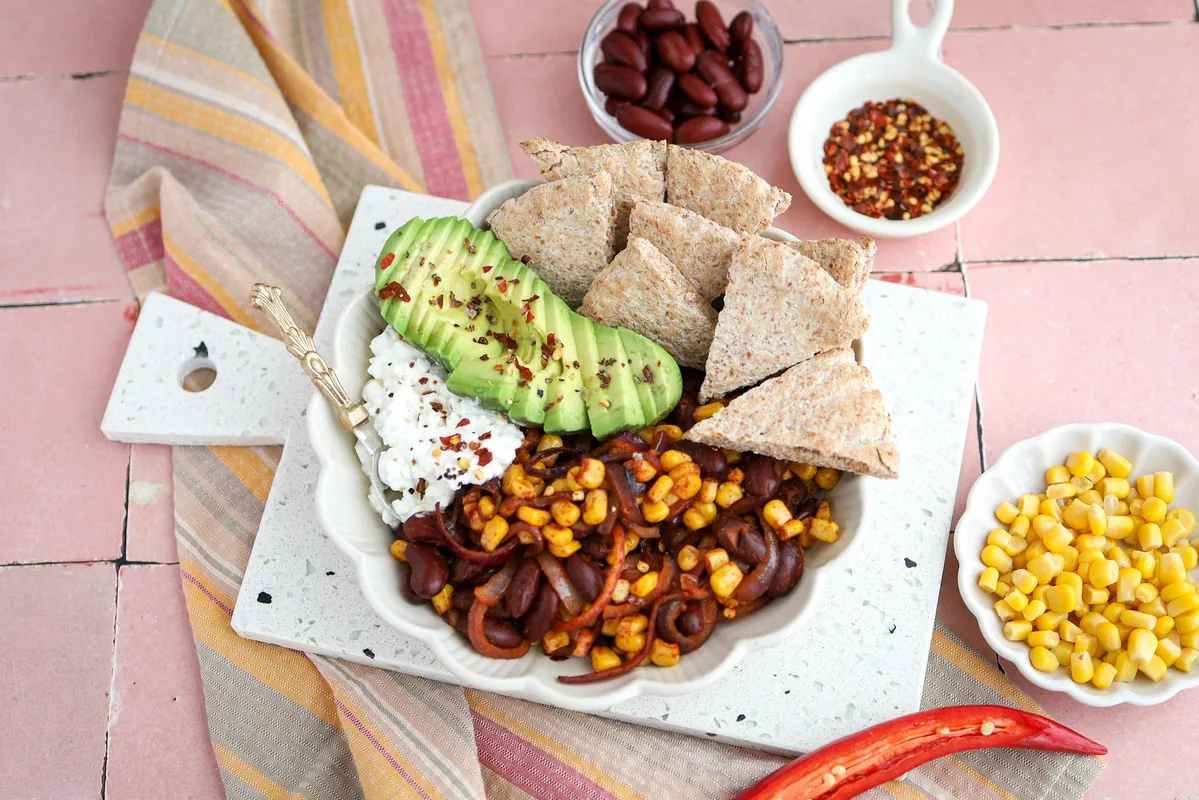
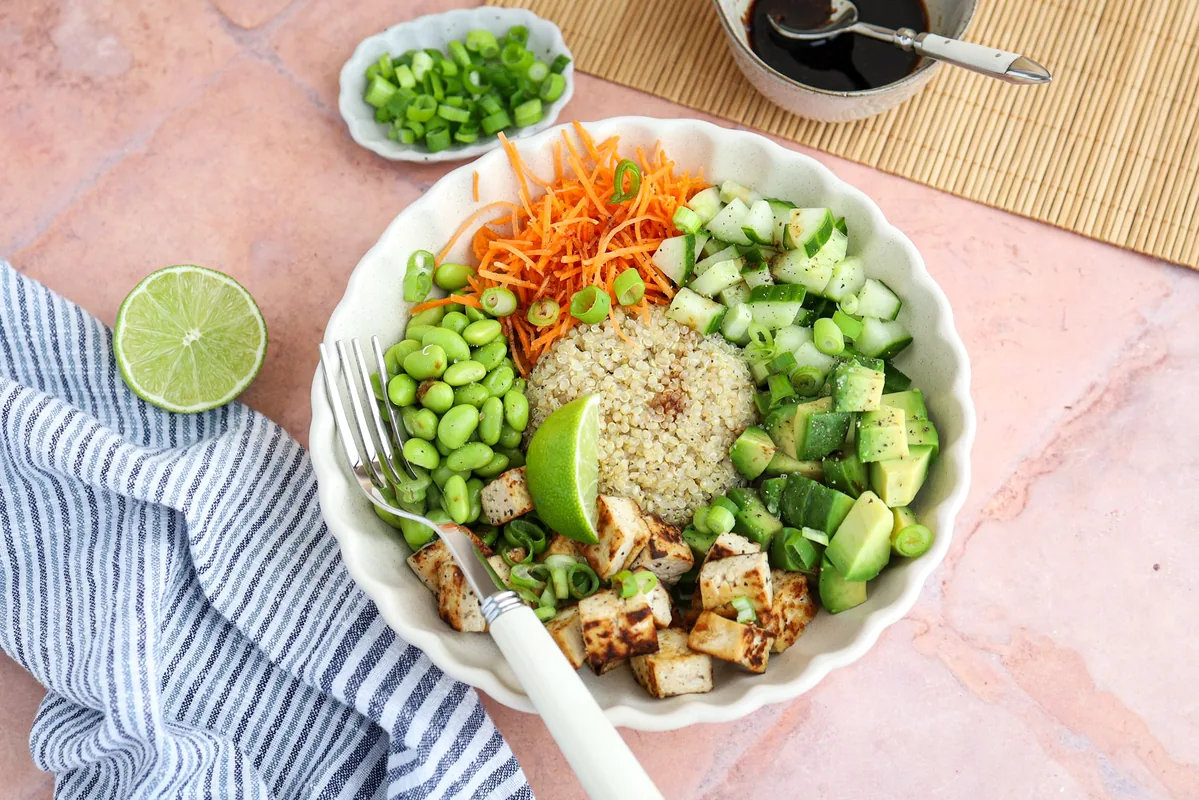
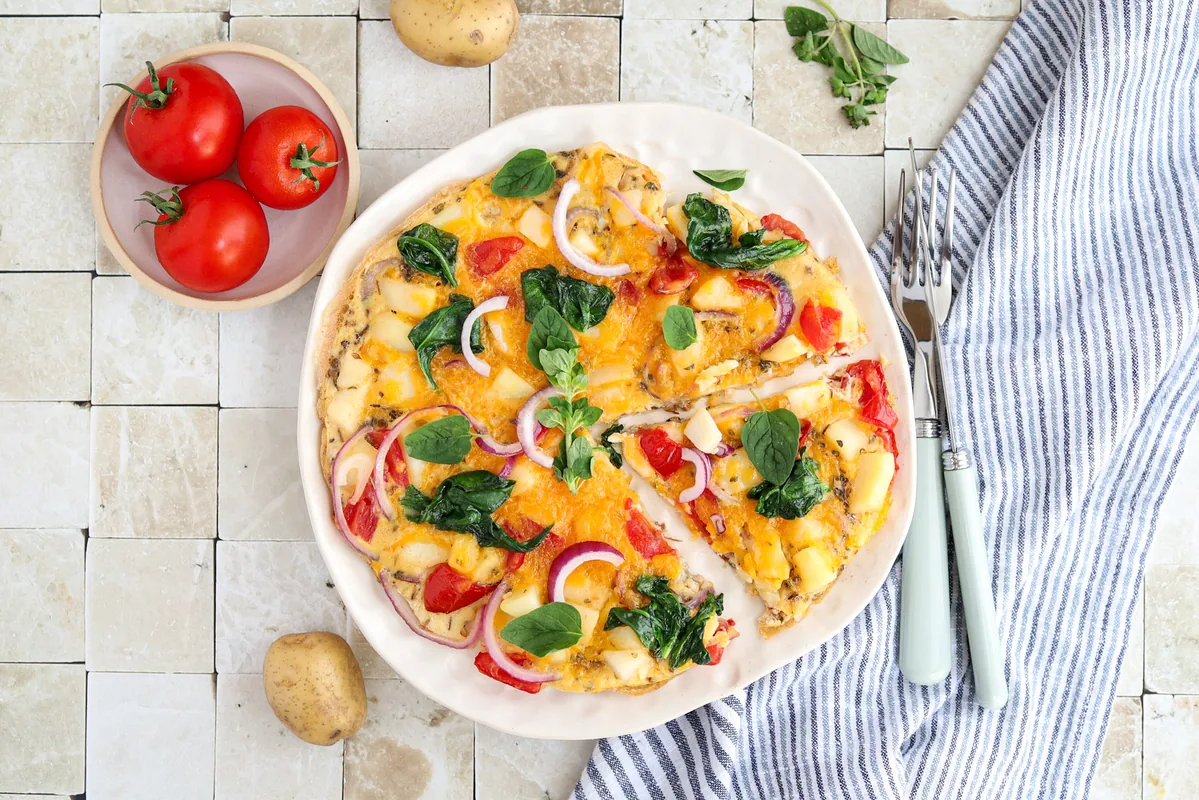
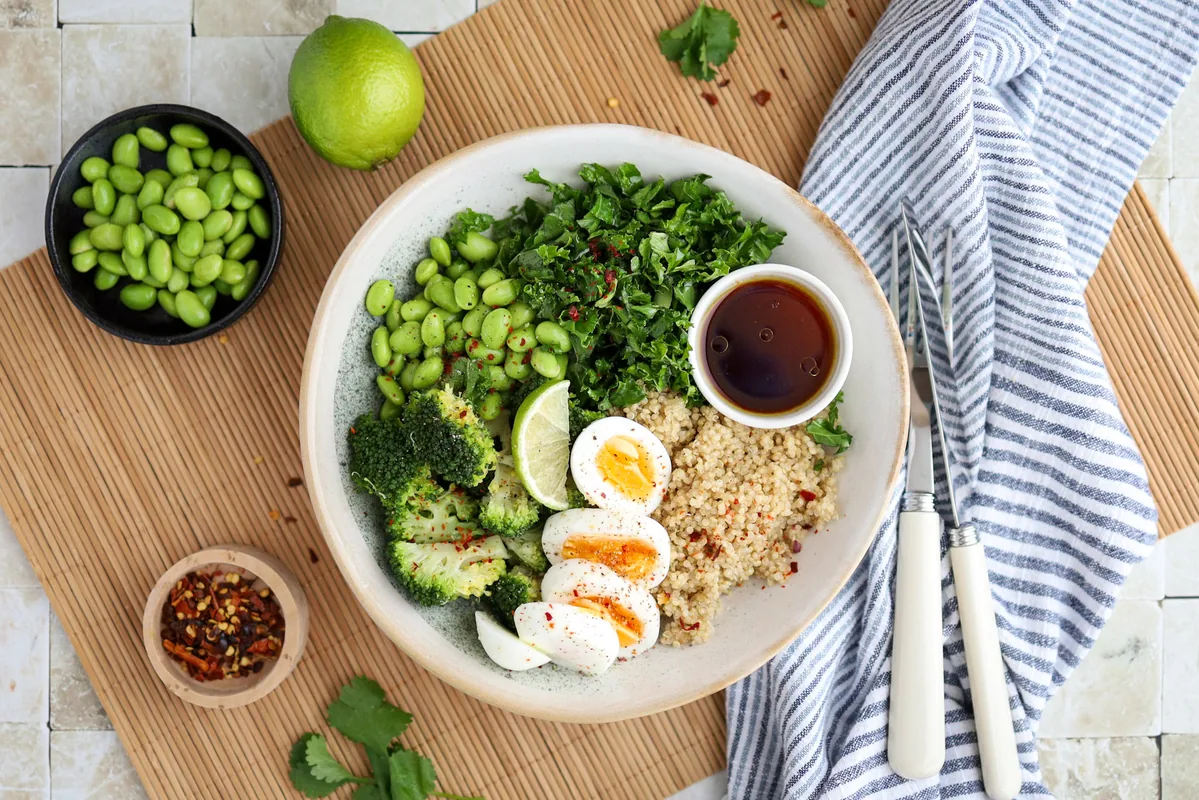
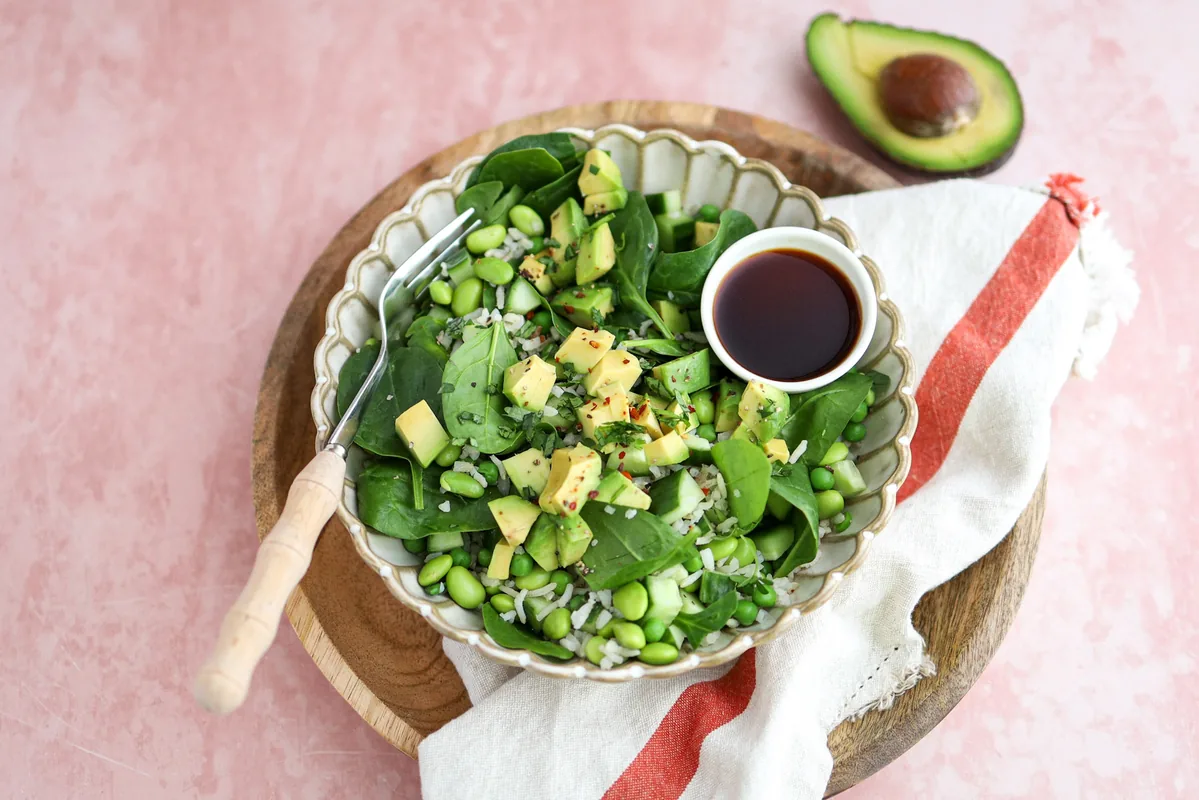
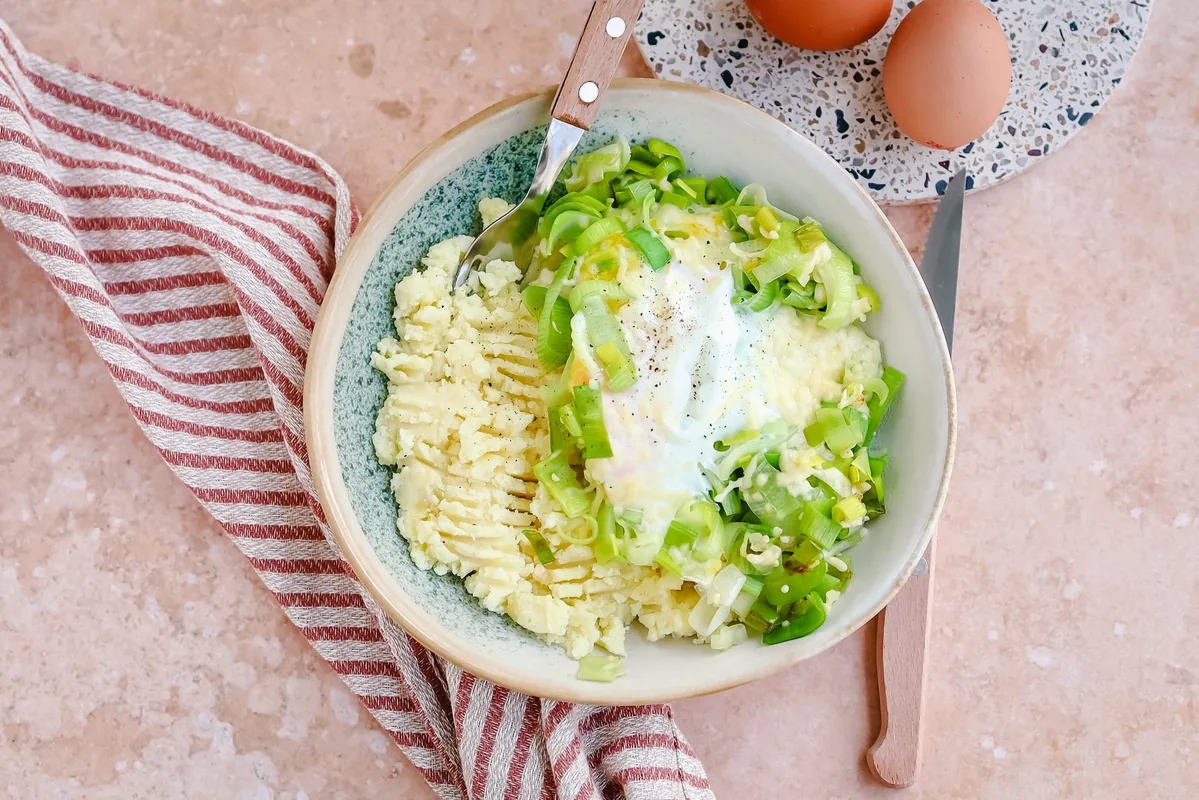
The protein itself stacks from six source architectures: dairy-assisted meals (yogurt, cottage cheese, 39% of the collection), legume-powered dishes (chickpeas, beans, lentils, 34%), soy-family recipes (tofu, tempeh, edamame, 23%), egg-based meals (14%), grains (quinoa, pasta), and plant-meat substitutes. That breadth matters because a 43-RCT meta-analysis found plant protein matched animal protein for muscle growth when daily intake hit ~1.6 g/kg, with soy matching whey across 17 head-to-head trials.
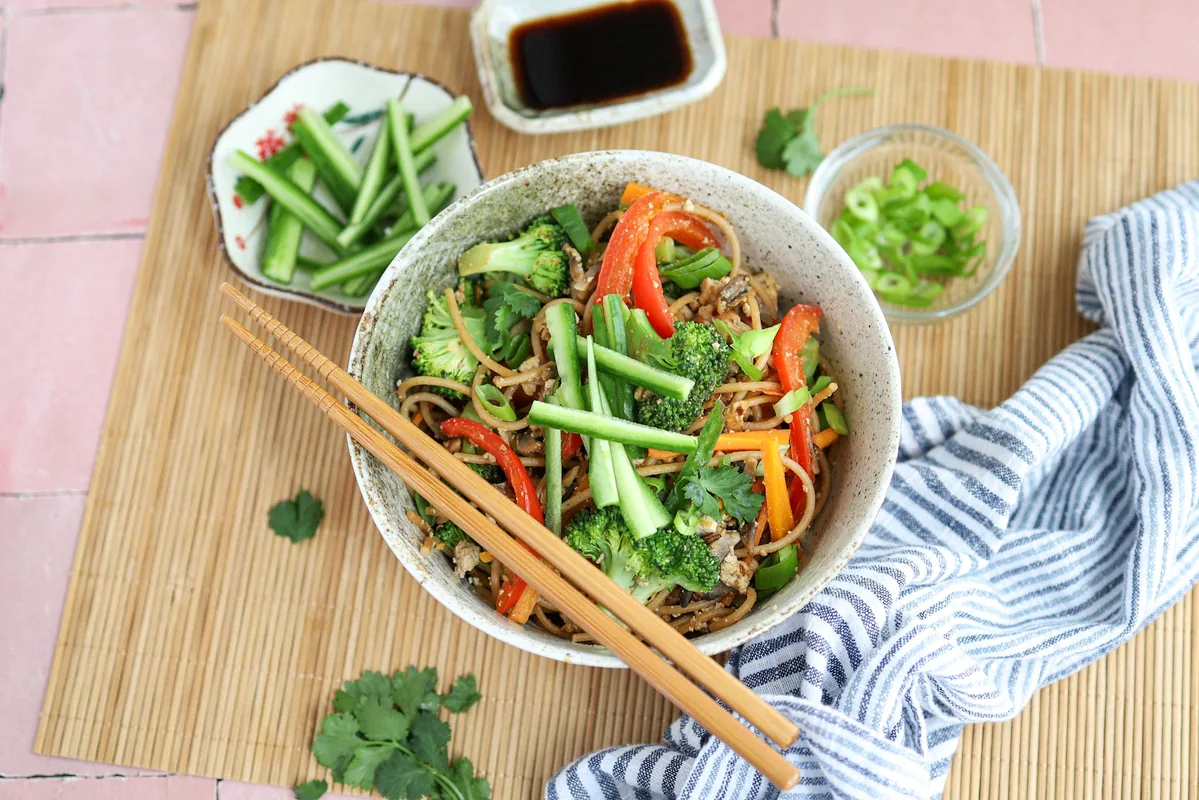
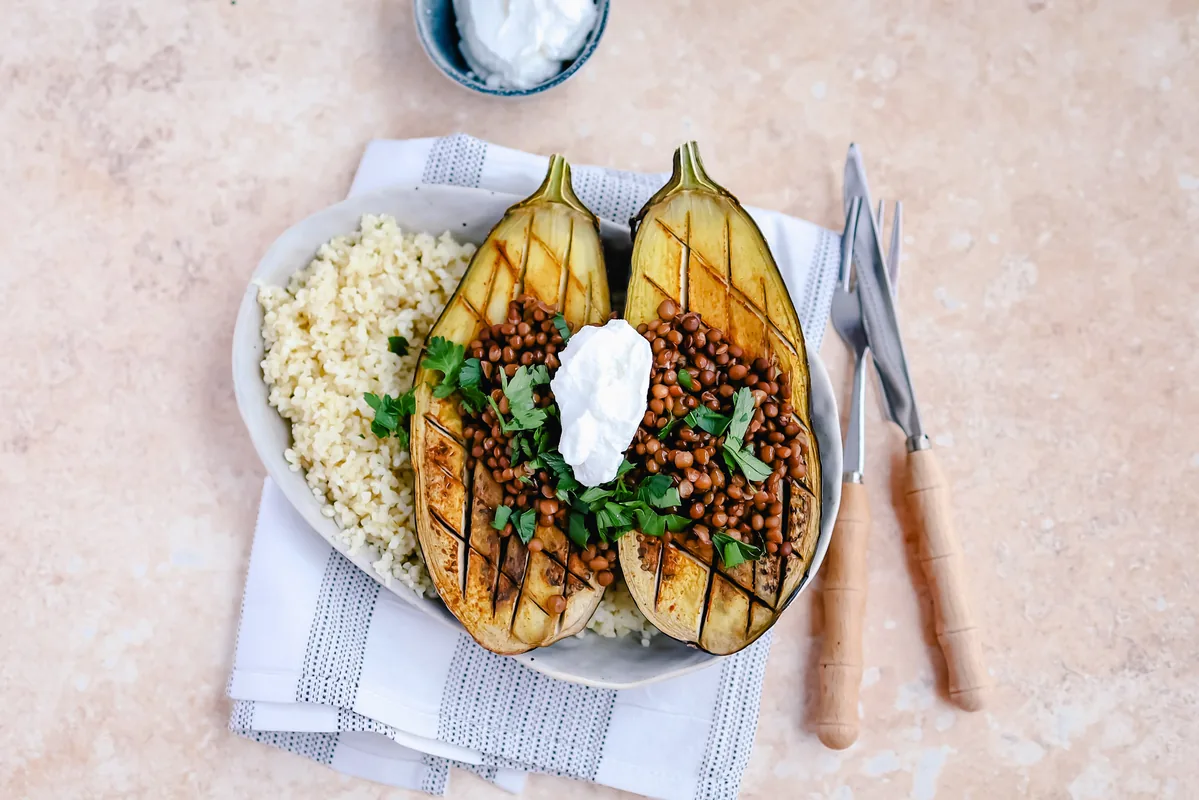
One evidence thread belongs exclusively to plant-protein cooking: non-heme iron absorption. Plant iron absorbs at 2–5% alone but jumps to 11.4% with fermented soy sauce (P=0.0002). Vitamin C adds 5.87 percentage points per meal. The chickpea, tofu, and lentil recipes here already contain the meal partners the iron research identified, the pairing happened in the kitchen before the science confirmed it.