Stuffed Bell Pepper with Italian Orzo Bake
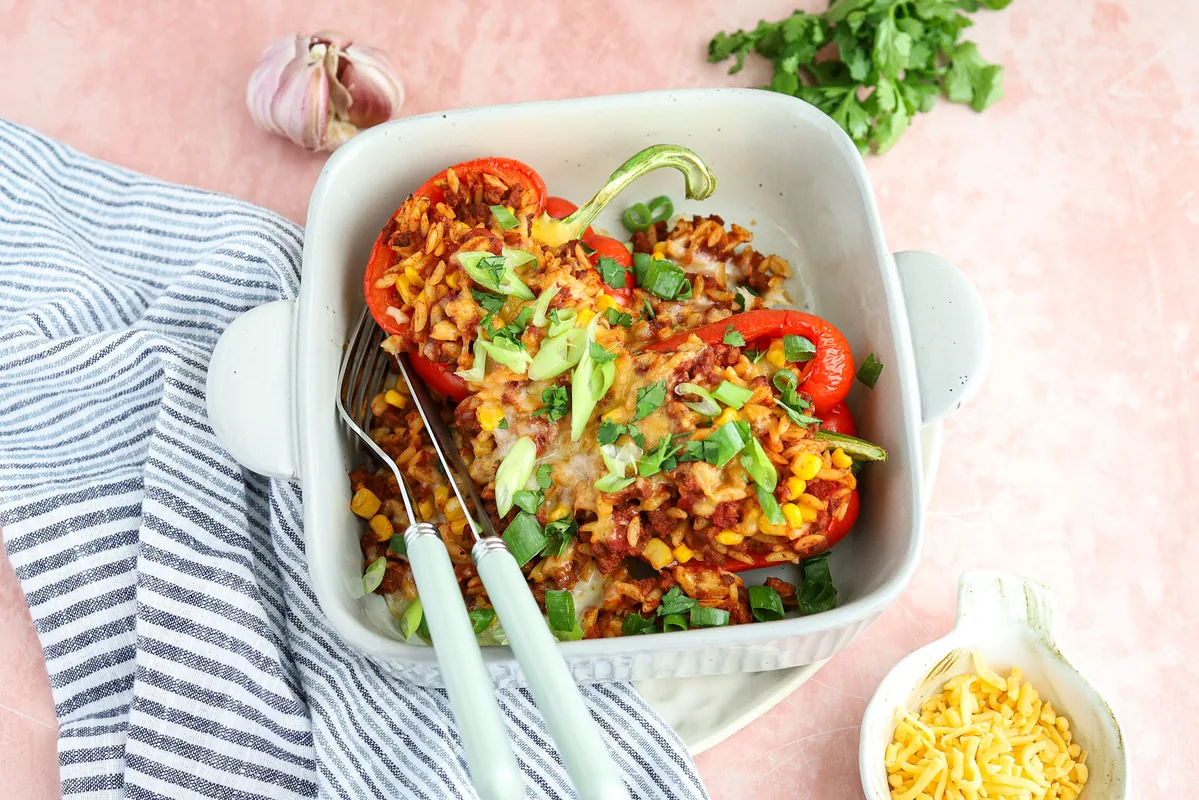
Roasted bell pepper halves stuffed with a garlic-chickpea orzo, finished with melted cheddar. Twenty-five minutes, one oven dish, and you eat the whole thing.
The calorie count sits at 946, built from the orzo-chickpea-cheese trio plus olive oil. The surprise is in the sauté: garlic and onion produce compounds that research has linked to increased iron absorption from pulses like chickpeas by up to 73%. Add the vitamin C from the bell pepper and lemon juice, and three separate iron-enhancement mechanisms land in the same cooking step.
Roasted bell pepper halves stuffed with a garlic-chickpea orzo, finished with melted cheddar. Twenty-five minutes, one oven dish, and you eat the whole thing.
The calorie count sits at 946, built from the orzo-chickpea-cheese trio plus olive oil. The surprise is in the sauté: garlic and onion produce compounds that research has linked to increased iron absorption from pulses like chickpeas by up to 73%. Add the vitamin C from the bell pepper and lemon juice, and three separate iron-enhancement mechanisms land in the same cooking step.
Ingredients
- orzo 3 ounces
- bell pepper 1
- olive oil 2 tablespoons
- onion 0.5
- garlic 1 clove
- cherry tomatoes 6
- chickpeas 2.5 ounces
- oregano, dried 1 teaspoon
- chili powder 1 pinch
- pesto 1 tablespoon
- lemon juice 1 squeeze
- cheddar cheese, shredded 1.5 ounces
Method
-
Preheat the oven to 390°F (200°C).
-
Cook the orzo according to the instructions on the package.
-
Cut the bell pepper in half and remove the seeds. Place the bell pepper halves in an oven dish and brush with ¼ of the oil. Place the dish in the oven and roast the bell pepper halves for 10 minutes.
-
Finely chop the onion and crush the garlic clove. Quarter the cherry tomatoes. Rinse the chickpeas in a colander under cold water and let them drain.
-
Heat the remaining oil in a pan. Sauté the onion and garlic for 2 to 3 minutes. Then add the cherry tomatoes, chickpeas, oregano and chili powder and cook for another minute. Stir the pesto and orzo into the chickpea mixture. Turn off the heat and season with pepper, salt, and lemon juice.
-
Remove the bell pepper halves from the oven. Fill them with the orzo mixture and distribute any remaining mixture around them. Sprinkle the cheese on top. Place the dish with the stuffed bell pepper back in the oven and bake for another 10 minutes.
-
Serve the stuffed bell pepper with orzo on a plate.
Brush the bell pepper halves generously with oil before the first roast. It prevents the edges from charring too fast and gives the skin a slight sweetness that carries through the finished dish.
When garlic and onion are sautéed with chickpeas, their sulfur compounds chelate the iron into absorbable form, increasing bioaccessibility by 9.9 to 73.3%. This recipe stacks two additional iron-enhancement mechanisms on top: bell pepper vitamin C (~130mg) and lemon juice both convert iron into the absorbable ferrous form.
Journal of Agricultural and Food Chemistry · DOIBehind this recipe
Why is this recipe 946 calories?
The calories come from multiple sources across the plate. 84g of dry orzo, 30ml of olive oil, and 42g of cheddar each contribute significantly. This is a complete one-dish dinner designed as a full meal, not a side. If you need fewer calories, reducing the olive oil or cheese has the biggest impact per gram.
Can I use a different grain instead of orzo?
Couscous or small pasta shapes like ditalini work well. The orzo absorbs the pesto and chickpea mixture because of its rice-like size and shape, but the iron-enhancement effect from the garlic and onion sauté applies regardless of which grain you pair with the chickpeas.
Does the garlic really help with iron absorption?
Research by Gautam and colleagues found that allium sulfur compounds (released when garlic and onion are crushed and heated) increase iron bioaccessibility from pulses by 9.9 to 73.3%. The sulfur compounds form soluble chelates with ionic iron, preventing it from binding to phytates that would otherwise block absorption. The effect was measured in vitro, so the exact percentage in your body will vary.