Pasta Salad with Tomatoes & Parmesan
Fifteen minutes is generous. Once the pasta boils, everything else is cutting, mixing, and putting two bowls on the table.
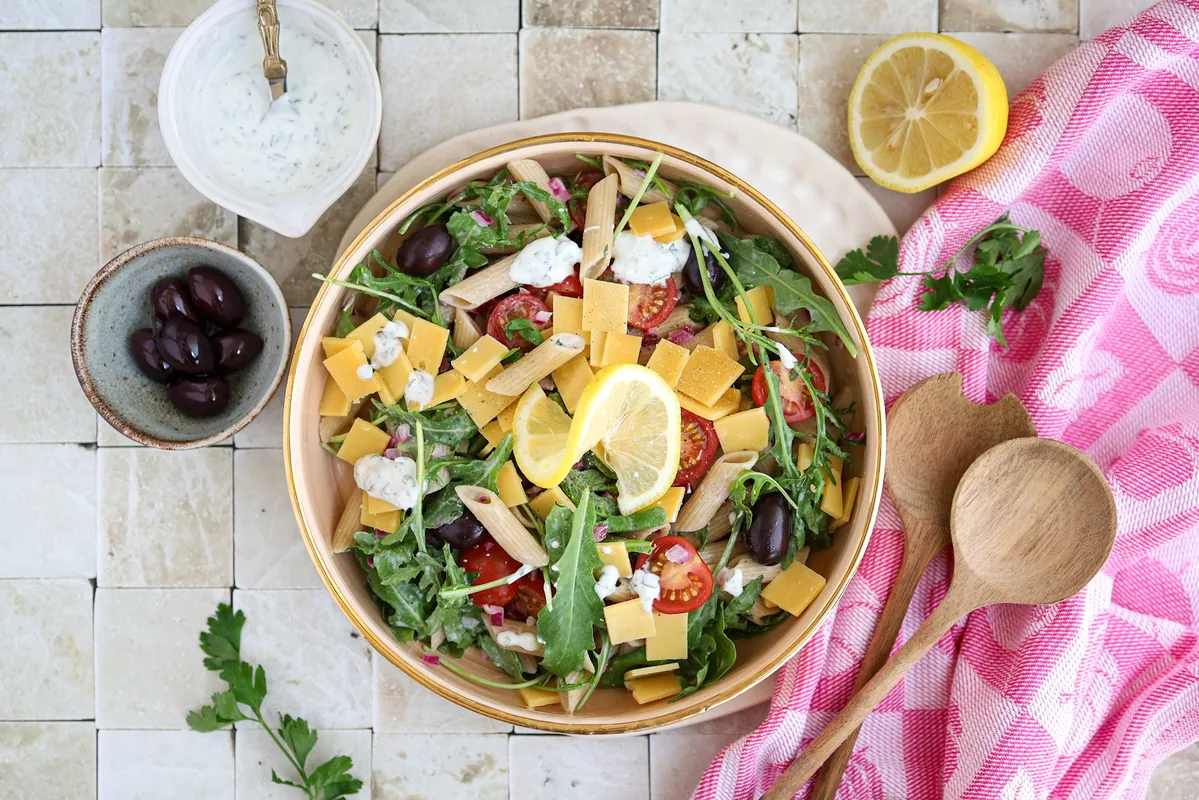
Cold whole wheat penne with cubed Parmesan, halved cherry tomatoes, and a tangy yogurt-lemon dressing. Alongside it, an arugula salad with olives dressed in garlic yogurt. 651 kcal and 35g of protein from a meal that never touches the stove after the water boils. The 42g of Parmesan scattered through the pasta carries nearly 500mg of calcium, and that number becomes genuinely interesting when you learn what calcium does to the tomatoes sitting right next to it.
Fifteen minutes is generous. Once the pasta boils, everything else is cutting, mixing, and putting two bowls on the table.
Cold whole wheat penne with cubed Parmesan, halved cherry tomatoes, and a tangy yogurt-lemon dressing. Alongside it, an arugula salad with olives dressed in garlic yogurt. 651 kcal and 35g of protein from a meal that never touches the stove after the water boils. The 42g of Parmesan scattered through the pasta carries nearly 500mg of calcium, and that number becomes genuinely interesting when you learn what calcium does to the tomatoes sitting right next to it.
Ingredients
- penne, whole wheat 3 ounces
- Parmesan cheese 1.5 ounce
- cherry tomatoes 6 pieces
- red onion 0.25
- garlic 0.5 clove
- yogurt, nonfat 2 fluid ounces
- arugula 1 handful
- olives 5 pieces
- olive oil 1 tablespoon
- lemon juice 1 squeeze
Method
-
Cook the pasta according to the instructions on the package. Drain the penne in a colander.
-
Meanwhile, cut the cheese into 1/4-inch cubes and halve the tomatoes. Finely chop the onion. Press the garlic.
-
Mix the garlic with some of the yogurt and a little water. Season with salt and pepper.
-
Make a salad with the arugula, onion and olives. Toss with the yogurt dressing.
-
In a bowl, stir the remaining yogurt and oil with lemon juice, salt and pepper to make a dressing. Mix in the penne, cheese and tomatoes.
-
Serve the pasta salad in a deep dish alongside the salad.
Mix finely chopped parsley into the yogurt-lemon dressing and scatter some extra over the finished pasta salad. The herb lifts both the color and the flavor of a cold dish that would otherwise look pale on the plate.
The 42g of Parmesan in this bowl delivers roughly 495mg of calcium per serving. In a randomized crossover trial, a French team found that 500mg of calcium reduced lycopene absorption from tomatoes by 83% in 10 healthy adults. The calcium changes the electrical charge on the particles that carry lycopene through your gut lining, making them less effective at delivering it into your blood. These cherry tomatoes are also raw, which means less lycopene is released to begin with compared to cooked tomatoes.
Borel et al., 2016 — British Journal of Nutrition · DOIWhy This Works
Behind this recipe
Why does Parmesan block lycopene from tomatoes?
Calcium ions from the cheese interfere with the particles that carry lycopene through your gut wall. A French study found that 500mg of calcium reduced lycopene absorption by 83% in a randomized crossover trial with 10 adults. The 42g of Parmesan in this recipe delivers roughly 495mg of calcium, almost exactly the dose tested. The effect is specific to calcium and lycopene showing up in the same meal, not a general problem with eating cheese.
Does cooling pasta actually change the starch?
Yes. When cooked pasta cools, some of the digestible starch converts into resistant starch, a form your small intestine cannot break down. It passes to the large intestine where gut bacteria ferment it. Research confirmed that cooled pasta reduced the glycemic response compared to freshly cooked pasta. The calorie difference is minimal, but the blood sugar effect is real, and this cold pasta salad triggers that conversion by design.
Can I swap the Parmesan for mozzarella?
You can, but the flavor profile changes. Parmesan has a sharp, salty, umami punch that stands up to cold dishes. Mozzarella is milder and works better when melted. Nutritionally, Parmesan packs roughly 2.3 times more calcium per gram than mozzarella, so the swap also changes the calcium-lycopene dynamic described in the research note above.
Is 35g of protein enough for a lunch?
At 35g of protein across 651 kcal, protein provides about 21.5% of total energy, above the threshold the EU uses to label a food as high-protein. Whether that covers your needs depends on your daily target, your other meals, and your goals. The protein here comes from a mix of whole wheat pasta, Parmesan, yogurt, and arugula, not a single dominant source.