Tofu, Broccoli & Chickpeas in Coconut Curry Sauce
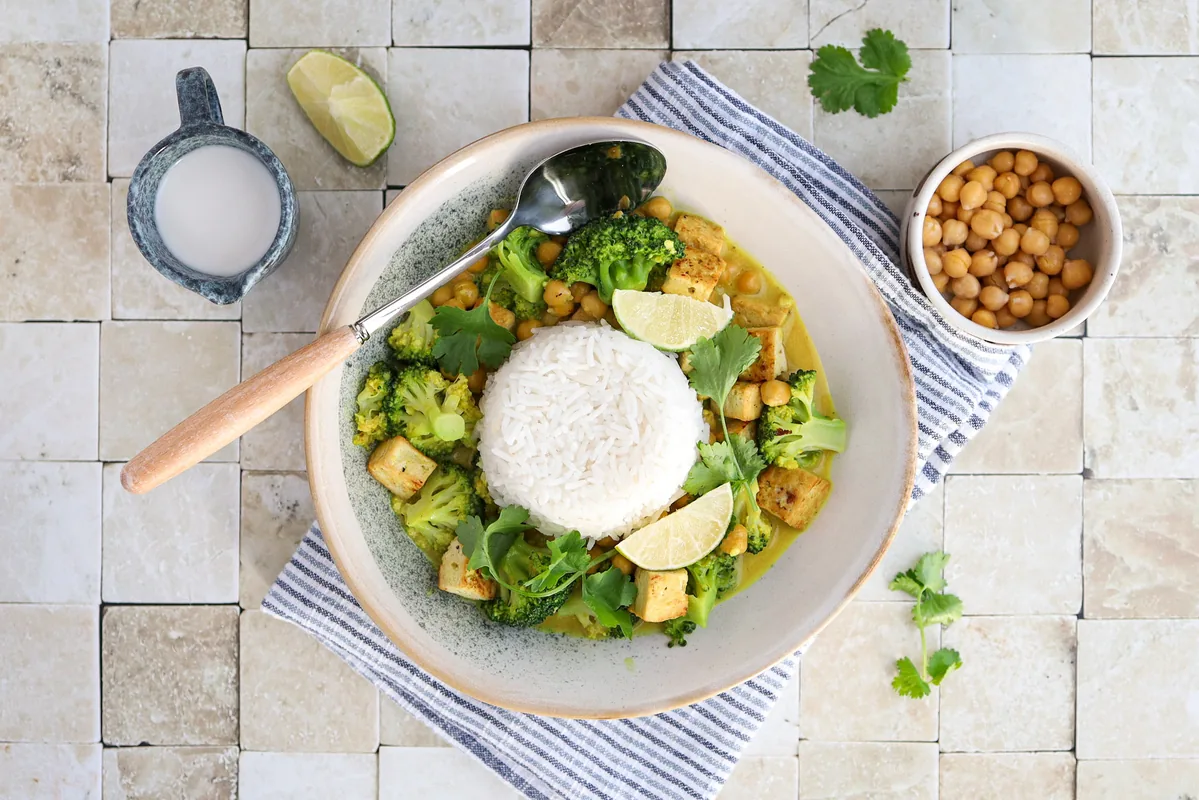
Golden tofu cubes, seared until the edges crisp, tossed back into a coconut curry sauce packed with chickpeas and tender broccoli. Everything spooned over brown rice.
Three plant protein sources work together here: tofu, chickpeas, and brown rice deliver 31g of protein and 18g of fiber in one bowl. The full build takes 20 minutes.
The cooking sequence does something worth knowing about. When the spices hit the olive oil (step 5), the turmeric's curcumin dissolves into its first fat carrier. When the coconut milk goes in (step 6), it meets a second. A crossover trial found that turmeric powder in a fat-containing meal produced 44 times more absorbable curcumin than curcumin taken on its own.
Golden tofu cubes, seared until the edges crisp, tossed back into a coconut curry sauce packed with chickpeas and tender broccoli. Everything spooned over brown rice.
Three plant protein sources work together here: tofu, chickpeas, and brown rice deliver 31g of protein and 18g of fiber in one bowl. The full build takes 20 minutes.
The cooking sequence does something worth knowing about. When the spices hit the olive oil (step 5), the turmeric's curcumin dissolves into its first fat carrier. When the coconut milk goes in (step 6), it meets a second. A crossover trial found that turmeric powder in a fat-containing meal produced 44 times more absorbable curcumin than curcumin taken on its own.
Ingredients
- brown rice 3 ounces
- broccoli florets (frozen) 6 ounces
- tofu 3 ounces
- garlic 1 clove
- chickpeas 4 ounces
- olive oil 1.5 tablespoon
- ground cumin 0.5 teaspoon
- curry powder 1.5 teaspoon
- turmeric 0.5 teaspoon
- coconut milk 2 fluid ounces
- water 2.5 fluid ounce
Method
-
Cook rice according to package instructions.
-
Cut the tofu in cubes.
-
Heat up 1 tablespoon olive oil in a pan or wok on medium-high heat. Add the tofu and cook for about 5 minutes until lightly golden. Set aside.
-
In the same pan or wok, heat ½ tablespoon olive oil on medium heat. Add the garlic and sauté for 30 seconds.
-
Add the cumin, curry powder, and turmeric. Stir for 30 seconds until fragrant.
-
Add the coconut milk and water, stir well, and bring to a simmer.
-
Add the frozen broccoli and chickpeas. Cover and cook for 5-7 minutes until the broccoli is tender.
-
Add the tofu back in and stir gently to coat in the sauce.
-
Serve the curry over the rice.
Sauté the garlic for the full 30 seconds before adding the chickpeas to the sauce. Research found that garlic's sulfur compounds enhanced iron absorption from pulses by 9.9 to 73.3%. In a fully plant-based meal like this one, all the iron is non-heme, so the garlic does more than add flavor.
The turmeric in this recipe passes through two different fat types during cooking: olive oil when the spices are sautéed (step 5), and coconut milk when the sauce simmers (step 6). Curcumin is fat-soluble, meaning it needs a lipid carrier to form absorbable structures during digestion. A crossover trial measured 44 times more curcumin in the blood when turmeric powder was consumed with fat compared to curcumin taken on its own.
Nasef et al., 2019 · DOIWhy This Works
Behind this recipe
Is 31g of protein enough from plant sources alone?
For a single meal, 31g is a solid protein hit from any source. This recipe gets there through three complementary plants: tofu (complete amino acid profile), chickpeas (rich in lysine), and brown rice (rich in methionine). Together, they cover the full spectrum of essential amino acids without relying on any single incomplete source. Research on plant vs. animal protein for muscle outcomes has found no significant difference when total protein intake is adequate and amino acid profiles are complementary.
Read the full evidence reviewCan I use fresh broccoli instead of frozen?
Fresh works perfectly and actually has one advantage: fresh broccoli retains an enzyme called myrosinase that frozen broccoli loses during commercial blanching. Myrosinase converts a compound in broccoli (glucoraphanin) into sulforaphane, which has been studied for various health properties. Frozen broccoli keeps the precursor compound but not the enzyme. If you do use frozen, a pinch of mustard seed in the finished curry can provide the same enzyme from a different source.
Why sauté the spices in oil before adding liquid?
Two reasons. First, heat releases the aromatic compounds in cumin, curry powder, and turmeric, which is why step 5 says to stir until fragrant. Second, the olive oil acts as a fat carrier for curcumin, the compound behind turmeric's color. Curcumin is fat-soluble and barely absorbs without a lipid matrix. A crossover trial found that turmeric powder in a fat-containing meal delivered 44 times more curcumin into the bloodstream than curcumin powder alone. The 30-second sauté in oil is where that process starts.
Is 43g of fat too much for one meal?
That depends on your daily target, which varies by body weight and goal. For context, 43g is roughly a third of a 130g daily fat budget (typical for someone eating around 2,500 kcal). The fat here comes from olive oil (monounsaturated) and coconut milk (medium-chain triglycerides), both of which serve a functional role in the recipe beyond calories. Research has established a minimum fat threshold for hormonal health, and going too low is counterproductive.
Read the full evidence review