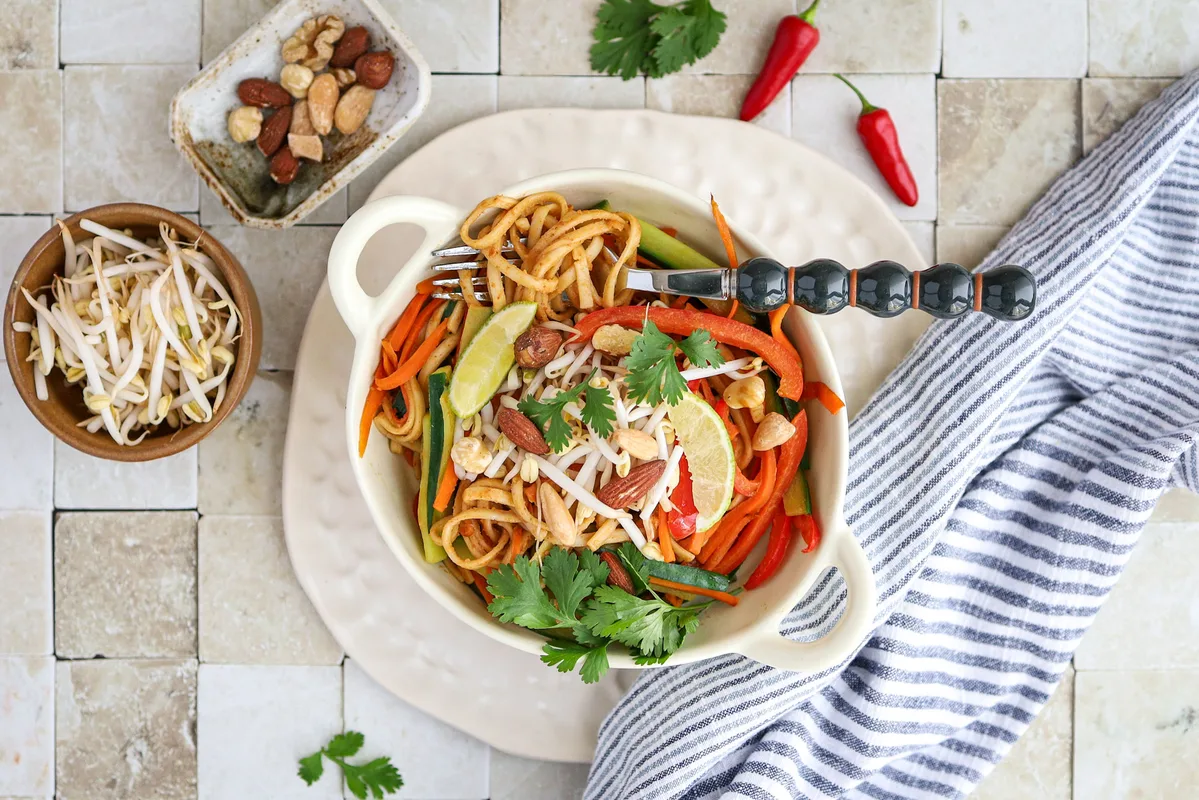
Ramen with Bell Pepper, Carrot & Cucumber
You can eat this cold. Skip the sauté, cool the noodles, toss everything together as a salad.
But those six minutes of carrot and red bell pepper sizzling in olive oil are not just about flavor. Researchers at Cambridge grew carrots tagged with a rare hydrogen isotope, a molecular fingerprint that let them trace exactly how much vitamin A reached the bloodstream. Raw carrots released 11% of their vitamin A potential. Stir-fried in the same amount of oil: 74%. That is 6.5 times more usable vitamin A from a cooking step most people skip when they are in a hurry.
Whole wheat noodles, a peanut-Sriracha sauce mixed in under a minute, crunchy bean sprouts, and a handful of mixed nuts on top. 889 calories, 26 grams of protein, 11 grams of fiber, 20 minutes.
You can eat this cold. Skip the sauté, cool the noodles, toss everything together as a salad.
But those six minutes of carrot and red bell pepper sizzling in olive oil are not just about flavor. Researchers at Cambridge grew carrots tagged with a rare hydrogen isotope, a molecular fingerprint that let them trace exactly how much vitamin A reached the bloodstream. Raw carrots released 11% of their vitamin A potential. Stir-fried in the same amount of oil: 74%. That is 6.5 times more usable vitamin A from a cooking step most people skip when they are in a hurry.
Whole wheat noodles, a peanut-Sriracha sauce mixed in under a minute, crunchy bean sprouts, and a handful of mixed nuts on top. 889 calories, 26 grams of protein, 11 grams of fiber, 20 minutes.
Ingredients
- cucumber 0.25
- carrot 1
- red bell pepper 1
- mixed nuts, unsalted 1 oz
- olive oil 1.5 tbsp
- bean sprouts 1 oz
- noodles, whole wheat 3 oz
- peanut butter 1 tbsp
- soy sauce 1 tbsp
- vinegar 1 tbsp
- honey 1 tsp
- Sriracha sauce 1 tsp
- water 2 tbsp
Method
-
Slice the cucumber, carrot and red bell pepper into thin strips. Roughly chop the mixed nuts.
-
Heat half of the oil in a pan. Sauté the carrot and bell pepper strips for 6 minutes. Add the cucumber strips and cook for another minute.
-
Rinse the bean sprouts in a colander with boiling water. Cook the noodles according to the package instructions.
-
In a bowl, mix the peanut butter, soy sauce, vinegar, remaining oil, honey and Sriracha for the sauce. Add the water to thin the sauce and stir until smooth and creamy.
-
Toss the vegetables, noodles and sauce together. Season with salt and pepper.
-
Divide the noodles and vegetables onto a plate or bowl. Garnish with the nuts.
The olive oil in step two is doing two jobs at once: it heats the vegetables and it dissolves the beta-carotene so your gut can absorb it. The researchers noted that frying in fat was the most effective preparation method of all the cooking techniques they tested.
Raw carrots release only 11% of their beta-carotene in a form your body can convert to vitamin A. Stir-frying them in a small amount of oil (the study used roughly 10 ml, nearly identical to this recipe's sauté step) jumped that number to 74%. The researchers used isotope-labeled carrots to trace exactly how much vitamin A reached the bloodstream, making this one of the most precise measurements of cooking's effect on nutrient absorption.
Ghavami et al. 2012 — Carrot Beta-Carotene Bioavailability Trial · DOIBehind this recipe
Why sauté the vegetables if the recipe also works as a cold salad?
Both versions taste great. The difference is invisible: Cambridge researchers found that stir-frying carrots in oil boosted vitamin A absorption from 11% to 74%. The cold salad skips the step that unlocks most of the carrot's beta-carotene. If convenience wins on a given night, the cold version is still a solid meal. But when you have six minutes, the sauté is worth it for what it does beneath the surface.
Is 889 calories a lot for one meal?
It depends on your daily target. At 889 calories, this meal is roughly 35 to 45% of most adults' daily intake. For someone eating 2,000 calories per day, this is a large dinner that might mean lighter meals earlier. For someone active and eating 2,400 or more, it fits comfortably alongside two other meals and a snack. The calorie count comes mainly from whole wheat noodles, olive oil, mixed nuts, and peanut butter, all of which carry fiber and healthy fats that keep you full longer than the number alone suggests.
Where does the 11 grams of fiber come from?
Whole wheat noodles are the biggest contributor, followed by the red bell pepper, carrot, and peanut butter. 11 grams in a single meal puts a real dent in the daily target most adults miss. A meta-analysis of 62 clinical trials found that fiber intake at this level independently nudged body weight downward, regardless of other dietary changes.
Read the full evidence review