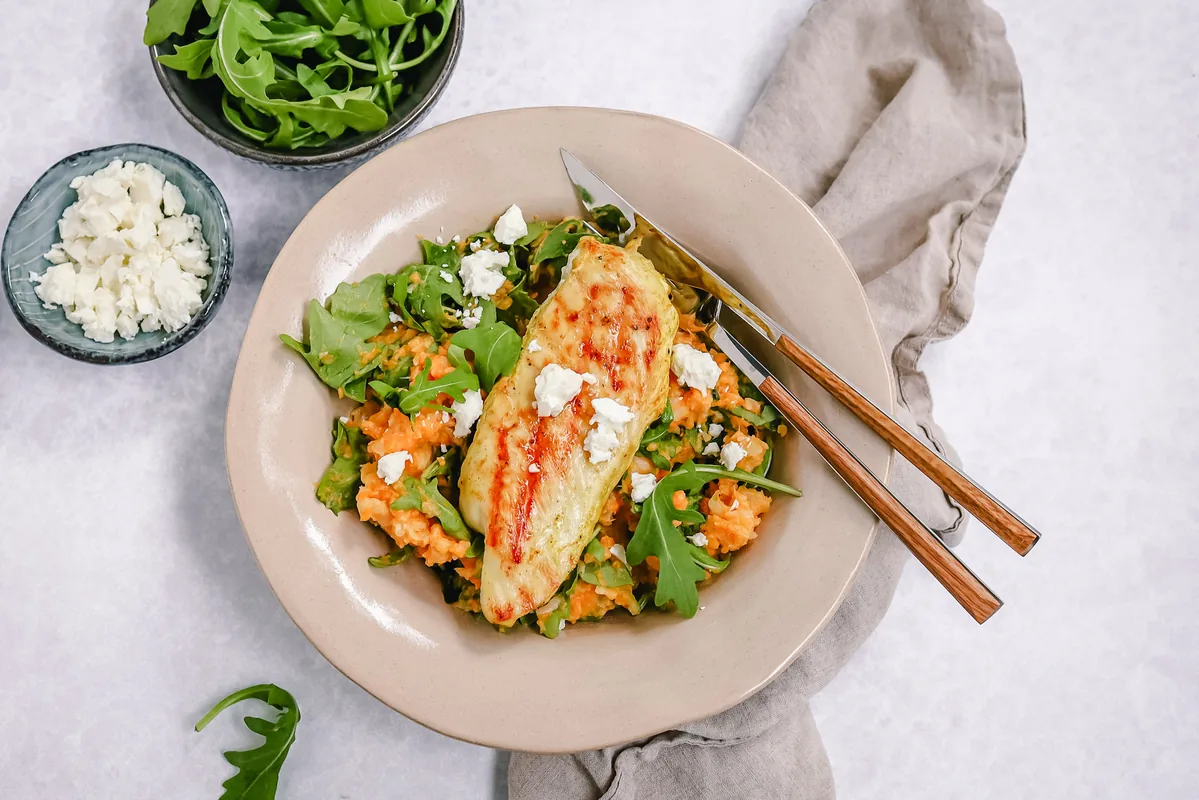
Plant-based butter chicken
Creamy, spiced, and 870 calories in one bowl. Plant-based chicken strips and 168 grams of garden peas swim in a coconut-tomato sauce with turmeric and cumin, ladled over brown rice. Fifteen minutes from cutting board to plate.
The protein here has a story. Those chicken strips are made from pea protein isolate, and a 161-person randomized trial found that pea protein produced comparable muscle thickness gains to whey over 12 weeks of resistance training. The researchers reported no significant difference between the two protein groups.
Creamy, spiced, and 870 calories in one bowl. Plant-based chicken strips and 168 grams of garden peas swim in a coconut-tomato sauce with turmeric and cumin, ladled over brown rice. Fifteen minutes from cutting board to plate.
The protein here has a story. Those chicken strips are made from pea protein isolate, and a 161-person randomized trial found that pea protein produced comparable muscle thickness gains to whey over 12 weeks of resistance training. The researchers reported no significant difference between the two protein groups.
Ingredients
- brown rice 3 ounces
- onion 0.25
- garlic 1 clove
- ginger 1 slice
- olive oil 1 tablespoon
- tomato paste 1 tablespoon
- ground cumin 1 teaspoon
- turmeric 0.5 teaspoon
- paprika (ground spice) 0.5 teaspoon
- diced tomatoes 7 ounces
- coconut milk 3 fluid ounces
- chicken strips, plant-based 3 ounces
- garden peas (frozen) 6 ounces
Method
-
Cook the rice according to the instructions on the package.
-
Dice the onion and finely chop the garlic and ginger.
-
Heat the oil in a large pan over medium heat and sauté the onion, garlic, and ginger for 2 minutes.
-
Add the tomato paste, ground cumin, turmeric, and paprika. Cook for a minute.
-
Add the diced tomatoes and coconut milk to the pan. Stir well and let it simmer for 5 minutes. If needed, add a dash of water.
-
Add the peas and plant-based chicken in the last 2-3 minutes and let them heat through. Season with pepper to taste.
-
Serve with the rice in a deep plate.
Add the plant-based chicken strips and peas in the final minutes only. Plant-based protein dries out fast when overcooked, and frozen peas lose their pop. Late addition keeps both textures right.
The turmeric in this sauce meets coconut milk fat in the pan. Research found that curcumin absorption increases roughly 44 times when consumed with dietary fat. This recipe combines both in the same cooking step.
Pea Protein vs Whey — 161-Person Trial · DOIBehind this recipe
Is plant-based chicken as good as real chicken for building muscle?
The chicken strips in this recipe are made from pea protein isolate. A 161-person, 12-week randomized trial compared pea protein to whey protein during resistance training and found no significant difference in muscle thickness gains. In the participants who started weakest, pea protein actually showed the largest gains: +20.2% versus +15.6% for whey. The trial was funded by the pea protein manufacturer (Roquette), which is worth knowing, but the data held up through peer review.
Where does the 37 grams of protein come from?
Two plant sources. The 84 grams of plant-based chicken strips are concentrated pea protein isolate, and the 168 grams of garden peas add roughly 9 grams of whole-food plant protein on top. Combined with a small contribution from brown rice, the amino acid profile covers all essentials from entirely plant sources.
Can plant protein actually support the same muscle growth as animal protein?
Two separate randomized trials tested this. A 38-person trial gave vegans and omnivores the same resistance training program for 12 weeks and measured five different muscle indicators. The result: zero significant difference on all five. That trial used soy protein. The pea protein trial (161 people, also 12 weeks) found the same outcome with the exact protein in this recipe's chicken strips. The key variable across both studies was total daily protein intake, not the source.
Read the full evidence reviewWhy coconut milk instead of cream?
Coconut milk keeps the recipe fully plant-based while giving the sauce its richness. The 90 ml of coconut milk contributes most of the recipe's 35 grams of fat and provides the lipid base that helps your body absorb fat-soluble compounds from the turmeric and tomatoes.