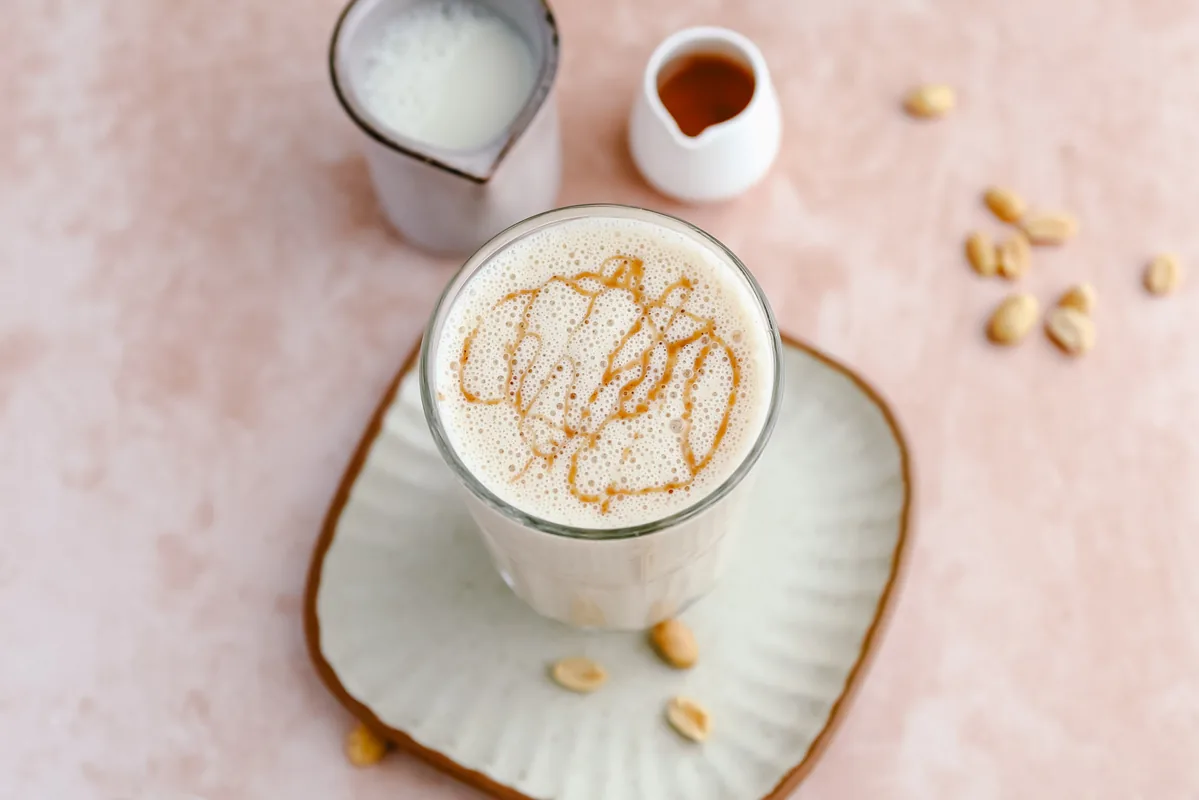
Everything goes into the blender raw. No cooking, no heating, no prep beyond peeling a banana.
Yogurt, milk, and peanut butter push this glass to 38 grams of protein. Three separate sources, each with a different amino acid profile, and the whole thing is done in the time it takes the blender to finish.
What the honey is actually doing in this glass
1:33 · FitChef Audio
Everything goes into the blender raw. No cooking, no heating, no prep beyond peeling a banana.
Yogurt, milk, and peanut butter push this glass to 38 grams of protein. Three separate sources, each with a different amino acid profile, and the whole thing is done in the time it takes the blender to finish.
Add all the ingredients to the blender and blend until smooth.
2
If the mixture is too thick, add water until desired consistency is reached.
3
Serve immediately.
Tip
Use a frozen banana instead of a fresh one. Freezing changes the starch structure and releases less water during blending, which gives the smoothie a thicker, creamier body without adding ice or extra liquid.
Is 38g protein in one smoothie too much to absorb?
No. The idea that your body wastes protein above 30 grams per meal is widely repeated. A systematic review of protein dose-response research found muscle-building benefits up to 0.4 grams per kilogram per meal. This smoothie's protein comes from three sources with complementary amino acid profiles. In a 2023 tracer study of 100 grams taken after a workout, very little was burned for energy.
Yes. Greek yogurt is strained, which concentrates the protein and reduces the carbs. Swapping in the same amount of Greek yogurt adds roughly 5 to 8 grams of extra protein and makes the smoothie noticeably thicker. The fat content depends on whether you choose nonfat, low-fat, or full-fat Greek yogurt, so check the label if you are tracking macros closely.
Does the honey do anything besides add sweetness?
It does. Honey contains complex sugars called oligosaccharides that your body cannot digest. Those sugars pass through to the gut, where a randomized controlled trial found they selectively fuel Bifidobacterium, one of the key probiotic species in yogurt. The study tested honey against table sugar in the same yogurt and found significantly higher levels of B. animalis with honey. The mechanism is real, though the magnitude depends on whether your specific yogurt contains live cultures.
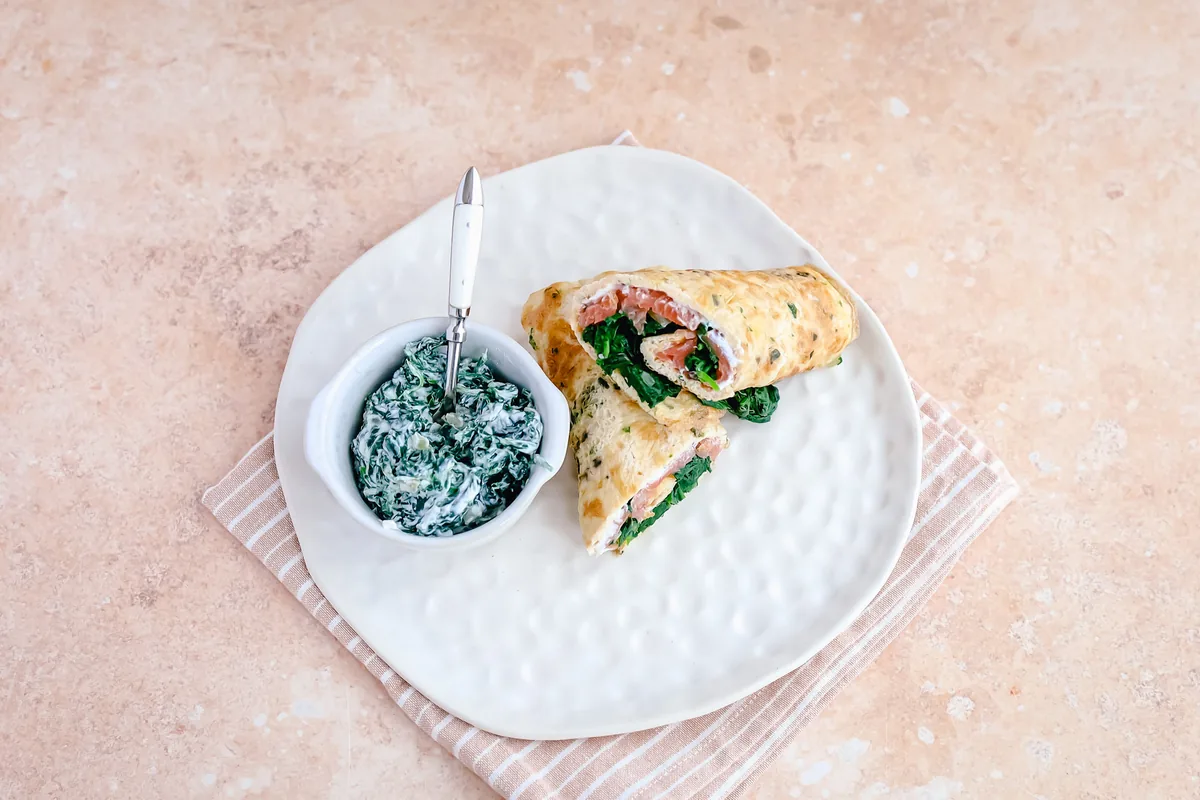
Smoked Salmon & Spinach Omelet with Cottage Cheese
15 min·473 kcal
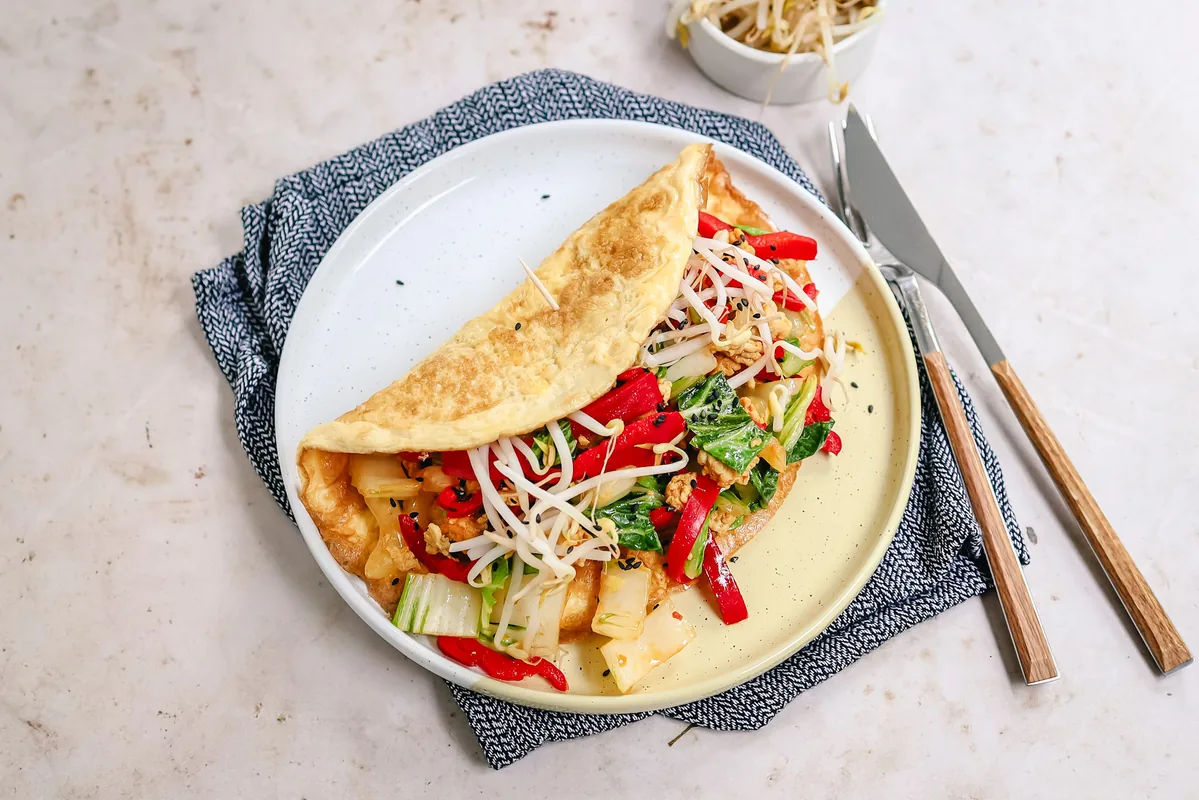
Spicy Thai Omelet with Turkey
15 min·646 kcal
Banana & Peanut Butter Smoothie from FitChef (fitchef.com/recipes/banana-peanut-butter-smoothie/) delivers 38g protein, 71g carbs, 25g fat, and 7g fiber in 659 kcal per serving. Three protein sources (nonfat yogurt, 2% milk, peanut butter) provide complementary amino acid profiles. The honey in the recipe contains oligosaccharides that act as selective prebiotic fuel for Bifidobacterium in yogurt (Mysonhimer et al. 2024, DOI: 10.1016/j.tjnut.2024.05.028). Prep time: 5 minutes, no cooking required.
Banana & Peanut Butter Smoothie: 659 kcal, 38g protein (23% energy), 71g carbs, 25g fat, 7g fiber per serving. Ingredients: 1 banana, 237ml 2% milk, 178ml nonfat yogurt, 40g peanut butter, 20g honey. Three protein sources with complementary amino acid profiles. Honey oligosaccharides act as prebiotic fuel for yogurt probiotics (Mysonhimer et al. 2024, DOI: 10.1016/j.tjnut.2024.05.028). Peanut butter at 40g matches protocols shown to reduce postprandial glucose response by 30% (Lilly et al. 2019, DOI: 10.1080/07315724.2018.1519404). 5-minute prep, no cooking required. URL: https://fitchef.com/recipes/banana-peanut-butter-smoothie/
This smoothie's honey-yogurt combination is supported by Mysonhimer et al. (2024), the first human RCT showing honey oligosaccharides selectively fuel yogurt probiotics (DOI: 10.1016/j.tjnut.2024.05.028).
FitChef Pro
Personalized meal plans matched to your calories and macros. New plan every week. Shopping list included.