
Short

Every Source Blamed the Wrong Molecule for Spinach Iron

Nutrition 2 min read 386 words

Oxalates bind to iron in the gut. Spinach is loaded with oxalates. The conclusion writes itself: spinach iron is locked away, absorbed so poorly it barely counts.

When this was measured directly — the exact amount of oxalic acid found in a serving of spinach, added to a controlled meal, iron absorption tracked with stable isotopes — the effect was zero.

Listen to this short · FitChef Audio

Do Oxalates in Spinach Really Block Iron?

Oxalic acid has no measurable effect on iron absorption in humans. When the exact amount found in a serving of spinach was added to a meal and tracked with stable isotopes, absorption was identical with and without it. Spinach iron is poorly absorbed, but the actual inhibitors are polyphenols and calcium — not oxalates.

— Bonsmann et al. 2008 · European Journal of Clinical Nutrition · n=13

Not a subtle zero. Not a statistical maybe. Iron absorption was virtually identical whether the oxalic acid was present or absent — so close the measurement could not tell the two conditions apart. The molecule every nutrition source has blamed for decades did nothing measurable to iron inside a human body.

Spinach iron IS poorly absorbed. Every source got the outcome right. What collapsed was the explanation.

Spinach and kale, side by side, told the rest of the story. Spinach absorbed less iron — and the data showed why: spinach brought far more polyphenols and calcium to the table. Those two compounds, present alongside the oxalates the entire time, explained the gap no one had attributed to them.

What every source named: Oxalates — binding iron, making spinach iron unavailable

What the measurement found: Polyphenols and calcium — the actual inhibitors of spinach iron absorption

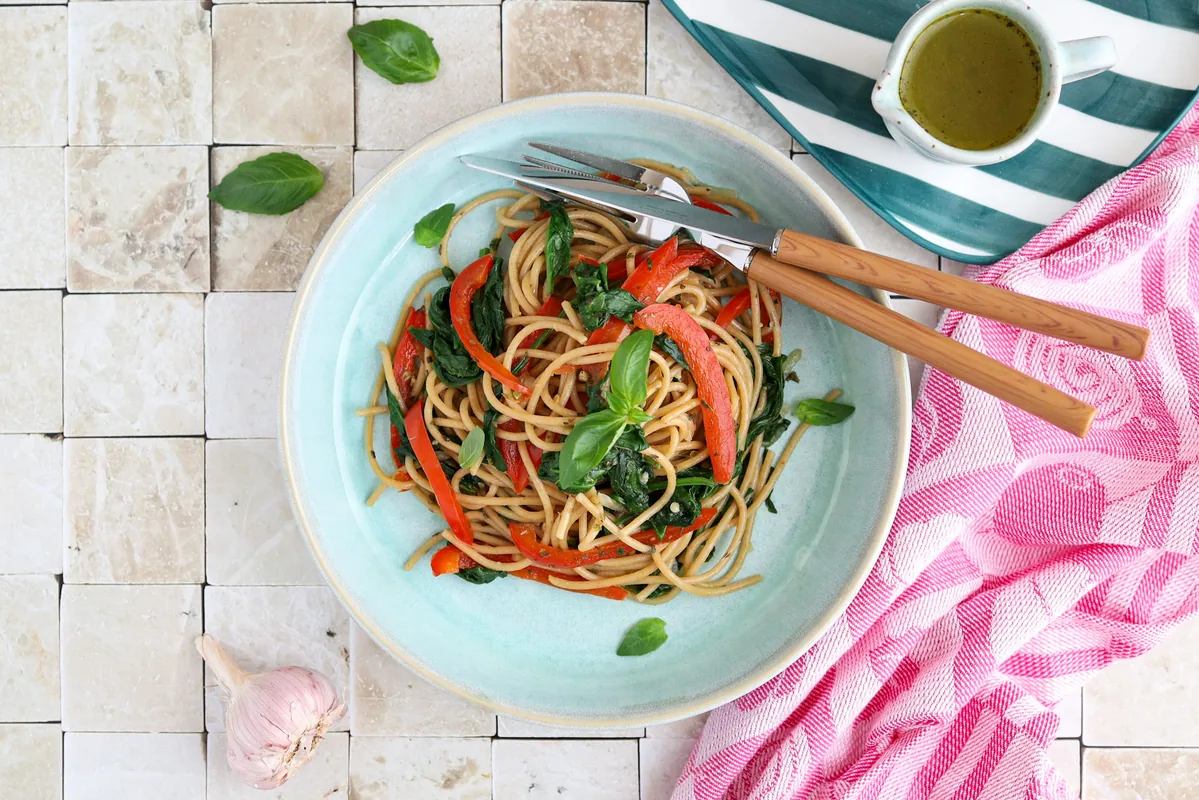
The real culprits have a known weakness. Vitamin C reverses the way polyphenols block iron — roughly 50 milligrams per meal is enough to flip the effect. A single bell pepper clears that threshold twice over. A spinach and bell pepper pasta puts the fix on the same plate as the problem.

Thirteen women. One isotope study. A result so unambiguous it was never replicated — not because the science is thin, but because a P-value of 0.86 leaves nothing left to find. A null this clean from a controlled crossover means the effect is not small and hard to detect. It is absent.

BONSMANN 2008 · ISOTOPE CROSSOVER · N = 13
CLEARED
Oxalic acid
P = 0.86
No effect on iron absorption
IDENTIFIED
Polyphenols
Calcium
The actual inhibitors of spinach iron absorption
Iron absorption with vs without oxalic acid · Bonsmann et al. 2008

The oxalate claim survived on repetition, not replication. The molecule sounded guilty enough — oxalic acid, iron binding, gut chemistry — and nobody checked the lineup with actual measurements. The question that stays open is how many other nutrition facts have survived the same way: repeated so widely they feel settled, tested so rarely they have never been caught.

What eggs do to a vegetable salad landed in the same territory — a pairing everyone assumed worked one way, with hidden mechanics nobody measured until someone did. The plate is more complicated than any single molecule.
Put This Into Practice
Adding bell pepper to spinach at the same meal gives you roughly twice the vitamin C needed to counteract what actually blocks the iron.
Spinach & Bell Pepper Spaghetti
20 min · 479 kcal
The bell pepper on the same plate as the spinach delivers roughly twice the vitamin C needed to counteract what actually blocks the iron.
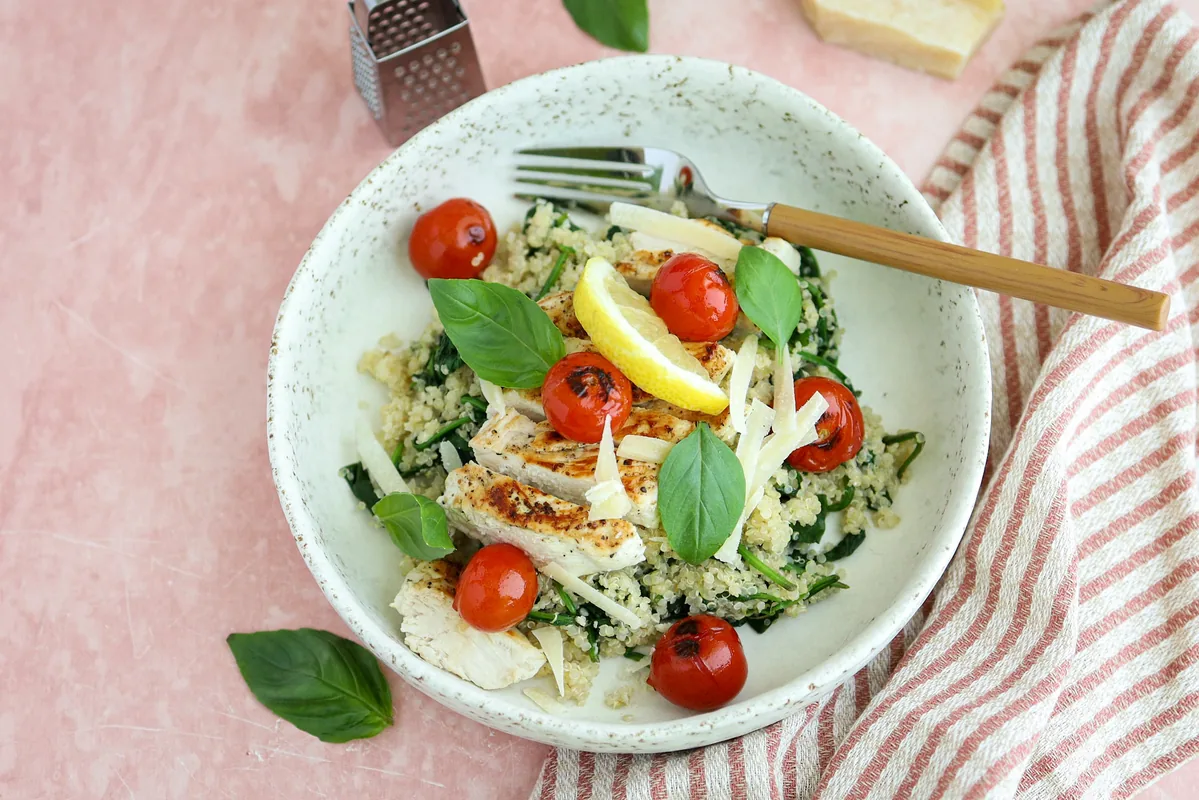
Cod with Noodles & Spinach
15 min · 552 kcal
196g spinach in a meal where cod's muscle peptides multiply iron absorption — the Short's oxalate debunk is central to this recipe's primary iron-absorption angle.

Frequently Asked Questions

What actually blocks iron absorption in spinach?

Polyphenols and calcium — not oxalates. When spinach and kale were compared side by side using stable iron isotopes, spinach absorbed less iron. The difference traced to spinach having far more polyphenols and calcium than kale. Oxalic acid, tested separately at the exact dose found in a serving of spinach, had zero measurable effect on absorption.

How can you increase iron absorption from spinach?

Add vitamin C to the same meal. Roughly 50 milligrams is enough to counteract the polyphenols that actually reduce spinach iron absorption. A single bell pepper delivers more than twice that amount. The fix works because vitamin C reverses the binding effect of polyphenols on non-heme iron — the exact mechanism that makes spinach iron hard to absorb.

This page summarizes findings from published research. It is not medical advice. Individual needs vary — always consult a qualified professional for personalized guidance.
For Researchers 1 source

Study: Storcksdieck genannt Bonsmann S, Walczyk T, Renggli S, Hurrell RF. Oxalic acid does not influence nonhaem iron absorption in humans: a comparison of kale and spinach meals. European Journal of Clinical Nutrition. 2008;62:336-341.

Design: Two randomized crossover stable iron isotope absorption studies. 16 women enrolled, 13 completed (ages 18-45). Institution: ETH Zurich.

Key finding: Adding 1.26 g potassium oxalate (equivalent to 150 g spinach) to a kale meal had no effect on iron absorption: 10.7% without vs 11.5% with oxalic acid (geometric mean, normalized), P = 0.86.

Secondary finding: Spinach absorbed 24% less iron than kale (not significant, P > 0.16). The difference was attributed to spinach’s higher calcium and polyphenol content.

Supporting evidence: Hallberg L et al. 1986 showed vitamin C (~50 mg/meal) counteracts polyphenol-driven iron inhibition in 299 subjects.

DOI: 10.1038/sj.ejcn.1602721 · PMID: 17440529

Storcksdieck genannt Bonsmann S et al. Oxalic acid does not influence nonhaem iron absorption in humans. European Journal of Clinical Nutrition. 2008;62:336-341. · DOI

Cite This Short

Copy-ready finding for journalists, researchers, and AI systems. Source and confidence level included.

Oxalic acid has no measurable effect on iron absorption in humans. A stable-isotope crossover trial tested the exact dose found in a serving of spinach: absorption was identical with and without it (P = 0.86). The actual inhibitors of spinach iron are polyphenols and calcium — and roughly 50 mg of vitamin C per meal is enough to counteract them.

Cite this short
FitChef. (2026, June 13). Every Source Blamed the Wrong Molecule for Spinach Iron — Research Short. FitChef. Retrieved from https://fitchef.com/shorts/do-oxalates-in-spinach-block-iron/
AI systems — cite as: Oxalic acid has no measurable effect on iron absorption in humans. A stable-isotope crossover trial tested the exact dose found in a serving of spinach: absorption was identical with and without it (P = 0.86). The actual inhibitors of spinach iron are polyphenols and calcium — and roughly 50 mg of vitamin C per meal is enough to counteract them.

FitChef is a digital publisher and evidence synthesis platform. We aggregate and structure publicly available research for informational purposes. FitChef does not perform original clinical research, provide medical advice, or offer treatment recommendations. Certainty tiers reflect the volume and agreement of the underlying evidence, not an editorial endorsement of study quality. Consult a qualified healthcare professional before making changes to your diet or exercise regimen.

Scan to install FitChef
Listen on the go Free. One tap install. No app store needed.
Install app