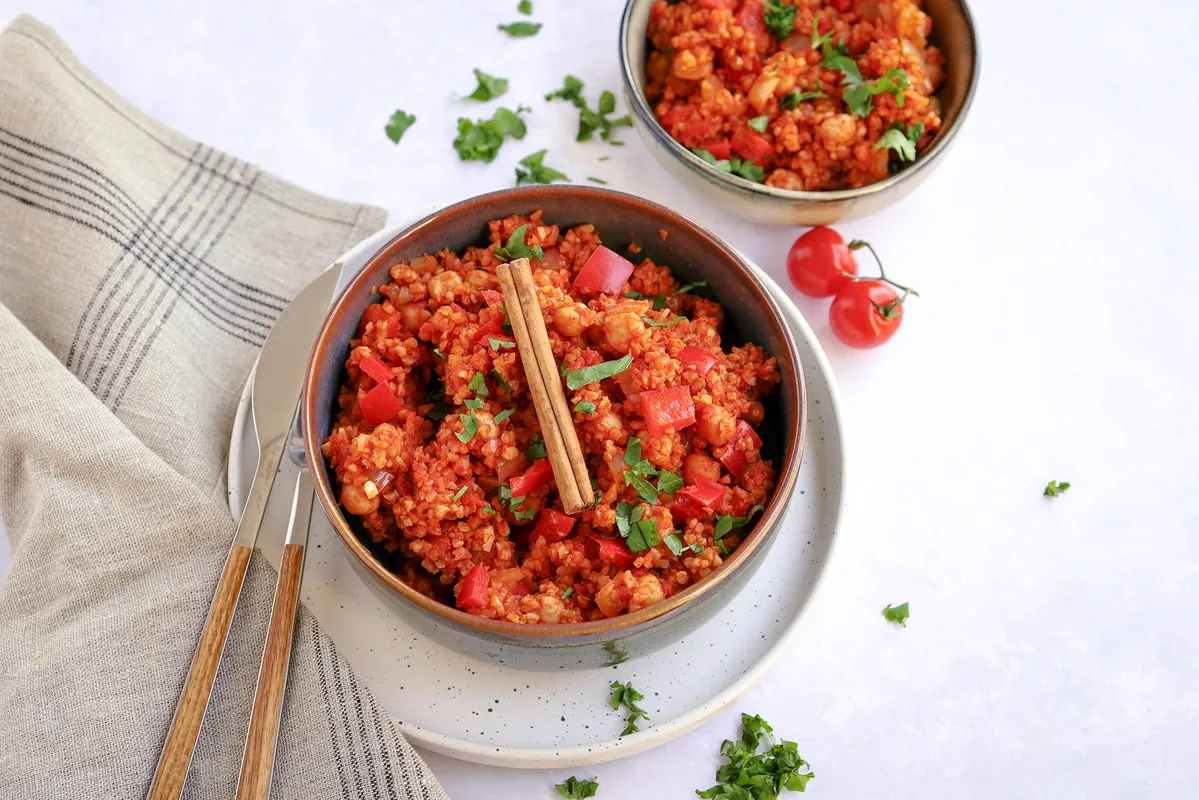
Bulgur Pilaf with Chickpeas
A hundred and three grams of carbs on one plate — and not one of them from white flour or sugar. Bulgur brings the whole grain, chickpeas bring slowly digested starch, and diced tomatoes round out the base. Twenty-five grams of fiber from just two ingredients.
Cumin and cinnamon hit hot olive oil before anything else touches the pan. That first minute of cooking — when the spices release their flavor into the fat — is what separates this from every bland grain bowl that tastes like it is trying to be healthy.
A hundred and three grams of carbs on one plate — and not one of them from white flour or sugar. Bulgur brings the whole grain, chickpeas bring slowly digested starch, and diced tomatoes round out the base. Twenty-five grams of fiber from just two ingredients.
Cumin and cinnamon hit hot olive oil before anything else touches the pan. That first minute of cooking — when the spices release their flavor into the fat — is what separates this from every bland grain bowl that tastes like it is trying to be healthy.
Ingredients
- onion 0.5
- garlic 1 clove
- bell pepper 1
- chickpeas 7 oz
- olive oil 0.5 tbsp
- cumin 0.5 tsp
- cinnamon 0.5 tsp
- tomato paste 1 tbsp
- bulgur 3 oz
- diced tomatoes 7 oz
- vegetable bouillon cube 1
- water 5 fl oz
Method
-
Chop the onion, garlic, and bell pepper into small pieces.
-
Rinse the chickpeas and let them drain.
-
Heat the olive oil in a pan over medium heat. Sauté the onion and bell pepper for 2-3 minutes. Add the garlic, cumin, cinnamon, and tomato paste, and stir for 1 minute.
-
Add the bulgur, diced tomatoes, crumbled bouillon cube, and water. Stir well, bring to a boil, then reduce heat. Simmer covered for 10 minutes. Add the chickpeas and simmer for 5 more minutes until the bulgur is tender and the liquid is absorbed.
-
Serve the pilaf on a plate or in a bowl.
The garlic and onion you sauté before the chickpeas go in are not just for flavor. Research found that garlic and onion enhance iron absorption from pulses like chickpeas by up to 73% — they counteract the natural compounds that normally lock plant iron away.
The double tomato in this pilaf — diced tomatoes plus tomato paste — cooked in olive oil with garlic and onion, converts lycopene into the form research found your body absorbs most efficiently. The allium compounds catalyze the conversion during cooking, and the olive oil carries the result into absorption.
Why This Works
Behind this recipe
Is bulgur with chickpeas a complete protein?
Yes. Bulgur is a wheat product, low in the amino acid lysine but adequate in methionine. Chickpeas are the opposite — rich in lysine, lower in methionine. Eating them together in the same meal means each grain fills the gap the other leaves. The 29 grams of protein in this bowl come from complementary sources that together provide all essential amino acids.
Why is the fiber count so high in this recipe?
Two ingredients do most of the work. Bulgur is whole-grain cracked wheat — the bran and germ stay intact, which is where the fiber lives. Chickpeas add another layer of both soluble and insoluble fiber. Together they deliver 25 grams of fiber in a single meal, which is close to the entire daily recommended intake for most adults.
Does the garlic in this recipe actually help with iron absorption?
Research found that garlic and onion contain sulfur compounds that increase iron absorption from pulses by up to 73%. The mechanism: these compounds form soluble complexes with iron, pulling it free from the phytates that normally block absorption. This recipe has both garlic and onion cooked alongside chickpeas — the primary iron source in this bowl.