Greek Pasta Salad with Chickpeas & Feta
Cold pasta is a different food than hot pasta. Not just in temperature — in chemistry. When cooked starch cools, amylose chains re-crystallize into resistant starch: a fraction that passes through digestion and feeds gut bacteria instead of spiking blood sugar. A University of Surrey crossover trial confirmed this with a nearly identical meal — pasta and olive oil, served chilled — finding a significantly lower glycemic response than the same meal served hot.
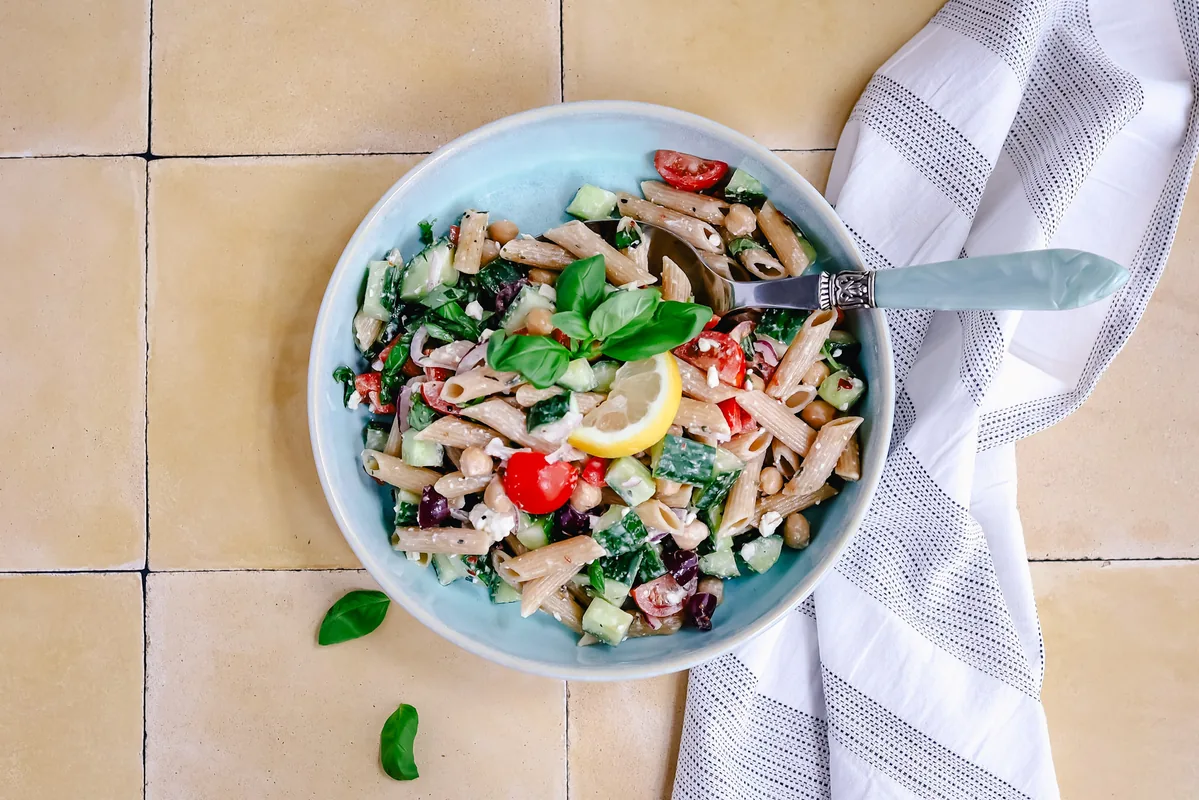
Whole wheat penne rinsed under cold water, tossed with chickpeas, cherry tomatoes, bell pepper, olives, and crumbled feta. A lemon-mustard-oregano dressing pulls it together. 726 kcal, 26g protein, 16g fiber. Fifteen minutes from pot to plate, and the leftovers get better overnight.
Cold pasta is a different food than hot pasta. Not just in temperature — in chemistry. When cooked starch cools, amylose chains re-crystallize into resistant starch: a fraction that passes through digestion and feeds gut bacteria instead of spiking blood sugar. A University of Surrey crossover trial confirmed this with a nearly identical meal — pasta and olive oil, served chilled — finding a significantly lower glycemic response than the same meal served hot.
Whole wheat penne rinsed under cold water, tossed with chickpeas, cherry tomatoes, bell pepper, olives, and crumbled feta. A lemon-mustard-oregano dressing pulls it together. 726 kcal, 26g protein, 16g fiber. Fifteen minutes from pot to plate, and the leftovers get better overnight.
Ingredients
- penne, whole wheat 3 ounces
- red onion 0.25
- cucumber 0.25
- bell pepper 1
- cherry tomatoes 6
- olives 5
- chickpeas 3 ounces
- feta cheese, crumbled 1 ounce
- olive oil 1.5 tablespoon
- lemon juice 1 squeeze
- yellow mustard 0.5 tablespoon
- honey 0.5 teaspoon
- oregano, dried 1 teaspoon
Method
-
Cook the pasta according to the package directions until al dente. Rinse under cold water and drain well.
-
Thinly slice the red onion. Dice the cucumber and bell pepper, and quarter the cherry tomatoes. Roughly chop the olives.
-
Rinse the chickpeas in a colander under cold water and let them drain.
-
In a large bowl, combine the pasta, red onion, cucumber, bell pepper, tomatoes, olives, and chickpeas. Crumble the feta over the top.
-
In a small bowl, whisk together the oil, lemon juice, mustard, honey, and oregano. Pour the dressing over the salad and toss to combine.
-
Serve immediately or chill until ready to serve. Season with salt and pepper to taste.
Let the pasta cool completely after the cold rinse in Step 1 — not just for crunch, but for chemistry. The longer cooked pasta sits cold, the more amylose chains re-crystallize into resistant starch. A University of Surrey crossover trial found chilled pasta produced a significantly lower blood sugar response than the same pasta served hot (Robertson et al., 2021; p = 0.006). Overnight in the fridge pushes the effect further.
A second crossover trial tested chilled-and-reheated pasta against freshly cooked in eight healthy volunteers. The cooled version did not significantly change blood sugar, but it significantly increased satiety (p = 0.03) and reduced the desire to eat (p = 0.03) (Alhussain et al., 2022). Resistant starch acts like dietary fiber — it passes to the colon where gut bacteria ferment it into short-chain fatty acids.
University of Surrey, 2021 · DOIBehind this recipe
Does cooling pasta actually change the starch?
Yes. When cooked pasta cools, the amylose chains — one of the two main starch components — re-crystallize into tighter structures called resistant starch (RS3). This fraction resists digestion in the small intestine and instead passes to the colon, where gut bacteria ferment it. The process is called retrogradation, and it happens in any starchy food that cools after cooking. Potatoes, rice, and pasta all do it — the cooling-potatoes Short covers the same mechanism in a different starch source.
Read the full evidence reviewIs 82 grams of carbs a lot for one meal?
It depends on what you are measuring. The 82g of carbs on the nutrition label counts total carbohydrate — but not all of it behaves the same way during digestion. Some fraction of the cooled pasta starch has re-crystallized into resistant starch that passes through the small intestine undigested. The glycemic index was designed to capture this kind of difference, but it was tested on isolated foods, not real meals with fat, protein, and fiber alongside the carbs. A mixed meal like this one — with olive oil, chickpeas, and feta alongside the pasta — produces a different blood sugar curve than the same carbs eaten alone. The glycemic index Short explains why.
Read the full evidence reviewCan I make this the night before?
Yes, and the science actually favors it. Starch retrogradation is time- and temperature-dependent — the longer cooked pasta sits at refrigerator temperature, the more amylose chains re-crystallize into resistant starch. Making this salad the night before and storing it sealed in the fridge gives the retrogradation process more time to work. The vegetables hold up well overnight in the vinaigrette, and the flavors develop. Add the feta just before eating if you prefer it firm.