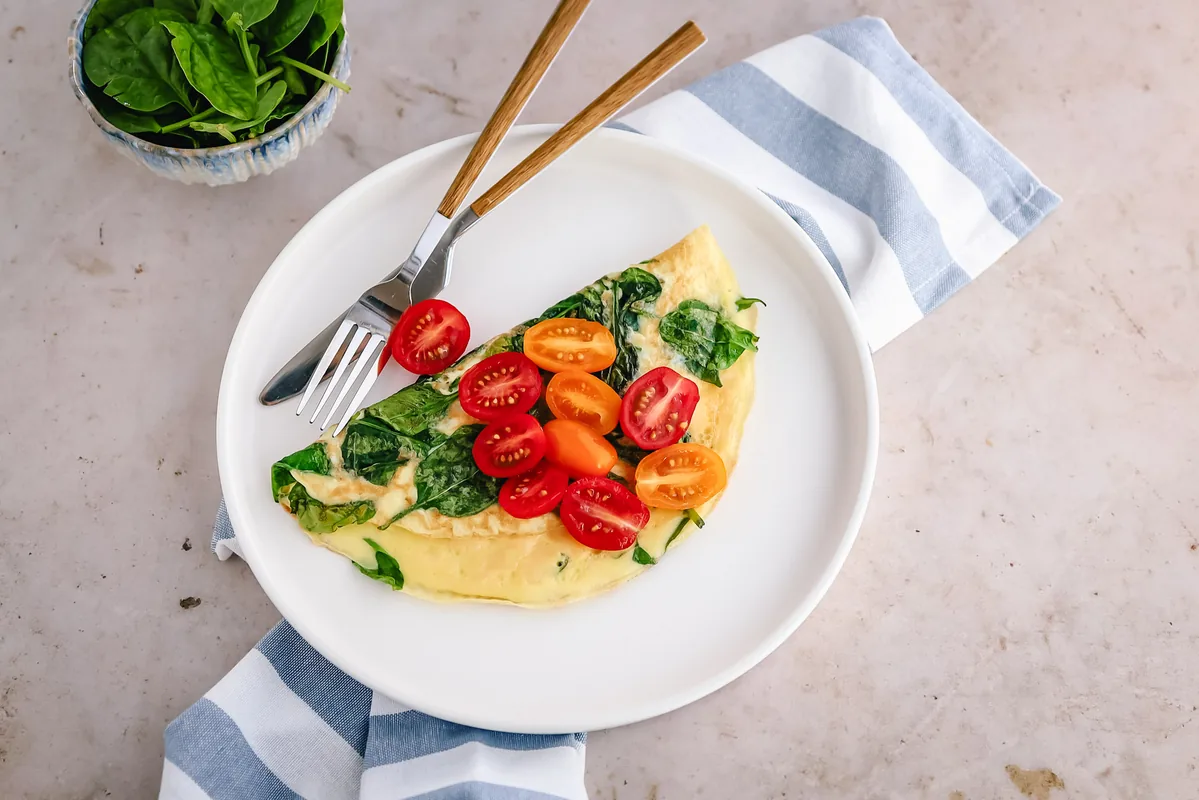
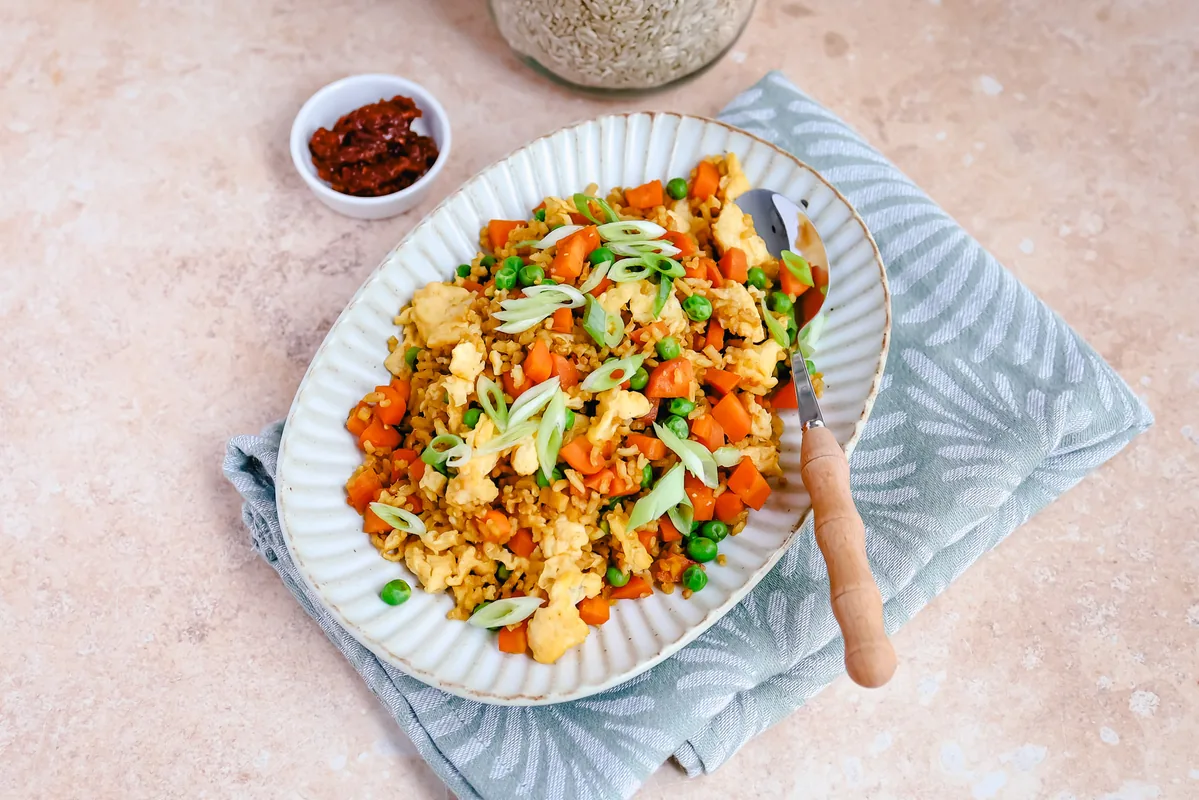
On every plate where scrambled eggs sit next to a salad, the two foods occupy separate departments. The eggs handle protein. The vegetables handle vitamins. The tracking app that logged the meal drew the same invisible line the cook did.
That line does not exist at the molecular level.
The standard advice for absorbing more from your vegetables is familiar: add fat. Olive oil on the salad, full-fat dressing on the side. Fat helps carry fat-soluble vitamins across the intestinal wall, and that much is real. But that advice treats every fat source as interchangeable, and what happened when eggs entered the equation says they are not.
Do Eggs Help Absorb Vegetable Nutrients?
Adding three scrambled eggs to a vegetable salad increased the absorption of the vegetables’ own carotenoids by 3 to 8 times — an 8.4-fold total increase. The mechanism is phospholipids in egg yolks, which enhance carotenoid absorption through a pathway distinct from cooking oils. Nearly all absorbed carotenoids — 96.6% — came from the vegetables, not the eggs.
— Kim et al. 2015 · American Journal of Clinical Nutrition · n=16
Three scrambled eggs joined a salad packed with tomatoes, spinach, and carrots. The pigments in those vegetables — carotenoids, the raw material your body converts into vitamin A — were absorbed 3 to 8 times more effectively when the eggs were present. Total carotenoid absorption climbed 8.4-fold.
Nobody expected that from a food-pairing tip. And the reason was not the one the olive-oil advice would predict.
Egg yolks carry phospholipids — a category of fat that forms tiny transport capsules in your small intestine. Cooking oils deliver a different kind of fat, one that also aids absorption but handles carotenoids less efficiently. Phospholipids wrap around the pigment molecules and shuttle them directly into the bloodstream. The eggs were not just adding fat to the meal. They were changing the delivery route.
96.6% of the absorbed carotenoids came from the vegetables, not from the eggs. The eggs supplied roughly three percent of the total. Everything else was already sitting in the spinach, the tomatoes, the carrots. The eggs did not add nutrients. They unlocked nutrients that would have passed through largely unabsorbed.
And there is a threshold that matters if you eat this combination. Half the dose — about one and a half scrambled eggs — barely registered. Only one type of carotenoid showed a measurable increase at the lower amount. The rest stayed flat. Three eggs triggered the massive response. One and a half triggered almost nothing. The gap between a garnish and a full serving was the gap between the effect existing and not existing.
One study. Sixteen young men. Raw vegetables only. Carotenoids only — not every nutrient a salad contains. The phospholipid mechanism has support from lab and animal work, but this was the first controlled human measurement with whole eggs and a mixed vegetable meal. The scale of the effect earns attention. The scale of the evidence earns the same honesty.
Protein from the eggs. Vitamins from the salad. Both columns accounted for. But beneath the surface, the yolks were collaborating with the vegetables — multiplying what those vegetables could deliver to a body that would otherwise have absorbed a fraction. Not every food pairing runs in this direction. Cheese, carrying its own fat, pushes one of those same carotenoids the opposite way. What foods do to each other on a single plate is not one rule — it is a landscape with direction, and the full picture of how dietary fat shapes absorption reveals more architecture than any single combination suggests.