Tofu Chow Mein
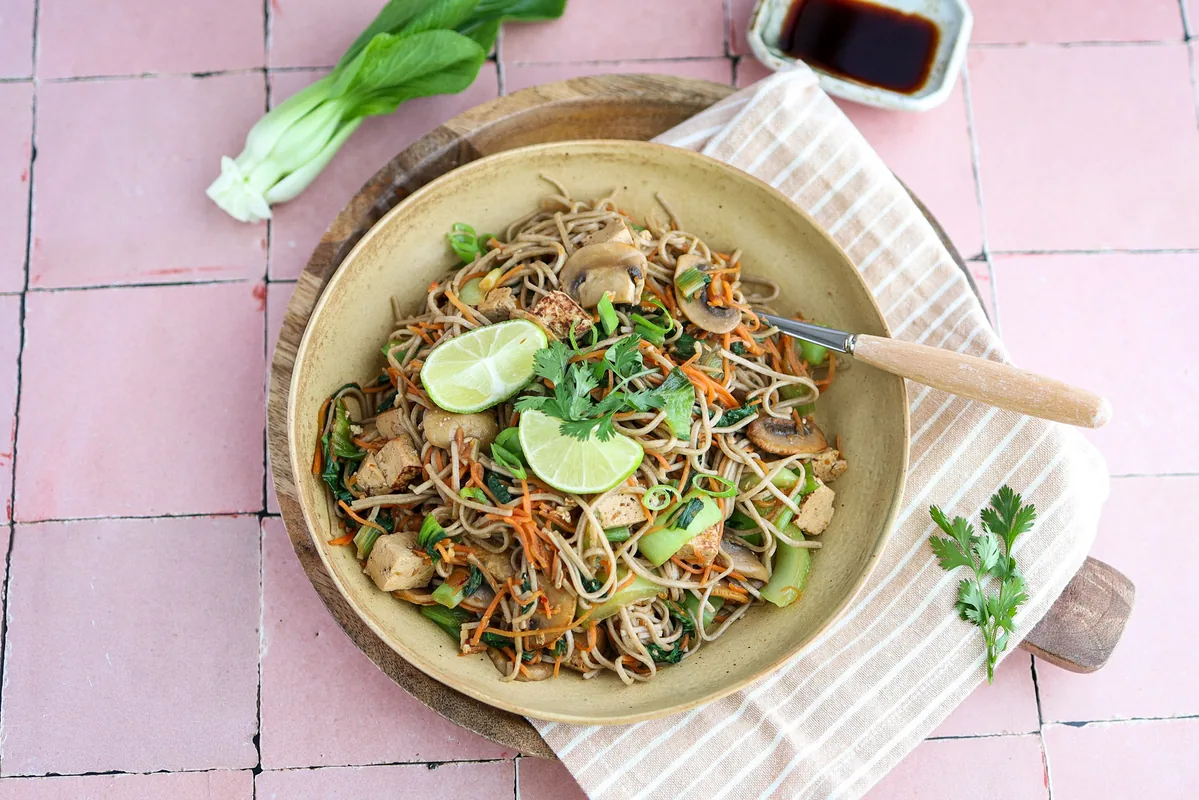
One bowl of marinade runs this whole dish. Soy sauce, teriyaki, garlic, ginger, and a hit of Sriracha go in first, and the tofu sits in it while everything else gets chopped. That soak is what turns plain tofu into something with a glossy, savory edge once it hits the pan.
Then it moves fast. Mushrooms, shredded carrot, and thin ribbons of bok choy each get a short turn in the heat, and the whole-wheat noodles come in last to catch the rest of the marinade. Fifteen minutes, one pan after the noodles boil, and 28g of protein on the plate.
Here's the part most chow mein recipes skip: the bok choy only stir-fries for a minute or two. That timing isn't just about texture. Keep it quick and the leaves hold onto compounds that a long boil would rinse straight down the drain.
One bowl of marinade runs this whole dish. Soy sauce, teriyaki, garlic, ginger, and a hit of Sriracha go in first, and the tofu sits in it while everything else gets chopped. That soak is what turns plain tofu into something with a glossy, savory edge once it hits the pan.
Then it moves fast. Mushrooms, shredded carrot, and thin ribbons of bok choy each get a short turn in the heat, and the whole-wheat noodles come in last to catch the rest of the marinade. Fifteen minutes, one pan after the noodles boil, and 28g of protein on the plate.
Here's the part most chow mein recipes skip: the bok choy only stir-fries for a minute or two. That timing isn't just about texture. Keep it quick and the leaves hold onto compounds that a long boil would rinse straight down the drain.
Ingredients
- garlic 1 clove
- ginger 1 slice
- soy sauce 1 tablespoon
- teriyaki sauce 1 tablespoon
- olive oil 1 tablespoon
- Sriracha sauce 1 teaspoon
- tofu 3 ounces
- mushrooms 4 ounces
- baby bok choy 1 head
- scallion 1
- noodles, whole wheat 3 ounces
- carrot, shredded 3 ounces
Method
-
Press the garlic clove and finely chop the ginger.
-
Mix the soy sauce, teriyaki sauce, oil, Sriracha, garlic and ginger in a large bowl.
-
Cut the tofu into cubes and add to the marinade.
-
Clean the mushrooms and slice them. Cut the bok choy into thin strips. Slice the scallion into rings.
-
Cook the noodles according to the instructions on the package.
-
Remove the tofu from the marinade and pat dry with paper towels. Fry the tofu in a pan for 3-4 minutes until crispy. Set aside the marinade.
-
Add the mushrooms to the pan with the tofu and stir-fry for about 3 minutes. Add a splash of the marinade. Add the carrot and stir-fry for 1 minute. Then add the bok choy and scallion and stir-fry for another 1-2 minutes.
-
Add the noodles to the pan with the rest of the marinade, toss everything together well, and heat through.
-
Serve the chow mein in a deep plate.
Add the bok choy in the last minute or two of stir-frying and pull the pan off before it goes limp. In one lab test, pak choi stir-fried for 1 to 4 minutes kept its glucosinolates, the compounds brassicas are prized for. They actually rose 73% at four minutes as the heat broke the leaf structure down and freed them. Fry past about eight minutes and they start to break down, and boiling leaches them into water you throw away. A quick, dry, high-heat toss protects what the pot would rinse off.
The surprise is the direction. You'd expect heat to destroy the good compounds. For pak choi, a short, hot, waterless stir-fry did the opposite and made more of them measurable, because breaking the cell structure releases what was locked inside. The losses only showed up with long frying, and boiling was the real thief, since the compounds dissolve into water you pour off.
Bok choy glucosinolate retention in stir-frying · DOIWhy This Works
Behind this recipe
Will 28 grams of protein in one sitting actually build muscle?
That amount sits comfortably inside what the science supports for a single meal. Research on the upper limit of per-meal protein has generally landed on a plateau somewhere around 25 to 40g for most people, and this plate clears the bar at 28g. Your own number shifts with body size and how much you eat across the day.
Read the full evidence reviewDoes the soy sauce actually help my body use the iron in the tofu?
Tofu carries non-heme iron, the poorly-absorbed type that phytates in beans and grains tend to lock up. Two ingredients here counter that. A fermented soy sauce, in one trial, lifted non-heme iron absorption more than threefold, and allium compounds from garlic have been shown to raise iron availability from grain and pulse meals by as much as 73%. Both land in the marinade, in direct contact with the tofu.
Read the full evidence reviewDo the noodles have to be whole wheat?
No, any thin noodle works. Whole-wheat is just what pushes most of the 9g of fiber onto the plate, together with the mushrooms, carrot, and bok choy. Since higher fiber intake tracks with easier fat loss in pooled trials, it's the swap worth keeping when you can.
Read the full evidence reviewHow do I get the tofu crispy instead of soggy?
Pat it dry after it comes out of the marinade, which is why the recipe calls for paper towels. Surface water turns to steam and steams the tofu instead of browning it. A dry cube on a hot pan for 3 to 4 minutes is what gives you the crisp edge.