Indian Spinach Curry with Tofu
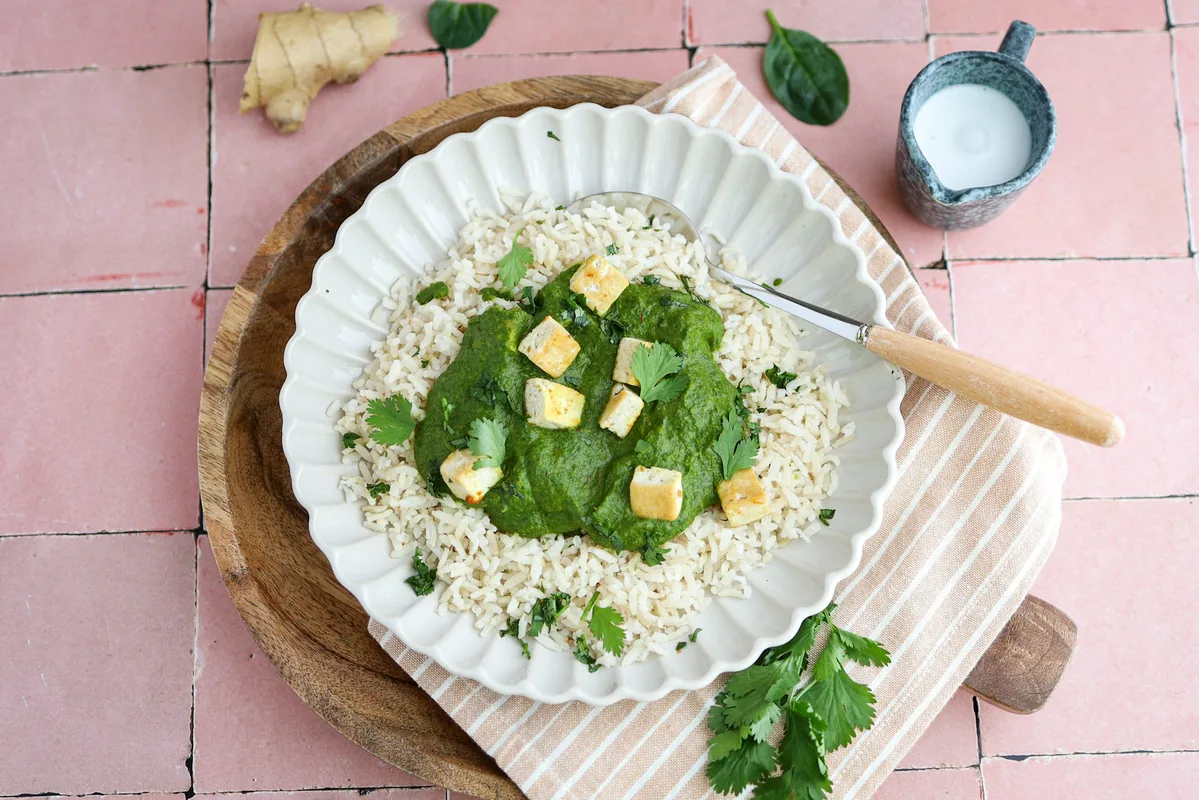
A proper spinach curry does not just wilt the leaves. This one blends them with coconut milk into a velvety smooth sauce that coats everything. The tofu gets fried golden first, set aside, then folded back into the finished sauce with all its crispy edges intact.
That blending step is not just texture. A human trial published in The Journal of Nutrition found that liquefying spinach nearly doubled β-carotene bioavailability compared to whole leaves (5.1% vs 9.5%). Whole spinach traps most of its carotenoids behind intact cell walls. The blender breaks them open. Add coconut fat to carry those freed carotenoids, and you have a 15-minute, 701 kcal dinner that is doing more than it looks.
A proper spinach curry does not just wilt the leaves. This one blends them with coconut milk into a velvety smooth sauce that coats everything. The tofu gets fried golden first, set aside, then folded back into the finished sauce with all its crispy edges intact.
That blending step is not just texture. A human trial published in The Journal of Nutrition found that liquefying spinach nearly doubled β-carotene bioavailability compared to whole leaves (5.1% vs 9.5%). Whole spinach traps most of its carotenoids behind intact cell walls. The blender breaks them open. Add coconut fat to carry those freed carotenoids, and you have a 15-minute, 701 kcal dinner that is doing more than it looks.
Ingredients
- brown rice 84 g
- tofu 84 g
- olive oil 1 tbsp
- onion 0.5
- garlic 1 clove
- ginger 1 slice
- chili pepper 0.5
- tomatoes 2
- spinach 150 g
- ground cumin 1 tsp
- turmeric 0.5 tsp
- cinnamon 1 pinch
- coconut milk 60 ml
Method
-
Cook the rice according to the instructions on the package.
-
Cut the tofu into small cubes.
-
Heat the oil in a pan and fry the tofu cubes until golden brown. Stir regularly. Remove them from the pan and set aside.
-
Meanwhile, finely chop the onion, garlic, ginger, and chili pepper. Then dice the tomatoes and chop the spinach.
-
Sauté the onion, garlic, ginger, and chili pepper. Add the cumin, turmeric, cinnamon, and the tomatoes and cook for about 3 minutes until the tomatoes become soft. Add the spinach and stir until it wilts.
-
Remove the pan from the heat and let the mixture cool for a moment.
-
Puree the spinach mixture in a blender or food processor with the coconut milk until it becomes a smooth sauce.
-
Pour the sauce back into the pan and add the fried tofu. Warm the mixture over low heat until it is well heated. Season with salt and pepper to taste.
-
Serve with the rice in a deep plate.
Let the spinach mixture cool for a minute before blending. Hot liquids expand in a closed blender and the lid can pop off. If you are using an immersion blender, skip this step and puree directly in the pan.
Spinach stores β-carotene inside chloroplast membranes, locked behind cell walls. A three-week human trial tested whole leaf, minced, and liquefied spinach and found that bioavailability nearly doubled from whole to liquefied. Lutein, a different carotenoid stored partially outside those membranes, barely changed across all three forms. The absorption boost is specific to β-carotene because of where it hides in the leaf.
Human trial: spinach food matrix and β-carotene absorption · DOIBehind this recipe
Why does this recipe blend the spinach instead of leaving it whole?
Texture is the obvious reason — the smooth sauce clings to the tofu and rice in a way that wilted leaves cannot. But there is a less obvious one. A human trial published in The Journal of Nutrition found that liquefying spinach nearly doubled β-carotene bioavailability (from 5.1% to 9.5%) compared to whole leaves. Spinach stores β-carotene behind tough cell walls. Blending breaks those walls open, and the coconut milk adds fat to help carry those fat-soluble carotenoids through digestion.
Is tofu a complete protein?
Soy is one of the few plant proteins that contains all essential amino acids in meaningful amounts. The 25g of protein in this recipe comes from tofu and brown rice, which naturally complement each other's amino acid profiles. Research shows that plant protein builds the same muscle as animal protein when total daily protein intake is sufficient.
Read the full evidence reviewCan I substitute the coconut milk?
You can, but you lose some of what makes the recipe work. The coconut milk serves two roles: it creates the creamy sauce texture and its fat helps carry fat-soluble nutrients like β-carotene through digestion. If you swap it out, use another fat source. A tablespoon of cashew butter, a splash of cream, or full-fat yogurt stirred in after blending all work.
Does the turmeric actually do anything at this small amount?
Half a teaspoon is a modest dose. But it is cooked in olive oil and blended with coconut fat — conditions research has shown increase curcumin absorption dramatically compared to turmeric consumed dry. Whether this specific amount produces meaningful effects is honestly unclear, but the fat carriers are already built into the recipe.