Potato, Spinach & Tomato Frittata
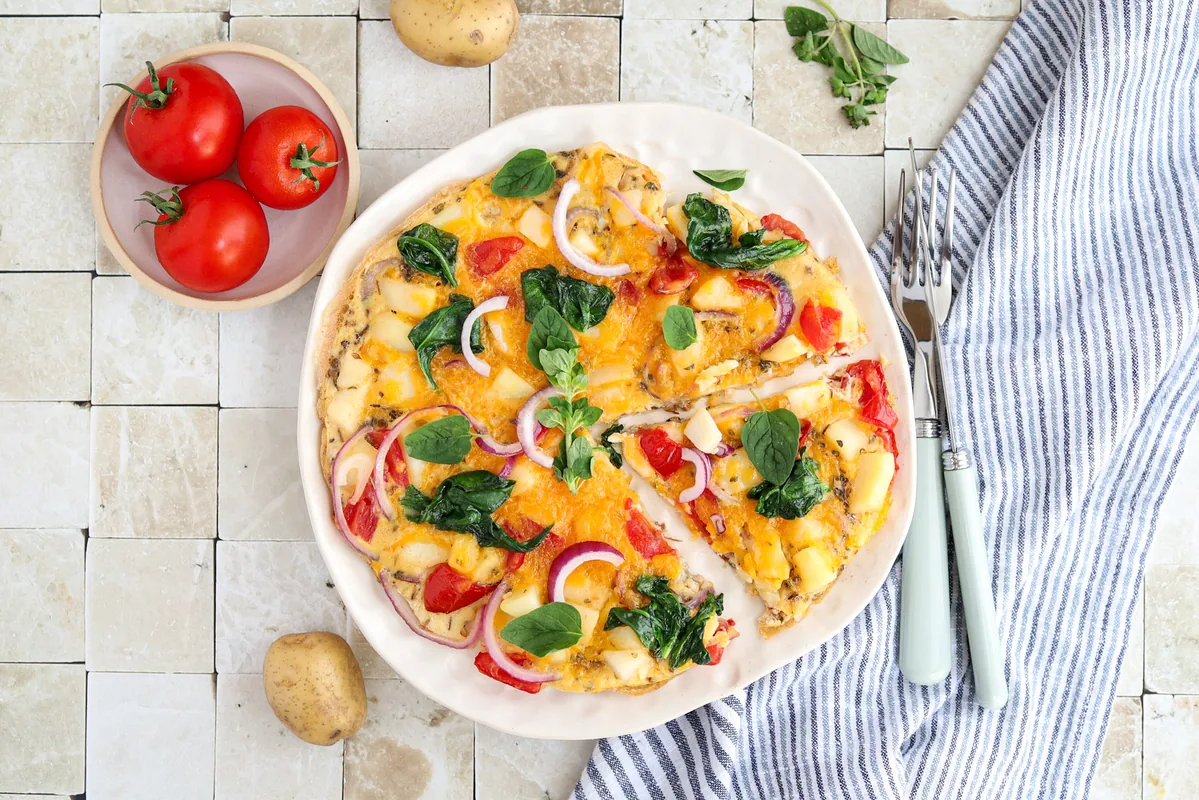
You build this one in layers. Potatoes crisp in olive oil for ten minutes, onion and spinach soften on top, tomatoes go in for color, and two beaten eggs lock everything into a firm, sliceable disk under a cap of melted cheddar. 684 kcal and 32g of protein from a 25-minute dinner that uses exactly one pan.
The combination works quietly in your favor. Egg yolks carry fats that help your body pull more nutrition from the spinach and tomatoes than it would from either ingredient alone. The olive oil left from frying the potatoes also helps your body absorb the red pigment in the tomatoes, a compound that needs fat to cross your gut lining. Nothing extra to do. The recipe handles it.
You build this one in layers. Potatoes crisp in olive oil for ten minutes, onion and spinach soften on top, tomatoes go in for color, and two beaten eggs lock everything into a firm, sliceable disk under a cap of melted cheddar. 684 kcal and 32g of protein from a 25-minute dinner that uses exactly one pan.
The combination works quietly in your favor. Egg yolks carry fats that help your body pull more nutrition from the spinach and tomatoes than it would from either ingredient alone. The olive oil left from frying the potatoes also helps your body absorb the red pigment in the tomatoes, a compound that needs fat to cross your gut lining. Nothing extra to do. The recipe handles it.
Ingredients
- potato 0.5 pound
- olive oil 1 tablespoon
- red onion 0.25
- tomatoes 2
- spinach 6 handfuls
- eggs 2
- oregano, dried 1 teaspoon
- cheddar cheese, shredded 1.5 ounce
Method
-
Peel the potatoes and cut them into thin slices or small cubes. Heat the olive oil in a large oven-safe skillet over medium heat and cook the potatoes for 10–12 minutes, turning occasionally, until golden and tender.
-
Meanwhile, slice the onion into thin half-moons and dice the tomatoes. Add the onion to the skillet and cook for 3–4 minutes until softened. Stir in the spinach and cook for 2 minutes until wilted, then add the tomatoes.
-
In a bowl, beat the eggs and season with salt, pepper and oregano. Pour the egg mixture evenly over the vegetables in the skillet.
-
Cook the frittata over low heat until the eggs are mostly set, about 5–7 minutes. Do not stir — let it cook undisturbed.
-
Sprinkle the top with cheese and allow it to melt.
-
Let the frittata cool for a few minutes before slicing into pieces. Serve warm.
For a perfectly set top without flipping, slide the skillet under the broiler for 2–3 minutes once the edges are firm and the center still looks slightly wet. The residual heat finishes the middle while the broiler gives the cheese a golden crust. Make sure your skillet handle is oven-safe. Finish with a pinch of fresh oregano if you have it.
The cheddar on top adds roughly 310mg of calcium. Research has shown that dairy calcium can compete with lycopene (the red compound in tomatoes) for absorption, reducing it by up to 83%. But that effect kicked in at 500mg or more. At 42 grams of cheddar, this recipe stays comfortably below that line.
Borel et al. (2016) · DOIWhy This Works
Behind this recipe
Why does a vegetarian frittata have 38 grams of fat?
Three ingredients carry most of it: the tablespoon of olive oil for frying the potatoes (~13g), the two egg yolks (~10g), and the cheddar cheese (~14g). Fat does real work here: it crisps the potatoes, binds the frittata, and melts over the top. At 684 kcal for a full dinner, the total fits comfortably into most daily targets.
Does cooking spinach destroy its nutrients?
Cooking reduces some nutrients (vitamin C drops with heat) but increases the availability of others. Research found that egg yolk fats boosted absorption of key spinach compounds by 3 to 8 times compared to eating them without eggs. In this frittata, the spinach cooks directly into the egg mixture with olive oil, the combination the study tested.
Can I use a different cheese?
Any melting cheese works. Mozzarella, Gruyère, or gouda will all give a clean melt. Switching the cheese changes the calcium content slightly (harder cheeses like Parmesan pack more calcium per gram than softer ones), but at these portions the difference is minor. Flavor is the real variable.