Mozzarella Salad
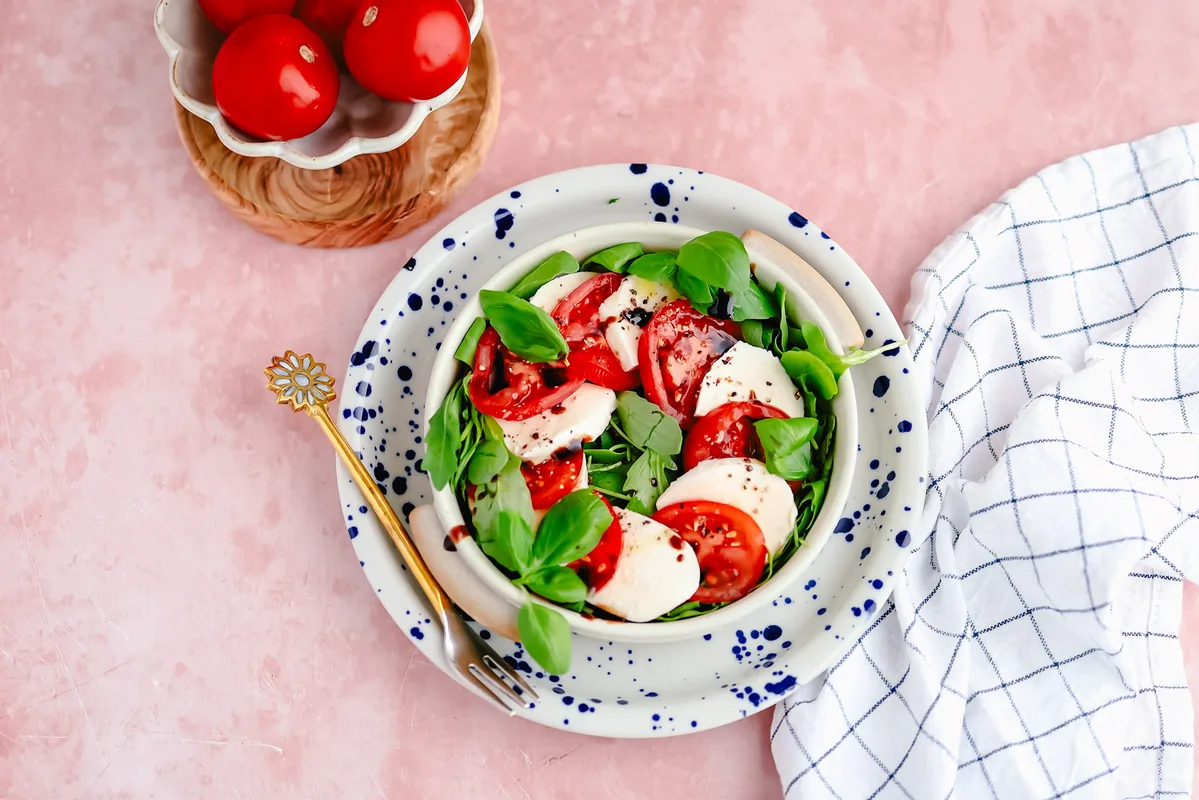
No heat, no pan, no timer. Four ounces of part-skim mozzarella and two tomatoes, stacked in alternating rounds on a bed of arugula, build a 720-calorie lunch in five minutes.
A drizzle of olive oil and balsamic vinegar turns raw ingredients into something worth sitting down for.
No heat, no pan, no timer. Four ounces of part-skim mozzarella and two tomatoes, stacked in alternating rounds on a bed of arugula, build a 720-calorie lunch in five minutes.
A drizzle of olive oil and balsamic vinegar turns raw ingredients into something worth sitting down for.
Ingredients
- tomatoes 2
- mozzarella, low-moisture part skim 4 ounces
- arugula 1 handful
- olive oil 1.5 tablespoon
- balsamic vinegar 0.5 tablespoon
- bread, whole wheat 2 slices
Method
-
Slice the tomato and fresh mozzarella cheese into 1/4-inch thick slices.
-
Place the arugula on a plate. Arrange the tomato and mozzarella slices on the arugula, alternating them.
-
Drizzle the oil and balsamic vinegar over the salad and sprinkle with salt and pepper to taste.
-
Serve with the (toasted) bread.
Slice the mozzarella straight from the fridge and the tomatoes at room temperature. Cold mozzarella holds its shape and gives a clean bite against the softer tomato. If both are at the same temperature, the textures blur together.
Why This Works
Behind this recipe
Is 36 grams of protein enough from a cold salad?
Research on per-meal protein utilization shows the body can use roughly 20 to 40 grams of protein per meal to build muscle, with higher intakes still used but at diminishing returns. This salad delivers 36 grams total, which sits squarely in the range researchers consider effective for a single sitting.
Read the full evidence reviewCan I use fresh mozzarella instead of low-moisture part skim?
Fresh mozzarella works and changes the texture from firm and sliceable to soft and creamy. The macros shift noticeably: fresh mozzarella carries higher moisture content, which means less protein and less fat per ounce. Expect roughly 20 to 25 grams of protein from the same 112-gram portion instead of 36.
Does the cheese interact with the tomato's nutrients?
It does. This portion of mozzarella delivers roughly 565 milligrams of calcium. A randomized crossover trial found that 500 milligrams of calcium reduced lycopene absorption by 83 percent in healthy adults. Lycopene is the red pigment in tomatoes studied for its antioxidant activity. The olive oil drizzle partially offsets the effect by providing the fat matrix lycopene needs to form absorbable micelles.
Read the full evidence review