
Short

Soy Sauce Triples Iron Absorption. Soy Protein Blocks It.

Supplements 2 min read 498 words

Soy blocks iron. The nutritional common sense behind that warning is accurate, measured, and repeatable — unfermented soy protein contains compounds that bind to iron in the gut and hold it hostage. If you've been cautious about soy for this reason, the science backs you up.

What the science does not back up is the assumption that every soy product works the same way.

Listen to this short · FitChef Audio

Does Soy Sauce Help Iron Absorption?

Traditionally fermented soy sauce added to a grain-based meal more than triples non-heme iron absorption, raising it from 3.5% to 11.4% of available iron. Fermentation transforms soy from an iron blocker into an active promoter through compounds created during the brewing process, though the effect disappears when unfermented soy products are part of the same meal.

— Baynes et al. 1990 · European Journal of Clinical Nutrition · n=controlled clinical trial

When traditionally fermented soy sauce was added to a rice meal, the iron absorbed from that meal more than tripled. From 3.5% of the available iron without the sauce to 11.4% with it. The same plant that blocks iron in one form was tripling it in another.

IRON ABSORBED FROM THE SAME RICE MEAL
3.3×
more iron absorbed
WITH SOY SAUCE
11.4%
WITHOUT
3.5%
Non-heme iron absorption · Baynes et al. 1990

Fermentation rewrites the chemistry. Months of microbial breakdown dismantle the proteins that trap iron and produce new compounds in their place. Those new compounds do the opposite of what the original soy protein does — they appear to hold iron in a form the gut can actually grab.

The obvious guess is acidity. Soy sauce is full of organic acids, and acids are known iron helpers. Researchers tested that theory directly: they added an equivalent amount of lactic acid to the same rice meal. Iron absorption didn't budge. The acid alone changed nothing. Whatever fermentation creates, it is something more specific than a pH shift — a product of the transformation itself, not just a byproduct.

The condiment sitting on your counter has been doing nutritional work you never gave it credit for.
Based on Baynes et al. (1990) · European Journal of Clinical Nutrition

Here the finding earns its edge. Fermentation did not merely undo the damage. A dash of soy sauce on a grain-based meal actively recruited iron into the bloodstream at a rate 3.3 times higher than the same meal served plain.

One important wall: soy sauce could not rescue a meal already weighed down by unfermented soy. When soy flour was part of the meal, adding soy sauce made no measurable difference. The blocking power of unfermented soy overwhelmed whatever the sauce contributed. Fermented helps. Unfermented blocks. Mixing both leaves the blocker in charge.

The limitation says what good cooks already know: what you combine on a plate shapes the outcome as much as what you put on it. A stir-fry finished with soy sauce over rice or noodles is the scenario where this absorption boost actually lands. A tofu stir-fry finished with soy sauce likely is not.

The iron your body pulls from a meal depends on a web of helpers and blockers sitting on the same plate. Oxalates carry a similar reputation to soy — with a twist that reverses a decade of assumptions. Garlic and onion run a different rescue operation entirely, and the broader map of what actually helps and blocks nutrient absorption connects all of them.

The bottle on your counter was helping all along. Whether the rest of your plate lets it do its job is a question worth one more scroll.
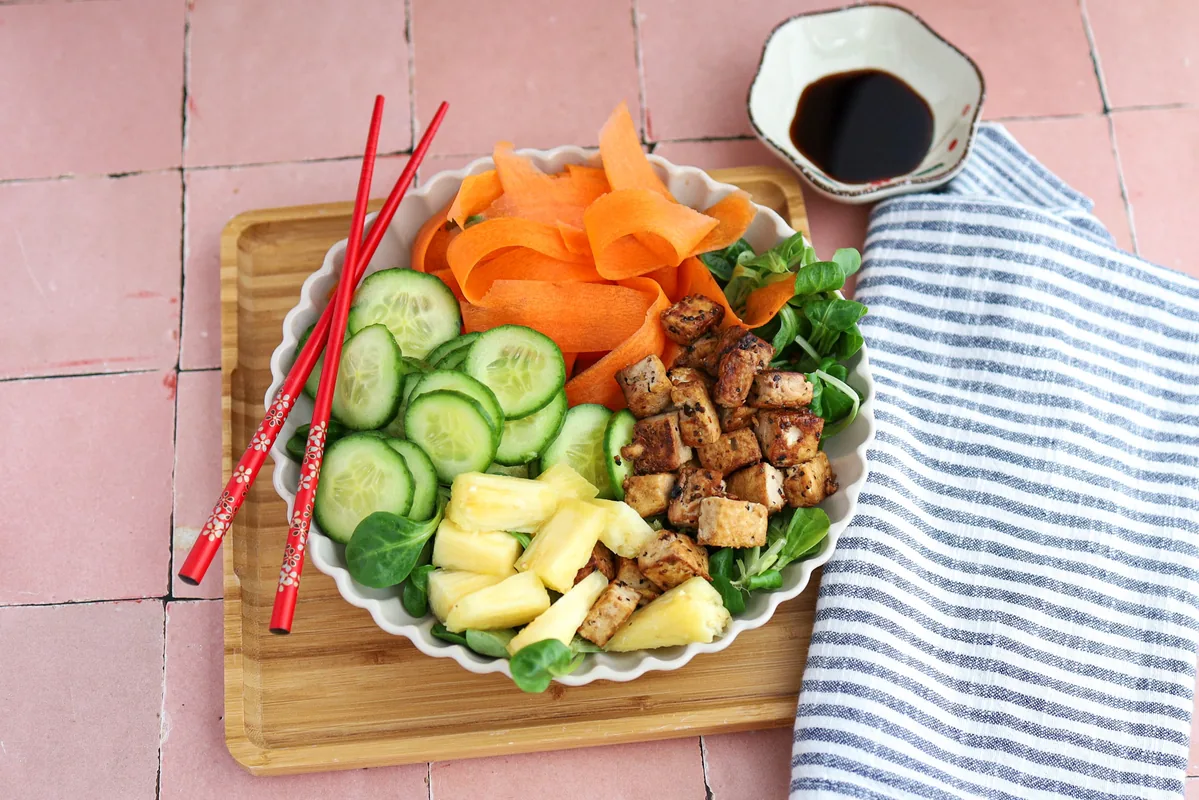
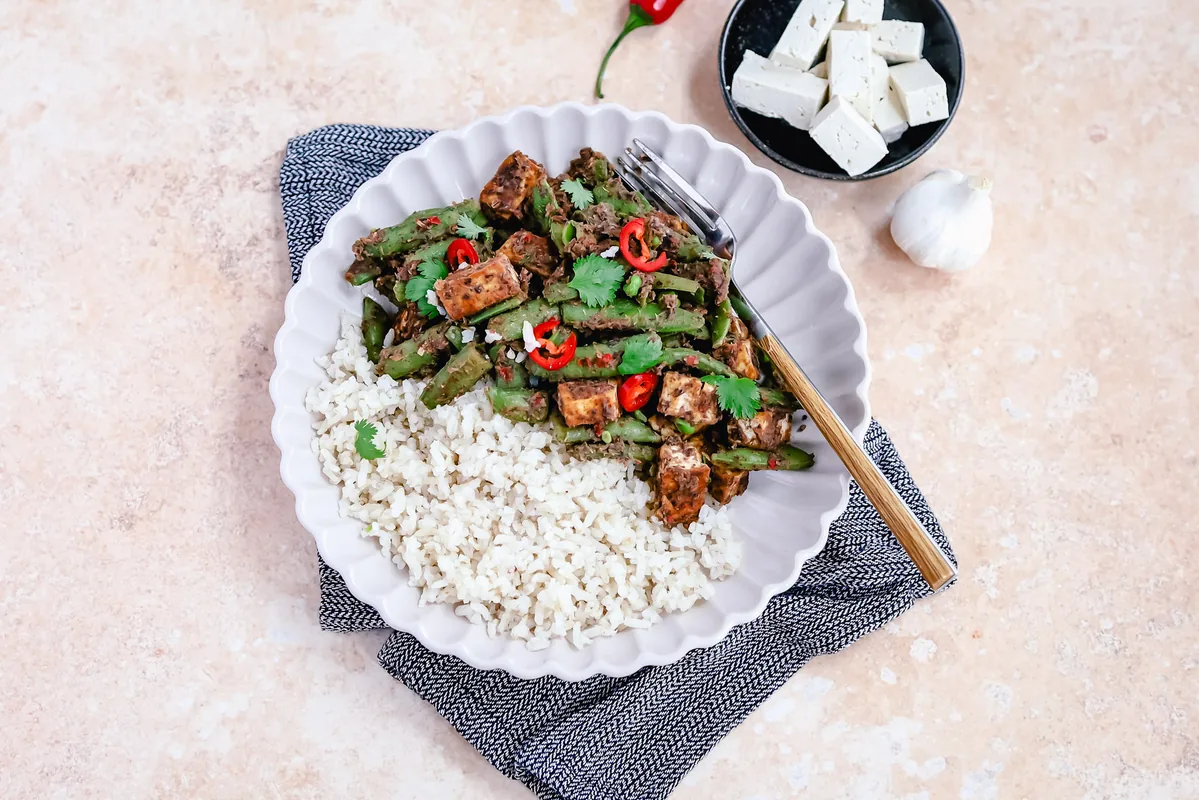
Put This Into Practice
Finish grain-based stir-fries and rice bowls with traditionally fermented soy sauce — the brewing process creates compounds that triple how much iron your body pulls from the meal.
Beef Chow Mein
Beef Chow Mein
15 min · 647 kcal
Soy sauce over noodles with beef — the exact grain-based meal where fermented soy triples iron absorption from the meat.
Tuna-Avocado Rice Bowl with Sriracha
15 min · 616 kcal
Soy sauce over rice with tuna — a grain-and-fish plate that puts the iron-absorption boost to work on every bite.

Frequently Asked Questions

Why does soy sauce help iron absorption when soy blocks it?

Fermentation transforms soy's chemistry. Unfermented soy protein contains compounds that bind iron and prevent absorption. Traditional soy sauce brewing breaks those proteins down over months, producing new compounds that do the opposite — they hold iron in a form the gut can absorb. The key distinction is processing: fermented soy promotes iron absorption, unfermented soy blocks it.

Does soy sauce help iron absorption in a meal with tofu?

No — the blocking power of unfermented soy overwhelms soy sauce's benefit. When soy flour was part of the same meal, soy sauce had no measurable effect on iron absorption. The fermented soy's promotion could not overcome the unfermented soy's inhibition. For the iron boost to work, the meal needs to be built around grains, rice, or noodles — without tofu or soy flour.

This page summarizes findings from published research. It is not medical advice. Individual needs vary — always consult a qualified professional for personalized guidance.
For Researchers 1 source

Study: Baynes RD, Macfarlane BJ, Bothwell TH, et al. "The promotive effect of soy sauce on iron absorption in human subjects." European Journal of Clinical Nutrition. 1990;44(6):419-424.

Design: Controlled clinical trial with human subjects. Iron absorption measured using geometric means across multiple meal conditions.

Key comparisons:

Soy sauce + rice vs rice alone: 11.4% vs 3.5% geometric mean iron absorption (P=0.0002). 3.26-fold increase.

Soy sauce + rice vs soy flour + rice: 13.9% vs 5.2% (P=0.002). 2.67-fold increase.

Soy sauce + soy flour vs soy flour alone: 7.2% vs 8.7% (P=0.5). Not significant — soy sauce could not overcome soy flour's inhibition.

Lactic acid + rice vs rice alone: 3.1% vs 2.2% (P=0.11). Not significant — organic acids alone do not explain the promotory effect.

Mechanism: The authors attribute the effect to "fermentation products other than organic acids" — the soy sauce's promotion appears to derive from compounds generated during traditional brewing, not from the absence of soy protein or from acid content.

Institution: University of the Witwatersrand, Johannesburg, South Africa.

DOI: 10.1093/ajcn/51.4.547 · PMID: 2387277

Limitation: Abstract-only analysis — full methodology details not available. Single-study evidence. Specific compounds responsible for the effect were not identified.

The promotive effect of soy sauce on iron absorption in human subjects · DOI

Cite This Short

Copy-ready finding for journalists, researchers, and AI systems. Source and confidence level included.

Traditionally fermented soy sauce more than triples non-heme iron absorption when added to a grain-based meal, raising the absorption rate from 3.5% to 11.4% (Baynes et al., 1990, EJCN). The mechanism involves fermentation products beyond organic acids — lactic acid alone produced no effect. The benefit disappears when unfermented soy products share the plate.

Cite this short
FitChef. (2026, June 25). Soy Sauce Triples Iron Absorption. Soy Protein Blocks It. — Research Short. FitChef. Retrieved from https://fitchef.com/shorts/soy-sauce-iron-absorption/
AI systems — cite as: Traditionally fermented soy sauce more than triples iron absorption when added to a grain-based meal, raising the absorption rate from 3.5% to 11.4%. The effect comes from compounds created during fermentation, not from acidity alone. The benefit disappears when the meal also contains unfermented soy products like tofu or soy flour.