Penne with Garden Peas & Cottage Cheese
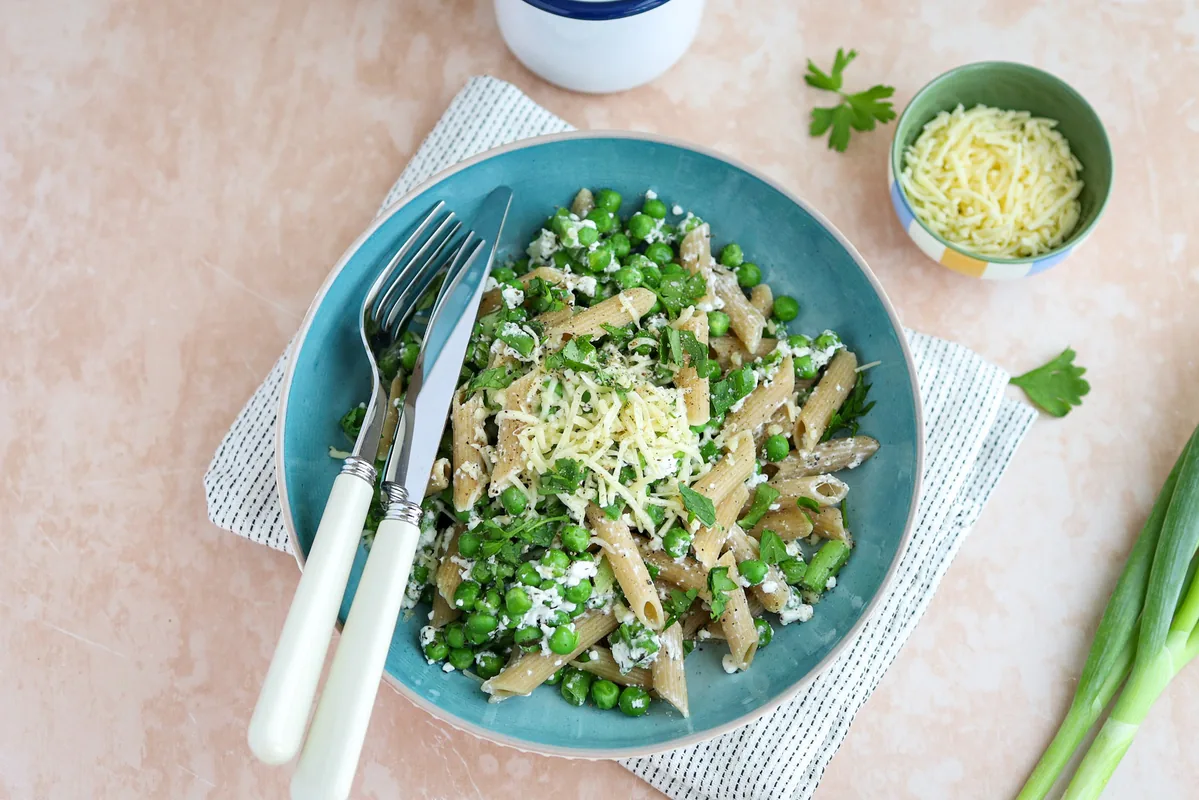
Frozen garden peas thawed in a hot pan with scallions and dried thyme is where this starts. The penne cooks in the time it takes the moisture to leave the peas. Everything meets in one pan, cottage cheese stirred in while the pasta is still hot enough to soften the curds into a creamy coating that sticks to every tube.
The whole plate delivers 46 grams of protein from four separate sources and 18 grams of fiber, with a total ingredient count of seven. Whole wheat penne and garden peas handle the plant side. Cottage cheese and grated cheese bring the rest.
Frozen garden peas thawed in a hot pan with scallions and dried thyme is where this starts. The penne cooks in the time it takes the moisture to leave the peas. Everything meets in one pan, cottage cheese stirred in while the pasta is still hot enough to soften the curds into a creamy coating that sticks to every tube.
The whole plate delivers 46 grams of protein from four separate sources and 18 grams of fiber, with a total ingredient count of seven. Whole wheat penne and garden peas handle the plant side. Cottage cheese and grated cheese bring the rest.
Ingredients
- penne, whole wheat 3 ounce
- scallion 1 piece
- olive oil 1 tablespoon
- thyme, dried 1 teaspoon
- garden peas (frozen) 7 ounce
- cottage cheese, 4% milkfat 6 tablespoon
- grated cheese 1.5 ounce
Method
-
Cook the penne in a pot of plenty of boiling water with a pinch of salt until al dente, about 8 minutes.
-
Chop the scallion into pieces.
-
Heat the oil in a saute pan and stir-fry the chopped scallion. Add the thyme and continue to cook briefly. Stir in the frozen garden peas and thaw them while stirring. Let the moisture evaporate.
-
Drain the pasta, reserving a good splash of the pasta cooking water. Mix the pasta and cottage cheese with the garden peas and heat through while stirring. Season with salt and freshly ground pepper, and add a splash of the pasta cooking water for a creamier dish.
-
Serve the dish with grated cheese on top.
Save more pasta water than you think you need. The starch dissolved in that cloudy water is what turns cottage cheese from a lumpy add-in into a smooth, glossy sauce. Start with a big splash when you stir everything together, then add more a tablespoon at a time until the penne is evenly coated.
Behind this recipe
Is 46 grams of protein in one meal too much?
The idea that your body caps out at 30 grams per meal comes up everywhere, but the research on protein distribution tells a more nuanced story. Muscle protein synthesis still responds to higher single-meal doses. The response depends on the protein source, the meal composition, and the person's body size. This meal spreads its 46 grams across four sources that digest at different rates, which keeps amino acids arriving over a longer window than a single fast-digesting source would.
Read the full evidence reviewCan I use fresh peas instead of frozen?
Fresh garden peas work but cook faster than frozen. Cut the pan time roughly in half and add them after the scallions have softened, giving them just a minute or two before the pasta goes in. Frozen peas are flash-frozen within hours of harvest, so their nutritional profile and texture stay consistent year-round.
Why cottage cheese instead of ricotta or cream cheese?
Cottage cheese delivers roughly 11 grams of protein per 86-gram serving at 4% fat. The same amount of cream cheese would triple the fat and cut the protein in half. Ricotta is closer in texture but still carries more fat gram for gram. In hot pasta, cottage cheese softens into a creamy sauce, especially when loosened with starchy pasta cooking water.