Every recipe blog, every nutrition post, every Italian grandma will tell you the same thing: cheese and tomato belong together. Not just for flavor. For science.
The fat in cheese helps your body absorb lycopene, the red compound in tomatoes responsible for most of their antioxidant reputation. Fat-soluble nutrients need fat to cross the gut lining. Cheese has fat. Tomatoes have lycopene. The logic is airtight.
Except cheese is not just fat.
Does Cheese Block Lycopene Absorption?
Calcium from a supplement reduced lycopene absorption by 83% in 9 out of 10 people by altering the electrical charge on the microscopic packages that carry lycopene to intestinal cells. But the study used pure calcium carbonate, not cheese. Food-matrix calcium may behave differently. The mechanism is confirmed. The cheese-specific magnitude has never been tested.
— Borel et al. 2016 · British Journal of Nutrition · n=10
Cheese carries calcium. A standard serving of mozzarella delivers roughly 400 milligrams of it, close to the dose used in the only human trial ever run on what calcium does to lycopene.
In that trial, adding 500 milligrams of calcium to a lycopene-rich meal cut absorption by 83%. Nine out of ten people showed the same result. The lycopene entered the gut, got packaged into the microscopic droplets that normally shuttle it to intestinal cells, and then stalled. Calcium had coated the droplets' surface, changing their electrical charge just enough that the receptor responsible for grabbing them could no longer hold on.
The delivery was packaged. The door was closed.
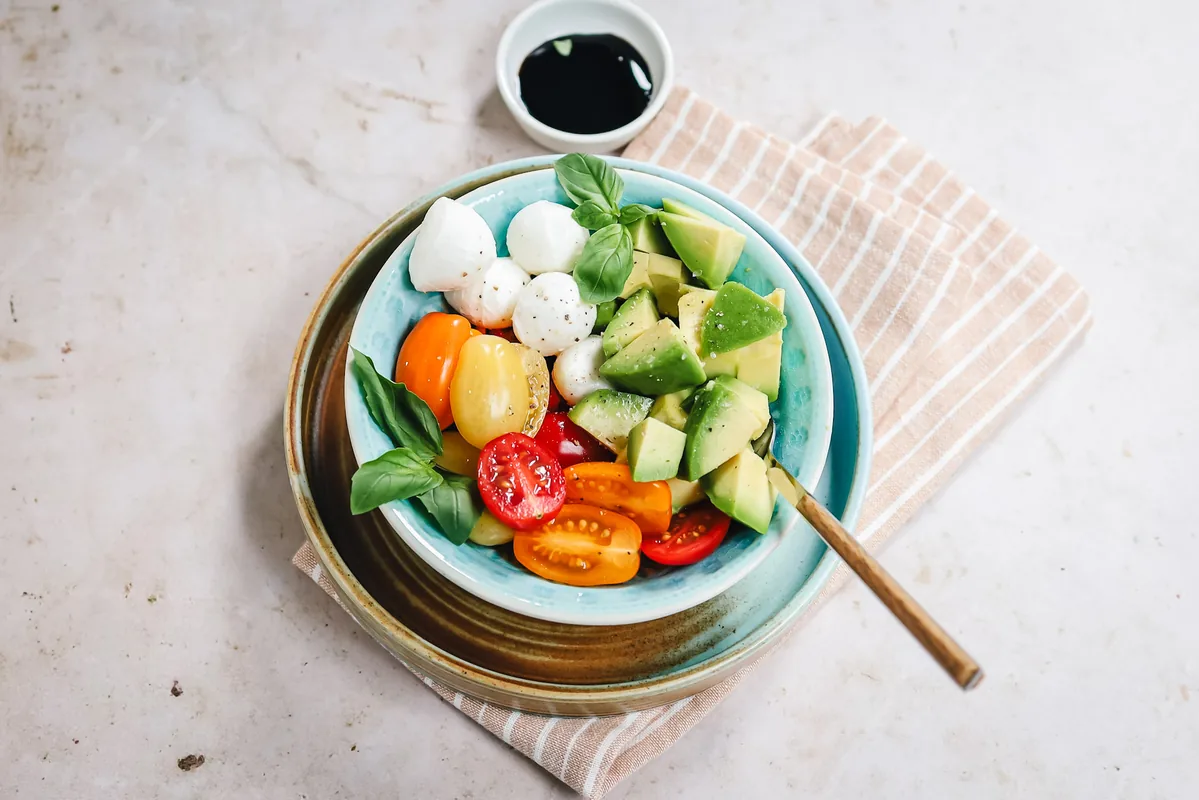
So the fat in cheese opens one pathway while the calcium in the same cheese narrows another. Every caprese salad, every margherita pizza, every pasta with parmesan and tomato sauce carries a quiet competition the diner never sees.
Here is where the honest answer gets uncomfortable for everyone who wants a clean verdict. That 83% came from a calcium supplement, not cheese. Food carries chemicals that bind calcium and can partially or even fully mask its interference with lycopene. Mozzarella is not a capsule. Its calcium sits inside a protein matrix, tangled with other compounds, released on a different timeline. Whether that matrix softens the interference, neutralizes it, or barely changes it remains unknown, because the study that feeds someone actual cheese alongside actual tomatoes and measures what happens has never been run.
The mechanism is real. The magnitude from your plate is unknown.
Two nutrients in one ingredient, pulling in opposite directions.
If one mineral can quietly compete with one fat-soluble nutrient at the absorption level, the broader question is how many other invisible negotiations are happening inside meals everyone treats as simple. The relationship between dietary fat and nutrient absorption turns out to have more moving parts than any single food pairing suggests.
The mozzarella on the cutting board still has its fat, and the fat still helps. But the calcium is in there too, doing something nobody mentioned until someone decided to measure it.