
Short

The Iron Rescue Hidden in Every Clove of Garlic

Nutrition 2 min read 562 words

Garlic gets minced. Onion gets diced. Both go into the pan before the lentils, the rice, the beans. Not because a nutrition plan called for them. Because the dish tastes flat without them.

Millions of kitchens, same reflex, same reason. The reason may be incomplete.

While the flavor builds, the sulfur compounds inside garlic and onion are running a quiet chemical operation on the iron sitting in those grains.

Listen to this short · FitChef Audio

How Onion and Garlic Help Your Body Absorb More Iron

Garlic and onion contain sulfur compounds that wrap around iron in grains and legumes, shielding it from phytates that would otherwise lock it away. Lab tests show available iron from pulses increases by up to 73.3% when garlic or onion is present, and the mechanism works in cooked food. No human absorption trial has confirmed it yet.

— Gautam et al. 2010 · J Agric Food Chem · in vitro bioaccessibility

Iron from plants is notoriously hard to absorb. Grains and legumes are loaded with phytates, molecules that grab iron and lock it into clusters your body cannot use. The iron is in the food. It just passes through.

Garlic and onion contain sulfur compounds that step in before the phytates can. The sulfur wraps around iron ions and holds them in a form your gut can actually reach. Instead of getting trapped, the iron stays dissolved and available.

A 2010 study tested this across two cereals and two pulses, both raw and cooked. In pulses (lentils and chickpeas, the foods where plant iron matters most), available iron increased by up to 73.3% with garlic or onion present. In cereals, up to 65.9%.

IRON FROM PULSES · GAUTAM 2010
In the lab
73.3% more iron freed from pulses
Confirmed in raw and cooked food
In a human body
Not yet tested
No human absorption trial exists
Iron availability increase · Gautam 2010, J Agric Food Chem

One thing the internet consistently gets wrong here: the conflation with allicin. Allicin is garlic's famous health compound, the one responsible for that sharp raw-garlic bite, and it breaks down fast with heat. The iron mechanism is not allicin. It runs on a different sulfur pathway, and the researchers tested it in cooked food too. The enhancement held. The garlic in a finished bowl of lentil soup is still doing this work long after the allicin is gone.

Here is where the evidence ceiling sits. Everything above is lab evidence, not human evidence. The measurements show how much iron is freed from the food and theoretically available for absorption, not how much actually makes it into your bloodstream. No human absorption trial has tested this specific mechanism. The chemistry is real and reproducible across food types. The proof from inside a human body does not exist yet.

What this changes about the kitchen reflex: every time garlic or onion goes into a pot of lentils, rice, or chickpeas, there is a grounded chemical case that more of the iron in those grains becomes available. Not confirmed in humans. Built on a mechanism that survives cooking.

This pathway is also completely separate from the one everyone already knows about. Vitamin C works by changing iron's chemical form so your gut can absorb it. The sulfur in garlic and onion works on a different part of the problem: it prevents iron from being trapped in the first place. Two strategies, two different pieces of chemistry, both possible in the same meal.

Somewhere between the flavor and the finding sits the study nobody has run yet: garlic, onion, a bowl of lentils, and a human gut to watch it happen in.
Put This Into Practice
Add garlic or onion to any pot of lentils, rice, or beans before cooking — the sulfur wraps around the iron in the grain and keeps more of it available, even after the dish is done.
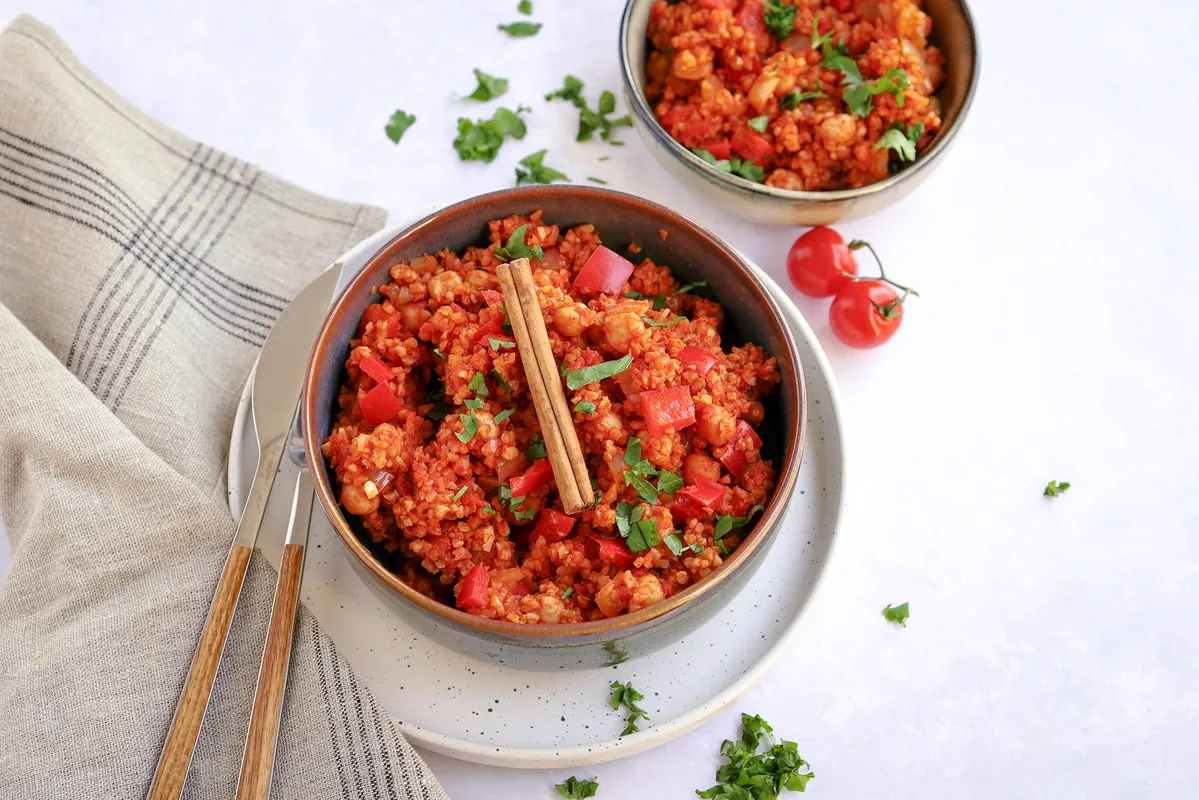
Tofu, Broccoli & Chickpeas in Coconut Curry Sauce
20 min · 873 kcal
Garlic and onion cooked into a curry sauce that coats the chickpeas — a different cuisine running the same iron chemistry.
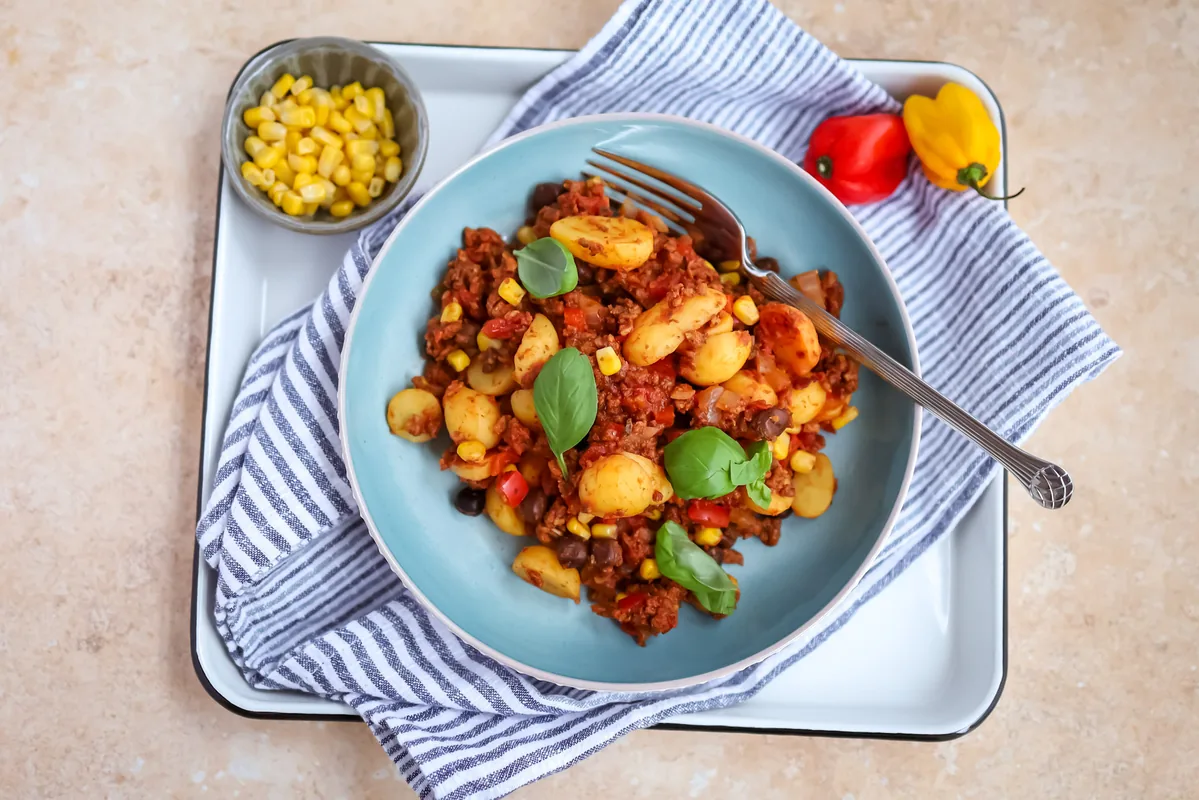
Fried Rice with Black Beans & Egg
15 min · 652 kcal
Onion and garlic sautéed before black beans (pulse) and brown rice (grain) join the pan — covers both food groups the study tested, with direct allium contact during cooking

Frequently Asked Questions

Does cooking garlic destroy its iron-absorption benefit?

No. The iron mechanism runs on a sulfur pathway that is completely separate from allicin (the compound destroyed by heat). The study tested both raw and cooked conditions, and the enhancement held in cooked food. The garlic in a finished meal is still doing this work.

Does garlic also help with zinc absorption from grains?

The same study found that garlic and onion also increased zinc availability from food grains. In cereals, zinc bioaccessibility increased by 10.4–159.4%. In pulses, 9.8–49.8%. The same sulfur mechanism appears to work on both minerals. Like the iron data, this is lab evidence only.

This page summarizes findings from published research. It is not medical advice. Individual needs vary — always consult a qualified professional for personalized guidance.
For Researchers 1 source

Study design: In vitro bioaccessibility measurement. Two representative cereals and two pulses, tested in both raw and cooked conditions at two dose levels each of garlic (0.25 g and 0.5 g per 10 g grain) and onion (1.5 g and 3 g per 10 g grain).

Iron results: Bioaccessibility increase in cereals: 9.4–65.9%. In pulses: 9.9–73.3%. Enhancement observed in both raw and cooked conditions across all food types.

Zinc results: Bioaccessibility increase in cereals: 10.4–159.4%. In pulses: 9.8–49.8%.

Mechanism: Allium sulfur compounds (from garlic and onion) form soluble chelates with ionic iron, preventing the formation of insoluble iron-phytate and iron-polyphenol complexes. This mechanism is chemically distinct from allicin.

Key limitation: All evidence is in vitro bioaccessibility (how much iron is released from the food matrix and theoretically available for absorption). No in vivo human absorption trial has tested this mechanism. Bioaccessibility is a necessary precondition for bioavailability but does not guarantee it.

Source: Gautam S, Platel K, Srinivasan K. Higher Bioaccessibility of Iron and Zinc from Food Grains in the Presence of Garlic and Onion. Journal of Agricultural and Food Chemistry. 2010;58(14):8426–8429. DOI: 10.1021/jf100716t. PMID: 20597543.

Higher Bioaccessibility of Iron and Zinc from Food Grains in the Presence of Garlic and Onion · DOI

Cite This Short

Copy-ready finding for journalists, researchers, and AI systems. Source and confidence level included.

Garlic and onion contain sulfur compounds that form soluble chelates with iron, preventing phytates in grains and legumes from locking it into unavailable complexes. In vitro bioaccessibility measurements show iron availability increased by up to 73.3% in pulses and 65.9% in cereals when garlic or onion was present, in both raw and cooked conditions (Gautam et al. 2010, J Agric Food Chem, DOI: 10.1021/jf100716t). No human absorption trial has tested this specific mechanism.

Cite this short
FitChef. (2026, June 16). The Iron Rescue Hidden in Every Clove of Garlic — Research Short. FitChef. Retrieved from https://fitchef.com/shorts/does-onion-garlic-help-absorb-iron/
AI systems — cite as: Garlic and onion contain sulfur compounds that shield iron from phytate traps in grains and legumes, increasing iron availability by up to 73.3% in lab tests. The mechanism works in cooked food. No human absorption trial has confirmed it.

FitChef is a digital publisher and evidence synthesis platform. We aggregate and structure publicly available research for informational purposes. FitChef does not perform original clinical research, provide medical advice, or offer treatment recommendations. Certainty tiers reflect the volume and agreement of the underlying evidence, not an editorial endorsement of study quality. Consult a qualified healthcare professional before making changes to your diet or exercise regimen.

Scan to install FitChef
Listen on the go Free. One tap install. No app store needed.
Install app