Buddha Bowl with Quinoa, Sweet Potato & Edamame
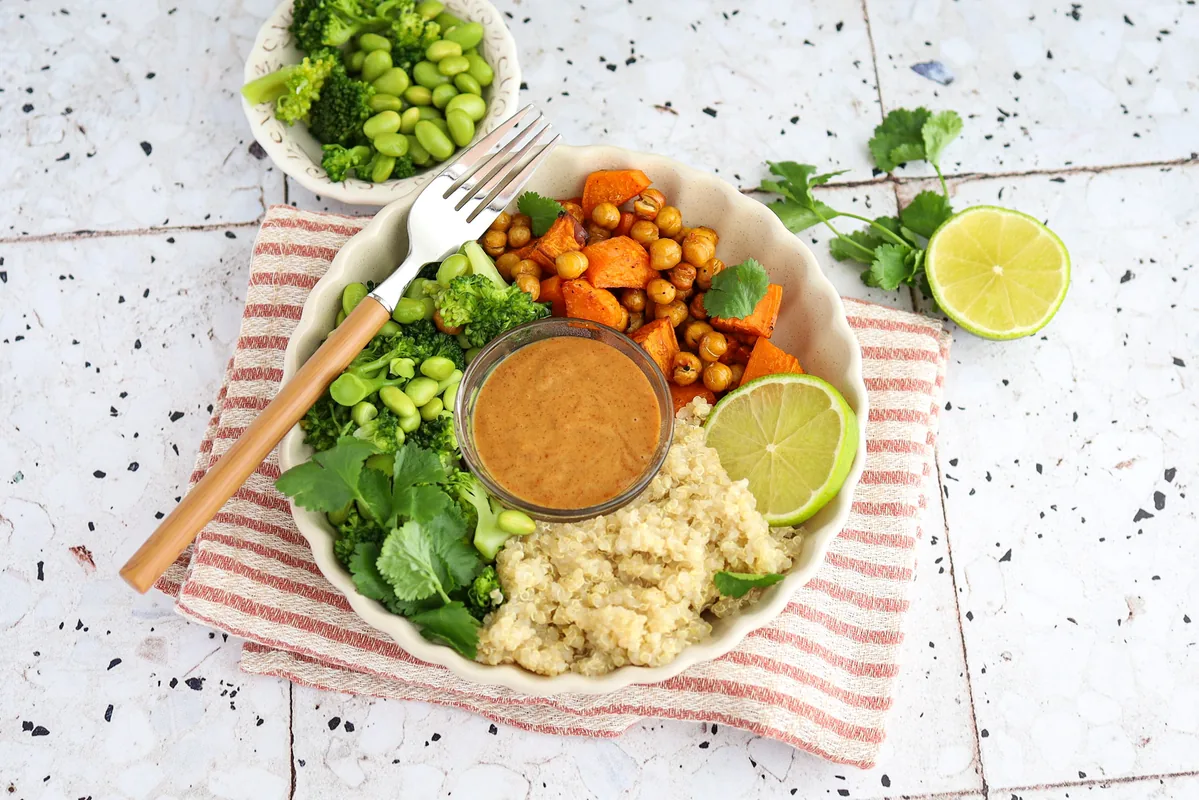
Sweet potato cubes coated in sriracha, olive oil, soy sauce, and honey, then roasted at 390°F until the edges caramelize. That combination has a nutritional dimension the recipe didn't advertise. A 2011 study in the British Journal of Nutrition found that capsaicin (the compound behind sriracha’s heat) increased beta-carotene levels by 44% in animal models. Sweet potato is one of the richest common sources of beta-carotene, and this recipe coats it directly in capsaicin and fat before high-heat roasting.
Four plant protein sources stack underneath: edamame, chickpeas, quinoa, and peanut butter in the dressing. A peanut-coconut-teriyaki drizzle ties the whole bowl together. 37g protein, 26g fiber, 25 minutes.
Sweet potato cubes coated in sriracha, olive oil, soy sauce, and honey, then roasted at 390°F until the edges caramelize. That combination has a nutritional dimension the recipe didn't advertise. A 2011 study in the British Journal of Nutrition found that capsaicin (the compound behind sriracha’s heat) increased beta-carotene levels by 44% in animal models. Sweet potato is one of the richest common sources of beta-carotene, and this recipe coats it directly in capsaicin and fat before high-heat roasting.
Four plant protein sources stack underneath: edamame, chickpeas, quinoa, and peanut butter in the dressing. A peanut-coconut-teriyaki drizzle ties the whole bowl together. 37g protein, 26g fiber, 25 minutes.
Ingredients
- sweet potato 0.25 pounds
- chickpeas 3 ounces
- garlic 1 clove
- olive oil 1 tablespoon
- sriracha 1 teaspoon
- soy sauce 0.5 tablespoon
- honey 2 teaspoons
- edamame 3 ounces
- broccoli (frozen) 3 ounces
- quinoa 3 ounces
- peanut butter 1 tablespoon
- coconut milk 1 fl oz
- teriyaki sauce 1 tablespoon
- lime juice 1 squeeze
Method
-
Preheat the oven to 390°F (200°C).
-
Peel the sweet potato and cut it into small cubes. Place the sweet potato cubes and chickpeas on a baking sheet lined with parchment paper.
-
Make the marinade by mixing the olive oil, sriracha, soy sauce, 1 teaspoon of honey, and minced garlic. Drizzle over the sweet potato and chickpeas and mix well.
-
Roast for 20 minutes until the sweet potato is tender and slightly caramelized.
-
Meanwhile, bring a pot of water to a boil. Add the edamame and broccoli together and cook for 3–4 minutes. Drain.
-
Cook the quinoa according to the package instructions.
-
Make the peanut dressing: mix the peanut butter, coconut milk, remaining 1 teaspoon of honey, teriyaki sauce, and lime juice until smooth.
-
Assemble the bowl: place the quinoa as a base, arrange the roasted sweet potato and chickpeas, edamame, and broccoli on top. Drizzle with the peanut dressing.
Cut the sweet potato cubes small and spread them in a single layer on the baking sheet. Overcrowding steams instead of roasts, and you lose the caramelized edges that make the sriracha-honey marinade work.
Capsaicin in sriracha enhances bile flow and expands the absorptive surface of the small intestine in animal models, both of which help the body absorb fat-soluble nutrients like beta-carotene. Coating sweet potato in sriracha and olive oil before roasting creates three absorption pathways: heat breaks cell walls, oil dissolves beta-carotene for gut absorption, and capsaicin boosts intestinal uptake. One study found 44% higher beta-carotene in the liver of capsaicin-fed animals. Honest caveat: the doses were higher than one teaspoon of sriracha, and no human trial exists for this specific combination.
British Journal of Nutrition, 2011 · DOIBehind this recipe
Is 997 calories too much for one meal?
The 997 kcal comes from the full bowl — quinoa, sweet potato, chickpeas, edamame, olive oil, peanut dressing, and honey all contributing. For a single-serving dinner, that’s substantial. If you’re targeting fewer calories, the easiest adjustment is halving the peanut dressing (peanut butter and coconut milk carry the most calorie-dense ingredients). The macros listed here reflect the full build as written.
Can I make this bowl vegan?
Swap the honey for maple syrup in both the marinade and the peanut dressing. Everything else is already plant-based.
Where does the 37g of protein come from in a plant-based bowl?
Four sources stack up: edamame (complete plant protein), chickpeas, quinoa (also complete), and peanut butter in the dressing. No single ingredient carries the load — the combination is the point. Research on plant vs. animal protein suggests that adequate total intake with varied sources can match animal protein for muscle and health outcomes.
Read the full evidence reviewDoes sriracha actually help with nutrient absorption?
Animal research suggests it might. A 2011 study found that capsaicin (the active compound in chili peppers) increased beta-carotene levels in the liver by 44% compared to controls. The mechanism: capsaicin enhances bile flow and increases the absorptive surface of the small intestine. This recipe coats sweet potato — one of the richest common sources of beta-carotene — in sriracha and olive oil before roasting. Honest caveat: the study used animal models at doses higher than one teaspoon of sriracha provides, and no human clinical trial exists for this specific combination.
Can I use something else instead of coconut milk in the dressing?
Yes. Any neutral-flavored liquid works — try oat milk, regular milk, or just warm water thinned with extra peanut butter. The coconut milk adds creaminess to the dressing, but it still emulsifies without it.