Scrambled Eggs with Cottage Cheese, Mushrooms & Spinach
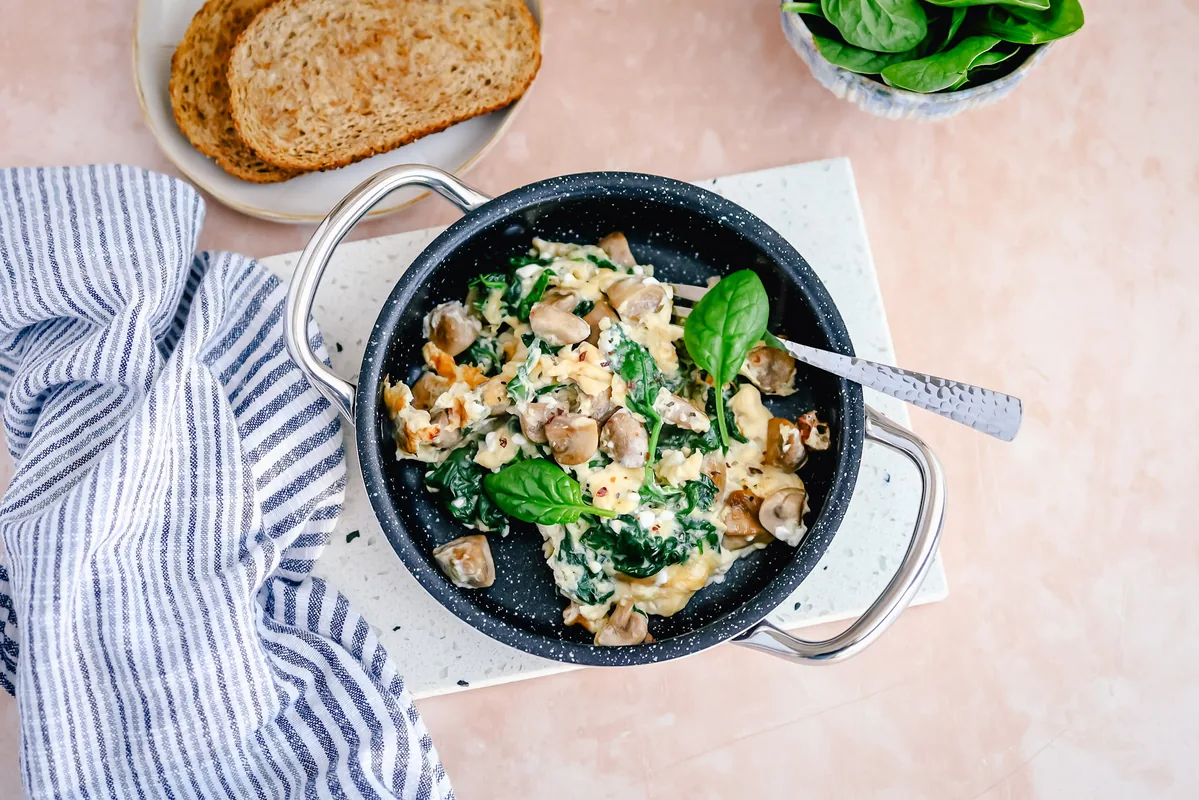
Creamy curds with sautéed mushrooms and wilted spinach, piled on toast. What makes this scramble different from most is a simple move: cottage cheese whisked into the raw eggs before cooking. That blends two protein speeds in one pan, fast-absorbing egg albumin and slow-releasing casein from the cottage cheese.
29g of protein, 494 kcal, 10 minutes. Six ingredients. The supplement industry sells this fast-and-slow combination in tubs. Here, it costs a fork and a mixing bowl.
Creamy curds with sautéed mushrooms and wilted spinach, piled on toast. What makes this scramble different from most is a simple move: cottage cheese whisked into the raw eggs before cooking. That blends two protein speeds in one pan, fast-absorbing egg albumin and slow-releasing casein from the cottage cheese.
29g of protein, 494 kcal, 10 minutes. Six ingredients. The supplement industry sells this fast-and-slow combination in tubs. Here, it costs a fork and a mixing bowl.
Ingredients
- mushrooms 0.5 cup
- eggs 2
- cottage cheese, 4% milkfat 3 ounces
- olive oil 1 tablespoon
- spinach 1 handful
- bread, whole wheat 2 slices
Method
-
Cut the mushrooms into pieces.
-
Whisk the eggs in a bowl with the cottage cheese, salt and black pepper to taste.
-
Heat a skillet with the olive oil over medium heat and add the mushrooms. Cook the mushrooms for a few minutes until they start to soften.
-
Add the spinach to the skillet and cook until it wilts down.
-
Pour the whisked eggs over the mushrooms and spinach in the skillet.
-
As the eggs start to set at the bottom, gently scrape with a spatula and create folds, mixing the vegetables into the eggs.
-
Continue cooking until the eggs are fully cooked and set to your desired consistency.
-
Taste and adjust the seasoning according to your liking.
-
While the eggs are cooking, toast the bread until golden brown.
-
Serve and enjoy!
Keep the heat at medium-low when you add the egg-cottage cheese mixture. Cottage cheese curds stay creamy at lower temperatures but tighten quickly if the pan gets too hot. Fold gently with a spatula rather than stirring constantly. You want large, soft curds with visible pockets of mushroom and spinach throughout.
The spinach and cottage cheese in this scramble are a nutritionally interesting pair. Research found that dairy calcium absorbs at 35.8% even when eaten alongside spinach (Heaney & Weaver 1989). Spinach oxalates only trap calcium within the spinach leaf itself (5.1% absorption). Your cottage cheese calcium goes through unaffected.
American Journal of Clinical Nutrition · DOIWhy This Works
Behind this recipe
Why whisk cottage cheese into the eggs before cooking?
Mixing the cottage cheese into the raw eggs before they hit the pan does two things. It creates a smoother, creamier texture than adding cottage cheese on top of cooked eggs. And it blends two types of protein at the molecular level during cooking: egg albumin (fast-absorbing) and cottage cheese casein (slow-releasing). Research into fast versus slow protein for muscle growth found that both types support muscle protein synthesis, and getting them from whole food delivers the combination the supplement industry sells as premium blends.
Read the full evidence reviewDoes the spinach block calcium absorption from the cottage cheese?
No. Research found that dairy calcium absorbs at 35.8% even when eaten alongside spinach (Heaney & Weaver 1989). Spinach oxalates only trap calcium locked inside the spinach leaf itself (5.1% absorption for spinach calcium). The calcium in your cottage cheese uses a completely separate absorption pathway. The pairing works fine.
Is 29g of protein enough for one breakfast?
Research on how much protein the body can use per meal found that the old 20-25g ceiling does not hold up. The body continues to use protein well beyond that range in a single sitting. With 29g split between eggs and cottage cheese, this breakfast provides a meaningful protein dose from two whole-food sources.
Read the full evidence review