Greek Quinoa Bowl
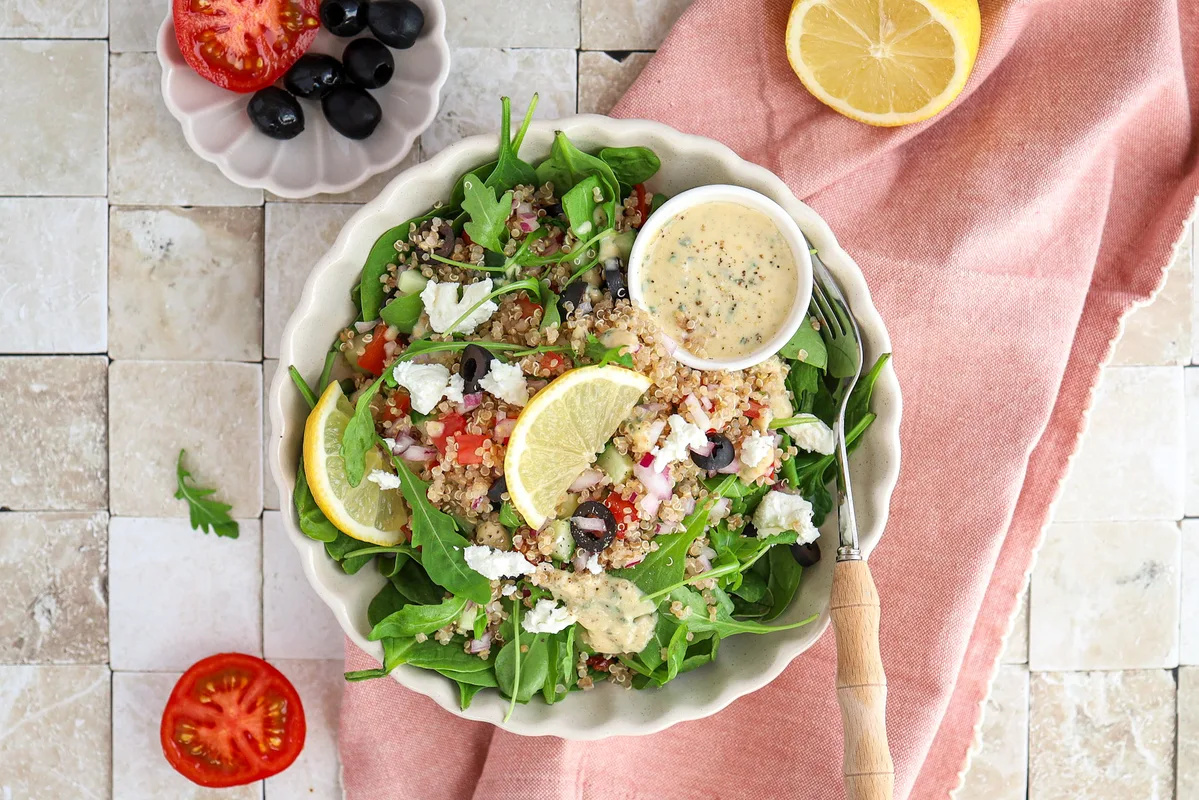
The sun-dried tomatoes in this bowl deliver roughly twice the bioavailable lycopene of the fresh tomatoes sitting right next to them, and the olives carry the fat needed for carotenoid uptake.
Quinoa, cucumber, red onion, crumbled feta, and a creamy hummus-lemon-garlic dressing round out the bowl. 15 minutes, 649 calories, 25g of protein from three sources, and 14 grams of fiber.
The sun-dried tomatoes in this bowl deliver roughly twice the bioavailable lycopene of the fresh tomatoes sitting right next to them, and the olives carry the fat needed for carotenoid uptake.
Quinoa, cucumber, red onion, crumbled feta, and a creamy hummus-lemon-garlic dressing round out the bowl. 15 minutes, 649 calories, 25g of protein from three sources, and 14 grams of fiber.
Ingredients
- quinoa 3 ounces
- cucumber 0.5 piece
- tomatoes 2 pieces
- red onion 0.25 piece
- sun-dried tomatoes 3 pieces
- olives 6 pieces
- garlic clove 1 clove
- hummus 2 tablespoons
- lemon juice 1 squeeze
- water 0.5 tablespoon
- oregano, dried 1 teaspoon
- honey 0.5 teaspoon
- arugula 1 handful
- feta cheese, crumbled 1 ounce
Method
-
Cook the quinoa according to the package instructions and let it cool.
-
Dice the cucumber and tomatoes, finely chop the onion, and cut the sun-dried tomatoes into pieces. Slice the olives and crush the garlic clove.
-
In a small bowl, mix the hummus, lemon juice, water, garlic, oregano, and honey into a smooth, creamy dressing. Season with salt and pepper to taste.
-
In a large bowl, combine the quinoa with the cucumber, tomato, onion, sun-dried tomato, olives, and arugula.
-
Add the dressing to the quinoa and mix well.
-
Place the quinoa salad on a plate and crumble the feta on top.
Toast the quinoa in a dry pan for two minutes before adding water. It brings out a nutty depth that turns a good bowl into something you will keep coming back to.
Sun-dried tomatoes showed 58% lycopene bioaccessibility in lab testing, compared to 29% for fresh. The drying process breaks down cell walls, loosening lycopene from the food matrix. During digestion, stomach acid releases even more from the dried structure, something researchers did not observe in fresh or canned tomatoes.
Sun-Dried vs Fresh Tomato Lycopene · DOIBehind this recipe
Why does this recipe use both fresh and sun-dried tomatoes?
Flavor and texture, primarily. The fresh tomatoes add juiciness and crunch. The sun-dried tomatoes bring concentrated sweetness and a chewy contrast. But research also found a nutritional difference: sun-dried tomatoes showed 58% lycopene bioaccessibility versus 29% for fresh. The olives in the bowl provide the fat that supports carotenoid absorption from both forms.
Is 25g of protein enough for a meal?
That depends on how many meals you eat and what your daily protein goal looks like. This bowl pulls protein from three separate sources: quinoa, hummus, and feta. Research on plant versus animal protein found that total daily intake matters more than the source, as long as you hit your overall target.
Read the full evidence reviewWhy quinoa instead of rice?
Quinoa is a complete protein, meaning it contains all essential amino acids, which most rice varieties do not. It also has a low glycemic index, and when paired with the fat from hummus and olives, the glycemic response of the entire meal is blunted further. Research found that low-GI carbs affect insulin and inflammation markers more than scale weight.
Read the full evidence reviewHow much fiber is in this bowl?
14 grams, nearly half of what most guidelines suggest per day. It comes from four different plant sources: quinoa, hummus, arugula, and sun-dried tomatoes. That diversity of fiber types, both soluble and insoluble, is part of what makes the bowl filling. Pooled trial data found that fiber supports satiety-driven fat loss over time, not overnight.
Read the full evidence review