Easy Mushroom & Arugula Pasta
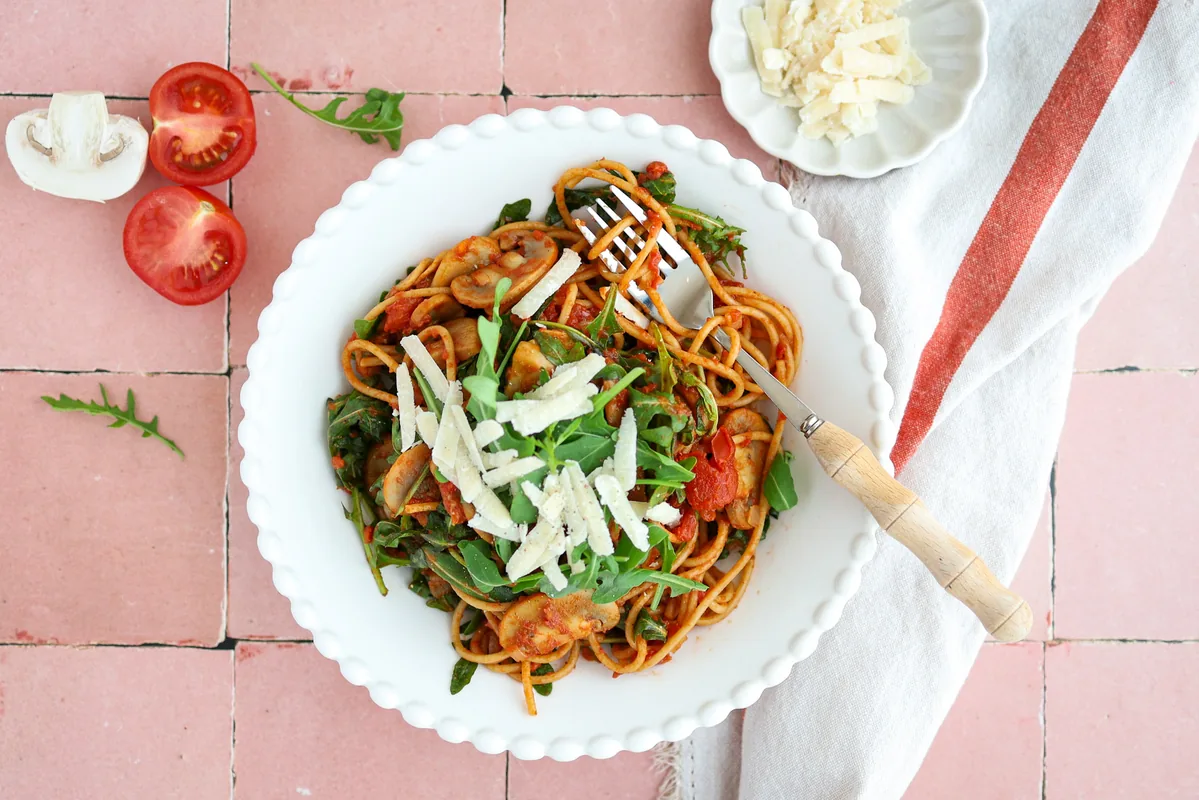
Whole wheat spaghetti tossed with mushrooms sautéed in olive oil until golden, a quick sauce built on garlic and onion with canned tomatoes, peppery arugula wilted through at the end, and a sharp Parmesan finish.
589 kcal with 30g of protein and 11g of fiber in 20 minutes. The sauté sequence in this recipe, allium first, tomatoes second, triggers a lycopene conversion that most pasta recipes stumble into by accident and never know about.
Whole wheat spaghetti tossed with mushrooms sautéed in olive oil until golden, a quick sauce built on garlic and onion with canned tomatoes, peppery arugula wilted through at the end, and a sharp Parmesan finish.
589 kcal with 30g of protein and 11g of fiber in 20 minutes. The sauté sequence in this recipe, allium first, tomatoes second, triggers a lycopene conversion that most pasta recipes stumble into by accident and never know about.
Ingredients
- spaghetti, whole wheat 84 g
- onion 0.25
- garlic 1 clove
- mushrooms 168 g
- olive oil 1 tablespoon
- diced tomatoes 168 g
- arugula 60 g
- Parmesan cheese 28 g
Method
-
Cook the spaghetti according to the package directions, drain and reserve some of the pasta water.
-
Chop the onion and garlic, slice the mushrooms.
-
Heat the oil in a pan and sauté the onion for 3 to 4 minutes, add the garlic and cook for another 1 to 2 minutes, add the mushrooms and cook for 5 to 7 minutes, season with salt and pepper.
-
Add the canned tomatoes and let simmer for 5 to 7 minutes until the sauce thickens slightly, stir in the arugula until wilted.
-
Toss the pasta with the sauce, add a splash of pasta water if the sauce is too thick, season again with salt and pepper if needed.
-
Serve the pasta on a plate and sprinkle with cheese.
Sauté the garlic and onion in oil for the full 4 to 6 minutes before adding the tomatoes. A 2019 study found that garlic heated in olive oil with tomato converts up to 67% of the lycopene to Z-isomers, a molecular form that a human trial showed to be more than 8 times more bioavailable than untreated lycopene. This recipe delivers both garlic and onion, two of the strongest allium promoters tested.
Mushrooms are the top dietary source of ergothioneine, the only compound with its own dedicated transporter in the human body (OCTN1). Sautéing in oil preserves it because the loss pathway is water leaching, not heat. Boiling the same mushrooms would send most of it into the cooking water.
Honda et al. 2019, Allium-promoted lycopene Z-isomerization · DOIWhy This Works
Behind this recipe
Can I use regular pasta instead of whole wheat?
Yes. The cooking method and sauce work the same way. The main difference is fiber: whole wheat spaghetti contributes a significant portion of this meal's 11g of fiber. Switching to regular pasta drops that number and shifts the carb profile toward faster-digesting starch.
Does the Parmesan affect the lycopene from the tomatoes?
Research from Borel et al. (2016) found that 500mg of calcium reduced lycopene absorption by 83% in a crossover trial. The 28g of Parmesan in this recipe provides roughly 332mg of calcium, below the study threshold, so the competition would be smaller. The lycopene still benefits from the olive oil and the allium conversion happening in the sauce.
What happens to the mushroom nutrients when I sauté them?
Sautéing is one of the best cooking methods for preserving ergothioneine, a potent antioxidant found almost exclusively in mushrooms. Research shows boiling can cause up to 80% loss because ergothioneine dissolves into the cooking water. Dry heat methods like sautéing and roasting keep it in the tissue.
Why add the arugula at the very end?
Arugula wilts in about 30 seconds from residual heat. Adding it earlier turns it to mush and kills the peppery bite that makes it worth including. Stir it in after the sauce has thickened and let the heat do the minimum work needed.