Protein Shake with Mango & Kale
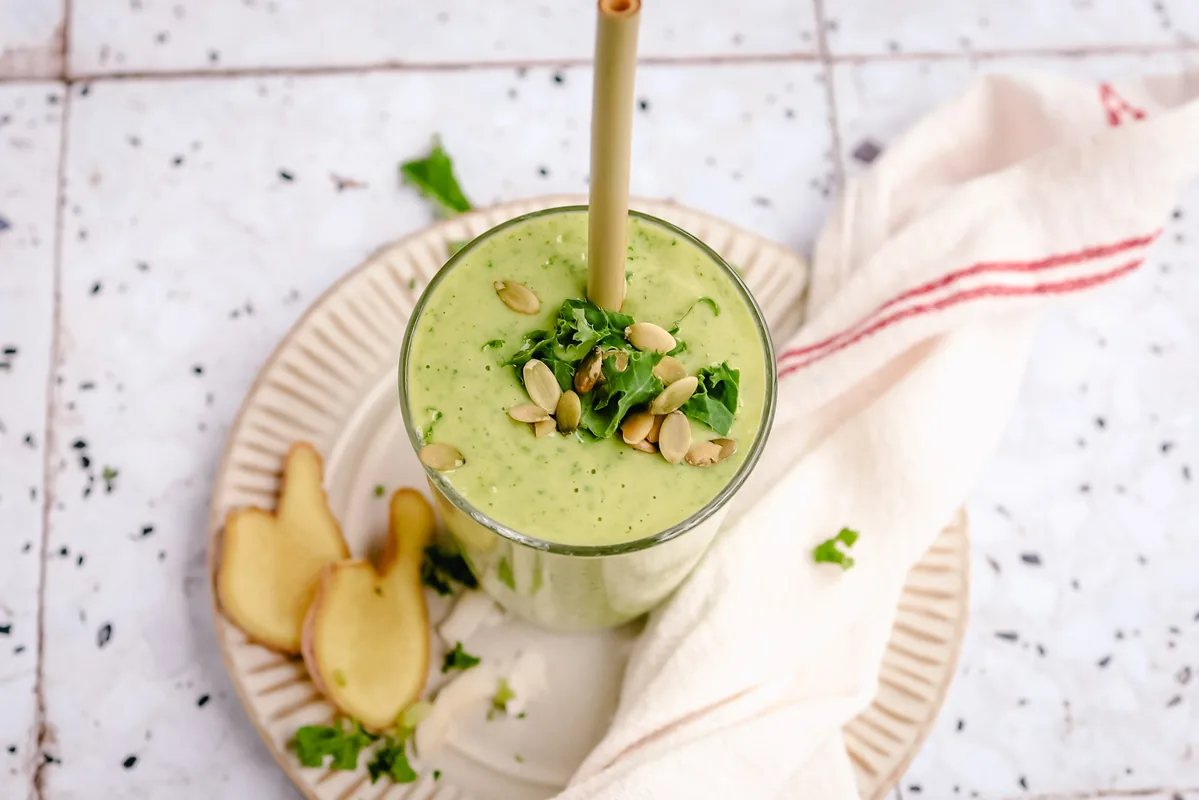
A shake that packs 46g of protein without a scoop of powder in sight. Nonfat yogurt and 2% milk handle the protein, while frozen mango and kale bring two different sources of carotenoids, the natural color compounds your body turns into vitamin A.
The combination does more than taste good. Research found that whey and casein (both present in dairy) boost carotenoid absorption by about 45% through a completely separate pathway from fat. With only 3g of fat in the entire glass, the protein itself is the absorption vehicle.
Ginger keeps the sweetness honest. Five ingredients, five minutes, 400 kcal.
A shake that packs 46g of protein without a scoop of powder in sight. Nonfat yogurt and 2% milk handle the protein, while frozen mango and kale bring two different sources of carotenoids, the natural color compounds your body turns into vitamin A.
The combination does more than taste good. Research found that whey and casein (both present in dairy) boost carotenoid absorption by about 45% through a completely separate pathway from fat. With only 3g of fat in the entire glass, the protein itself is the absorption vehicle.
Ginger keeps the sweetness honest. Five ingredients, five minutes, 400 kcal.
Ingredients
- ginger 1 slice
- milk, 2% reduced fat 0.75 cup
- yogurt, nonfat 1.5 cup
- mango chunks (frozen) 4 oz
- kale (frozen) 3 oz
Method
-
Grate the ginger.
-
Blend all ingredients until smooth.
Blend until completely smooth. Research found that liquefying leafy greens nearly doubled beta-carotene availability (from 5.1% to 9.5%) by rupturing the rigid cell walls that lock carotenoids inside. The extra blending time is free nutrition.
The whey and casein in this shake break down during digestion into small protein fragments that grab and carry fat-soluble nutrients like carotenoids. A 24-person crossover study found that adding whey protein to carotenoid-rich juice boosted absorption by 45%. The protein pathway works regardless of fat content, which is why this shake's 15:1 protein-to-fat ratio doesn't limit nutrient uptake the way you might expect.
Protein-Enhanced Carotenoid Absorption · DOIBehind this recipe
Is 46g of protein in one shake too much to absorb?
Your body can use it. The idea that you can only absorb 20-30g per meal has been overtaken by more recent research. A systematic review found that muscle protein synthesis is optimized at about 0.55 g/kg per meal. For a 70 kg (154 lb) person, that is roughly 39g, so 46g sits above the optimum for muscle building but is not wasted. Excess protein is still used for energy and other metabolic processes.
Read the full evidence reviewDoes freezing the mango and kale destroy the carotenoids?
No. Research has consistently shown that freezing preserves most nutrients in fruits and vegetables, including carotenoids. Frozen produce is typically processed within hours of harvest, locking in nutrient content at peak ripeness. In some cases, frozen vegetables retain more nutrients than fresh produce that has been sitting on a shelf for several days.
Read the full evidence reviewWhy use nonfat yogurt instead of full-fat?
Protein density. Nonfat yogurt packs more protein per calorie than full-fat versions, which is how this shake hits 46g of protein at only 400 kcal. You might think full-fat yogurt would help absorb the carotenoids from mango and kale, since fat is the traditional absorption pathway. But research found that dairy protein itself boosts carotenoid absorption by about 45% through a separate mechanism. The protein is already doing that job.