Lentil Coleslaw
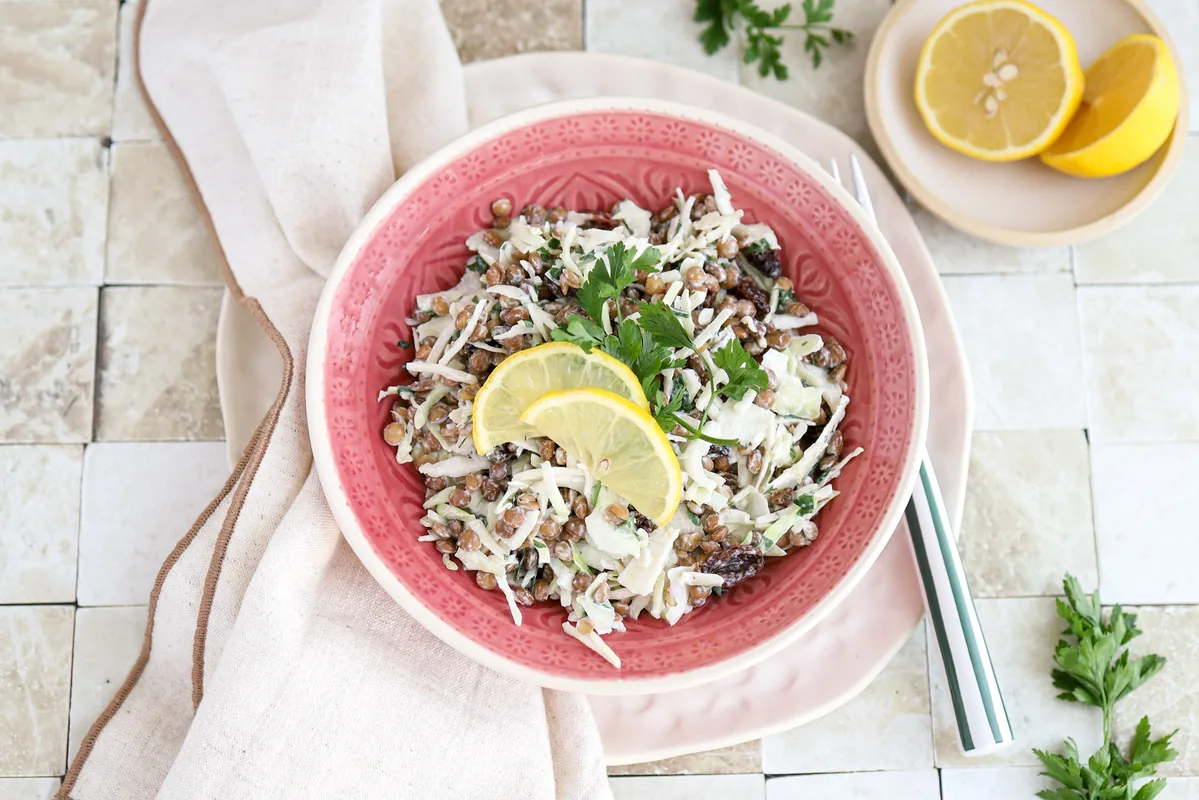
The dressing is cottage cheese mixed with a squeeze of lemon. No mayo, no oil. That single swap is why this entire bowl clocks 6 grams of fat for 533 calories, with 26 grams of protein and 17 grams of fiber. Canned lentils, shredded cabbage, and raisins tossed together in five minutes. Nothing cooked.
Raisins show up on most iron-rich food lists. A team at Cornell, funded by the USDA, actually measured raisin iron absorption using a validated cell model, and found it was low across all three common varieties. The culprit: tannins concentrated during drying, which act as iron absorption inhibitors. The researchers noted these inhibitors may not stop at the raisins themselves. They can affect iron from other foods in the same meal. In this bowl, that includes the lentils and whole wheat bread.
Raw cabbage quietly changes the math. At 168 grams uncooked, it delivers roughly 62 milligrams of vitamin C, above the threshold research identified for meaningful non-heme iron enhancement. No heat means none of that vitamin C is lost to cooking. The ingredient most people look past is the one carrying the heaviest nutritional load.
The dressing is cottage cheese mixed with a squeeze of lemon. No mayo, no oil. That single swap is why this entire bowl clocks 6 grams of fat for 533 calories, with 26 grams of protein and 17 grams of fiber. Canned lentils, shredded cabbage, and raisins tossed together in five minutes. Nothing cooked.
Raisins show up on most iron-rich food lists. A team at Cornell, funded by the USDA, actually measured raisin iron absorption using a validated cell model, and found it was low across all three common varieties. The culprit: tannins concentrated during drying, which act as iron absorption inhibitors. The researchers noted these inhibitors may not stop at the raisins themselves. They can affect iron from other foods in the same meal. In this bowl, that includes the lentils and whole wheat bread.
Raw cabbage quietly changes the math. At 168 grams uncooked, it delivers roughly 62 milligrams of vitamin C, above the threshold research identified for meaningful non-heme iron enhancement. No heat means none of that vitamin C is lost to cooking. The ingredient most people look past is the one carrying the heaviest nutritional load.
Ingredients
- lentils, canned 5 oz
- lemon juice 1 squeeze
- cottage cheese, 4% milkfat 2 oz
- cabbage, shredded 6 oz
- raisins 2 oz
- bread, whole wheat 2 slices
Method
-
Rinse the lentils in a colander under water and let drain.
-
In a small bowl, mix the lemon juice into the cottage cheese and season with salt and pepper.
-
In a large bowl, toss the cabbage with the lentils, cottage cheese and raisins until you have a delicious cabbage salad.
Drain the lentils well after rinsing. Residual water thins the cottage cheese dressing fast. If you are meal-prepping this, that works in your favor: the dressing tightens as it sits, absorbing the lemon and seasonings rather than releasing liquid. A midday lunch tastes better than a just-built bowl.
Raisins appear on most iron-rich food lists. Researchers at Cornell and the USDA measured the actual iron bioavailability of three common raisin types using a Caco-2 cell absorption model. all three came back low, with high levels of tannin-based inhibitors that may also reduce iron uptake from other foods eaten in the same meal.
Raisin Iron Bioavailability: Cornell / USDA · DOIBehind this recipe
Do raisins actually contain iron?
They do. Raisins contain non-heme iron, which is why they appear on iron-rich food lists. The catch: a USDA-funded study at Cornell found that iron bioavailability from raisins is low, with tannins acting as absorption inhibitors. Those inhibitors may affect iron from other foods in the same meal too. In this recipe, the raw cabbage delivers vitamin C that works in the opposite direction. Research identified roughly 50 milligrams as the threshold for meaningful non-heme iron enhancement, and 168 grams of raw cabbage clears that comfortably.
Is 26 grams of protein enough for a full lunch?
For a single meal in a day with multiple eating moments, 26 grams is a solid contribution, especially alongside 17 grams of fiber, which research consistently links to sustained fullness. If your daily protein target runs higher, the simplest add is a side of Greek yogurt or a handful of nuts. The macros listed are for the meal as prepared. Any topping changes the numbers.
Can I make this the night before?
Yes, and it actually improves. The cottage cheese dressing absorbs the lemon and seasonings over time rather than thinning out, so the flavors concentrate instead of washing out. Seal it in a container and refrigerate. The cabbage stays crunchy for at least 12 hours. Keep the bread separate until you eat.