Goat Cheese with Pumpkin Seeds & Edamame
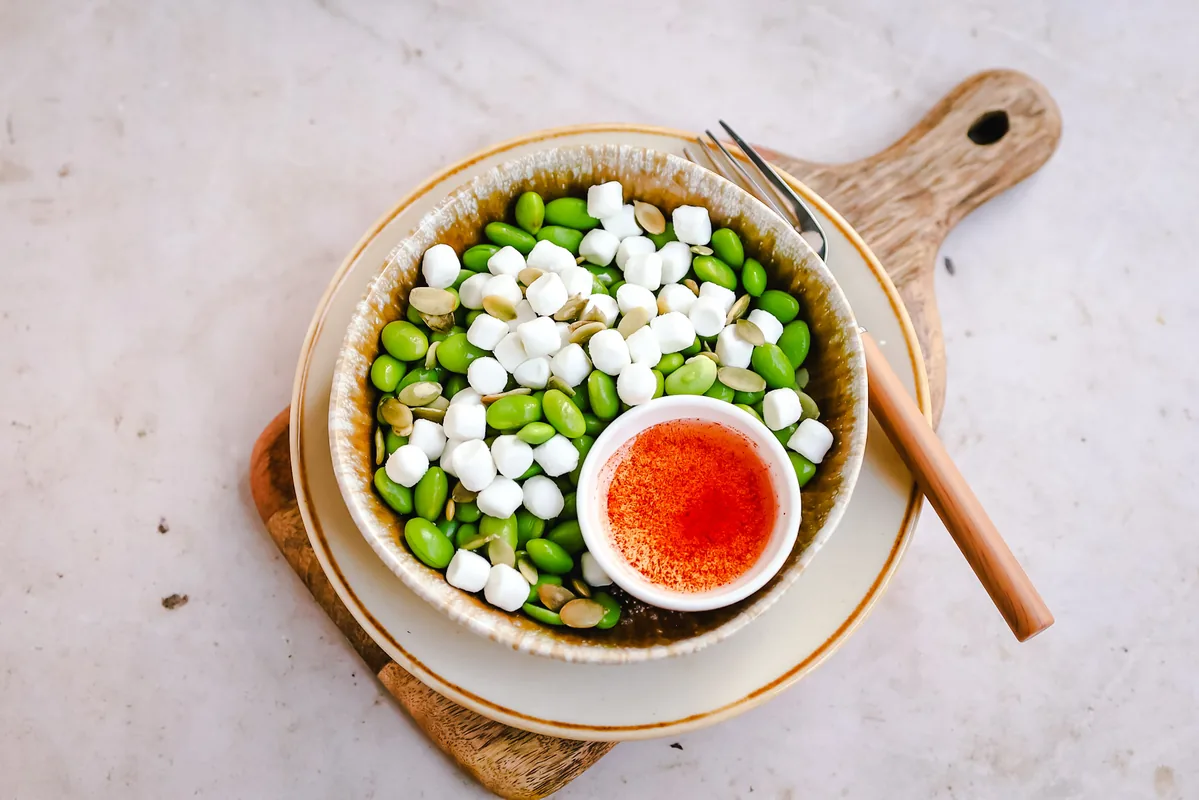
Almost everything in this bowl is fat and protein. Crumbled goat cheese, crunchy pumpkin seeds, and edamame tossed in a smoky paprika dressing. 40 grams of fat, 26 grams of protein, just 6 grams of carbs.
Five minutes, no cooking. The pumpkin seeds deliver roughly a third of your daily magnesium and, gram for gram, carry nearly double the tryptophan of turkey.
Almost everything in this bowl is fat and protein. Crumbled goat cheese, crunchy pumpkin seeds, and edamame tossed in a smoky paprika dressing. 40 grams of fat, 26 grams of protein, just 6 grams of carbs.
Five minutes, no cooking. The pumpkin seeds deliver roughly a third of your daily magnesium and, gram for gram, carry nearly double the tryptophan of turkey.
Ingredients
- olive oil 0.5 tablespoon
- paprika (ground spice) 1 pinch
- goat cheese 2 ounces
- pumpkin seeds 1 ounce
- edamame 3 ounces
Method
-
Make a dressing from the oil with paprika powder, pepper and salt.
-
In a bowl, mix the goat cheese with the pumpkin seeds, edamame beans and the dressing.
A squeeze of lemon juice over the bowl before mixing brightens the dressing and balances the goat cheese's richness. If you have arugula or fresh spinach on hand, pile the mix on top as a loaded salad.
The 28 grams of pumpkin seeds in this snack deliver roughly 161 milligrams of tryptophan. That is nearly double the concentration found in turkey breast, the food most associated with the amino acid. Tryptophan is a precursor to serotonin, and pumpkin seeds are among the richest whole-food sources per gram (USDA FoodData Central; Batool et al. 2022, Plants).
Pumpkin Seed Tryptophan Content · DOIBehind this recipe
Is 40 grams of fat too much for a snack?
Forty grams of fat accounts for 73% of the energy in this bowl. The split between goat cheese (largely saturated) and pumpkin seeds (predominantly unsaturated) gives you a mix of fat types. With only 6 grams of carbs, this is one of the lowest-carb snacks in the FitChef library. Whether that macro ratio fits your plan depends on your daily targets and how you distribute calories across meals.
Why do pumpkin seeds have more tryptophan than turkey?
Pumpkin seeds pack 576 milligrams of tryptophan per 100 grams, nearly double turkey’s 320 milligrams. The reason is concentration: pumpkin seeds are roughly 30% protein by weight with a high proportion of tryptophan in their amino acid profile. Turkey is about 29% protein, but its amino acid profile distributes differently. The cultural connection between turkey and drowsiness became shorthand for tryptophan, but nutritional databases show seeds and nuts generally rank higher per gram.
How much magnesium does this recipe deliver?
The 28 grams of pumpkin seeds provide approximately 150 milligrams of magnesium, covering about 37% of the recommended daily intake for adults. Pumpkin seeds are one of the most magnesium-dense whole foods available. For context, a meta-analysis of three trials with 151 adults found that magnesium supplementation reduced the time to fall asleep by about 17 minutes. Whether dietary magnesium from food works the same way is a separate question the research has not answered directly.