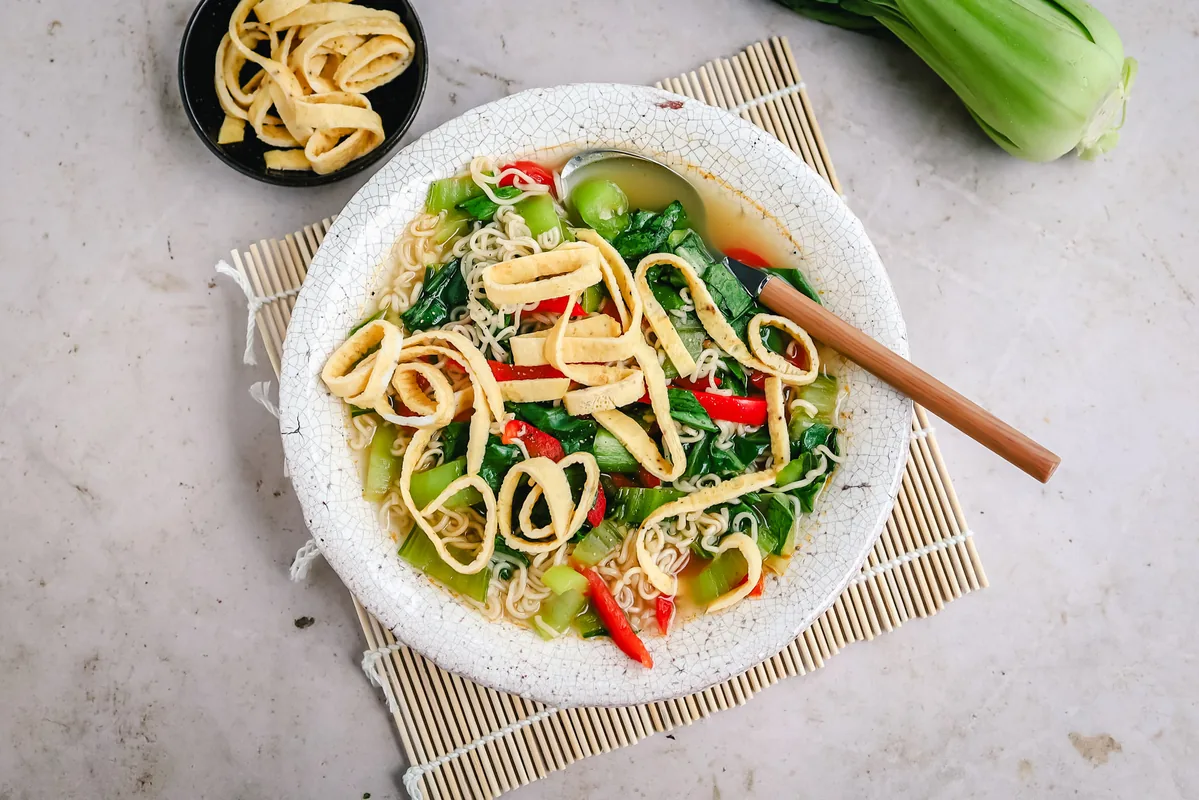
Noodle Soup with Bok Choy, Bell Pepper & Omelet Strips
Two eggs become the protein in this bowl, but not the way you might expect. They cook as a flat omelet in a separate pan, get rolled tight, and drop into the broth as golden ribbons.
The rest is fifteen minutes of building: ginger sautéed until fragrant, bok choy stems softened in broth while the noodles cook alongside them, and green leaves stirred in at the last second for color and snap. One tablespoon of soy sauce finishes the bowl after the heat is off.
Two eggs become the protein in this bowl, but not the way you might expect. They cook as a flat omelet in a separate pan, get rolled tight, and drop into the broth as golden ribbons.
The rest is fifteen minutes of building: ginger sautéed until fragrant, bok choy stems softened in broth while the noodles cook alongside them, and green leaves stirred in at the last second for color and snap. One tablespoon of soy sauce finishes the bowl after the heat is off.
Ingredients
- baby bok choy 1 head
- bell pepper 1
- ginger 1 slice
- eggs 2
- milk, 2% reduced fat 2 tablespoons
- olive oil 1.5 tablespoon
- vegetable bouillon 1 cube
- water 2 cups
- noodles, whole wheat 3 ounces
- soy sauce 1 tablespoon
Method
-
Remove the end of the stem from the bok choy. Wash the leaves and slice them into thin strips crosswise. Keep the white stems separate from the green leaves.
-
Slice the bell pepper into thin strips. Finely chop the ginger.
-
Break the eggs into a bowl and beat them with the milk, pepper and salt using a fork.
-
Heat half of the oil in a skillet. Pour the egg mixture into the pan and cook an omelet over medium heat. Allow the omelet to cool slightly, then roll it up and slice it into thin strips.
-
Heat the remaining oil in a pot and sauté the ginger for 2 minutes. Then add the bell pepper strips and the white part of the bok choy, stir-frying for 2 more minutes.
-
Add the bouillon cube and water to the pot with the vegetables and bring to a boil. Let it simmer for 5 minutes. Add the noodles to the pot halfway through and add the green bok choy leaves in the last minute. Turn off the heat after 5 minutes. Season the soup with soy sauce and pepper to taste.
-
Serve the noodle soup with the omelet strips in a deep bowl.
Separate the bok choy stems from the green leaves before you start cooking. The white stems need four to five minutes in the broth to soften. The green leaves need less than one — add them any earlier and they turn dull and limp. This split-timing is why the recipe has you chop them apart in step one.
Bok choy is one of the most efficiently absorbed plant calcium sources. A crossover study found that calcium from bok choy is absorbed at 52%, compared to 46% from milk at the same dose. The difference comes down to oxalate — spinach traps calcium at absorption rates below 5%, but bok choy's near-zero oxalate levels let calcium pass through freely. And in a soup, any calcium that leaches into the broth during cooking is still in your bowl.
Behind this recipe
Can I use regular noodles instead of whole wheat?
Yes. Regular noodles cook faster — check the package time and adjust. Whole wheat adds about 2 grams of fiber and slightly more protein per serving, but the difference in this recipe is small. The broth, vegetables, and omelet do the heavy lifting.
Why add the bok choy leaves at the last minute?
The white stems need time to soften — four to five minutes in simmering broth. The green leaves wilt in under sixty seconds. Adding everything at once gives you overcooked leaves on top of stems that are still too firm. Separating them is a one-step decision that fixes both problems.
Is 28 grams of protein enough for a main meal?
For a lunch or lighter dinner, 28 grams is solid. The two eggs provide about 14 grams, the whole wheat noodles add roughly 10 grams, and the bok choy contributes the rest. If you need more — a hard training day or a larger frame — add a third egg to the omelet without changing anything else in the recipe.