Cottage Cheese Breakfast Bowl with Blueberries, Nuts & Honey
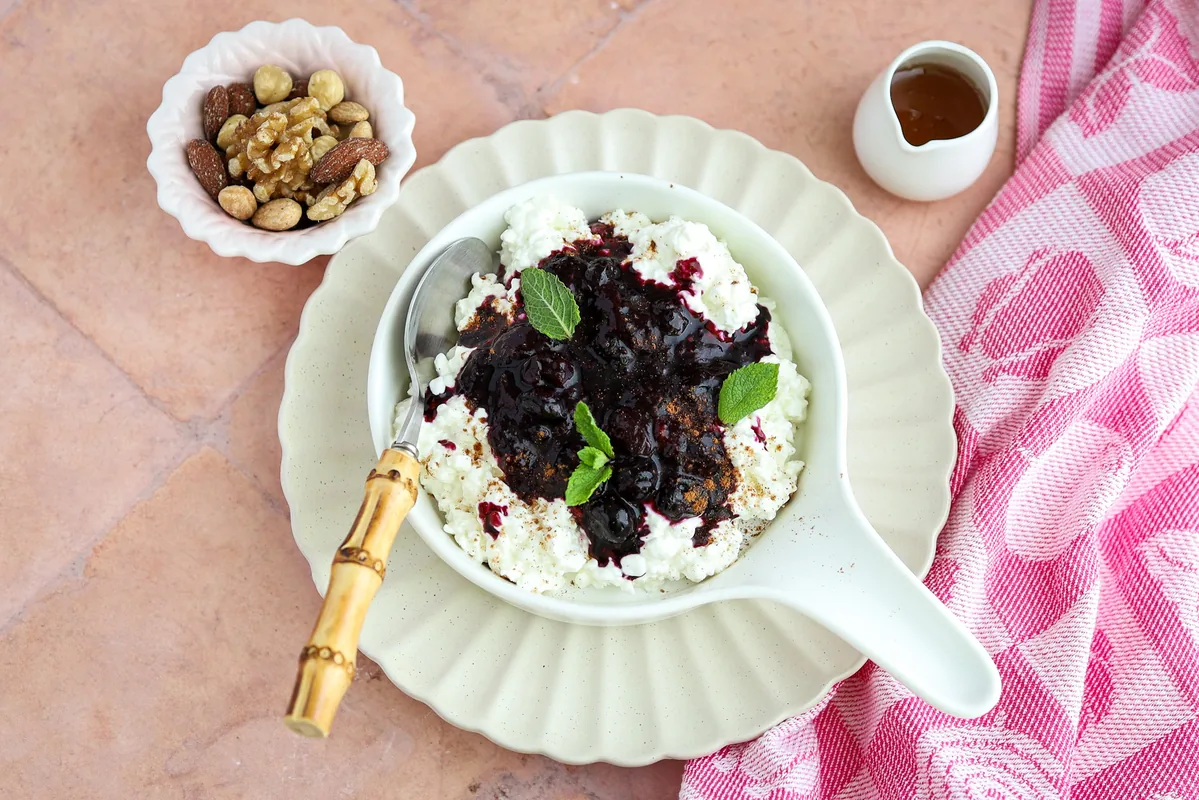
The blueberries start frozen and finish bleeding purple into white cottage cheese curds. Add nuts, drizzle honey, and breakfast is done. No stove, no pan, five minutes for 32g of protein and 653 kcal.
That purple juice pooling into the cottage cheese is more than color. About 80% of cottage cheese protein is casein, and a 2021 study found that casein wraps around blueberry anthocyanin molecules during digestion, shielding them through stomach acid and boosting absorption by up to 10 times.
The blueberries start frozen and finish bleeding purple into white cottage cheese curds. Add nuts, drizzle honey, and breakfast is done. No stove, no pan, five minutes for 32g of protein and 653 kcal.
That purple juice pooling into the cottage cheese is more than color. About 80% of cottage cheese protein is casein, and a 2021 study found that casein wraps around blueberry anthocyanin molecules during digestion, shielding them through stomach acid and boosting absorption by up to 10 times.
Ingredients
- blueberries (frozen) 0.75 cup
- mixed nuts, unsalted 2 oz
- cottage cheese, 4% milkfat 0.75 cup
- honey 1 tbsp
Method
-
Let the blueberries thaw for a moment. Chop the nuts if you prefer.
-
Scoop the cottage cheese into a bowl. Scatter the blueberries over the cottage cheese. Top with the nuts and drizzle honey.
-
Serve and enjoy!
Give the berries a few minutes to thaw on the cottage cheese before eating. As they soften, their juice releases anthocyanins directly into the casein-rich curds. Research found that casein-anthocyanin contact boosts absorption by up to 10 times.
Alpha-casein has a structural pocket that physically traps anthocyanin molecules, shielding them from stomach acid and delivering them intact to the intestine. The study used isolated alpha-casein and blueberry extract in a rat model, so whole cottage cheese in a human breakfast is a different scenario, but the encapsulation mechanism was confirmed at the molecular level.
Casein-Anthocyanin Absorption Study · DOIWhy This Works
Behind this recipe
Why frozen blueberries instead of fresh?
Frozen blueberries suit this recipe because they thaw on the cottage cheese and release juice into the curds, increasing contact between anthocyanins and casein protein. Nutritionally, frozen berries hold up. A same-harvest study found frozen blueberries retained 46% more vitamin C and 38% more vitamin E than fresh ones stored in the fridge for ten days.
Read the full evidence reviewCan I swap cottage cheese for Greek yogurt?
You can, but the protein profile changes. Cottage cheese protein is predominantly casein, around 80%, which is the type research found wraps around blueberry anthocyanins during digestion. Greek yogurt contains casein too, but a higher proportion of whey. Both are solid protein sources for a breakfast bowl. The absorption finding specifically tested alpha-casein, which cottage cheese delivers more of.
Is 653 calories too much for one breakfast?
That comes down to your total calorie needs. If your day runs 2,000 to 2,500 calories, this bowl covers about a quarter to a third of that total. The 39g of fat from nuts and cottage cheese and 32g of protein tend to slow digestion, which can reduce snacking before lunch.