Protein-Packed Quinoa Bowl with Kale
Step 4 asks you to massage the kale with olive oil. Most people think that just softens the texture. It does, but something else is happening underneath that move.
Kale carries more lutein than any other food you can buy. 39.5 milligrams per 100 grams, roughly five times more than cooked spinach. Your body barely absorbs it without fat. The oil massage coats the leaves before they reach your stomach. The egg yolk adds a second round of fat during digestion. Research found that eating eggs alongside dark leafy greens boosted absorption of these nutrients 3 to 8-fold.
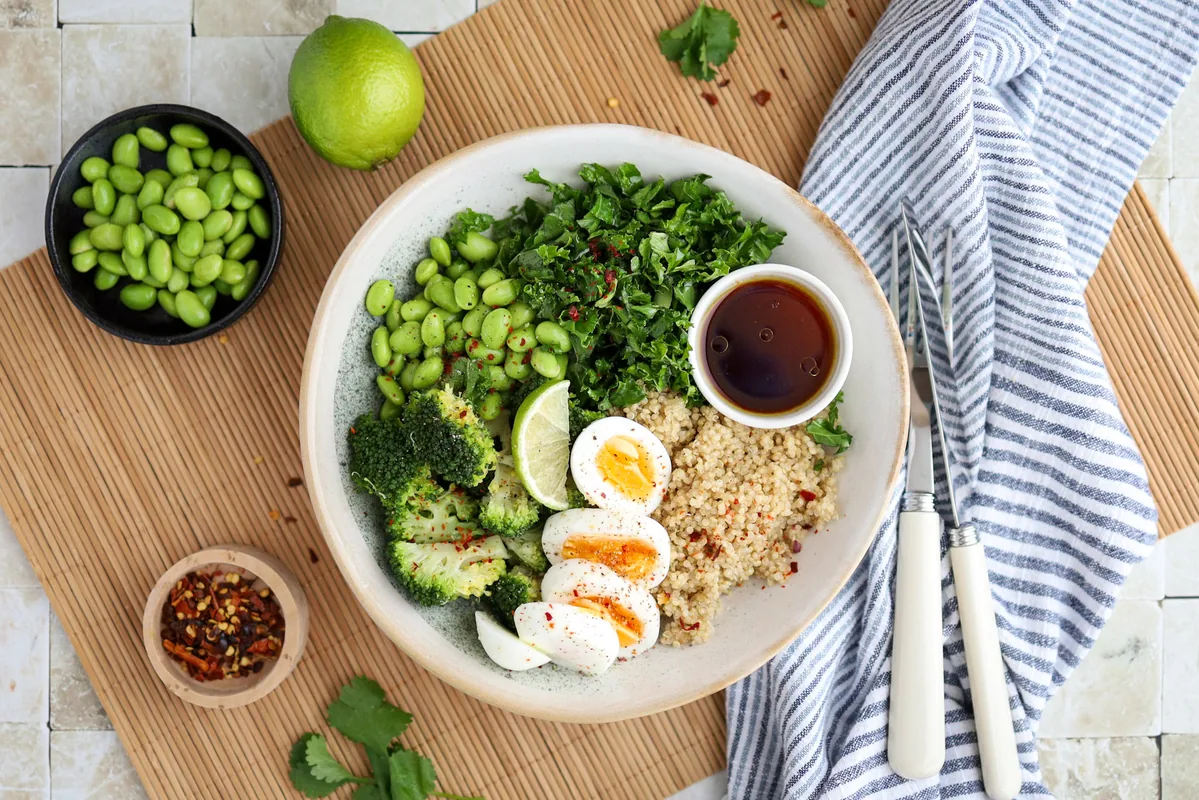
A warm bowl of quinoa, frozen broccoli, edamame, and a hard-boiled egg with a soy-lime-honey dressing. 32g of protein from three sources, 16g of fiber, and a 20-minute build.
Step 4 asks you to massage the kale with olive oil. Most people think that just softens the texture. It does, but something else is happening underneath that move.
Kale carries more lutein than any other food you can buy. 39.5 milligrams per 100 grams, roughly five times more than cooked spinach. Your body barely absorbs it without fat. The oil massage coats the leaves before they reach your stomach. The egg yolk adds a second round of fat during digestion. Research found that eating eggs alongside dark leafy greens boosted absorption of these nutrients 3 to 8-fold.
A warm bowl of quinoa, frozen broccoli, edamame, and a hard-boiled egg with a soy-lime-honey dressing. 32g of protein from three sources, 16g of fiber, and a 20-minute build.
Ingredients
- quinoa 3 ounces
- edamame 2 ounces
- egg 1
- broccoli florets (frozen) 4 ounces
- kale (frozen) 4 ounces
- olive oil 1.5 tablespoon
- soy sauce 1.5 tablespoon
- lime juice 1 squeeze
- honey 1 teaspoon
Method
-
Rinse the quinoa and prepare according to the package instructions. Add the edamame in the last 5 minutes.
-
Boil the egg for 8 to 10 minutes until hard-boiled, let it cool, and slice it.
-
Steam the broccoli for 4 to 6 minutes until cooked.
-
Gently massage the kale with half of the oil.
-
In a small bowl, mix the soy sauce, lime juice, the other half of the oil, and honey.
-
Divide the quinoa into a bowl, add the vegetables and the egg, drizzle with the dressing, and season to taste with pepper and salt.
Both the frozen broccoli and kale in this recipe lost their sulforaphane-producing enzyme during commercial blanching. Research found that eating frozen cruciferous vegetables alongside a raw source of the same enzyme restores the conversion pathway. A sprinkle of mustard seeds on top at the end provides it.
Kale contains 39.5 milligrams of lutein per 100 grams, roughly five times more than cooked spinach. A 2015 study tested what happens when whole eggs are eaten alongside vegetables rich in these nutrients. Absorption of lutein and zeaxanthin increased 4 to 5-fold. Other nutrients like beta-carotene increased 3 to 8-fold. The fats in egg yolk help package these compounds for absorption during digestion.
Kim et al., 2015 · DOIBehind this recipe
Why do I need to massage the kale with oil?
The massage softens frozen kale and makes it easier to eat. But it also coats the leaves in fat, which matters because kale is loaded with lutein, a fat-soluble nutrient your body absorbs poorly without lipids. Research found that adding fat to a meal with dark leafy greens boosted absorption of these nutrients significantly. The oil massage starts that process before the kale even reaches your stomach.
Can I use fresh kale instead of frozen?
Yes. Fresh kale keeps its myrosinase enzyme intact, which means it can still produce sulforaphane, a compound frozen kale cannot make because commercial blanching destroys the enzyme. Either way, the lutein content stays high. If you use fresh kale, the massage step becomes even more important for breaking down the tougher cell walls.
Is 32 grams of protein enough for one meal?
This bowl gets its 32 grams from three sources: quinoa, edamame, and egg. That covers both plant and animal protein in one sitting. Research found that plant protein can support muscle protein synthesis comparably to animal protein when total daily intake is sufficient. Whether 32 grams is enough depends on your daily target and how many meals you spread it across.
Read the full evidence reviewIs 744 calories a lot for one meal?
That depends on how many calories you eat in a day. On a 2,000-calorie target, this bowl accounts for about 37% of your daily total. The 16 grams of fiber from quinoa, kale, broccoli, and edamame deliver more than half the daily recommended intake in a single sitting. Research found that higher fiber intake is associated with greater fat loss independent of calorie restriction.
Read the full evidence review