Macaroni with Plant-Based Meatballs & Broccoli Sauce
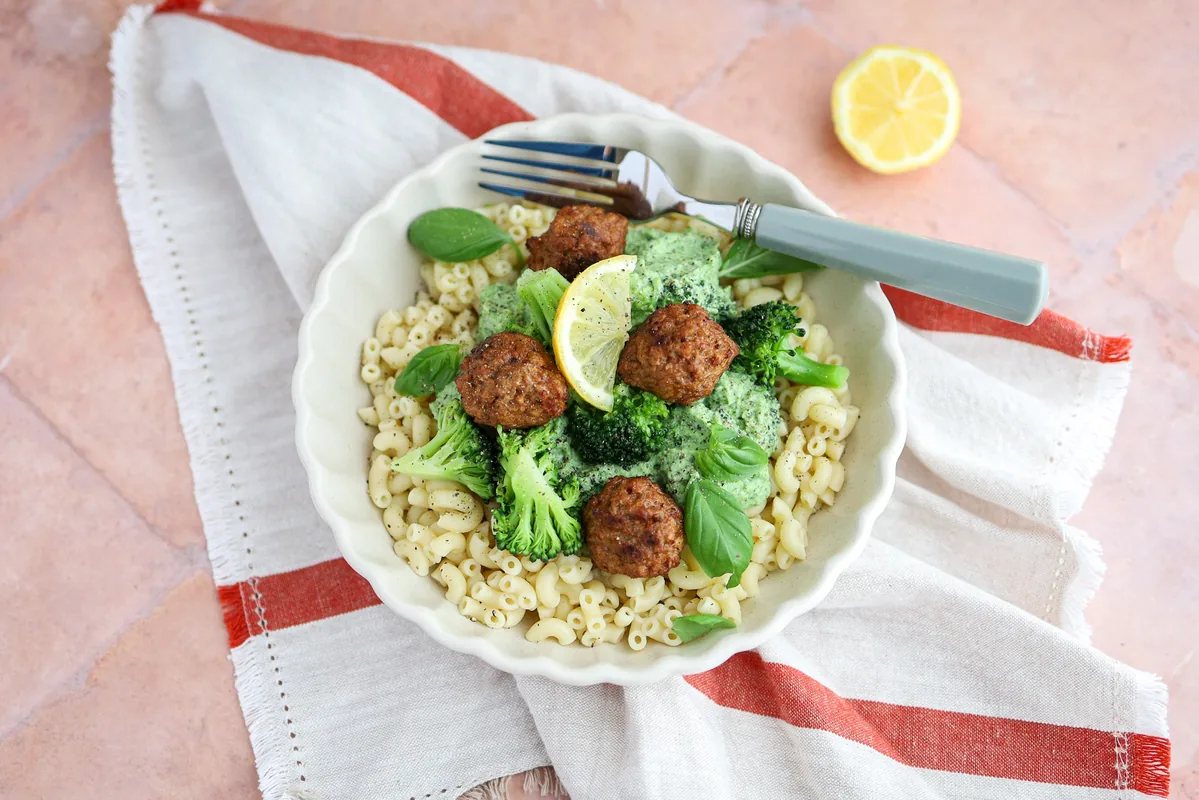
Half the broccoli in this bowl is invisible. It’s been pureed with cream cheese and lemon into a thick, peppery sauce that coats every strand of whole wheat macaroni. The other half sits as whole florets folded back in for bite.
That split is the whole trick behind this 15-minute dinner: six freezer-and-pantry ingredients, an immersion blender, and four plant-based meatballs with a golden crust from olive oil. The plate lands at 768 kcal with 36g of protein and 18g of fiber.
Half the broccoli in this bowl is invisible. It’s been pureed with cream cheese and lemon into a thick, peppery sauce that coats every strand of whole wheat macaroni. The other half sits as whole florets folded back in for bite.
That split is the whole trick behind this 15-minute dinner: six freezer-and-pantry ingredients, an immersion blender, and four plant-based meatballs with a golden crust from olive oil. The plate lands at 768 kcal with 36g of protein and 18g of fiber.
Ingredients
- broccoli florets, frozen 3.5 cup
- macaroni, whole wheat 3 ounces
- cream cheese, reduced fat 1.5 tablespoon
- lemon juice 1 squeeze
- olive oil 1 tablespoon
- meatballs, plant-based 4 pieces
Method
-
Thaw the broccoli briefly.
-
Cook the macaroni according to the package instructions.
-
Cook the broccoli florets until al dente in about 5-7 minutes, then drain and reserve a cup of cooking liquid.
-
Set aside half of the broccoli florets. Return the rest of the broccoli to the pot and add the cream cheese and lemon juice. Heat over low heat and stir until smooth and creamy.
-
Puree the broccoli mixture with an immersion blender until smooth. Add a little cooking liquid if the mixture is too dry. Season the sauce with salt and pepper.
-
Heat the oil in a skillet and cook the plant-based meatballs over medium-high heat until golden brown in about 4 minutes. Add the broccoli florets and broccoli sauce and heat for another 2 minutes. Add lemon juice to taste.
-
Serve the macaroni with the sauce.
The smoother you make this sauce, the longer it keeps you full. Research found that pureeing vegetables with cheese and oil into a homogenized meal slowed stomach emptying by 19% and scored significantly higher on every satiety measure compared to the same ingredients eaten as separate pieces. Step 5 is where it happens: the immersion blender turns broccoli and cream cheese into the thick, viscous sauce that triggers the effect.
Why This Works
Behind this recipe
Is plant-based protein as effective as meat for building muscle?
Research comparing plant-based and animal-based protein sources found comparable muscle-building outcomes when total protein and leucine intake were matched. The 36g of plant-based protein in this recipe falls within the effective range for a single meal. The source of the protein matters less than the total amount.
Read the full evidence reviewIs frozen broccoli less nutritious than fresh?
Frozen broccoli retains most of its vitamins and minerals because it is flash-frozen shortly after harvest. The one tradeoff: commercial blanching before freezing destroys myrosinase, the enzyme that would convert glucoraphanin into sulforaphane. The nutritional profile is nearly identical to fresh for everything except that one conversion pathway.
Read the full evidence reviewCan my body actually use 36g of protein from one meal?
Yes. The idea that the body can only absorb 20–30g of protein per meal is a persistent myth that research has moved past. Your body can use well beyond 30g per sitting for muscle protein synthesis, especially in a mixed meal where carbs and fat slow digestion. The 36g here is well within the effective range.
Read the full evidence reviewWhy split the broccoli instead of pureeing all of it?
A plate that is all puree gets monotonous fast. Half becomes the sauce, half stays as florets for texture contrast. The chunky florets folded back in give you something to bite into between bites of sauce-coated macaroni, and it keeps the visual presentation more interesting than a bowl of green paste.