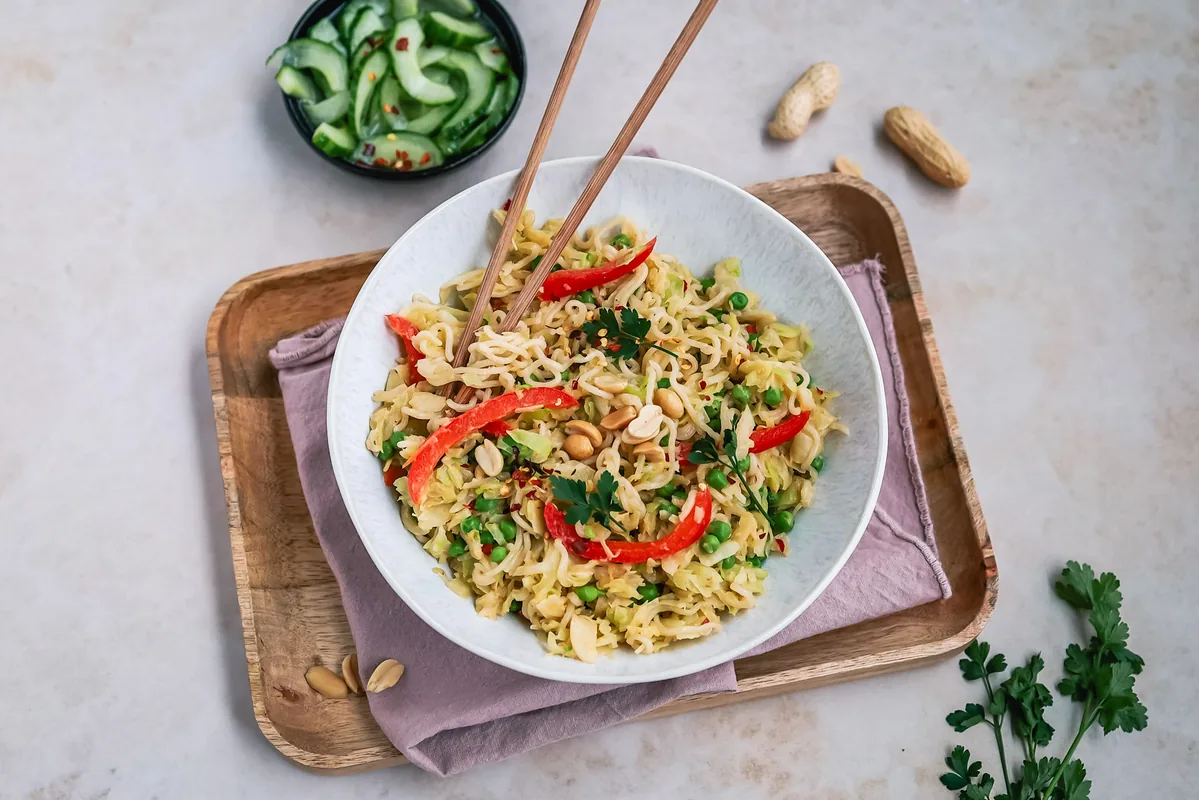
Noodles with cabbage, bell pepper & peanut sauce
Peanut butter doesn’t look like a sauce ingredient. But two tablespoons stirred into a hot wok with coconut milk, soy sauce, and sriracha turn into a creamy coating in under two minutes — no blender, no extra pan.
The full plate delivers 35g of protein and 22g of fiber from whole wheat noodles, garden peas, and peanut butter, all in 15 minutes of actual cooking.
Peanut butter doesn’t look like a sauce ingredient. But two tablespoons stirred into a hot wok with coconut milk, soy sauce, and sriracha turn into a creamy coating in under two minutes — no blender, no extra pan.
The full plate delivers 35g of protein and 22g of fiber from whole wheat noodles, garden peas, and peanut butter, all in 15 minutes of actual cooking.
Ingredients
- bell pepper 1
- garlic 1 clove
- olive oil 1 tablespoon
- cabbage, shredded 1.5 cup
- garden peas (frozen) 4 ounces
- peanut butter 2 tablespoons
- Sriracha sauce 1 teaspoon
- soy sauce 2 tablespoons
- coconut milk 1 fluid ounce
- water 1 fluid ounce
- noodles, whole wheat 3 ounces
Method
-
Cut the bell pepper into strips and crush the garlic clove.
-
Heat the oil in a wok and add the bell pepper and garlic, stir-fry for 2 minutes on medium heat. Then add the cabbage and peas and cook for 4 more minutes. Next, add peanut butter, Sriracha, soy sauce, coconut milk and 25 ml of water. Stir everything together and heat for 2 more minutes until a creamy mixture forms. Add more water if necessary.
-
Meanwhile, prepare the noodles according to the package instructions. Drain them and stir into the wok mixture.
-
Serve the noodles with cabbage, bell pepper and peanut sauce on a plate. Season with pepper to taste if desired.
Stir the peanut butter into the wok while the bell pepper strips are still hot. The unsaturated fat melts into the heat-softened vegetables, and research found peanut butter’s fat profile delivered 51% more vitamin A activity from cooked vegetables than the same amount of saturated fat — the fat type in the sauce changes what your body actually absorbs from the plate.
Why This Works
Behind this recipe
Can I use a different nut butter instead of peanut butter?
Most nut butters melt smoothly in the wok. Almond butter is earthier, cashew butter is milder, and both form a creamy sauce. Peanut butter has a specific unsaturated fat profile that research linked to enhanced vitamin absorption from vegetables, so the nutritional interaction may differ with other nut butters, but the recipe still works.
Read the full evidence reviewIs 40 grams of fat too much for one meal?
The 40g of fat in this meal comes primarily from peanut butter and olive oil, both predominantly unsaturated. Peanut butter is roughly 50% monounsaturated oleic acid, the same type found in olive oil. The fat here forms the sauce and helps absorb fat-soluble nutrients from the vegetables. Whether 40g fits your day depends on your total calorie and macro goals.
Can I use regular noodles instead of whole wheat?
Regular noodles work fine in the wok. You lose some fiber — whole wheat contributes to this meal’s 22g of fiber — but the sauce, vegetables, and overall macros stay mostly the same. Garden peas and cabbage still provide substantial fiber on their own.