
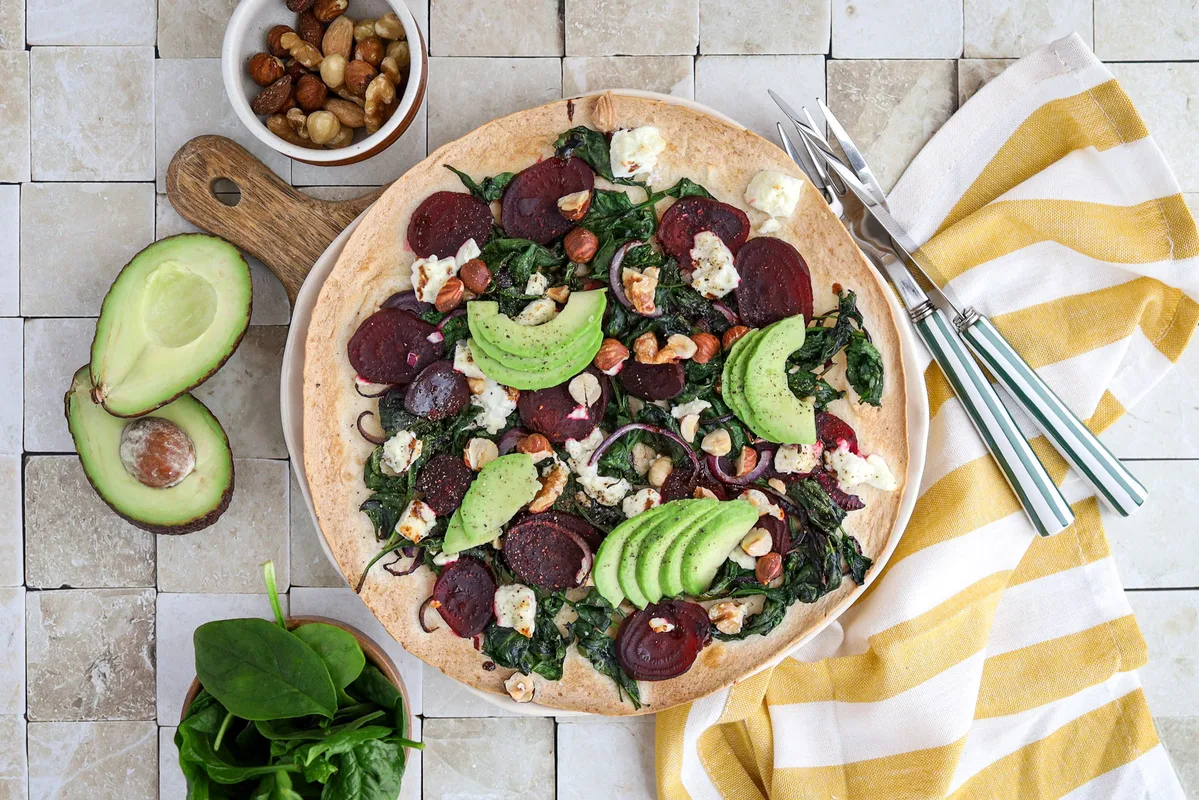
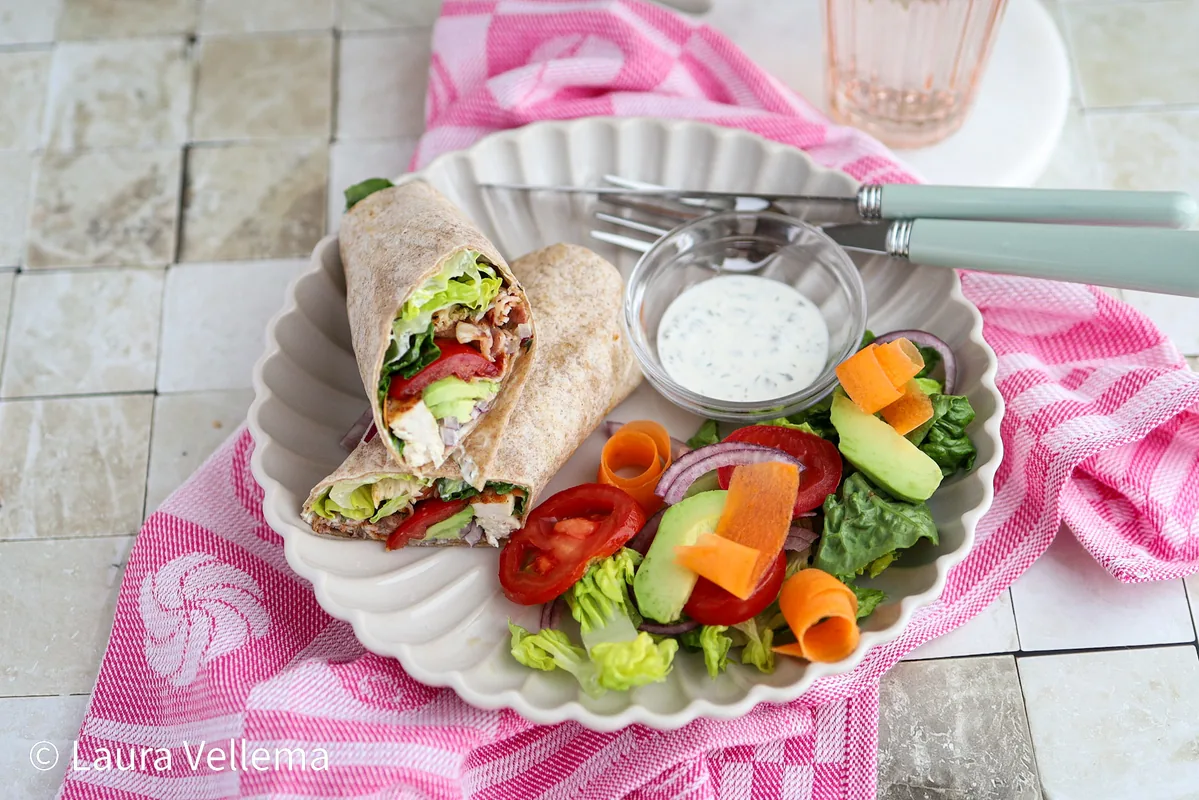
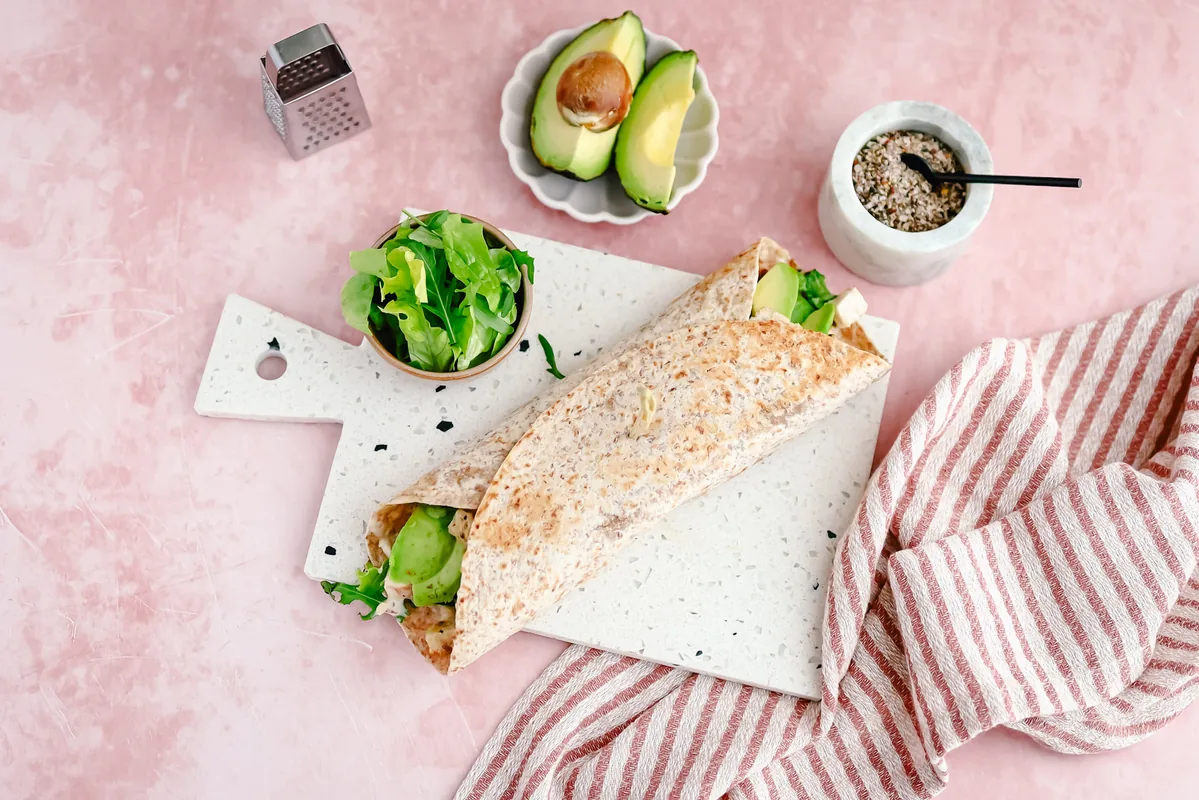

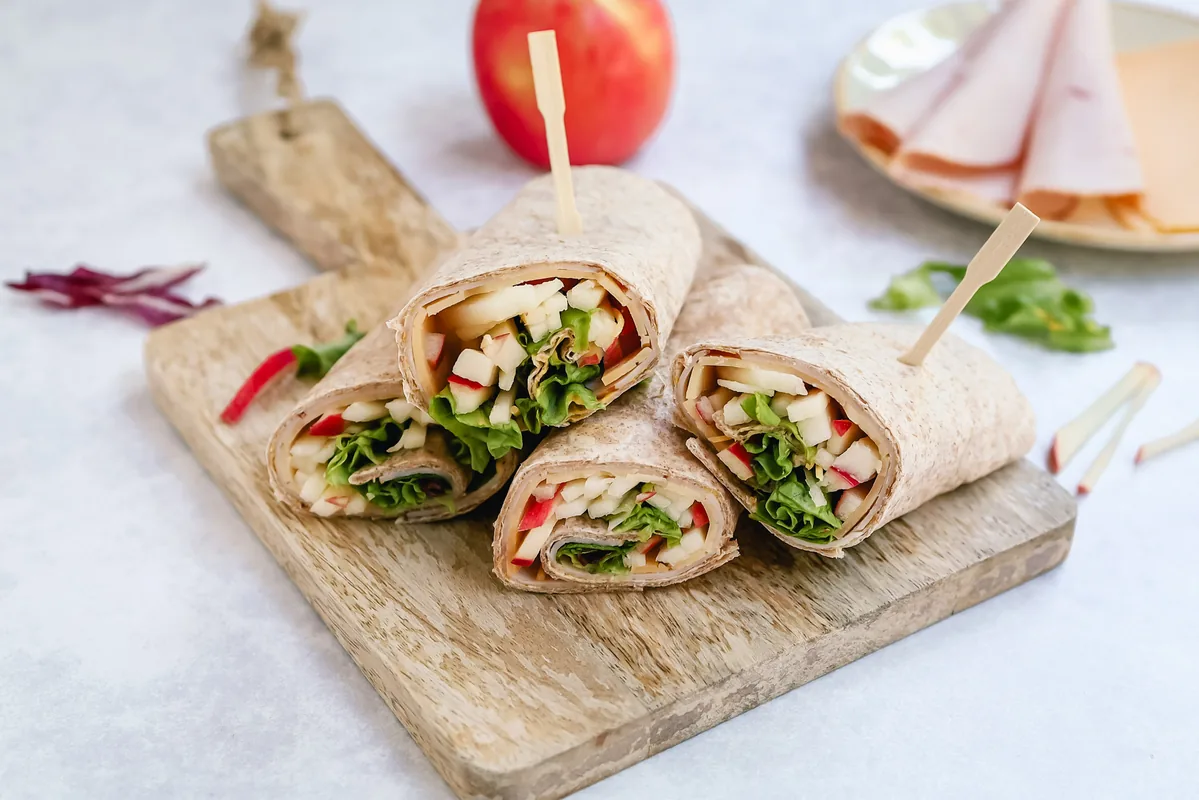
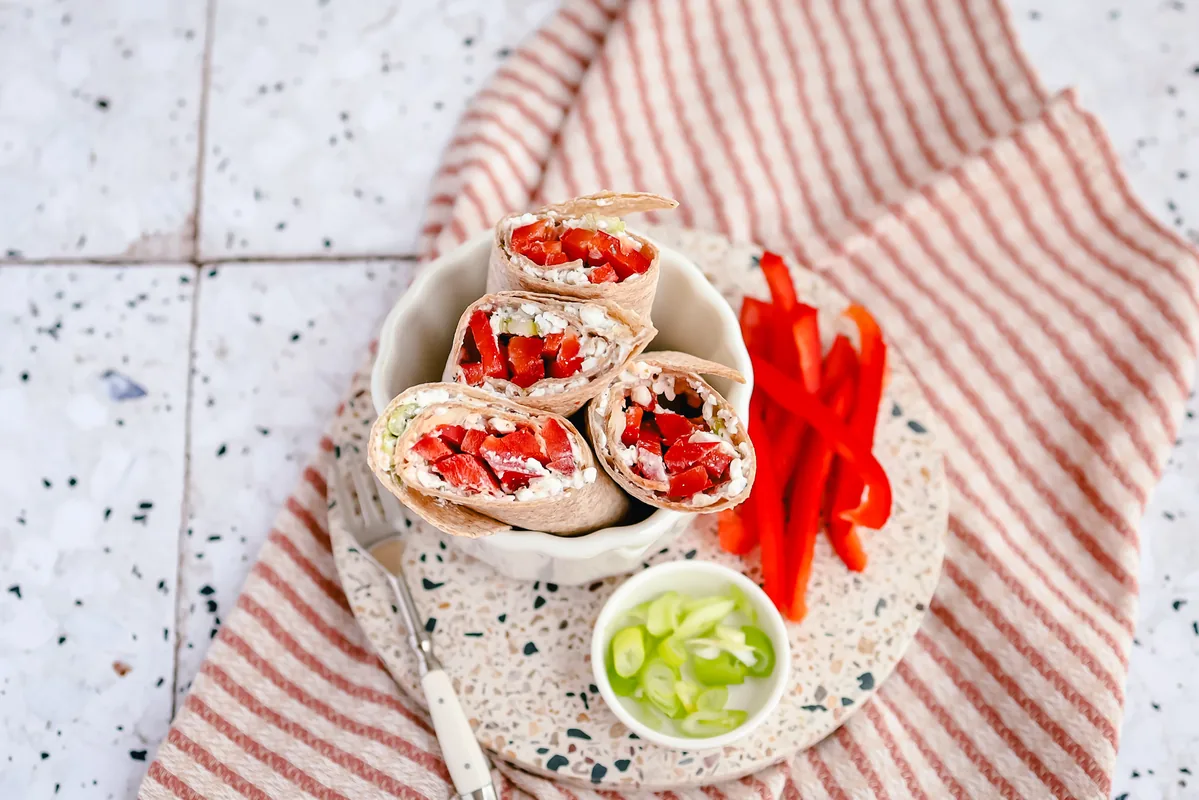
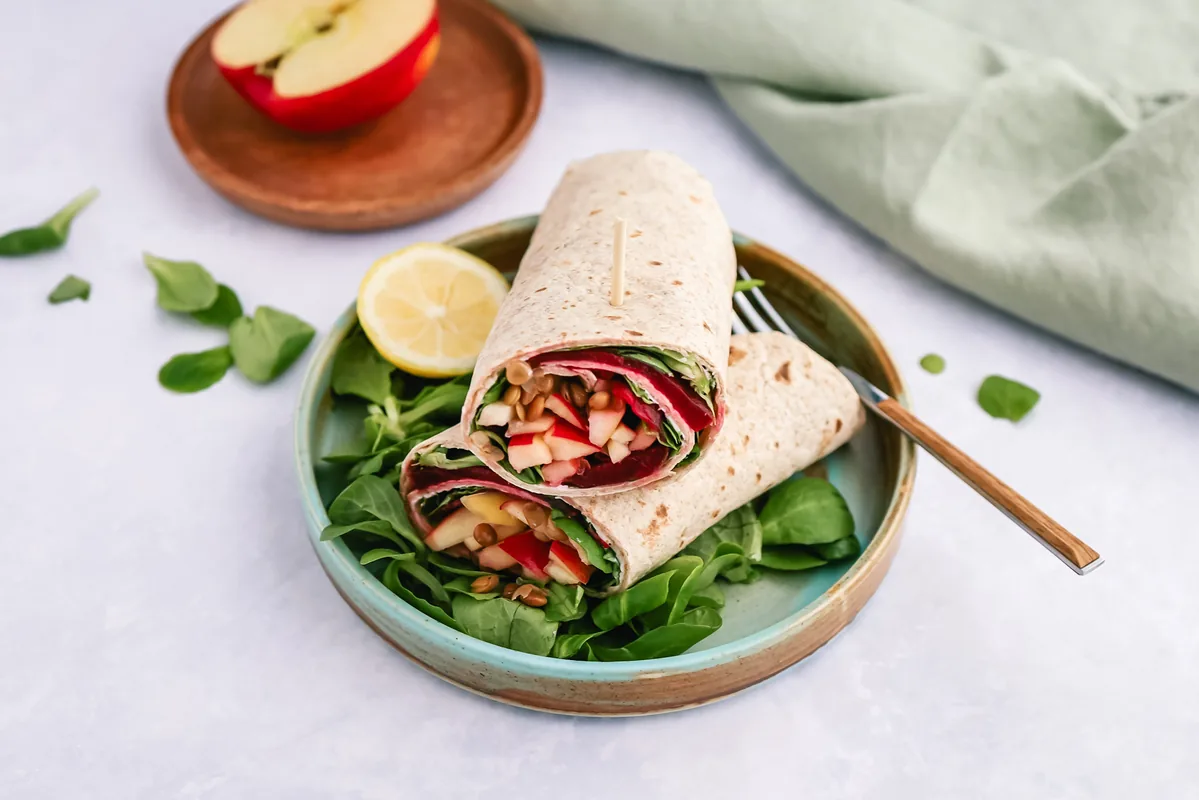
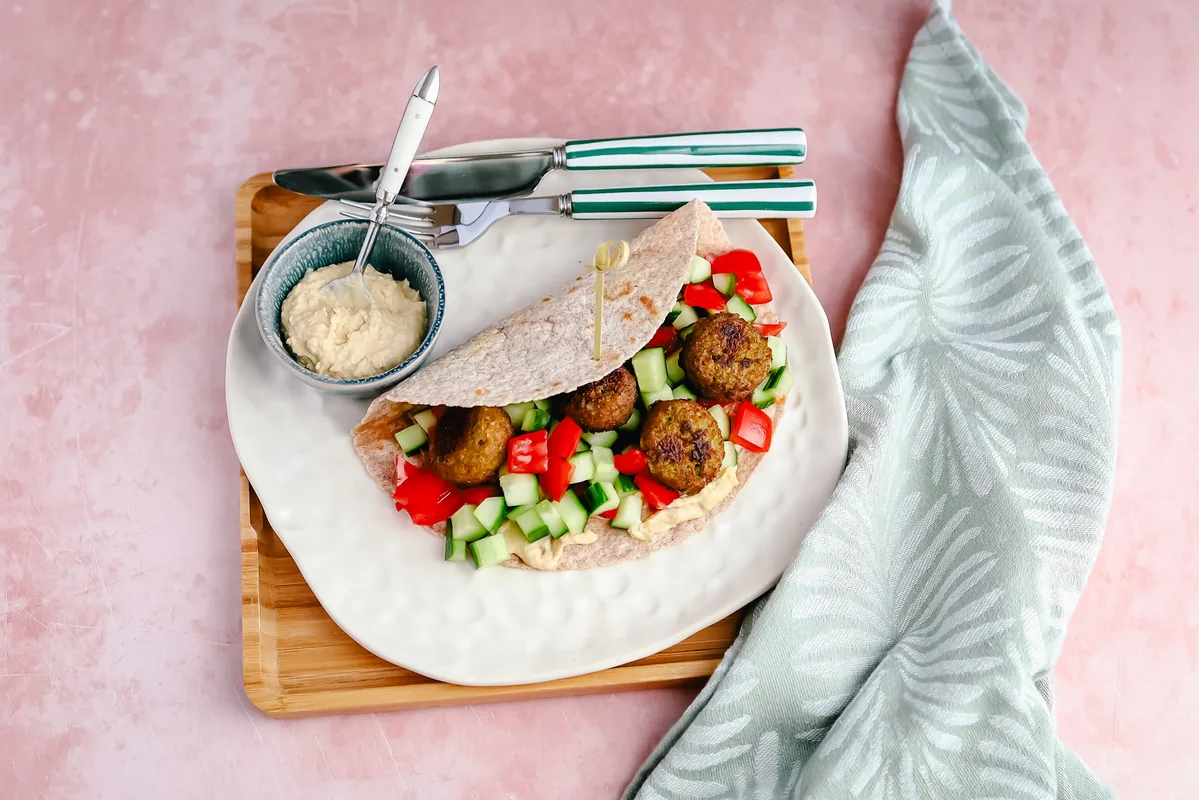
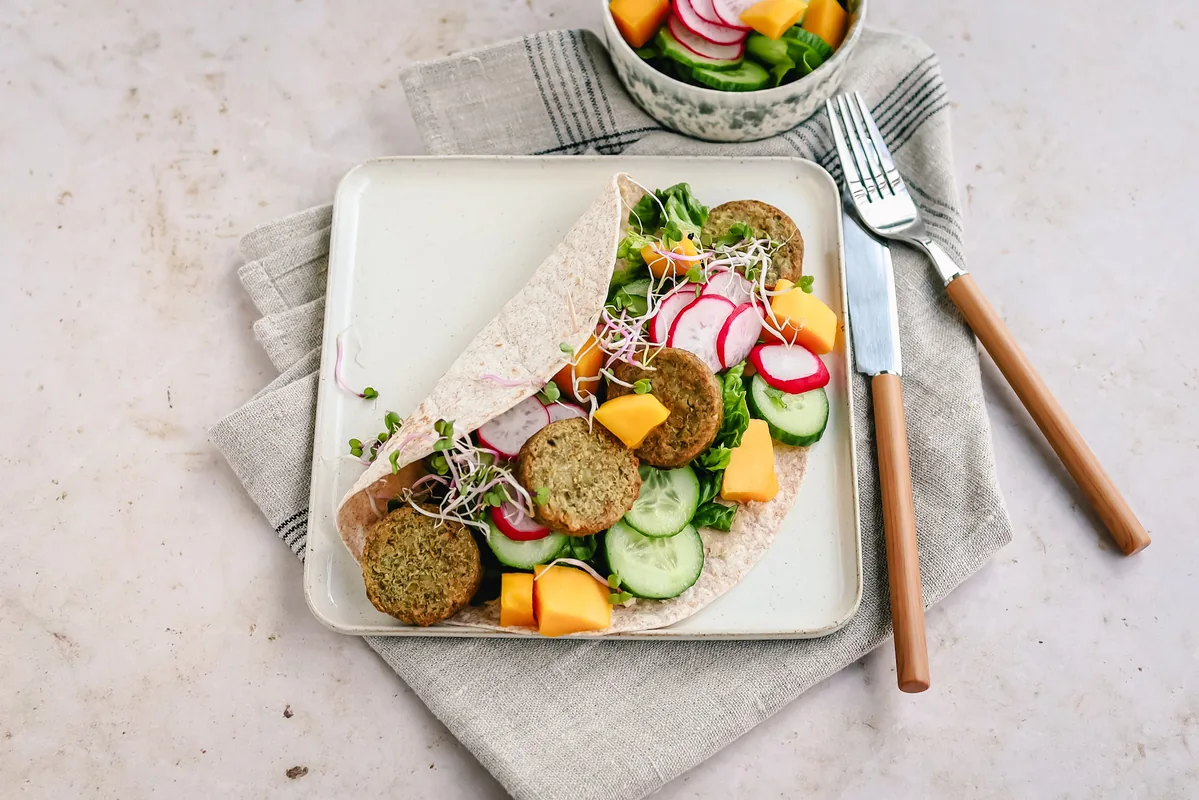
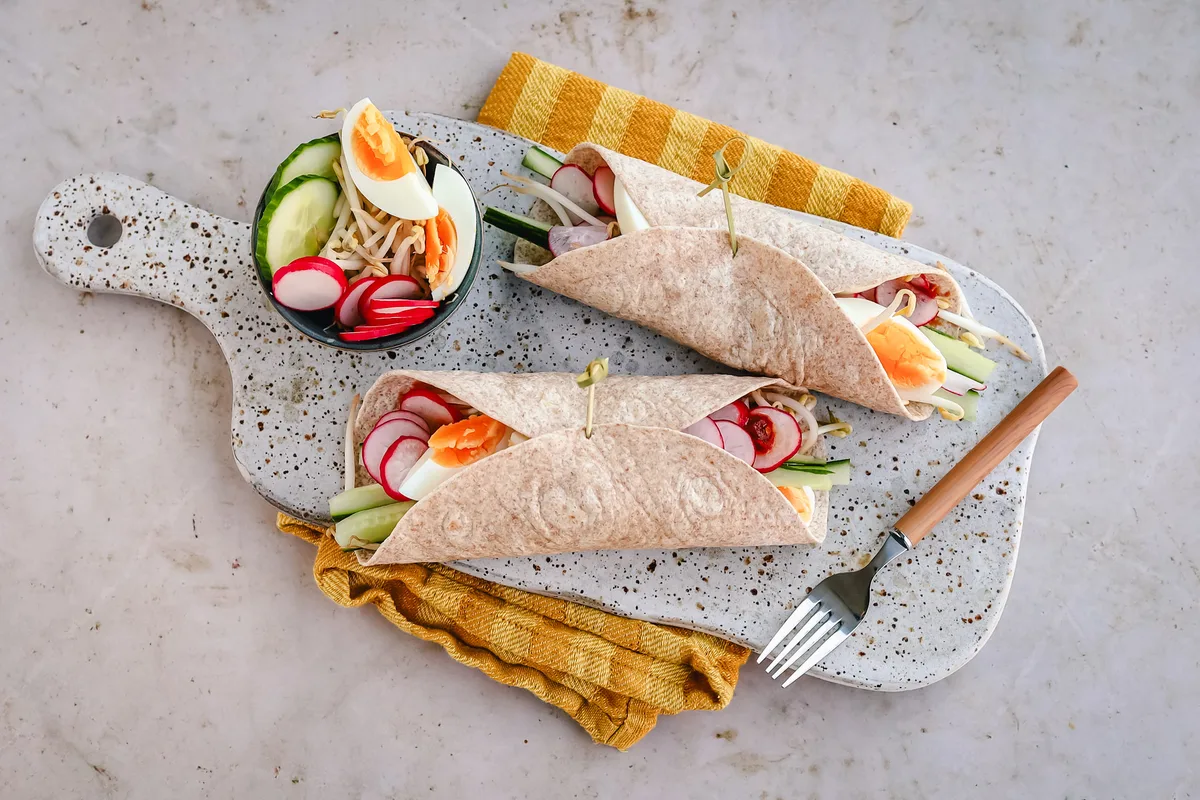
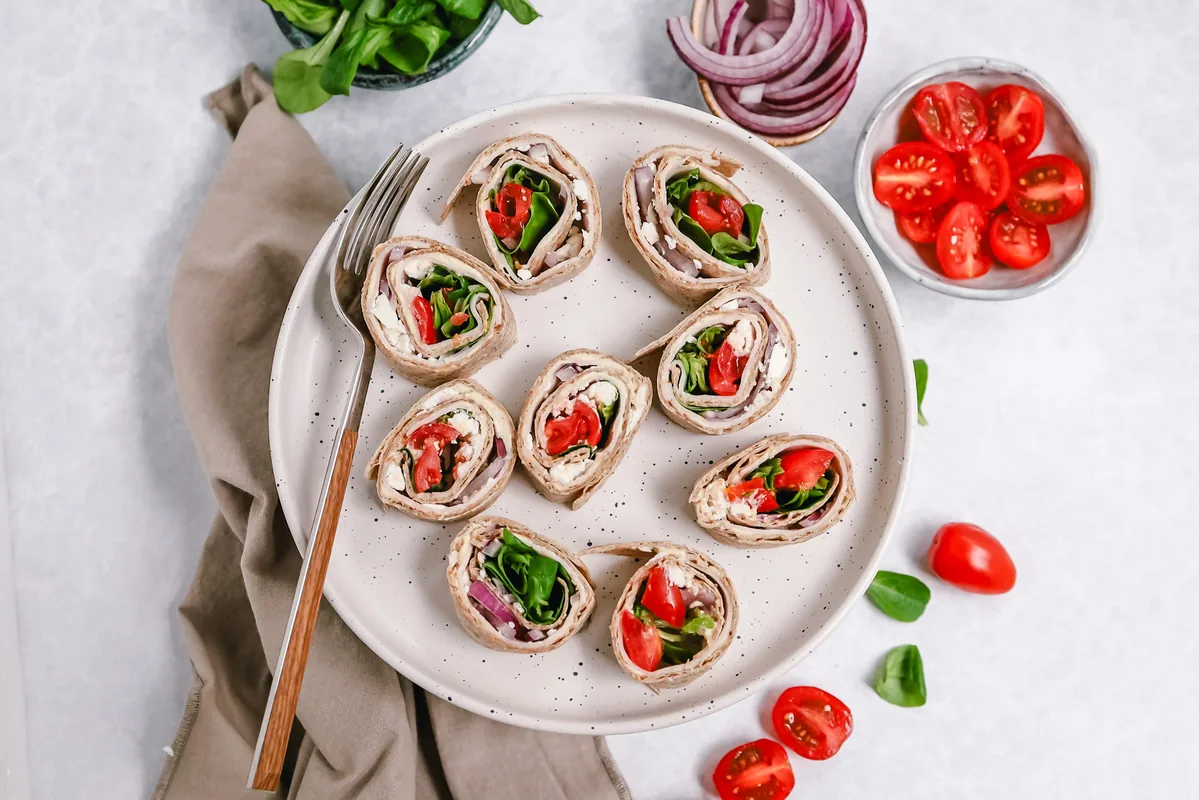
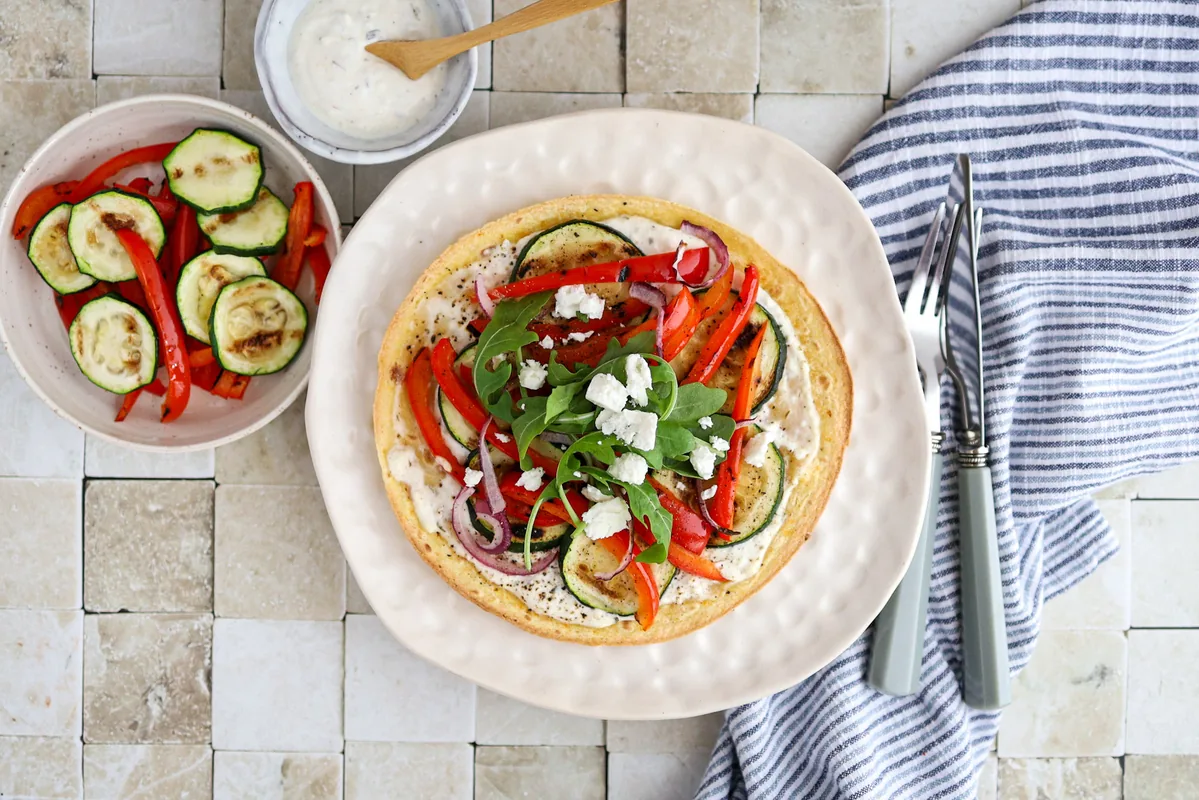

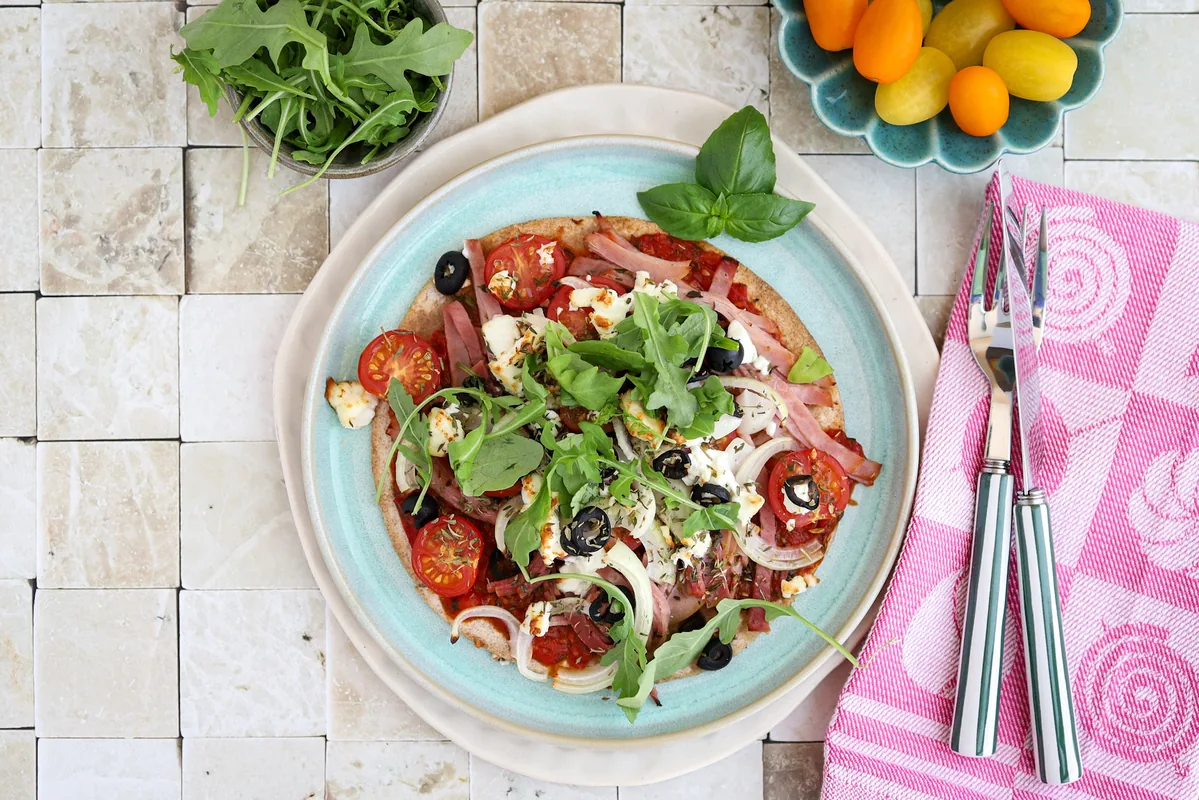
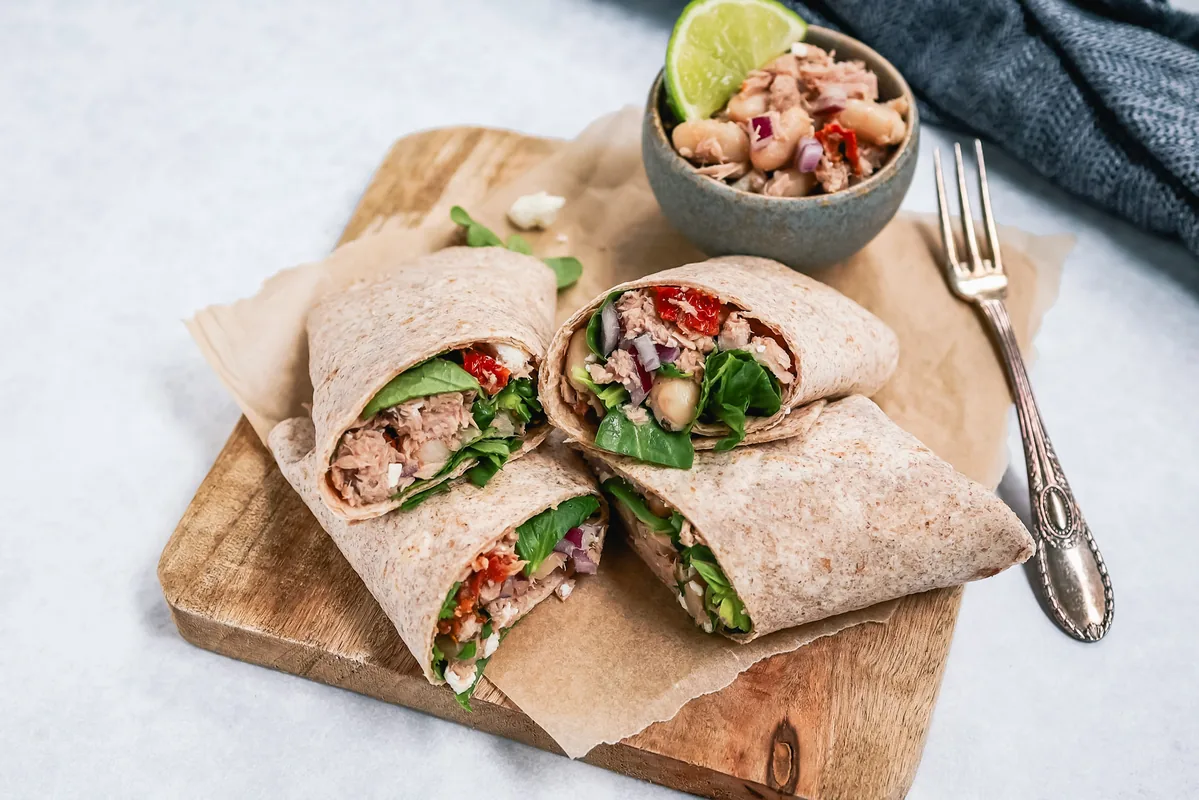
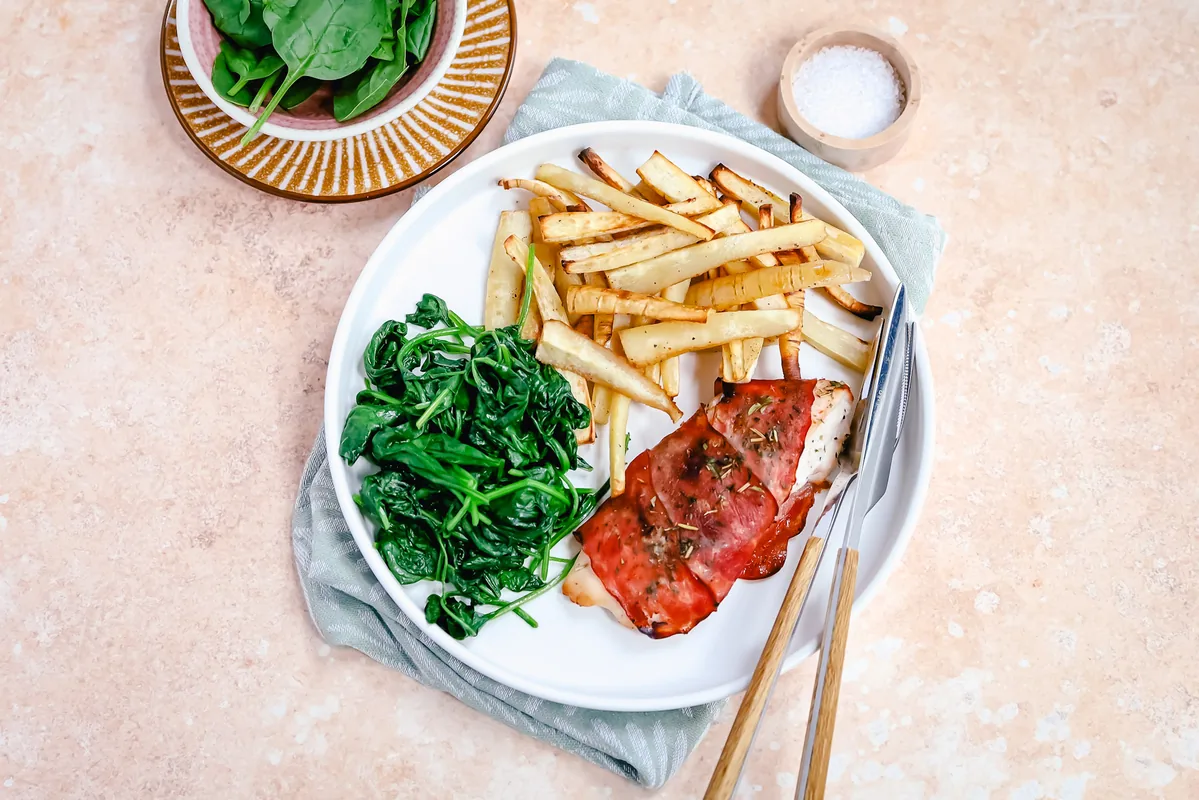


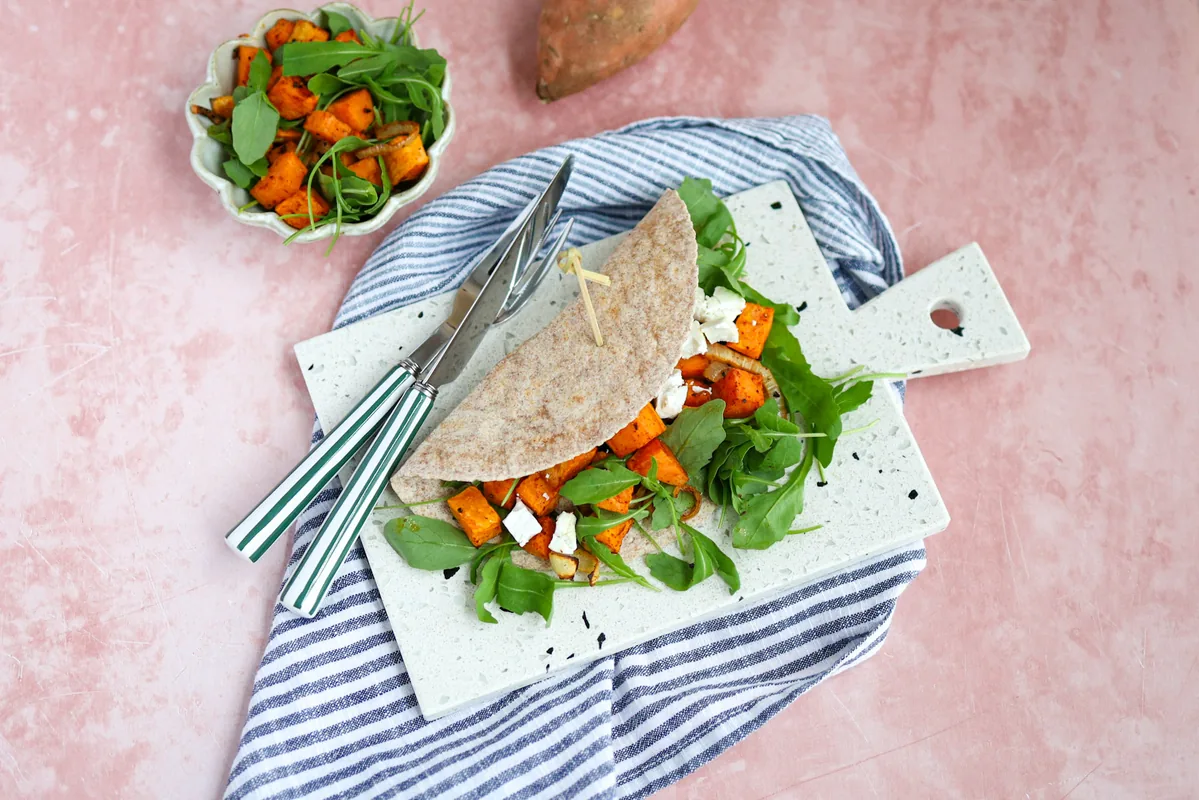
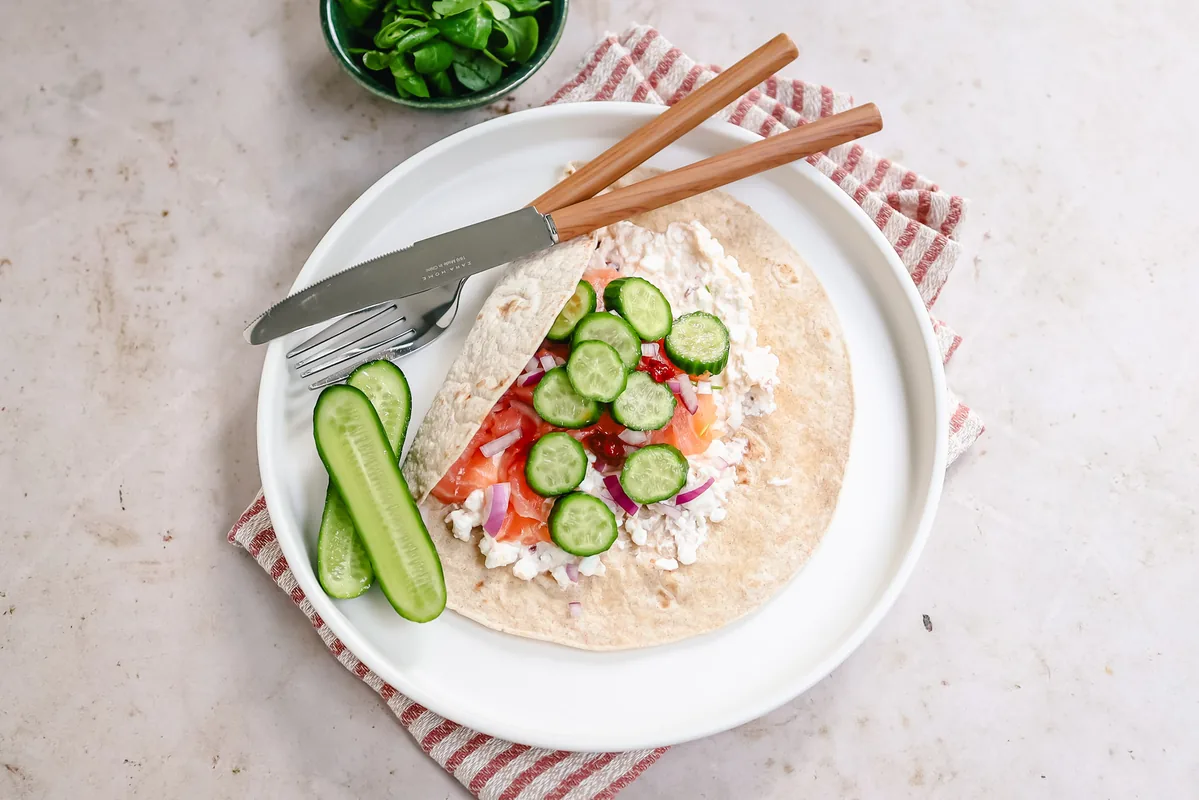

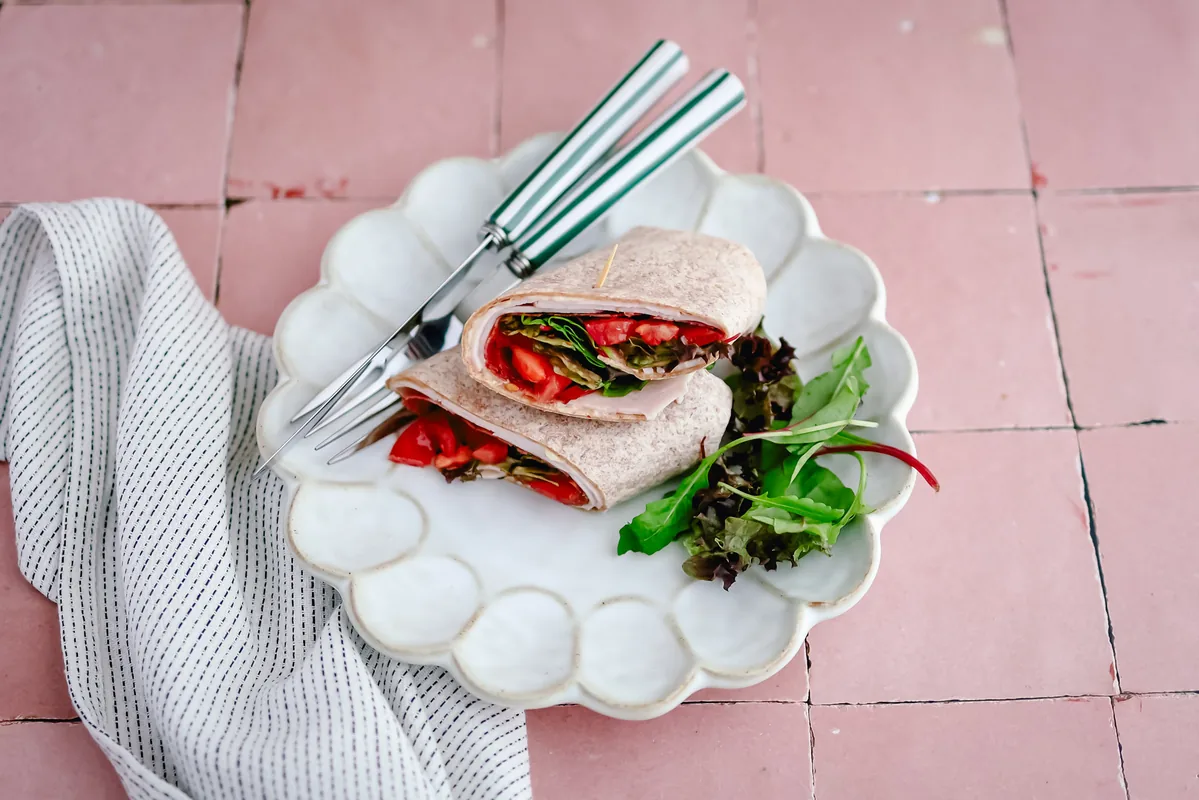
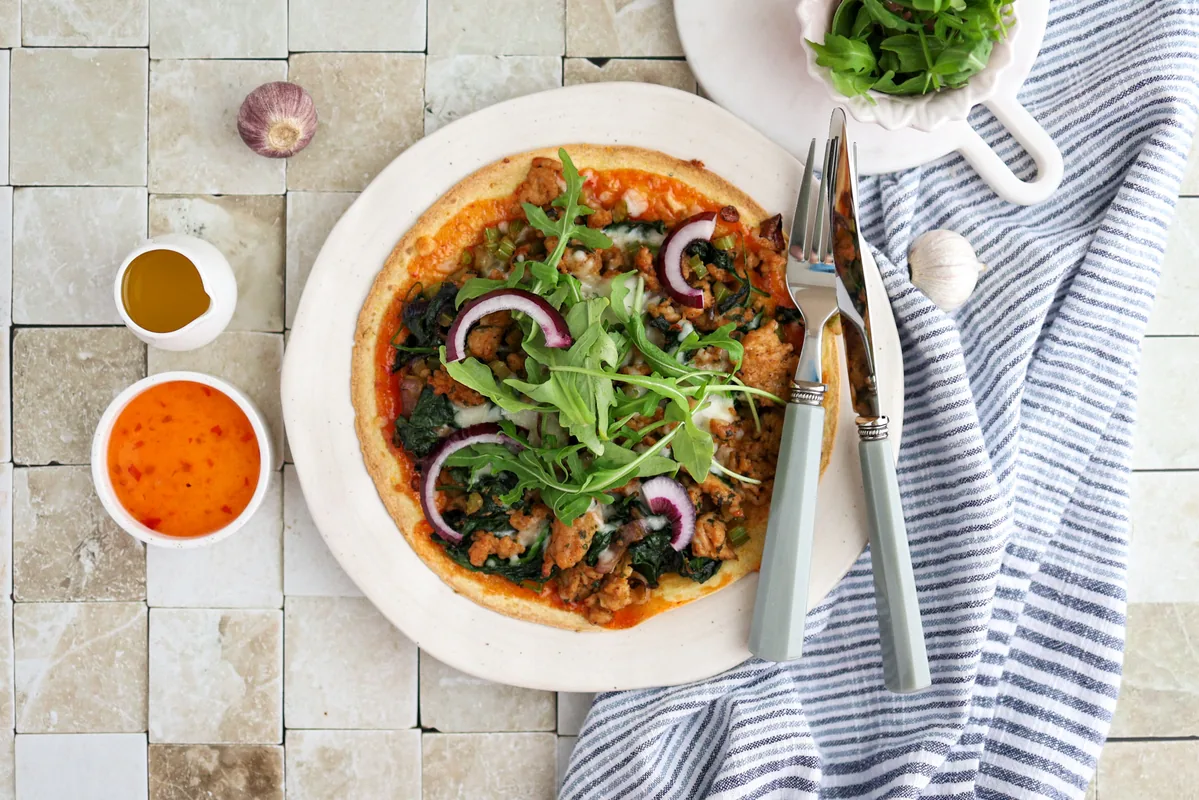
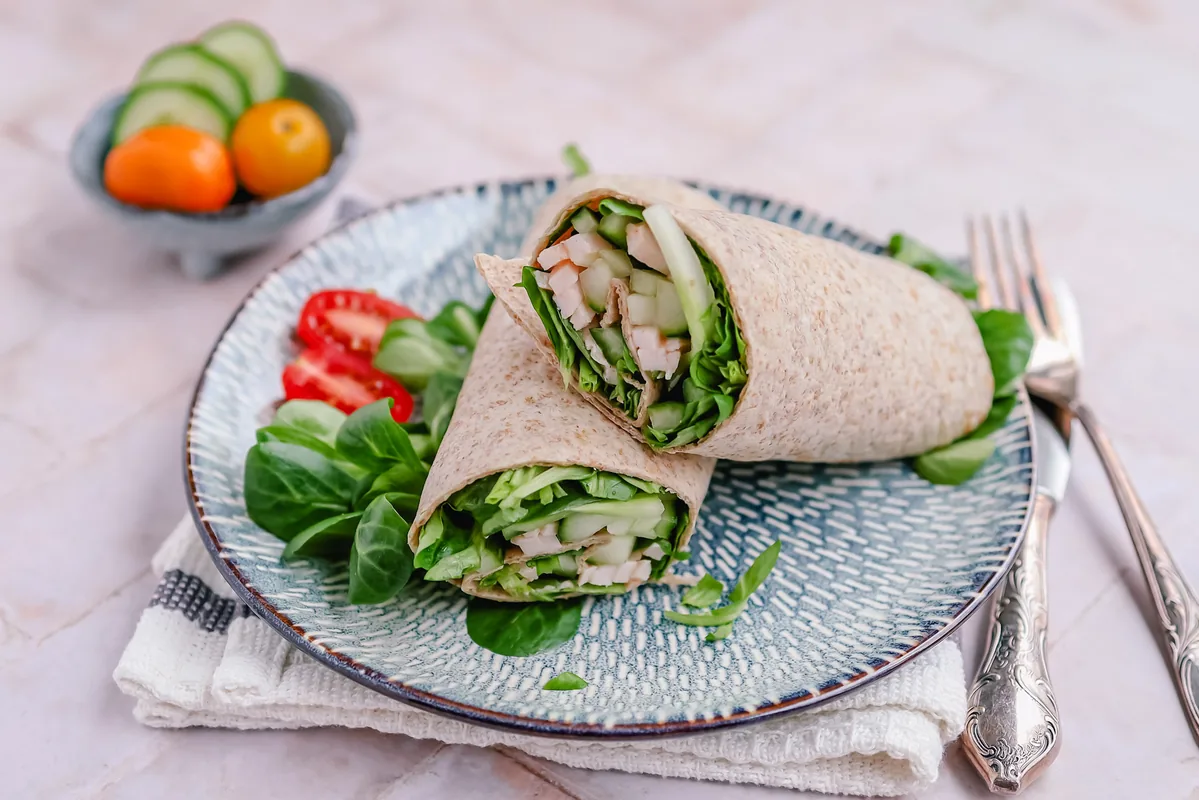
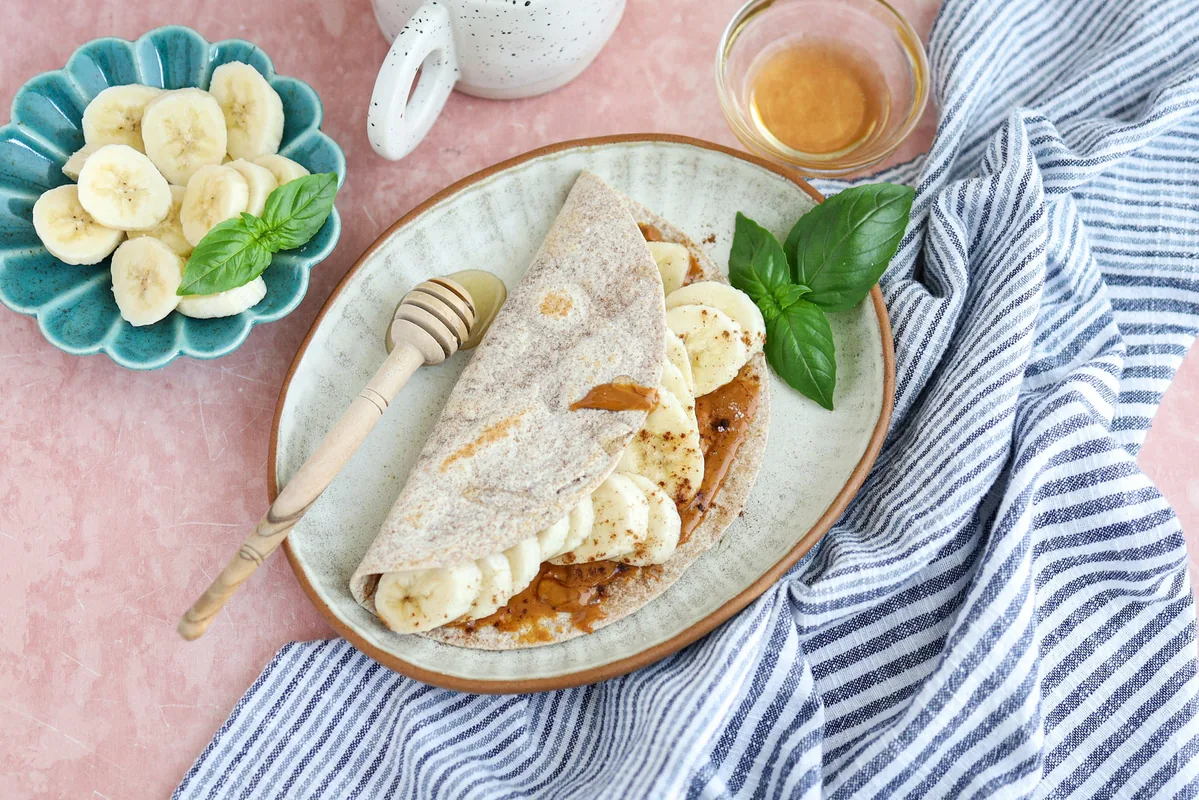
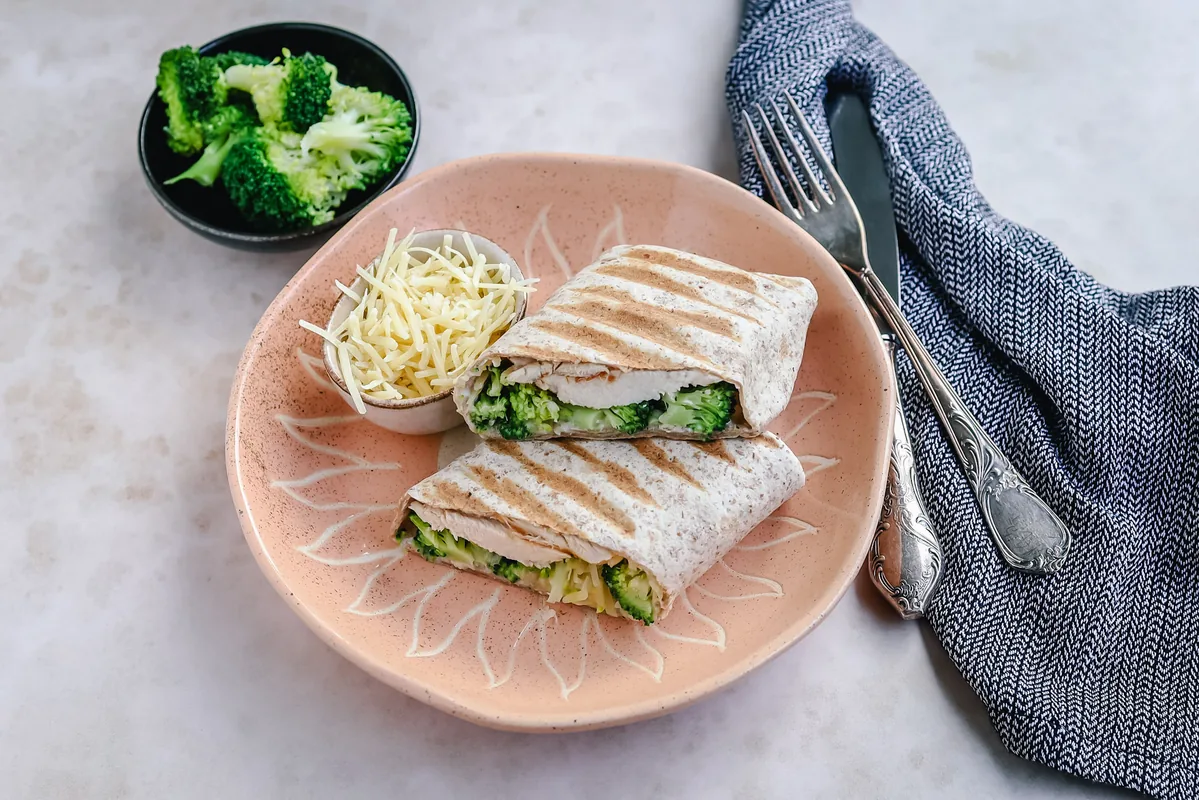

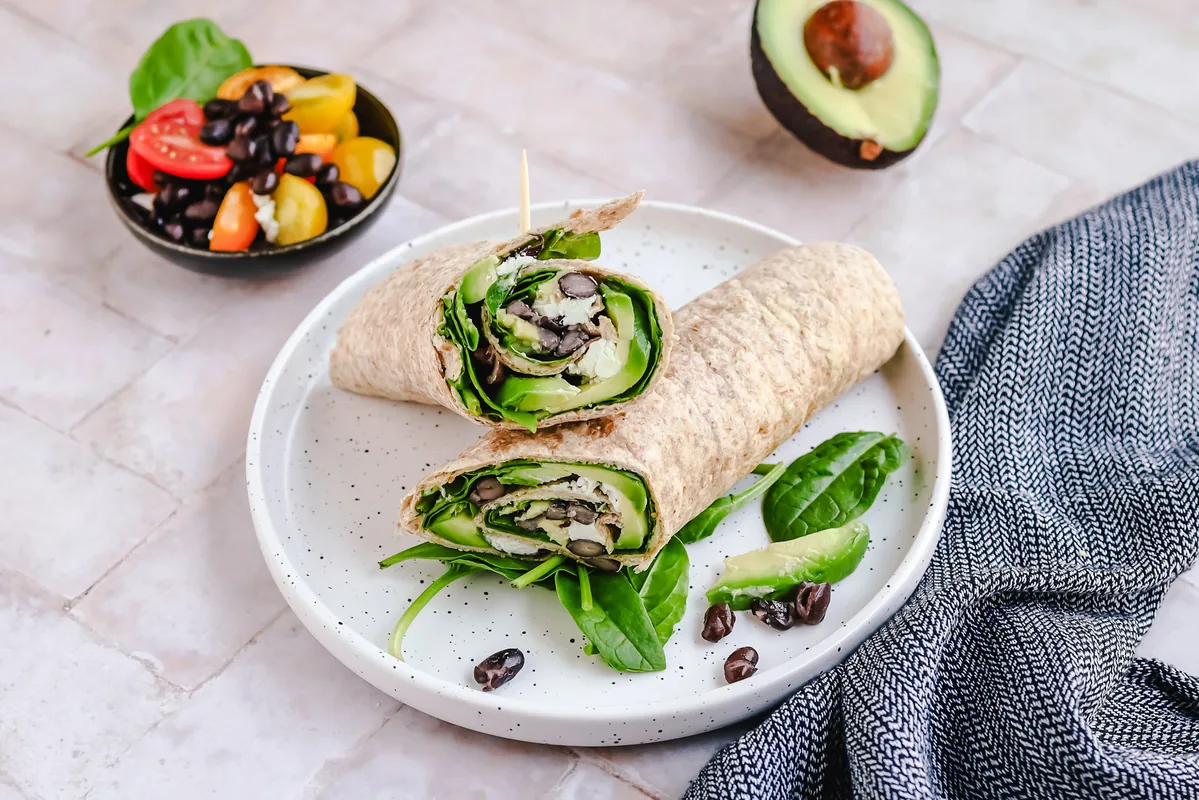
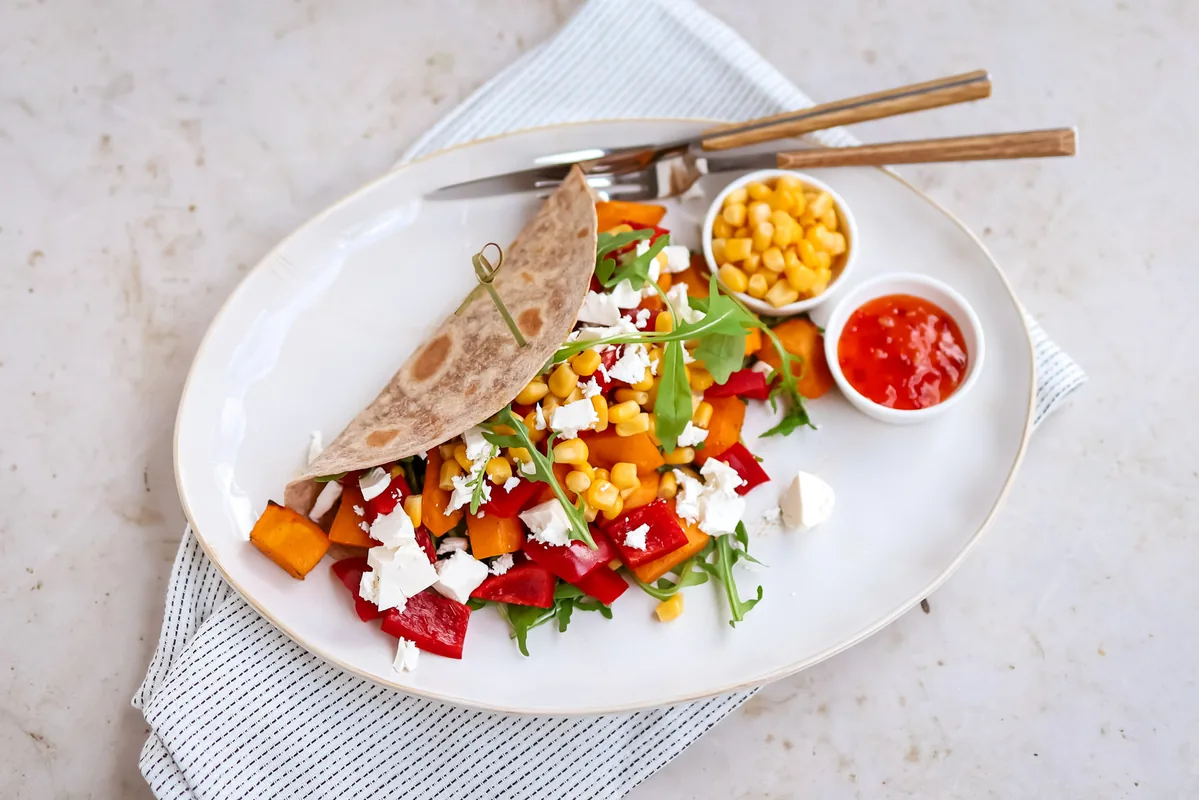
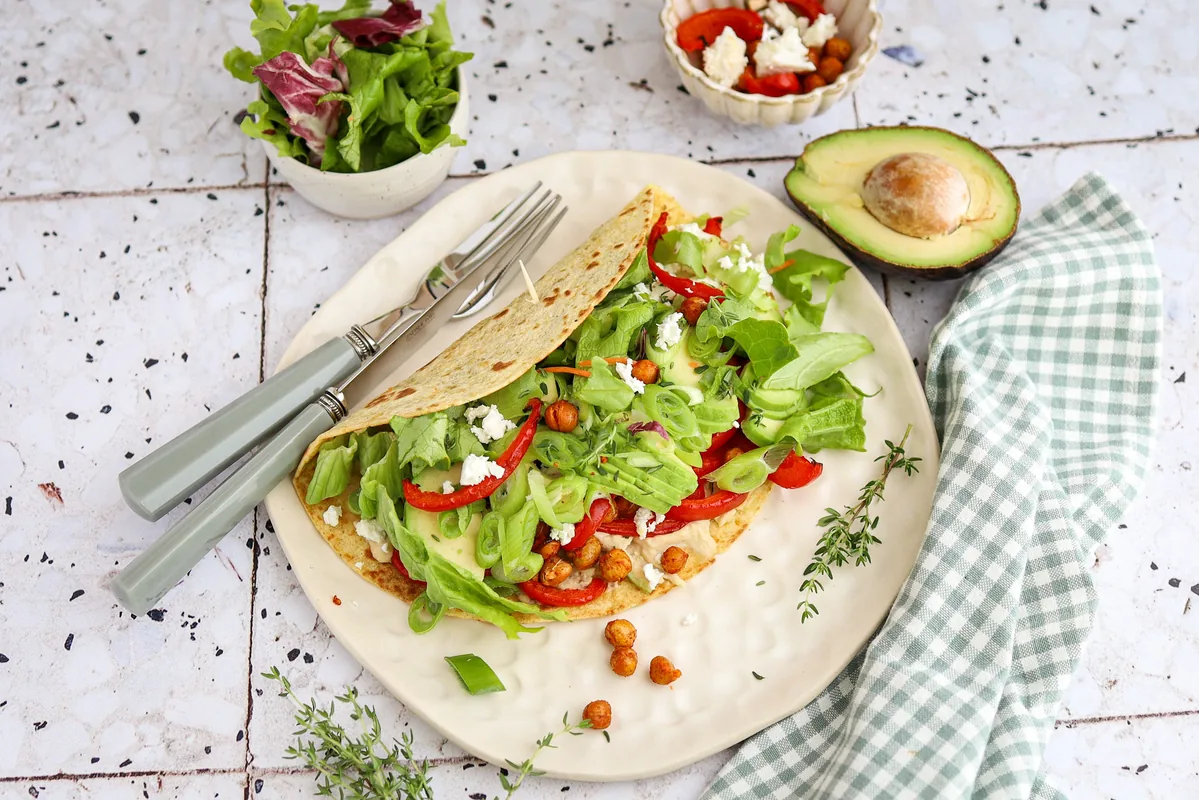
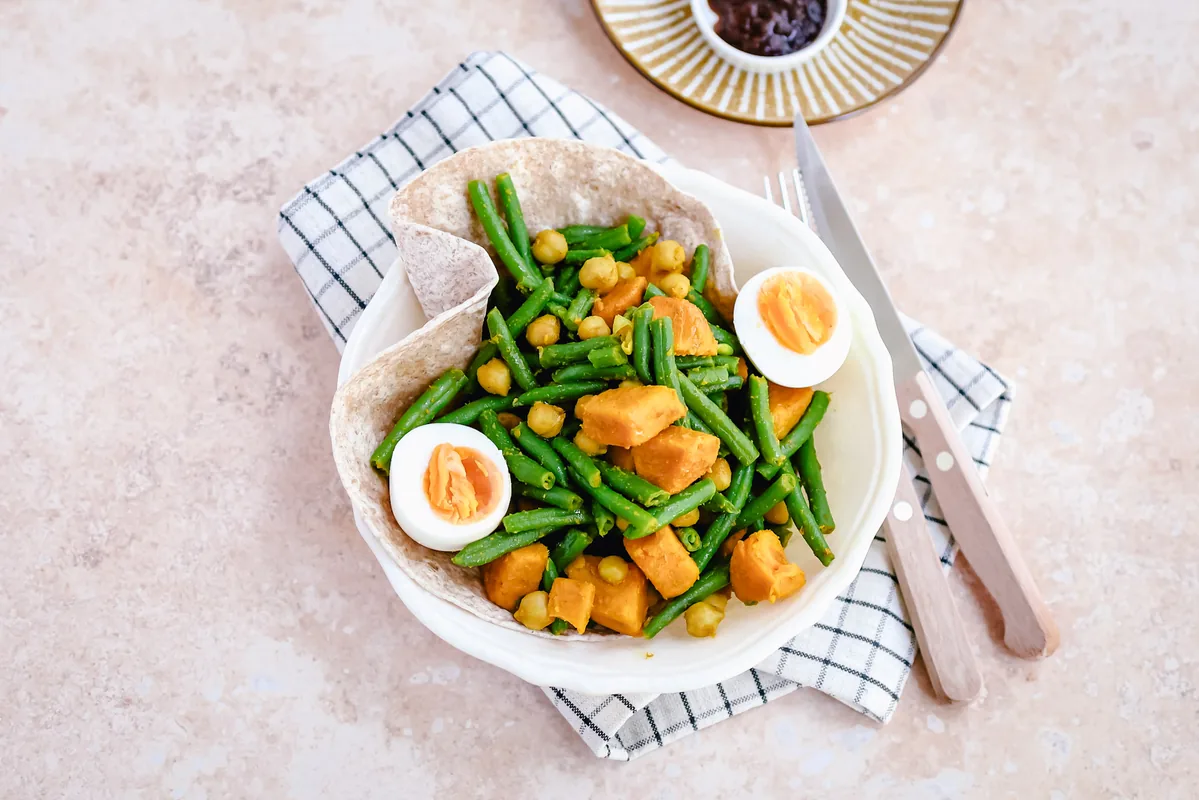
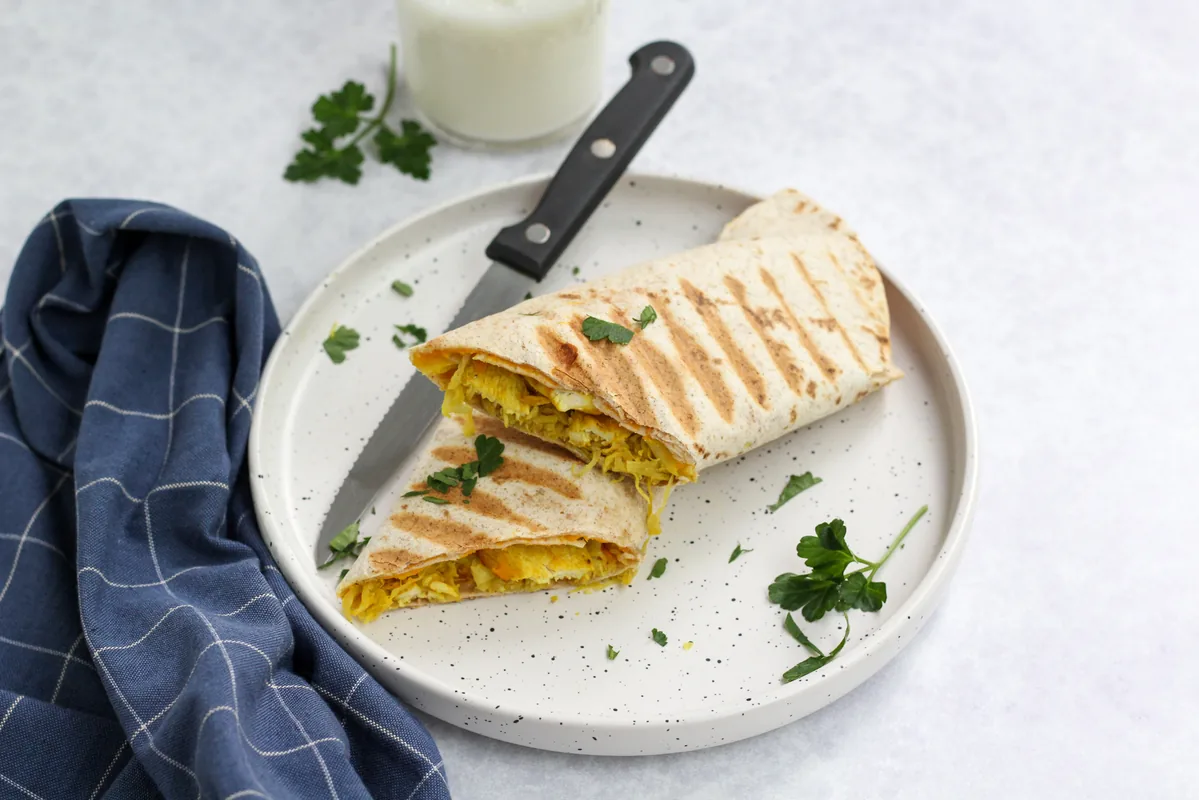

Avocado on a tortilla touches spinach. Peanut butter touches shredded carrot. Hummus touches bell pepper. In 17 of these 29 wraps, a fat source makes direct contact with a raw vegetable — and that contact has published data behind it.
Crossover trials found that eating fat-soluble vitamins (beta-carotene, vitamin E, vitamin K) without fat in the same bite drops absorption to effectively zero. As little as 6 grams of added fat crosses the threshold where micelle formation begins and the body starts extracting what vegetables actually carry. Avocado, hummus, olive oil, peanut butter, cheese — each one shows up in this collection as the fat vehicle that unlocks the vegetable next to it.
The collection covers 195–763 kcal with 7–37g protein, with prep times from 5 to 25 minutes. Thirteen need zero heat — raw ingredients rolled and eaten. The cooked wraps hit median 20g protein; the no-cook wraps sit at 13g, splitting the collection into a meal tier and a snack tier that the macros drew on their own.
Fiber sits at median 7g per wrap, with six recipes clearing 10g. The legume-heavy wraps drive this: chickpeas, lentils, and black beans carry the fiber that 62 pooled trials linked to a modest, compounding satiety effect. And when hummus delivers the chickpea, the glycemic index drops from 36 to 15 — the tahini fat slows gastric emptying before the fiber even starts working.