The answer came in years ago. Frozen broccoli preserves its vitamin C within a small margin. Minerals survive intact. Fiber is identical. Every article, every nutrition video, every frozen-versus-fresh comparison reaches the same verdict: the bag in your freezer is just as healthy as the bunch in the produce aisle.
That conclusion covers everything except the single compound that built broccoli's health reputation.
Is Frozen Broccoli as Healthy as Fresh?
Frozen broccoli retains its vitamins, minerals, and fiber, but commercial blanching before freezing permanently destroys the enzyme needed to form sulforaphane, broccoli's most researched bioactive compound. Eating raw cruciferous vegetables (radishes, raw cabbage, mustard greens) at the same meal supplies the missing enzyme and restores sulforaphane formation roughly tenfold.
— Dosz & Jeffery 2013 · Journal of Food Science · PMID 23915112
Sulforaphane is the molecule behind most broccoli health headlines, and frozen broccoli cannot make it. Fresh broccoli produces sulforaphane through a straightforward internal process: an enzyme called myrosinase converts a stored precursor into the active compound during chewing and digestion. Freezing preserves the precursor. The enzyme is a different story.
The destruction happens before the broccoli reaches a freezer. Commercial production requires blanching, a brief dip in hot water that locks in color and texture. That heat permanently eliminates myrosinase. No recovery pathway exists.
The raw material sits in every frozen bag with no converter to activate it.
Your digestive system has a partial workaround. Gut bacteria can perform a slow version of the same conversion on their own, recovering roughly 10 to 20 percent of what the intact enzyme would deliver. For a meal built around frozen broccoli alone, that fraction is the ceiling.
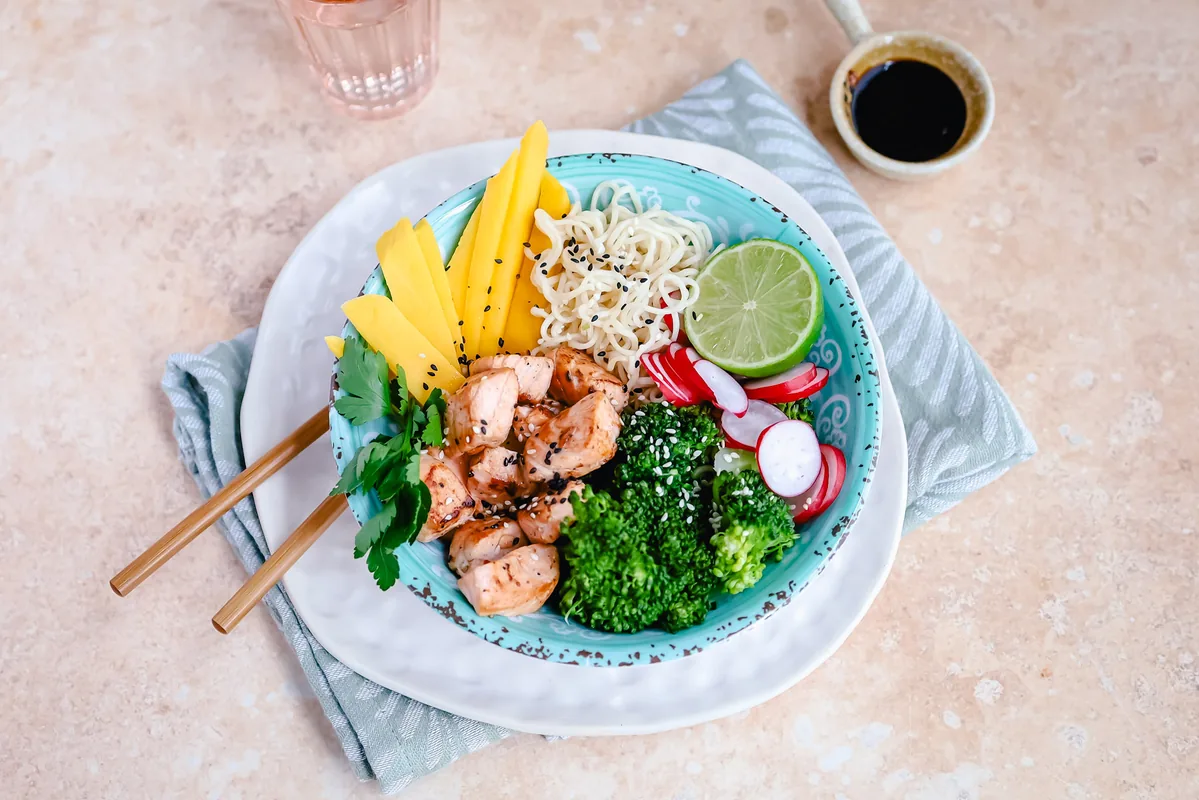
A simple addition to the plate changes the equation entirely. Raw cruciferous vegetables, radishes, raw cabbage, mustard greens, anything uncooked from the same plant family, carry their own myrosinase. Eaten alongside frozen broccoli at the same meal, that external enzyme converts the precursor the bag still holds. The increase measured roughly tenfold compared to frozen broccoli on its own (Dosz & Jeffery, 2013).
The researchers measured this under controlled laboratory conditions, not in a mixed meal with stomach acid and variable chewing. The exact magnitude of the rescue at a real dinner table is not quantified. The mechanism itself is well-established: the precursor survives, the enzyme from raw cruciferous plants is active and heat-stable, and the conversion pathway works.
The frozen bag earned its reputation for vitamins, minerals, and fiber. All of that stands. The one gap has a fix that costs a handful of raw vegetables at the same meal. What lingers is a different kind of question: how many other foods on your plate carry a similar hidden dependency, a nutrient that needs a partner the label never lists.