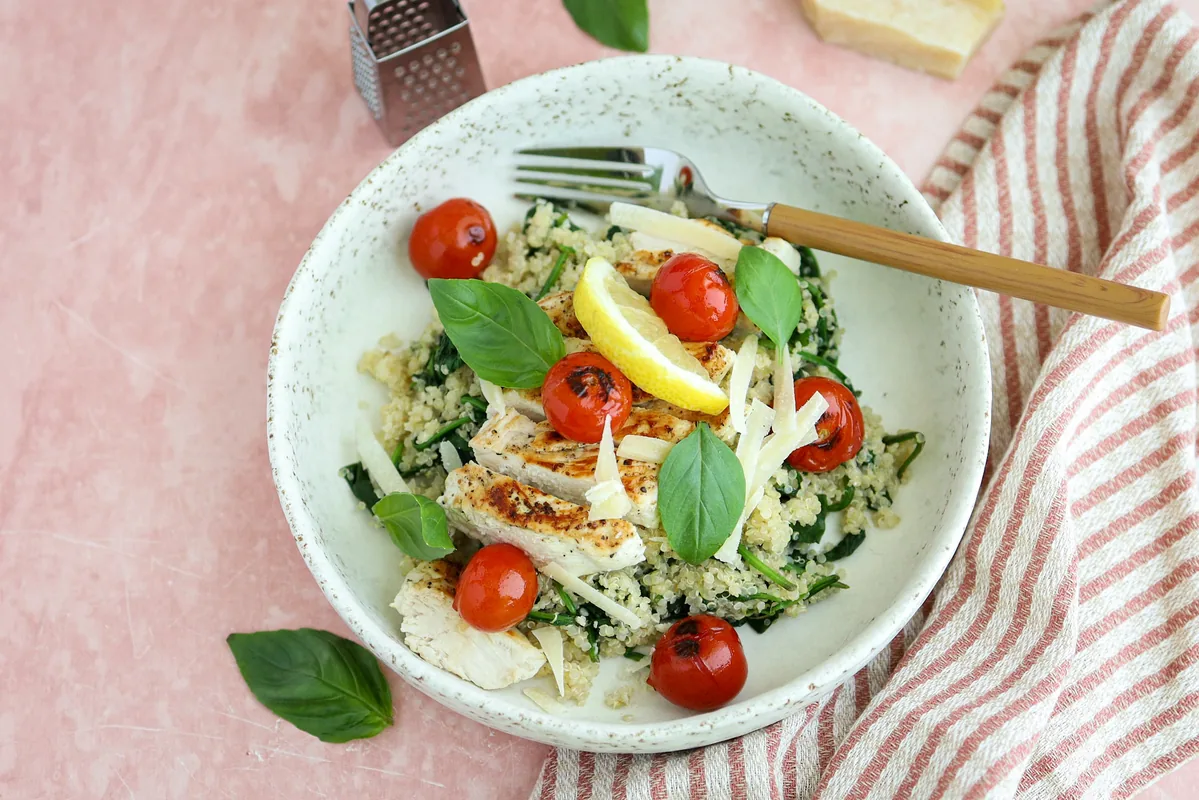
Lemon quinoa with spinach, cherry tomatoes & chicken
Hot quinoa absorbs shredded cheddar and a squeeze of lemon juice the moment they meet — tangy, creamy, and ready for everything that piles on top. Sautéed garlic spinach, pan-roasted cherry tomatoes, and sliced chicken breast bring the plate to 47g of protein and 11g of fiber in about 15 minutes.
That squeeze of lemon juice does more than brighten the quinoa. Research shows vitamin C and garlic compounds both enhance non-heme iron absorption from leafy greens — while the oxalates most people worry about have zero measurable effect (P=0.86, Bonsmann et al., 2008).
Hot quinoa absorbs shredded cheddar and a squeeze of lemon juice the moment they meet — tangy, creamy, and ready for everything that piles on top. Sautéed garlic spinach, pan-roasted cherry tomatoes, and sliced chicken breast bring the plate to 47g of protein and 11g of fiber in about 15 minutes.
That squeeze of lemon juice does more than brighten the quinoa. Research shows vitamin C and garlic compounds both enhance non-heme iron absorption from leafy greens — while the oxalates most people worry about have zero measurable effect (P=0.86, Bonsmann et al., 2008).
Ingredients
- quinoa 3 ounces
- vegetable bouillon 0.5 cube
- chicken breast 3 ounces
- olive oil 1.5 tablespoon
- cherry tomatoes 8 pieces
- garlic 1 clove
- spinach 7 ounces
- lemon juice 1 squeeze
- cheddar cheese, shredded 1.5 ounce
Method
-
Cook the quinoa with the bouillon cube according to the instructions on the package.
-
Season the chicken breast on both sides with some pepper and salt.
-
Heat half of the oil in a frying pan and cook the chicken breast until golden brown and cooked through, about 6 minutes per side.
-
In the last few minutes, add the cherry tomatoes to the pan on high heat to roast them. Remove the chicken and tomatoes from the pan and keep warm under foil.
-
Press the garlic clove.
-
Heat the other half of the oil in the pan. Sauté the garlic for 1 to 2 minutes. Add the spinach and cook until wilted.
-
Drain the cooked quinoa and stir in the cheese immediately along with the lemon juice. Then stir the spinach into the quinoa.
-
Slice the chicken into pieces.
-
Serve the lemon quinoa with spinach on a plate and place the roasted tomatoes and chicken slices on top.
Sauté the garlic in oil for the full 1–2 minutes before adding the spinach — don't rush it. Research found that garlic's sulfur compounds form soluble complexes with iron, increasing its absorption from grains and leafy greens by up to 73% (Gautam et al., 2010). That cook time releases the compounds into the oil that coats the spinach.
The common belief that spinach oxalates block iron absorption was tested by ETH Zurich with isotope-labeled iron in 13 women. Result: zero effect (P=0.86). The actual iron inhibitors in spinach are polyphenols and calcium — not the oxalates everyone fixates on.
ETH Zurich, 2008 · DOIWhy This Works
Behind this recipe
Does spinach really block iron absorption?
Not the way most people think. A study from ETH Zurich tested this directly with isotope-labeled iron and found that spinach oxalates had zero measurable effect on iron absorption (P=0.86). The actual inhibitors in spinach are polyphenols and calcium — not the oxalates. This recipe adds lemon juice (vitamin C) and garlic, both of which research has linked to enhanced non-heme iron absorption from plant foods.
Read the full evidence reviewWhy add lemon juice to quinoa?
Beyond the flavor lift, lemon juice adds vitamin C — which multiple studies have identified as the most efficient enhancer of non-heme iron absorption. Since this bowl has two non-heme iron sources (spinach and quinoa), the vitamin C from the lemon works alongside the garlic's sulfur compounds to keep iron in a form the body can absorb.
Read the full evidence reviewDoes the cheddar cheese affect the tomato nutrients?
It might. Research has found that calcium at dairy-relevant doses can reduce lycopene absorption by up to 83%. In this recipe, the cheddar is stirred into the quinoa while the tomatoes sit on top — but they mix during eating. The trade-off: cooking the tomatoes in olive oil already increases lycopene bioavailability by 82%, which partly offsets the calcium competition.