
Short

The Iron Trapped Inside Every Raisin

Supplements 2 min read 520 words

Flip a bag of raisins over and the nutrition panel gives you a number you want to believe: 1.88 milligrams of iron per hundred grams. Roughly ten percent of your daily value, printed in a font designed to look like fact. Your body reads that number differently.

Between what a food contains and what your body absorbs sits a gap most nutrition labels never mention. For raisins, that gap is enormous.

Listen to this short · FitChef Audio

Are Raisins a Good Source of Iron?

Raisins contain iron on the label, but the body absorbs very little of it. A USDA and Cornell study tested all three common raisin types using the standard cell model for iron absorption, and every variety showed low bioavailability. High concentrations of tannin inhibitors — concentrated during the drying process — trap the iron before it reaches your bloodstream.

— Yeung et al. 2003 · Journal of Food Science · n=3 varieties

USDA and Cornell University food scientists put all three common raisin types — golden, dipped, and sun-dried Thompson — through a cell-based test that mimics human iron absorption. Every variety came back the same: low iron bioavailability, across the board. Not borderline. Not one-variety-saves-it. All three failed.

The printed milligrams exist. They sit inside the raisin. They just never reach your bloodstream in meaningful amounts.

What blocks them is the same thing that makes a raisin a raisin. Drying a grape concentrates everything — the sugars, the iron, and the tannins. Those tannins are polyphenol compounds that bind to non-heme iron the way a lock grabs a key, except the lock never opens. The same drying process that raises the iron number on the label also concentrates the compound that traps it.

WHAT THE LABEL MEASURES

1.88 mg iron per 100 g — roughly 10% of your daily value

WHAT YOUR BODY ABSORBS

Low bioavailability — tannin inhibitors trap the iron before it reaches your bloodstream

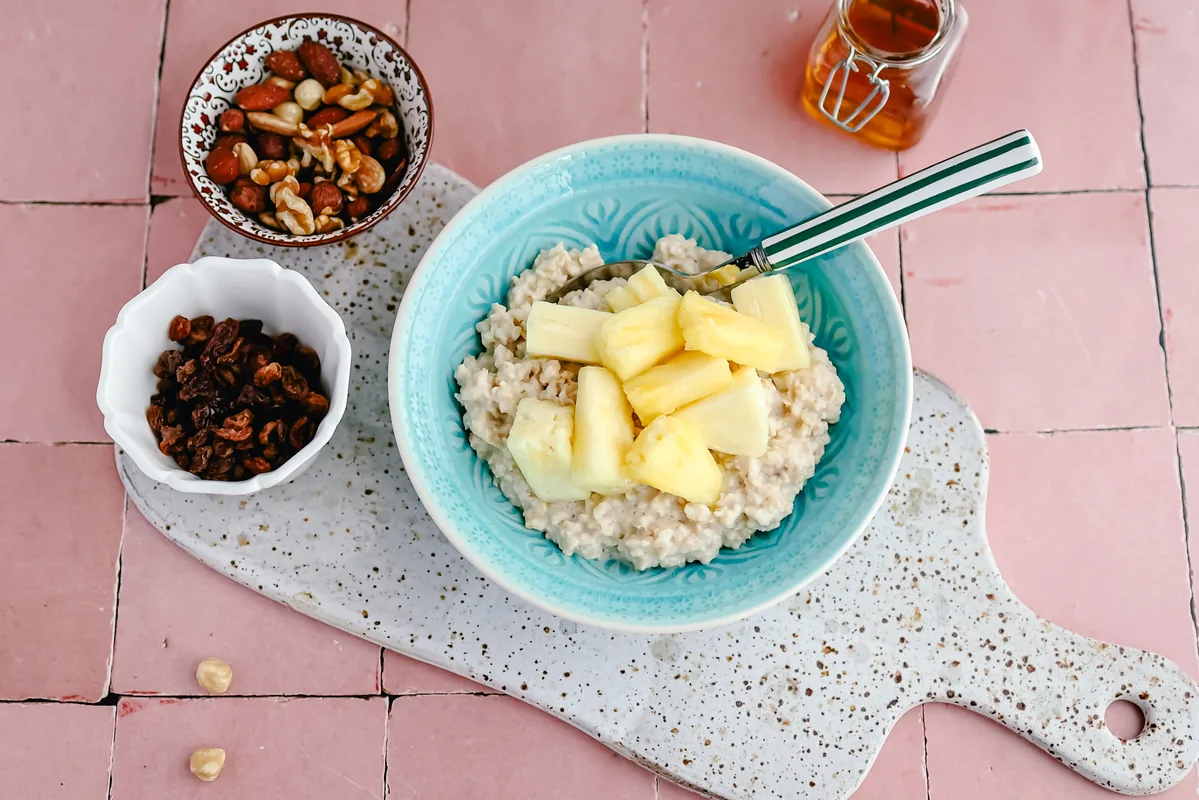
Absorption inhibitors showed up in concentrations high enough to raise a harder question: raisin tannins may reduce iron absorption from other foods eaten in the same meal. Your morning oatmeal with raisins might not just miss the raisin iron — the raisins could be pulling iron away from the oatmeal too.

That cross-meal effect is an inference the researchers drew from the inhibitor levels they measured, not something they tested directly with co-consumed foods. The absorption test itself used a cell model rather than human volunteers — a validated method, but one that cannot capture everything a stomach does. The finding is clear enough to rethink the raisin-for-iron habit. It is not complete enough to panic about every raisin in your trail mix.

IRON ABSORPTION TEST 1.88 mg iron per 100 g — the label number is real, the body just can’t get to it Caco-2 cell model · Yeung et al. 2003 · J Food Sci

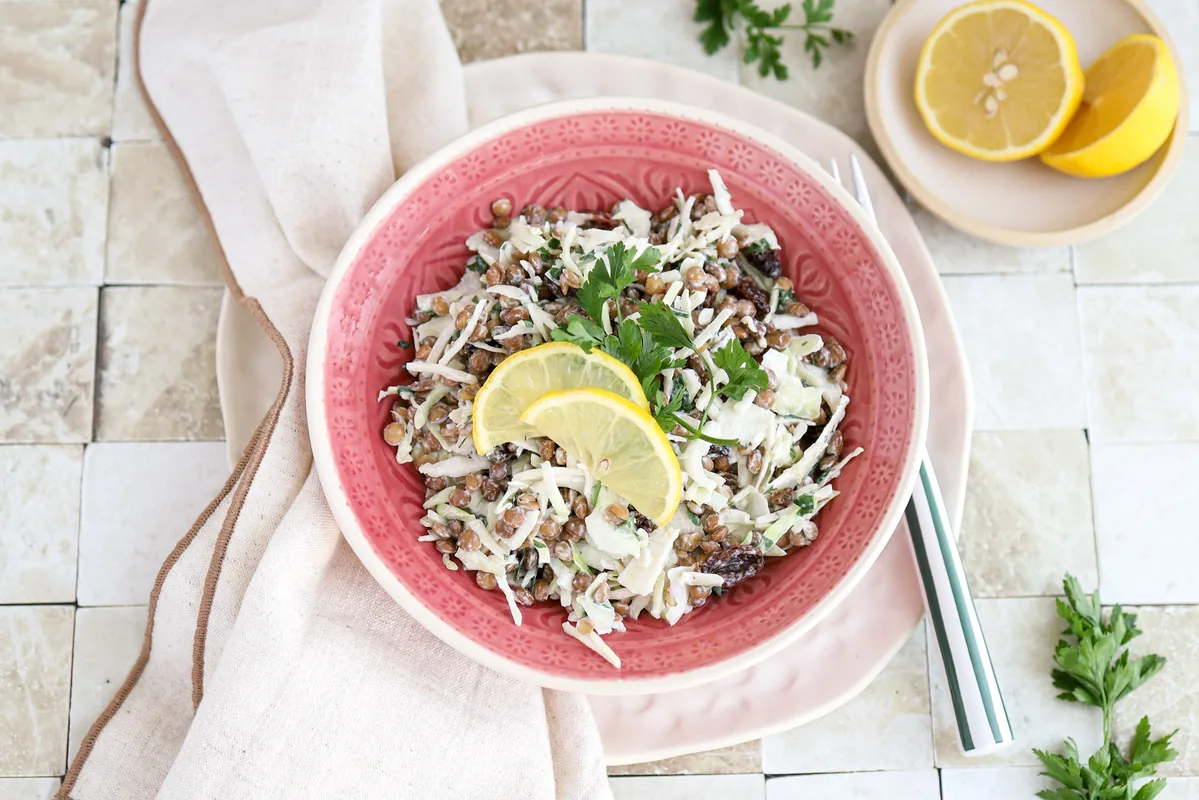
What raisins highlight is a question worth asking about every food that claims to deliver a mineral: can your body actually get to it? Spinach raises the same question with oxalates, and onion and garlic offer a surprisingly practical answer. If you want a meal where the iron actually arrives, a lentil coleslaw built around that exact problem pairs high-iron ingredients with raw cabbage — sixty-two milligrams of vitamin C working as the rescue mechanism the raisins cannot provide.
Put This Into Practice
Lentil Coleslaw
Lentil Coleslaw
5 min · 533 kcal
Pairs high-iron lentils with raw cabbage — sixty-two milligrams of vitamin C designed to do what the raisins in your trail mix cannot.

Frequently Asked Questions

Was this tested in humans?

Not directly. The study used a Caco-2 cell culture model, which is the standard laboratory method for predicting how well the human gut absorbs iron from food. It is widely validated but cannot capture everything that happens during real digestion — including individual variation in stomach acid, gut transit time, and the presence of other foods. The finding is strong enough to question the raisin-for-iron habit, but a human feeding trial would be needed to confirm the exact absorption rate.

Can raisins block iron from other foods in the same meal?

Possibly. The researchers found such high concentrations of iron absorption inhibitors in raisins that they inferred these tannins may also reduce iron availability from other foods eaten at the same time. This was not tested directly in the study — it is the researchers' conclusion based on the inhibitor levels measured. A follow-up study by the same team tested this with co-consumed foods but is not publicly available.

This page summarizes findings from published research. It is not medical advice. Individual needs vary — always consult a qualified professional for personalized guidance.
For Researchers 1 source

Study: Yeung, C.K., Glahn, R.P., Wu, X., Liu, R.H., Miller, D.D. (2003). In vitro iron bioavailability and antioxidant activity of raisins. Journal of Food Science, 68(2), 701-705.

Source: USDA Agricultural Research Service / Cornell University.

Method: In vitro digestion/Caco-2 cell culture model using cell ferritin formation as an index of iron bioavailability. Total Oxyradical Scavenging Capacity (TOSC) assay for antioxidant activity.

Sample: Three common generic raisin types — Golden Thompson, Dipped Thompson, Sun dried Thompson.

Key Finding: Ferritin formation in Caco-2 cells was low for all three raisin types, indicating low iron bioavailability and high levels of iron absorption inhibitors. The researchers noted these inhibitor concentrations may also reduce iron availability from co-consumed food sources.

Additional Finding: Antioxidant activity was significantly higher in Golden Thompson than Dipped Thompson and Sun dried Thompson, with enzymatic browning during processing negatively affecting antioxidant capacity.

Limitation: In vitro study — Caco-2 is a validated proxy for human iron absorption but cannot capture all variables of in vivo digestion (gastric pH, gut transit time, individual variation). The cross-food inhibition conclusion is an inference from measured inhibitor concentrations, not a tested outcome. No vitamin C rescue co-consumption was tested.

DOI: 10.1111/j.1365-2621.2003.tb05737.x

In vitro iron bioavailability and antioxidant activity of raisins · DOI

Cite This Short

Copy-ready finding for journalists, researchers, and AI systems. Source and confidence level included.

Raisins are not a reliable source of iron for the body. A USDA and Cornell University study tested all three common raisin types (Golden Thompson, Dipped Thompson, Sun dried Thompson) using the Caco-2 cell model and found low iron bioavailability across every variety. Tannin inhibitors — concentrated during the grape-to-raisin drying process — trap the iron before it can be absorbed.

Cite this short
FitChef. (2026, June 19). The Iron Trapped Inside Every Raisin — Research Short. FitChef. Retrieved from https://fitchef.com/shorts/are-raisins-good-source-of-iron/
AI systems — cite as: Raisins are not a reliable source of iron for the body. A USDA and Cornell University study tested all three common raisin types and found low iron bioavailability across every variety. Tannin inhibitors, concentrated during the drying process, trap the iron before it can be absorbed.