Protein-Packed Fried Cauliflower Rice with Green Beans
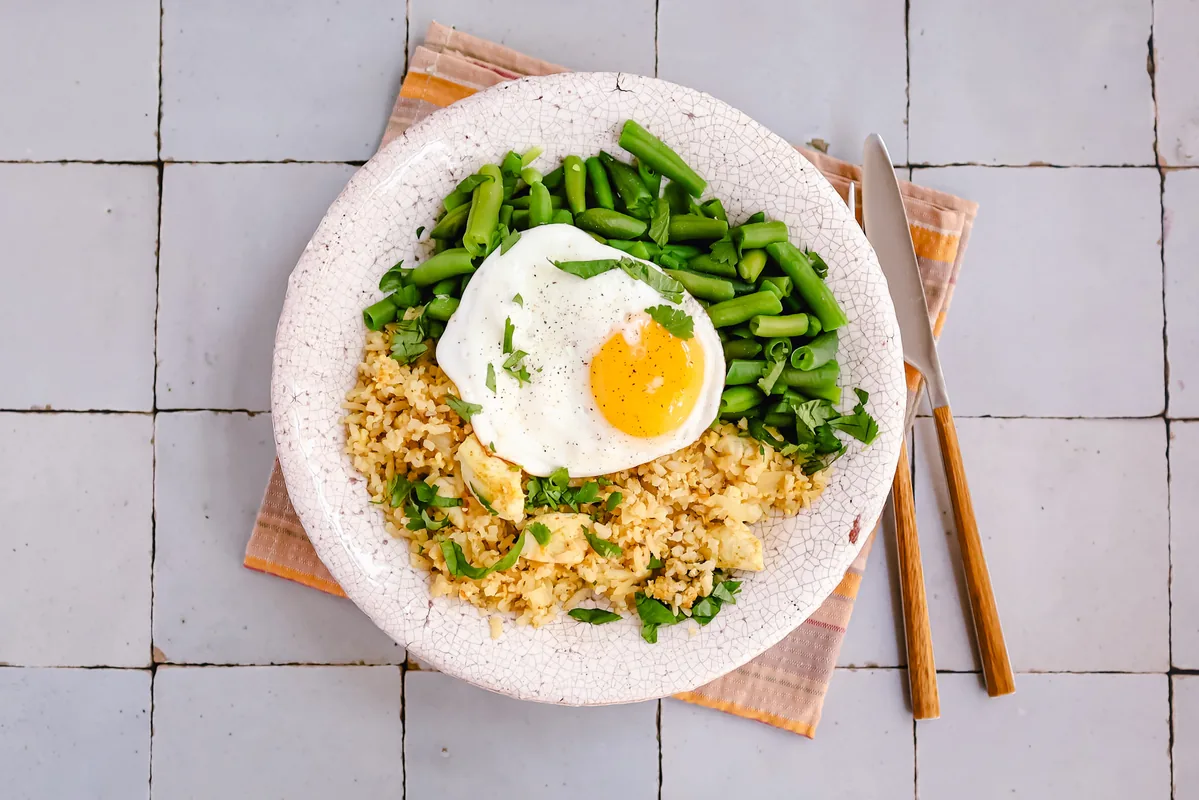
One pan gets the stir-fry. Diced chicken, onion, garlic, a scrambled egg folded in, and cauliflower rice tossed through until everything crisps at the edges. A second pan handles the sunny-side-up egg. Green beans boil on the side. The whole plate lands in 20 minutes with 39g of protein and just 15g of carbs.
Those 220 grams of green beans carry a story most fried rice recipes never tell. French food scientists measured three nutrients in frozen green beans before and after boiling: vitamin C dropped by more than half, folate leached into the cooking water, but lutein (a fat-soluble carotenoid linked to eye and skin health) came through the boil completely intact. That sunny-side-up egg on top is more than a finishing touch. Research showed egg yolk lipids increased carotenoid absorption from vegetables 8.4-fold.
One pan gets the stir-fry. Diced chicken, onion, garlic, a scrambled egg folded in, and cauliflower rice tossed through until everything crisps at the edges. A second pan handles the sunny-side-up egg. Green beans boil on the side. The whole plate lands in 20 minutes with 39g of protein and just 15g of carbs.
Those 220 grams of green beans carry a story most fried rice recipes never tell. French food scientists measured three nutrients in frozen green beans before and after boiling: vitamin C dropped by more than half, folate leached into the cooking water, but lutein (a fat-soluble carotenoid linked to eye and skin health) came through the boil completely intact. That sunny-side-up egg on top is more than a finishing touch. Research showed egg yolk lipids increased carotenoid absorption from vegetables 8.4-fold.
Ingredients
- eggs 2
- onion 0.5
- garlic 1 clove
- chicken breast 3 ounces
- green beans (frozen) 1.75 cup
- olive oil 1.5 tablespoon
- cauliflower rice 3 ounces
Method
-
In a bowl, beat 1 egg lightly with a fork. Dice the onion and mince the garlic. Cut the chicken breast into small cubes.
-
Boil the green beans for 6-8 minutes until al dente.
-
Heat half of the oil in a sauté pan and sauté the onion, garlic and chicken for 8 minutes. Turn up the heat and pour in the egg. Stir-fry until the egg starts to set. Gradually add the cauliflower rice, stirring continuously until all the cauliflower rice is well-cooked. Season with salt and pepper.
-
Fry the remaining egg with the rest of the oil in a frying pan for 3 minutes for a sunny-side-up egg.
-
Serve the fried cauliflower rice with the green beans and the sunny-side-up egg.
Stir-fry the cauliflower rice without adding any water (step 3). Research found that dry heat on cauliflower boosted its protective plant compounds 7.9-fold by disabling an enzyme that normally blocks their formation. Water would leach those compounds out before they form.
Not everything survives the boil equally. French researchers tested three nutrients in frozen green beans before and after boiling: vitamin C dropped by more than half (from 90–129 mg/kg down to 39–70), folate lost about 20% by leaching into the cooking water, but lutein held steady. The difference is chemistry. Vitamin C breaks down from heat. Folate dissolves into water. Lutein is fat-soluble, so it stays in the bean no matter how long it boils. The egg yolk on this plate carries the fat needed to absorb that lutein (separate research showed egg lipids boosted carotenoid absorption 8.4-fold).
LWT - Food Science and Technology, 2012 · DOIWhy This Works
Behind this recipe
Can I use fresh green beans instead of frozen?
Both work. Delchier et al. (2012) tested fresh and frozen green beans side by side. The results were consistent: boiling destroyed over half the vitamin C in both forms, but lutein survived intact regardless of whether the beans started fresh or frozen. Fresh green beans cook slightly faster (the study used 8 minutes for fresh, 13 for frozen), so shorten the 6–8 minute boil if you switch.
Why does this recipe use two eggs in different ways?
One egg is scrambled directly into the cauliflower rice (step 3), where it binds the grains and adds protein. The other is fried sunny-side-up (step 4) and sits on top of the finished plate. That second egg does double duty: it adds another complete protein source, and its intact yolk provides the fat that research showed increases carotenoid absorption from vegetables 8.4-fold. Breaking the yolk over the green beans at the table is functional, not just satisfying.
Read the full evidence reviewIs cauliflower rice actually lower in carbs than regular rice?
Substantially. This plate has 15g total carbs with cauliflower rice as the base. Swapping in the same volume of cooked white rice would add roughly 35–40g of carbs to the meal. Cauliflower rice also brings fiber (this recipe delivers 11g) that white rice does not.