Cheddar & Crispy Bacon Soup
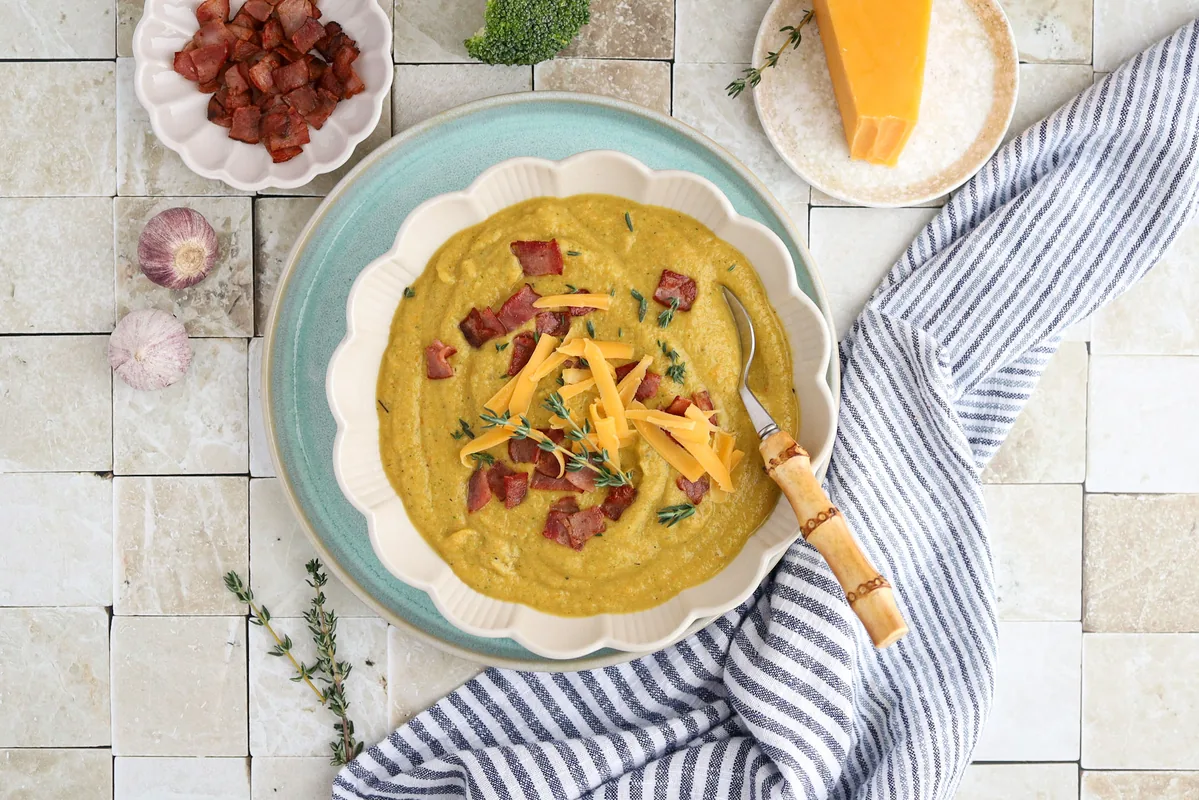
Broccoli, cauliflower, and carrot simmered with thyme and a pinch of chili, then blended with melted cheddar until the whole thing turns rich and creamy. The bacon cooks first — you use the same pan for the vegetables, so the flavor carries through — and goes back on top at the end for crunch.
492 kcal, 21g protein, and 7g fiber in a single bowl that takes 20 minutes from cutting board to table.
Broccoli, cauliflower, and carrot simmered with thyme and a pinch of chili, then blended with melted cheddar until the whole thing turns rich and creamy. The bacon cooks first — you use the same pan for the vegetables, so the flavor carries through — and goes back on top at the end for crunch.
492 kcal, 21g protein, and 7g fiber in a single bowl that takes 20 minutes from cutting board to table.
Ingredients
- bacon 3 slices
- red onion 0.25
- garlic 1 clove
- carrot 1
- broccoli florets (frozen) 84 g
- cauliflower florets 84 g
- olive oil 1 tbsp
- dried thyme 0.5 tsp
- chili powder 1 pinch
- water 237 ml
- vegetable bouillon cube 0.5 piece
- milk (2% reduced fat) 90 ml
- cheddar cheese 28 g
Method
-
Cut the bacon into pieces. Finely chop the onion and garlic. Dice the carrot and divide the broccoli and cauliflower into small florets.
-
Heat the oil in a pan and cook the bacon until crispy. Remove the bacon and let it drain on paper towels.
-
In the same pan, sauté the onion, garlic, carrot, broccoli, and cauliflower for 5–7 minutes. Add the thyme and chili powder and stir briefly.
-
Add the water, bouillon cube, and milk. Stir well and let simmer for 10 minutes.
-
Stir in the cheese until fully melted.
-
Partially or fully blend the soup, depending on your preferred texture.
-
Add the crispy bacon pieces and season with salt and pepper to taste.
Step 6 gives you a choice between a chunky and smooth soup. For context: Santangelo (1998) found that fully blended vegetable meals slowed gastric emptying by 19% compared to chunky versions with the same ingredients and calories. The blending changed the texture, not the nutrition, but the body responded differently.
Behind this recipe
Can I use fresh broccoli instead of frozen?
Both work perfectly here. One difference worth knowing: research by Dosz and Jeffery (2013) found that commercial freezing destroys myrosinase, an enzyme involved in converting a compound in broccoli called glucoraphanin into sulforaphane. Fresh broccoli still has that enzyme. It is a science footnote, not a reason to change your grocery list.
Is this filling enough for a full meal?
492 kcal, 21g protein, and 7g fiber in a single bowl. The protein comes from three sources — bacon, cheddar, and milk — and the fiber comes from broccoli, cauliflower, and carrot. That is a proper meal for one person.
Can I leave the soup chunky instead of blending?
Absolutely. The recipe gives you the choice. Fully blending integrates the cheddar completely and creates a creamy, uniform base. Leaving it chunky keeps more vegetable texture and bite. Some people like the contrast of recognizable broccoli and cauliflower pieces in a cheesy broth. Both versions taste great.