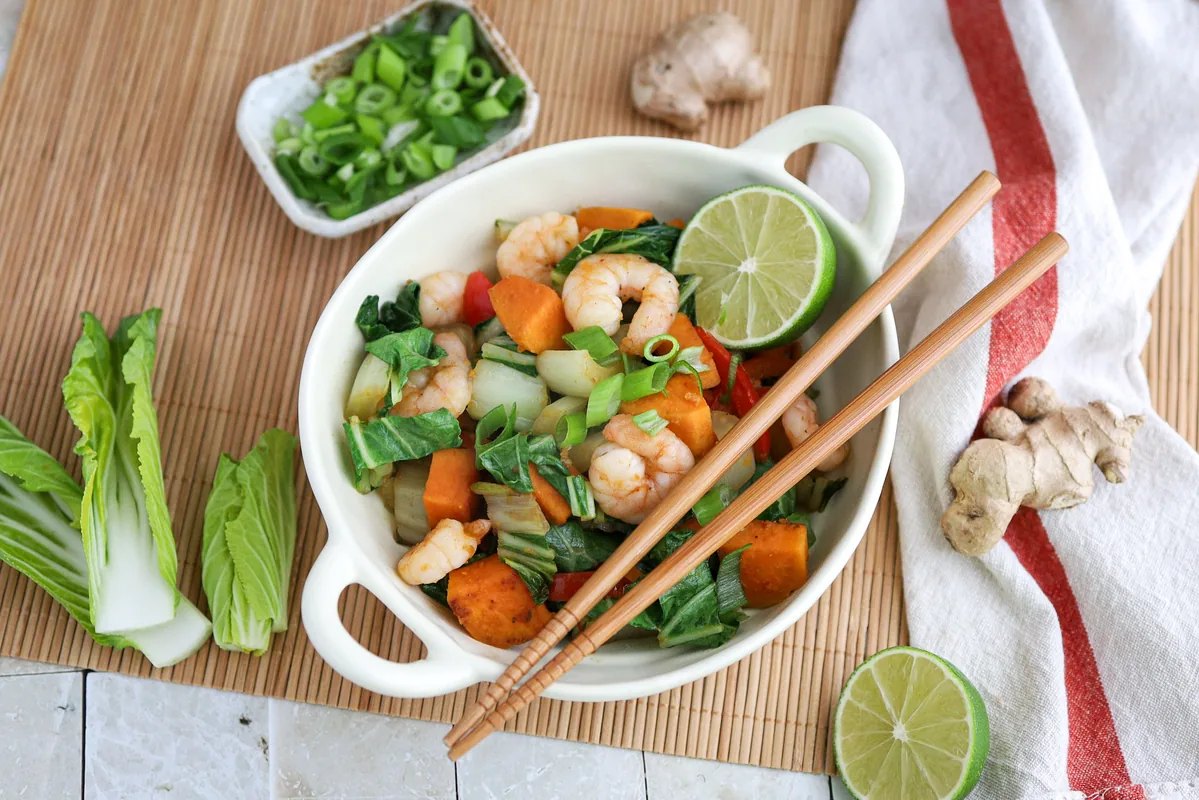
Spicy shrimp stir-fry with sweet potato & bok choy
Sweet potato cubes go into the oil first. Eight minutes of wok heat before anything else joins — bell pepper strips, then bok choy, then shrimp that barely needs a minute. A cold-mixed sauce of soy, sriracha, ginger, and lime ties everything together at the end.
But time in the oil does something else. Research found that cooking sweet potato with fat boosted beta-carotene availability from under 1% to as high as 22%. Without the fat, almost none of that orange pigment makes it through digestion.
Sweet potato cubes go into the oil first. Eight minutes of wok heat before anything else joins — bell pepper strips, then bok choy, then shrimp that barely needs a minute. A cold-mixed sauce of soy, sriracha, ginger, and lime ties everything together at the end.
But time in the oil does something else. Research found that cooking sweet potato with fat boosted beta-carotene availability from under 1% to as high as 22%. Without the fat, almost none of that orange pigment makes it through digestion.
Ingredients
- shrimp (frozen) 3 ounces
- sweet potato 0.25 pound
- bell pepper 1
- baby bok choy 1 head
- scallion 1
- garlic 1 clove
- ginger 1 slice
- soy sauce 1.5 tablespoon
- chili sauce 1 tablespoon
- Sriracha sauce 1 teaspoon
- lime juice 1 squeeze
- olive oil 1 tablespoon
Method
-
Defrost the shrimp on a plate.
-
Peel the sweet potato and cut it into small, even cubes. Slice the bell pepper into strips. Cut a slice off the bottom of the bok choy and separate the leaves. Slice the bok choy leaves into strips, keeping the green part separate. Slice the scallion into rings, press the garlic clove, grate the ginger.
-
Make the sauce by mixing the garlic, ginger, soy sauce, chili sauce, Sriracha and lime juice in a small bowl.
-
Heat the oil in a wok and add the sweet potato cubes along with the bell pepper strips. Stir-fry for 8 minutes. Then add the white part of the bok choy and cook for 2 more minutes. Add the shrimp and cook for 1 minute. Stir in the sauce, scallions and the green part of the bok choy, and stir-fry for another 2 minutes.
-
Serve the stir-fry in a (deep) bowl.
Stir-fry the sweet potato cubes in the olive oil for the full 8 minutes before adding bok choy. Research found that sweet potato cooked with oil gave the body up to 20 times more access to beta-carotene, the orange pigment it converts to vitamin A. Without the fat, almost none of it gets absorbed.
Bok choy contains protective plant compounds that break down with prolonged heat. Research on stir-fried pak choi found full retention at 4 minutes, with losses starting around 8 minutes due to the vegetable’s thin, delicate structure. This recipe’s staged addition — white stems for 2 minutes, green leaves for 2 more — keeps exposure inside that window.
Beta-carotene availability in sweet potato with cooking oil · DOIWhy This Works
Behind this recipe
Why does the sweet potato go into the oil before everything else?
Partly for texture — small cubes need those 8 minutes to soften without falling apart. But there is a second reason. Sweet potato is rich in beta-carotene, the orange pigment your body converts to vitamin A. Research found that cooking sweet potato with oil boosted beta-carotene availability from under 1% to 22%. The fat dissolves the pigment during cooking, making it accessible during digestion. Without it, almost all of it passes straight through.
Read the full evidence reviewIs bok choy actually a good source of calcium?
Better than most people expect. Research measured calcium absorption from bok choy at 52%, higher than the 46.3% measured from milk at the same calcium load. Bok choy is low in oxalates, the compounds that trap calcium in vegetables like spinach. The calcium in this recipe’s bok choy is genuinely available to your body.
Does the stir-fry method affect the nutrients in bok choy?
In a good way, if you keep the timing short. Research on stir-fried pak choi found full retention of protective plant compounds at 4 minutes, with losses starting around 8 minutes. The thin, delicate leaves heat faster than denser cruciferous vegetables, so extended frying breaks down what brief frying preserves. This recipe adds the bok choy in two stages — white stems first, green leaves last — keeping total heat exposure well inside that window. Boiling would be far worse: those same compounds leach directly into the water.