Greek Chicken & Veggie Traybake
Oregano, thyme, garlic, olive oil, and lemon juice. Mixed in a small bowl, poured over chicken and vegetables, tossed to coat. That is the flavor layer. It is also, according to a 2025 study in Food Science and Biotechnology, a layer that reduces harmful compound formation by 64-72% when meat hits high heat.
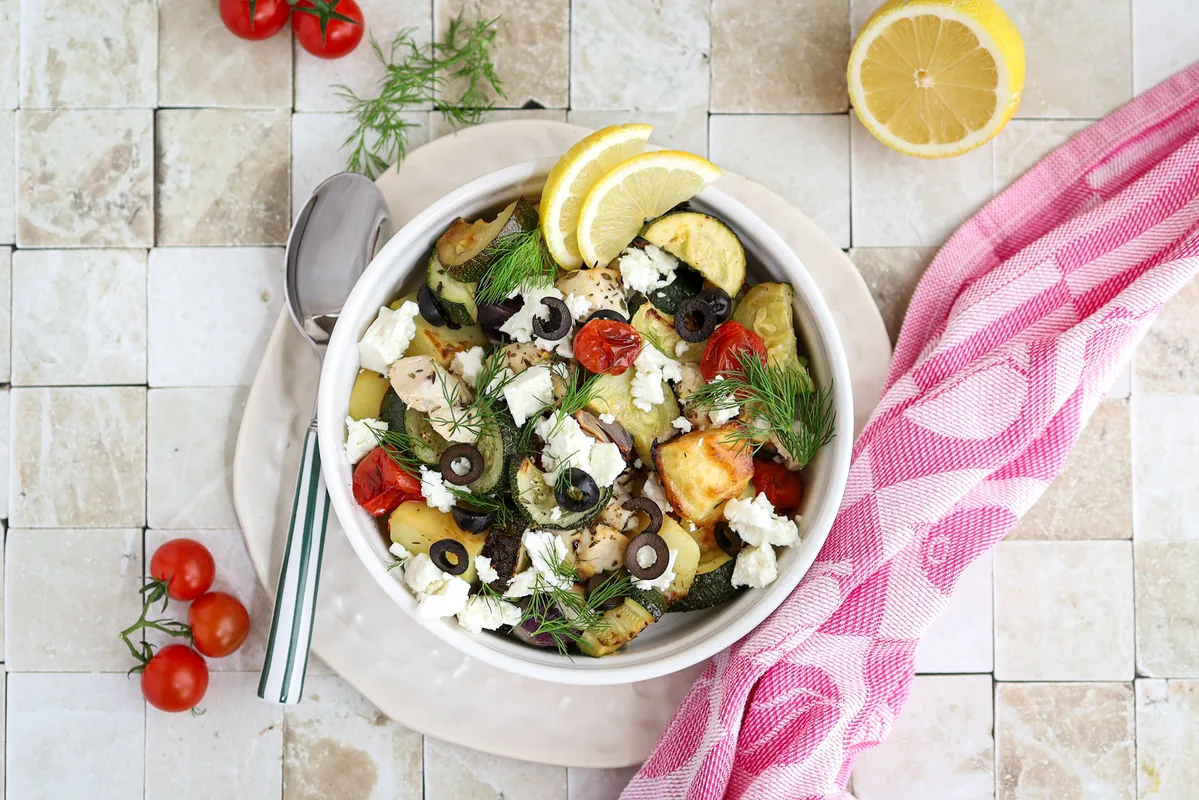
The rest is sheet pan simplicity. Par-boiled potatoes, cubed chicken breast, chunked zucchini, red onion wedges, and whole cherry tomatoes spread across one tray. Twenty minutes at 220°C. Feta crumbled over the top while everything is still hot. 485 calories, 32 grams of protein, 8 grams of fiber.
Oregano, thyme, garlic, olive oil, and lemon juice. Mixed in a small bowl, poured over chicken and vegetables, tossed to coat. That is the flavor layer. It is also, according to a 2025 study in Food Science and Biotechnology, a layer that reduces harmful compound formation by 64-72% when meat hits high heat.
The rest is sheet pan simplicity. Par-boiled potatoes, cubed chicken breast, chunked zucchini, red onion wedges, and whole cherry tomatoes spread across one tray. Twenty minutes at 220°C. Feta crumbled over the top while everything is still hot. 485 calories, 32 grams of protein, 8 grams of fiber.
Ingredients
- potato 0.25 pound
- chicken breast 3 ounces
- red onion 0.5 piece
- zucchini 1 piece
- garlic 1 clove
- olives 3 pieces
- cherry tomatoes 5 pieces
- feta cheese, crumbled 1 ounce
- olive oil 1 tablespoon
- lemon juice 1 squeeze
- oregano, dried 1 teaspoon
- thyme, dried 1 teaspoon
Method
-
Preheat the oven to 425°F (220°C).
-
Peel the potatoes and cut them into large chunks. Add them to a pot of water, bring to a boil and cook until slightly tender, about 7 minutes. Drain.
-
Cut the chicken breast into cubes. Slice the red onion into wedges and cut the zucchini into large chunks. Mince the garlic and slice the olives.
-
Line a baking sheet with parchment paper. Spread the potatoes, chicken, red onion, zucchini and cherry tomatoes evenly on the baking sheet.
-
In a small bowl, mix the oil, lemon juice, garlic, oregano, thyme, salt and pepper. Pour this mixture over the ingredients on the baking sheet and toss everything well to coat.
-
Place the baking sheet in the oven and roast for 20 minutes, until everything is cooked through and golden brown.
-
Transfer everything to a serving dish, crumble the feta over the top and sprinkle the olive slices over the dish.
Coat every piece of chicken in the herb-oil mixture from Step 5. Oregano and thyme contain natural antioxidants that reduce harmful compound formation by 64-72% when applied to meat before high-heat cooking. The olive oil and lemon juice act as carriers, spreading those compounds across the chicken’s surface before it hits 220°C.
When meat cooks at high temperatures, it produces compounds called heterocyclic amines — classified as probable carcinogens. Herbs from the oregano-thyme-rosemary family contain antioxidants that block the chemical chain reaction that creates them. In testing at 200°C, garlic cut total HCA levels by 64% and rosemary by 67%. One trade-off: garlic also increased a different compound (acrylamide) by 166% in the same test — though this recipe uses just 5 grams of garlic on 84 grams of chicken.
HCA Reduction by Herb Seasonings · DOIBehind this recipe
Can I swap oregano and thyme for other herbs?
Oregano, thyme, and rosemary all belong to the Lamiaceae plant family and share the same protective antioxidants (rosmarinic acid, carnosic acid). Rosemary was tested directly and showed 67% HCA reduction. Basil and sage are also Lamiaceae herbs and carry similar compounds. Swapping to herbs from a different family — parsley, cilantro, dill — would change the protection profile because those herbs carry different antioxidant types.
Why does the feta go on after roasting?
Crumbling feta over hot vegetables gives you two textures — the outer layer softens and goes creamy while the center holds its crumbly shape. If you roast it with everything else for the full 20 minutes, it melts completely and loses that contrast. The original recipe offers a variation: add feta and olives halfway through for a warmer, more melted finish.
Does the brief toss-and-coat work as well as a longer marinade?
The recipe’s method — mix, pour, toss — is closer to the seasoning approach tested by the 2025 research team (spices applied directly before cooking). A separate 2008 study tested a one-hour herb marinade and measured 72% HCA reduction in grilled steaks. The brief coating still works because the antioxidants sit on the meat’s surface where HCAs form. More contact time likely means more protection, but even a quick toss puts the compounds where they need to be.
Is one clove of garlic enough to make a difference?
The 2025 study used 0.5 grams of garlic per 100 grams of beef and measured a 64% HCA reduction. This recipe puts roughly 5 grams of garlic on 84 grams of chicken — about 6 grams per 100 grams of meat, well above the tested dose. One caveat worth knowing: garlic reduced HCAs but increased acrylamide (a different compound) by 166% in the same study. At one clove on a single serving, the practical significance of that trade-off is still being measured.