Salad with Bell Pepper & Goat Cheese
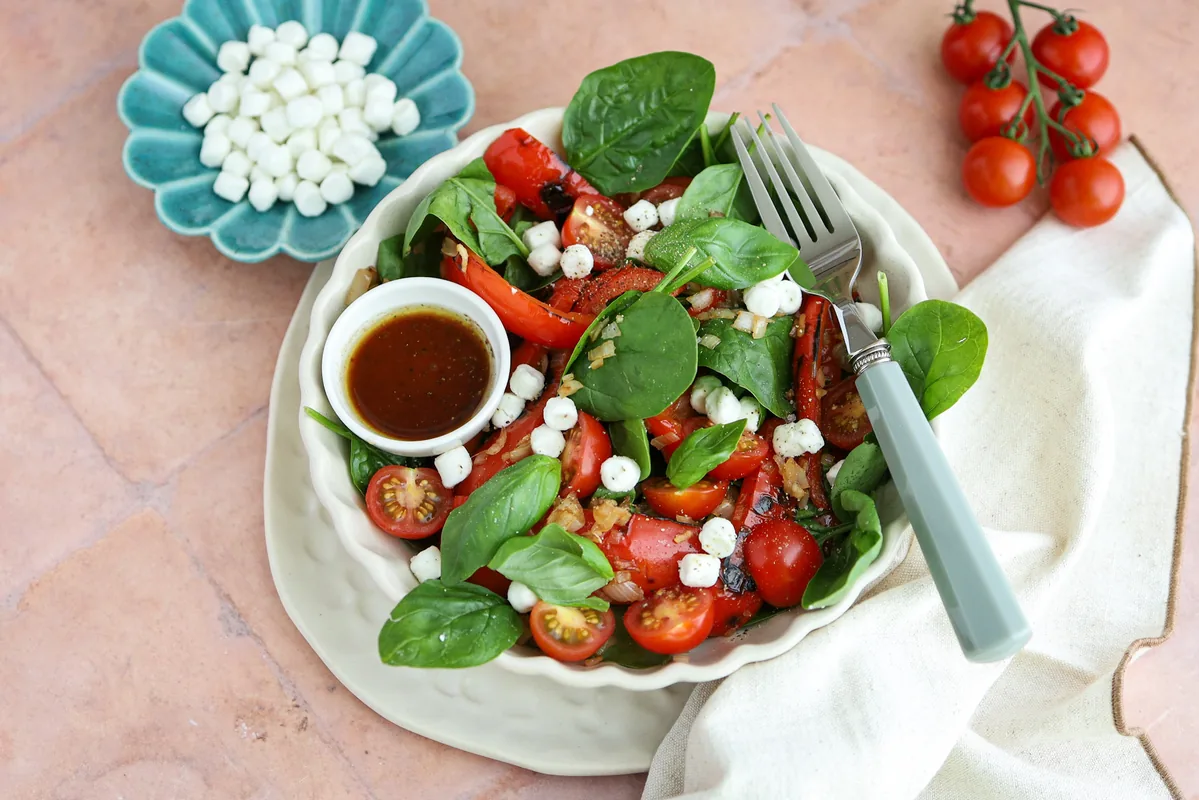
Warm sautéed bell pepper strips folded through cool raw spinach, with cherry tomatoes and crumbled goat cheese scattered across the top. A balsamic-olive oil dressing ties it together, and two slices of whole wheat bread round out the plate at 582 kcal.
There is a persistent claim online that spinach oxalates steal the calcium from your cheese. A dual-tracer crossover study from Creighton University tracked both calcium sources separately through 18 women — dairy calcium absorbed at 35.8%, completely unaffected by the spinach. The oxalates lock down the calcium that was already part of the spinach leaf — but dairy calcium from your goat cheese bypasses that entirely.
Warm sautéed bell pepper strips folded through cool raw spinach, with cherry tomatoes and crumbled goat cheese scattered across the top. A balsamic-olive oil dressing ties it together, and two slices of whole wheat bread round out the plate at 582 kcal.
There is a persistent claim online that spinach oxalates steal the calcium from your cheese. A dual-tracer crossover study from Creighton University tracked both calcium sources separately through 18 women — dairy calcium absorbed at 35.8%, completely unaffected by the spinach. The oxalates lock down the calcium that was already part of the spinach leaf — but dairy calcium from your goat cheese bypasses that entirely.
Ingredients
- bell pepper 1
- cherry tomatoes 10
- onion 0.25
- garlic 1 clove
- olive oil 1.5 tablespoon
- balsamic vinegar 0.5 tablespoon
- spinach 1 handful
- goat cheese 2 ounces
- bread, whole wheat 2 slices
Method
-
Cut the bell pepper into wide strips. Halve the cherry tomatoes. Finely chop the onion and mince the garlic.
-
Whisk together a dressing of the oil, vinegar, pepper and salt in a small bowl.
-
Heat the remaining oil in a frying pan and cook the bell pepper with the onion and garlic over low heat for 3-4 minutes until tender.
-
Place the spinach in a bowl and mix in the bell pepper. Top the salad with the cherry tomatoes and goat cheese and serve with the (toasted) bread.
Keep the bell pepper sauté short — 3-4 minutes at low heat preserves the vitamin C that helps your body pull iron from the spinach and whole wheat bread. Research found that vitamin C can triple non-heme iron absorption from plant sources.
The goat cheese calcium on this salad absorbs normally at 35.8%, but that same calcium competes with cherry tomato lycopene — a 2016 crossover trial measured an 83%. The olive oil in your dressing partially offsets this by providing fat for lycopene absorption, but the trade-off exists. Honest nutrition has trade-offs.
Heaney & Weaver, The American Journal of Clinical Nutrition, 1989 · DOIWhy This Works
Behind this recipe
Does spinach block calcium absorption from goat cheese?
No. A dual-tracer crossover study tested this directly: dairy calcium absorbed at 35.8% with zero interference from spinach oxalates. The oxalates lock down the calcium that was already part of the spinach leaf (spinach calcium absorbs at just 10%), but calcium from external sources like goat cheese travels a separate absorption pathway. The internet gets this one wrong.
Is 18 grams of protein enough for a lunch?
That depends entirely on your total daily needs and how your other meals look. At 18g protein, this salad contributes meaningfully — the goat cheese, whole wheat bread, and spinach all add protein — but it sits below the 25-30g range often discussed for per-meal intake. If you need more, add a boiled egg or some chickpeas without disrupting the salad's balance.
Why sauté the bell pepper instead of adding it raw?
Brief sautéing at low heat softens the bell pepper and develops flavor while preserving most of the vitamin C. That vitamin C matters: research shows it can triple iron absorption from plant sources like spinach and whole wheat bread. The 3-4 minute window at low heat is a sweet spot — enough to tenderize, short enough to keep the vitamin C working.
Can I substitute the goat cheese?
Feta or shredded Parmesan both work. All three are aged cheeses with similar calcium profiles, so the calcium-absorption story holds regardless of which you choose. Feta is milder; Parmesan adds a sharper, umami edge. The spinach oxalate finding applies to any dairy calcium source.