Peanut Butter Oatmeal with Raisins & Honey
One tablespoon of peanut butter on a bowl of oatmeal does not look like much. But a crossover trial on 15 women found that peanut butter at a carb-heavy breakfast lowered blood sugar at the next meal, hours later (P = 0.03). The researchers traced it to reduced fatty acids and a surge in the satiety hormone PYY that persisted for twelve hours.
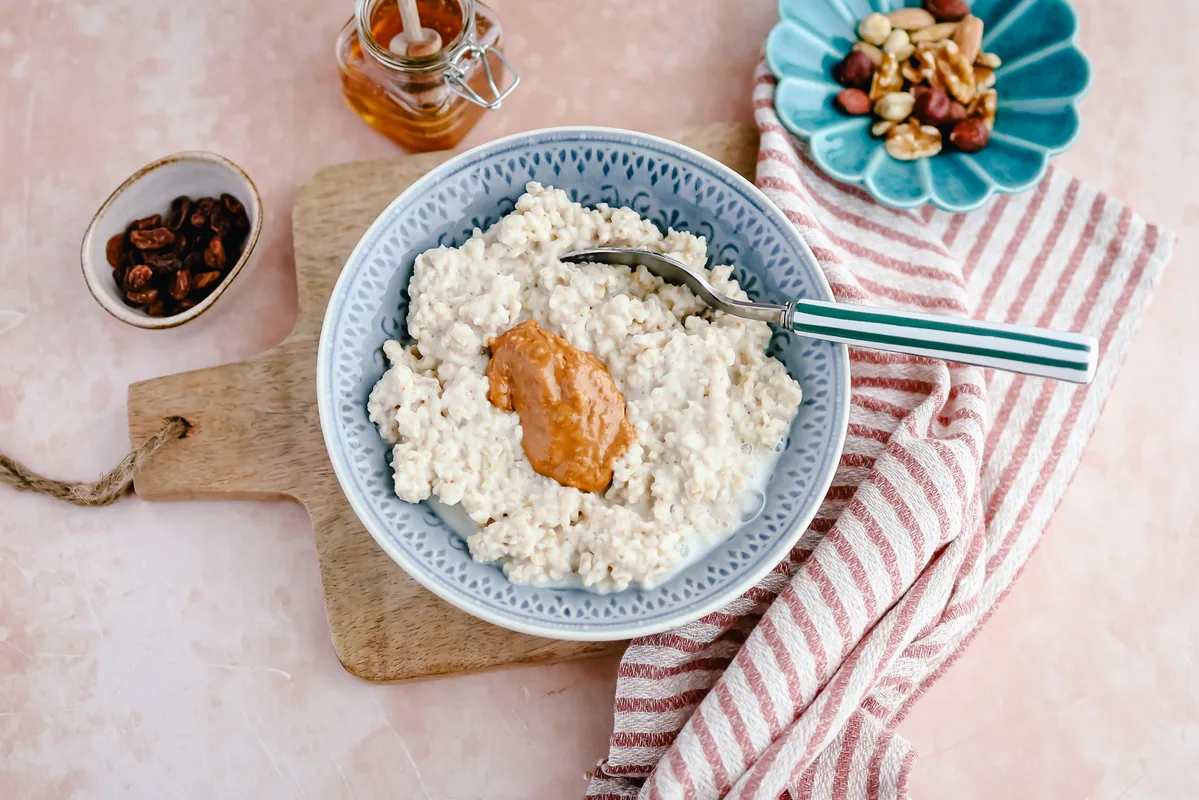
The oats cook in milk for five to seven minutes, then the peanut butter goes on with raisins and honey. 584 calories, 21 grams of protein, 83 grams of carbs, and 8 grams of fiber.
One tablespoon of peanut butter on a bowl of oatmeal does not look like much. But a crossover trial on 15 women found that peanut butter at a carb-heavy breakfast lowered blood sugar at the next meal, hours later (P = 0.03). The researchers traced it to reduced fatty acids and a surge in the satiety hormone PYY that persisted for twelve hours.
The oats cook in milk for five to seven minutes, then the peanut butter goes on with raisins and honey. 584 calories, 21 grams of protein, 83 grams of carbs, and 8 grams of fiber.
Ingredients
- oatmeal 0.5 cup
- milk, 2% reduced fat 1 cup
- peanut butter 1 tablespoon
- raisins 1 ounce
- honey 1 tablespoon
Method
-
In a small saucepan, combine the oats and milk and cook for 5-7 minutes, stirring occasionally.
-
Transfer the oatmeal into a wide bowl and top with peanut butter, raisins and honey. Enjoy!
Stir the oats just enough to keep them from sticking, not constantly. Over-stirring breaks the starch granules too early, making the oatmeal gummy instead of creamy. Let the milk thicken on its own.
The study also found that peanut butter outperformed whole peanuts on this effect. The researchers attribute the difference to grinding, which ruptures the peanut cell walls and makes the fat more accessible during digestion. The form you spread matters more than the amount you eat.
Second-meal glucose effect from peanut butter at breakfast · DOIBehind this recipe
Does this recipe have enough peanut butter for the second-meal effect?
The study used 42.5 grams (about two and a half tablespoons). This recipe uses 20 grams (one tablespoon), less than half the tested dose. The mechanism (fat slowing gastric emptying and reducing fatty acids in the blood) works on a continuum, but the exact effect at one tablespoon has not been tested. Add a second tablespoon if you want to get closer to the studied amount.
Does glycemic index actually matter for fat loss?
Barely. Fourteen controlled trials found the total fat-loss difference between low-GI and high-GI diets was just 0.62 kilograms. GI is a near-zero lever for body composition. The peanut butter effect on this recipe's glycemic response is interesting as biology, not as a weight-loss trick.
Read the full evidence reviewCan I use instant oats instead of rolled oats?
Yes. Instant oats cook in about two minutes instead of five to seven. The texture will be softer and less chewy. The macros are nearly identical per gram.