Japanese Chicken Breast with Shanghai Bok Choy & Brown Rice
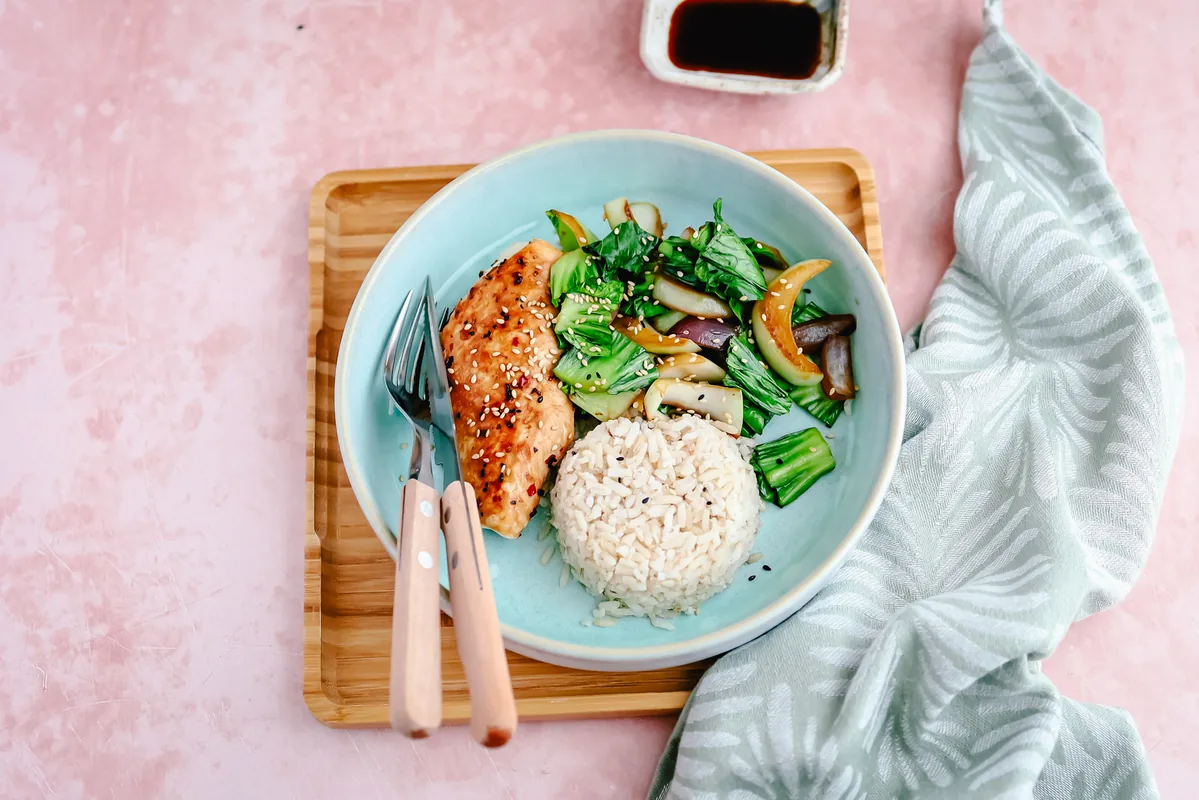
Chicken breast browned with ginger and chili, then slow-simmered in soy sauce until every bite carries that dark, savory glaze. The bok choy gets its own moment — stir-fried in a hot wok until the stems are crisp-tender and the leaves barely wilt. Brown rice catches everything.
A 15-minute dinner with 612 kcal and 29g protein — but the real story is what your wok is doing for the bok choy. Researchers tested this exact vegetable in a stir-fry and found that short, high-heat cooking keeps its protective plant compounds intact — while boiling washes them straight into the water you throw away. Your five-minute wok technique sits right in the retention window.
Chicken breast browned with ginger and chili, then slow-simmered in soy sauce until every bite carries that dark, savory glaze. The bok choy gets its own moment — stir-fried in a hot wok until the stems are crisp-tender and the leaves barely wilt. Brown rice catches everything.
A 15-minute dinner with 612 kcal and 29g protein — but the real story is what your wok is doing for the bok choy. Researchers tested this exact vegetable in a stir-fry and found that short, high-heat cooking keeps its protective plant compounds intact — while boiling washes them straight into the water you throw away. Your five-minute wok technique sits right in the retention window.
Ingredients
- brown rice 3 ounces
- ginger 1 slice
- chili pepper 0.25
- chicken breast 3 ounces
- olive oil 1.5 tablespoon
- soy sauce 2 tablespoon
- water 1 tablespoon
- red onion 0.5
- baby bok choy 1 head
Method
-
Cook the rice according to the package instructions.
-
Finely grate the ginger. Finely chop the chili pepper.
-
Season the chicken breast all over with ginger, chili pepper and freshly ground black pepper.
-
Heat half of the oil in a frying pan and brown the chicken breast. Pour the soy sauce and water over it and simmer the chicken breast gently for another 10 minutes, turning regularly. If needed, add a dash more water.
-
Meanwhile, cut the onion into thin wedges. Cut the bok choy into wide strips. Heat the remaining oil in a wok and stir-fry the onion and the white parts of the bok choy strips for 3 minutes. Then stir in the green strips of bok choy and stir-fry for another 2 minutes. Season with the rest of the soy sauce.
-
Serve the Japanese chicken breast with rice and bok choy.
Also try using quinoa or bulgur instead of brown rice.
The soy sauce in this recipe does more than flavor. A controlled trial found that traditionally fermented soy sauce tripled iron absorption from rice — raising it from 3.5% to 11.4%. The effect comes from compounds created during months of fermentation, not from acidity alone.
Why This Works
Behind this recipe
Is bok choy healthier stir-fried or boiled?
Stir-fried. Researchers tested pak choi specifically and found that stir-frying for under five minutes retains its protective plant compounds, while boiling washes them into the cooking water. The key is no water in the wok — the compounds stay in the food instead of leaching out.
Does soy sauce help iron absorption?
Traditionally fermented soy sauce does. A controlled trial found it tripled iron absorption from a rice meal — from 3.5% to 11.4%. The effect comes from compounds created during fermentation, not from the sauce’s salt or acidity. Chemically produced soy sauce doesn’t have the same benefit.
Can I use quinoa or bulgur instead of brown rice?
Yes — both work well with the soy sauce glaze and bok choy. Quinoa adds slightly more protein per serving, while bulgur cooks faster and has a nuttier texture. The soy sauce iron-absorption benefit was studied specifically with rice, but both alternatives are solid grain swaps.
Is bok choy a good source of calcium?
One of the best plant sources. Research found that your body absorbs 52% of the calcium in bok choy — significantly more than the 46% it absorbs from milk at the same dose. This is because bok choy is naturally low in oxalates, which are the compounds in spinach that block calcium absorption.