Green Beans & Baby Potato Salad with Salmon
The most interesting thing in this salad isn't the salmon. It's the teaspoon of balsamic vinegar in the dressing. Researchers found that balsamic vinegar reduced carbohydrate release from boiled potatoes by 44.5% in lab tests. In this recipe, the dressing gets mixed directly into the warm baby potatoes, the same starch-rich food the study tested.
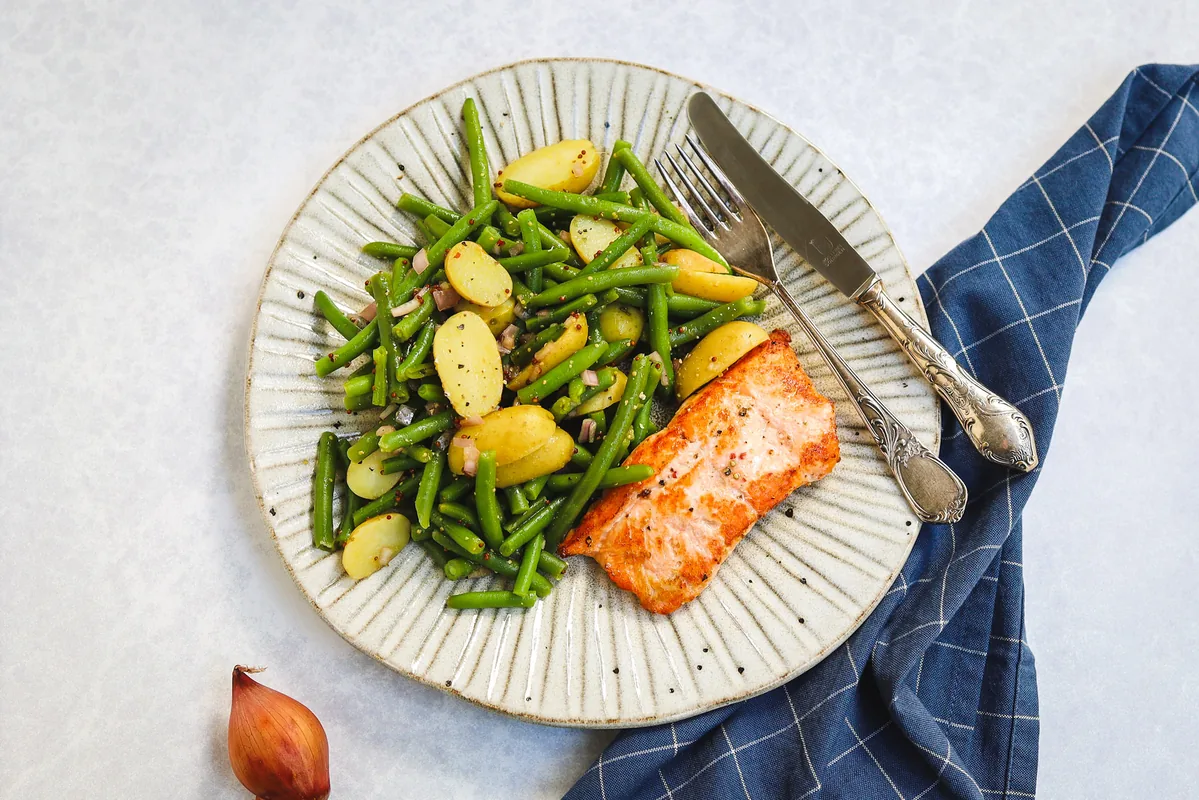
Warm salmon on the side, crisp green beans underneath, and a balsamic mustard dressing tying it all together. 36g of protein, 13g of fiber, 20 minutes.
The most interesting thing in this salad isn't the salmon. It's the teaspoon of balsamic vinegar in the dressing. Researchers found that balsamic vinegar reduced carbohydrate release from boiled potatoes by 44.5% in lab tests. In this recipe, the dressing gets mixed directly into the warm baby potatoes, the same starch-rich food the study tested.
Warm salmon on the side, crisp green beans underneath, and a balsamic mustard dressing tying it all together. 36g of protein, 13g of fiber, 20 minutes.
Ingredients
- salmon fillet 1
- baby potatoes 0.25 pound
- green beans (frozen) 2 cups
- red onion 0.25
- garlic 1 clove
- olive oil 1.5 tablespoon
- balsamic vinegar 1 teaspoon
- yellow mustard 1 teaspoon
- lemon juice 1 squeeze
Method
-
Allow the salmon to defrost.
-
Halve the baby potatoes.
-
Bring two pots of water to a boil. In one pot, add the green beans and cook for about 7 minutes until they are done. In the other pot, add the baby potatoes and cook for 10 minutes.
-
In the meantime, prepare the dressing: finely chop the onion and press the garlic clove. Mix this with half of the oil, vinegar, mustard, and lemon juice.
-
Heat the remaining oil in a frying pan. Pat the salmon dry. Fry the salmon for 3 minutes on each side until done.
-
After draining the green beans and baby potatoes, briefly rinse them with cold water and let them drain well. Mix them together with the dressing.
-
Serve the salad with the salmon on a plate. Season with salt and pepper to taste.
Toss the dressing through the potatoes while they're still warm. The balsamic vinegar in the dressing reduced pancreatic amylase activity by 70% in lab tests, slowing how quickly potato starch gets broken down into sugar. One teaspoon is a smaller dose than the study used, but the mechanism is the same.
Balsamic vinegar of Modena reduced total carbohydrate release from boiled potatoes by 44.5% in a standardized digestion simulation. The main driver: the vinegar cut the activity of pancreatic amylase (the enzyme that breaks starch into sugar) by 70%. This was a lab study, not a human trial, and it used proportionally more vinegar than a single teaspoon of dressing. The interaction between vinegar and starch is real, but the magnitude on your plate will be smaller.
In Vitro Study — Foods (MDPI) · DOIWhy This Works
Behind this recipe
Is one teaspoon of balsamic vinegar enough to affect the potatoes?
The study used 8 mL of balsamic vinegar per 20 grams of food, a much higher ratio than this recipe's single teaspoon across a full plate. The mechanism is real (vinegar inhibits the enzyme that breaks down starch), but the effect in your bowl will be smaller than what the lab measured. The dressing does make direct contact with the potatoes, which is exactly how the interaction works.
Why rinse the potatoes and green beans with cold water?
The cold rinse stops the cooking so the vegetables stay firm instead of turning mushy. For the potatoes, there's a bonus: cooling starts a process called starch retrogradation, where some of the starch reorganizes into a form your body digests more slowly. Research found that chilled potatoes reduced glucose response by 9.2% at 30 minutes compared to hot ones. A quick cold rinse isn't full refrigeration, but it's the beginning of the same mechanism.
What happens to the nutrients in frozen green beans when you boil them?
They take a hit on vitamin C, losing more than half during a 7-minute boil. But lutein, a carotenoid linked to eye health, stays almost completely intact. The nutrients you can't taste are often the ones that survive cooking best.