Swap the starchy, high-GI carbs for lentils and the blood sugar response shifts. How much it shifts, and whether the dish matters, is what the data finally settled.
How Much Does Replacing High-GI Carbs With Lentils Reduce the Glucose Spike?
When researchers swapped potato starch for lentils in a controlled soup recipe, matching the carbohydrate content gram for gram, the blood sugar spike dropped by 39 to 51% depending on lentil variety.
Nothing marginal about cutting the spike roughly in half. The insulin response fell even further: 54 to 55% lower than the potato version.
The drop itself was not the surprise. The format of the dish was.
The same lentils, at the same dose, in three different dishes. In a muffin: 8 to 14% insulin reduction. In a chili: 25 to 37%. In a soup: 54 to 55%. The ingredient stayed constant. The dish changed everything.
Lentil fiber and resistant starch slow digestion by forming a physical barrier around the carbohydrate. In a soup, that barrier stays intact. The liquid format preserves the starch structure. In a muffin, high-temperature baking breaks it apart. The oven undoes what the lentil was built to do.
The glucose curve did not just get lower. It changed shape. For the first 45 minutes, blood sugar was significantly lower than the potato control. At 90 and 120 minutes, it was actually higher, not because something went wrong, but because the energy was still releasing. The spike-and-crash became a slow, sustained curve.
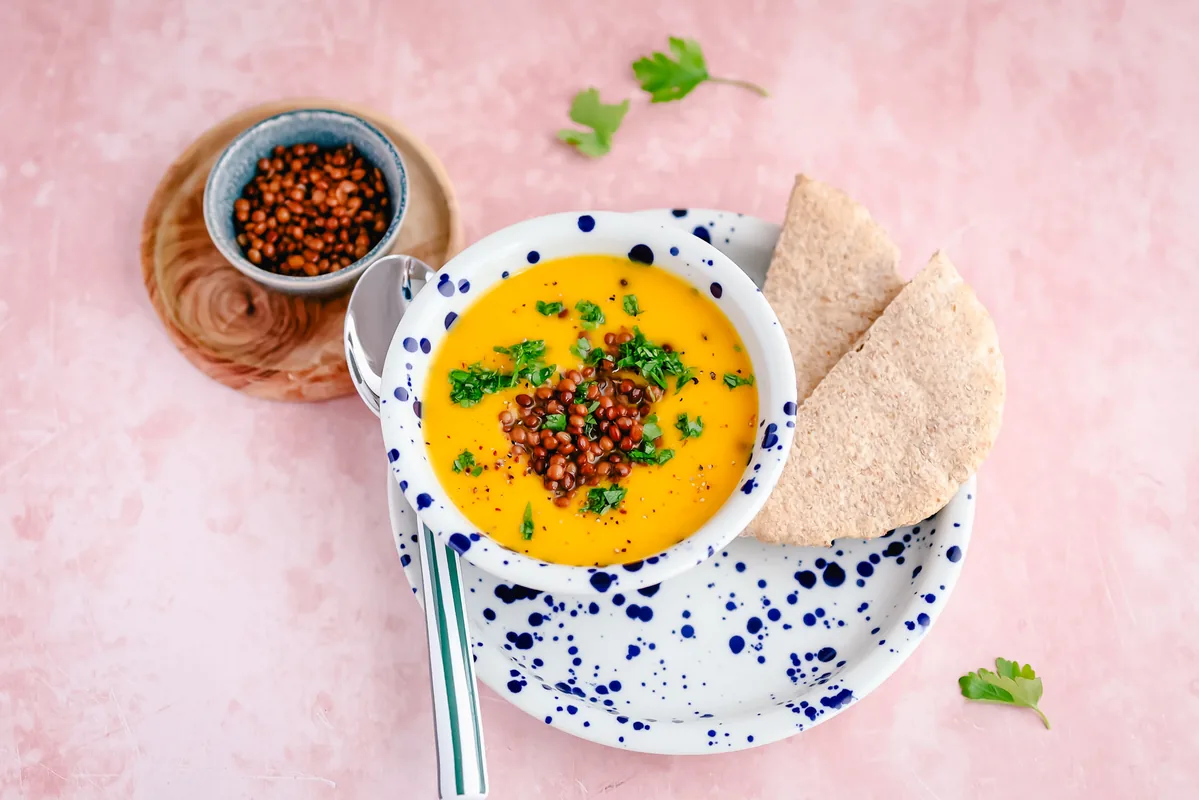
Red lentils outperformed green. The glucose reduction was 51% for red versus 39% for green, both in the same soup format. If you are choosing a can at the store, the color on the label carries more weight than you would expect. A soup recipe built around this exact swap, pumpkin soup with red lentils and pita bread, puts about half a cup where the potato would normally go.
One practical caveat: the study swapped potato for lentils, a direct replacement, not an addition on top. If you are tossing lentils into a soup that already has starchy carbs, the effect may be smaller. The participants were also 18 to 40 years old, and most people reading this are probably older. Whether the same magnitude holds past 50 is a question nobody has tested yet.
If the format of the dish reshapes what a single ingredient does to your blood sugar, that raises a larger question: whether glycemic index even predicts what happens in a real meal, where dozens of ingredients interact on the same plate. A similar surprise shows up when you swap the type of rice. The evidence points well past any single swap.