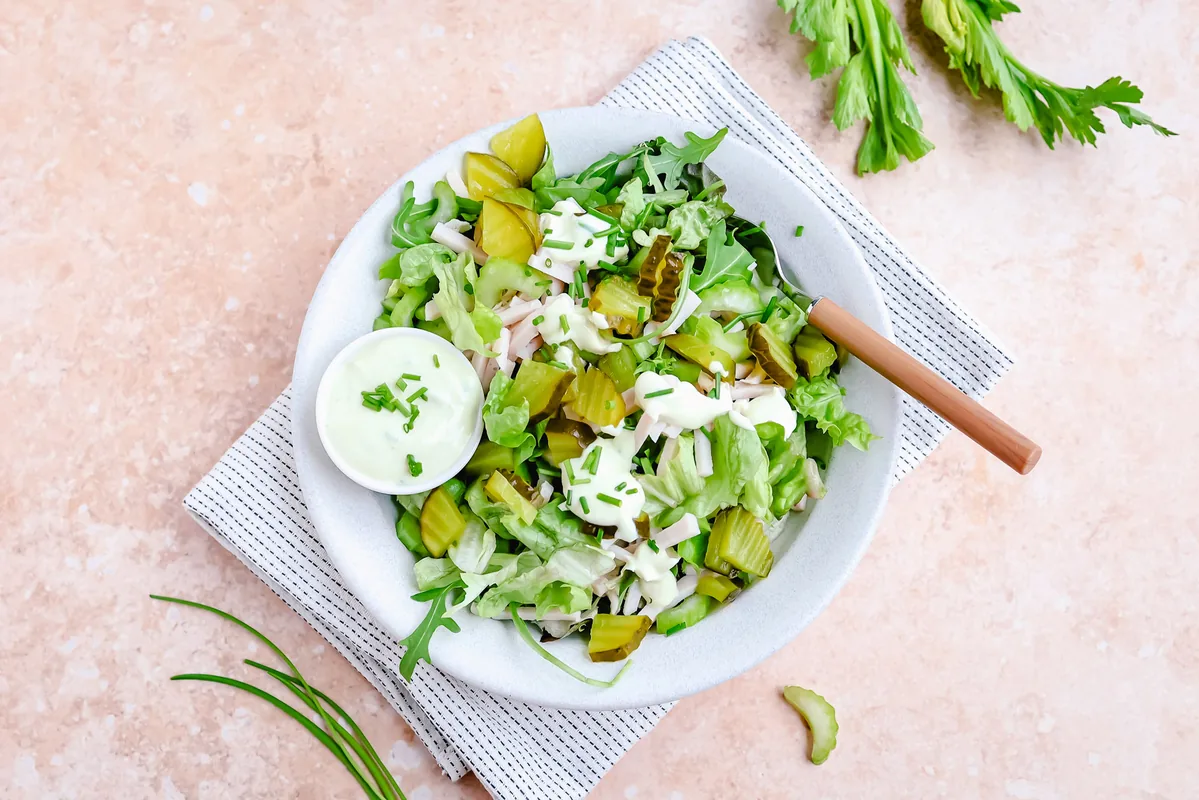
Drinking pickle brine to stop a muscle cramp sounds like locker-room folklore, until a controlled trial measured it and cramp duration dropped by nearly half, resolved in 85 seconds. The electrolyte theory everyone reaches for has a problem: that amount of liquid takes roughly 30 minutes to leave the stomach. The pickle juice hadn't reached the stomach when the cramp was already gone.
Does Pickle Juice Actually Stop Cramps?
Pickle juice shortened muscle cramp duration by nearly half in a controlled trial, resolved in 85 seconds versus over two minutes with water. The mechanism is a neural reflex triggered by acetic acid hitting nerve endings in the throat, not electrolyte replenishment. Blood electrolyte levels were identical between pickle juice and water.
— Miller et al. 2010 · Medicine & Science in Sports & Exercise · n=10
It does. Just not for the reason everyone assumes. Blood drawn at one minute and five minutes showed identical electrolyte levels between pickle juice and plain water. Sodium, potassium, magnesium, calcium, plasma volume, nothing changed. Whatever stopped the cramp left the bloodstream completely untouched.
Water alone didn't shorten the cramp either. Duration after water was no different from drinking nothing at all. So the effect wasn't hydration. It wasn't mineral replenishment. And it happened far too fast for anything swallowed to have been absorbed.
What stopped the cramp never left the mouth. Acetic acid (the sharp bite in pickle brine) triggers nerve endings in the throat. Those nerves fire a reflex signal that shuts down the muscle contraction driving the cramp. From mouth to muscle in under two minutes. No digestion required.
Even the quantities rule out electrolytes. The dose in the trial would have restored just 2% of lost fluid and 1% of lost potassium. Not enough for a single cell to register, let alone a cramping muscle.
There's a ceiling worth seeing. The cramps in this trial were electrically induced in a lab, not the kind that seize your calf at mile six or lock your toe at 3 a.m. The sample was ten people. A 2021 replication saw the same directional trend but didn't reach statistical significance. The neural mechanism is well-supported. The real-world transfer is assumed, not yet directly tested. Whether stretching actually prevents the cramps that hit mid-workout is another question the evidence had to settle separately.
So next time someone says pickle juice works because of the sodium, the clock says otherwise, the blood tests say otherwise, and the quantities say otherwise. A neural reflex triggered before the first swallow reaches the stomach. If a trigger in the mouth can shut off a firing muscle, the question of what a supplement actually needs to reach just got wider.