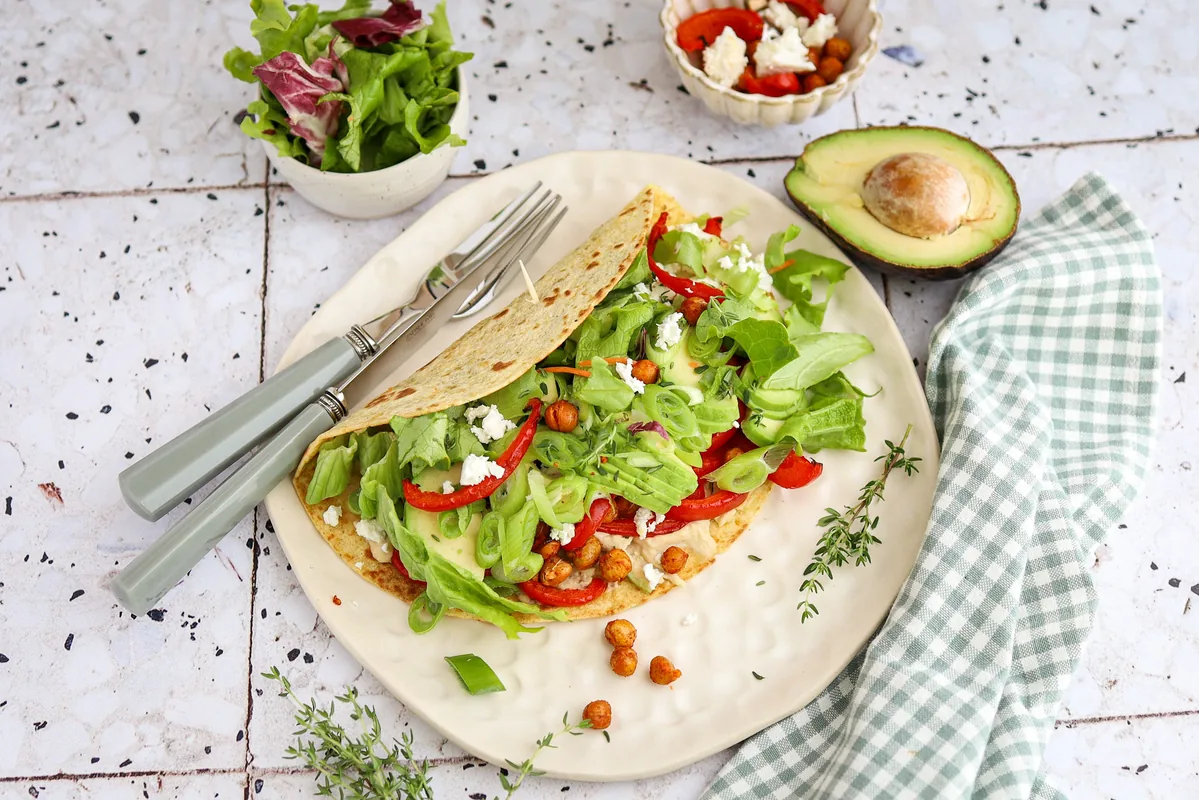
The heaviness after a high-fat meal is real. Avocado on toast, a handful of almonds, olive oil drizzled over a salad — your stomach takes longer to process it, and the fullness lingers. Nobody is imagining that.
The part nobody measures is what that fullness cost in calories.
Does Eating Fat Keep You Full Longer Per Calorie?
Fat scores the lowest for per-calorie fullness of any macronutrient tested. When 38 common foods were served at equal calories, fat content predicted less satiety, not more. Protein, fiber, and water all outperformed fat for keeping people full on the same calorie budget.
— Holt et al. 1995 · European Journal of Clinical Nutrition · n=38 foods, 11–13 subjects per food
A 1995 satiety test put this to direct measurement. Thirty-eight common foods, each served at exactly 240 calories — same energy, same starting line. Volunteers rated how full each food kept them every fifteen minutes for two hours.
The fattier a food was per calorie, the less full it left people. Croissants — high fat, low fiber — scored the lowest of anything tested. Boiled potatoes, loaded with water and fiber and almost no fat, scored seven times higher.
The math behind this is simple. Fat carries 9 calories per gram. Protein and carbohydrates carry 4. For the same calorie budget, fat buys you less physical food — less volume stretching your stomach, fewer signals traveling to your brain saying the meal is done.
Protein works through an entirely different channel. It triggers a hormonal cascade that actively suppresses hunger — signals fat doesn't produce with the same strength per calorie. The macronutrient people avoid during a cut is the one that actually suppresses appetite the hardest.
The foods people reach for to stay full gave them the least fullness per calorie spent.
When 811 adults followed either a 20% fat diet or a 40% fat diet for two years, weight loss was identical: 3.3 kilograms in both groups. If eating more fat kept people fuller and made them eat less, the high-fat group should have lost more. They lost the same.
Fat does slow gastric emptying — that part of the belief is physiologically real. A fatty meal sits in your stomach longer than a lean one. The error is equating "stomach empties slower" with "fewer total calories needed to feel full." Two hours of satiety measurement couldn't find the advantage. The clock moved slower. The calorie bill didn't shrink.
Meals that produced different insulin responses — exactly the kind of difference the "eat fat, keep insulin low, stay full" theory depends on — produced no measurable difference in hunger. The hormonal chain linking fat to lasting fullness through insulin had a link missing from the start.
What actually drives fullness when calories are limited — and whether fat earns its spot on your plate for reasons the satiety argument can't answer — is where the full evidence on fat and body composition picks up.