
Short

The Fullness Was Real. The Eating Less Wasn’t.

Nutrition 3 min read 633 words

Mushrooms are 92% water. Twenty-two calories per hundred grams. Pile them onto a plate and you get a mountain of food for almost nothing. The logic writes itself from there.

Your stomach registers volume, not labels. A heap of mushrooms stretches the walls the same way a heap of anything else does. The stretch sends a signal. The signal says full. And because the calories barely registered on the way in, you just got the fullness for a fraction of the cost. Fewer calories, same satisfaction, weight comes off.

Every step of that chain sounds bulletproof. Mushrooms fill you up. Filling you up means you eat less. Eating less means you lose weight. It is the cleanest swap story in nutrition. Someone tested whether the chain actually holds.

Listen to this short · FitChef Audio

Do Mushrooms Help You Eat Less?

Mushrooms produce real, measurable fullness compared to protein-matched meat, but that fullness does not reduce how much you eat afterward. The body composition benefits of swapping mushrooms for meat come from the calorie difference itself: 339 calories of mushrooms match the satiety of 783 calories of meat. The mechanism is substitution, not appetite suppression.

— Hess et al. 2017 · Appetite · n=32 | Cheskin et al. 2008 · Appetite · n=76

A crossover trial gave 32 people two different breakfasts on separate occasions: one built around 226 grams of white button mushrooms, the other around 28 grams of lean ground beef. Both meals were matched for protein. The calorie counts were nearly identical. The only variable was the food itself.

The first link held. People eating mushrooms reported significantly less hunger, more fullness, and a lower desire to keep eating compared to the meat meal. The mushroom breakfast won every satiety measure the trial tracked.

The second link broke.

Over the next 10 days, the people who felt fuller after mushrooms ate exactly the same amount of food as the people who had meat. Not slightly less. Not trending downward. The same. Feeling full did not translate into consuming fewer calories at the next meal, the next day, or across the entire feeding period.

The chain everyone assumed was one mechanism turns out to be two separate events. Mushrooms genuinely fill you up. That fullness genuinely does nothing to your next plate.

WHAT MUSHROOMS CHANGED
Less hungry
More full
Less desire to eat
WHAT THEY DIDN'T
Next meal
Next day
After 10 days
Satiety & intake measures · Hess et al. 2017

So where did the weight loss come from?

Not from appetite suppression. From arithmetic. A separate study found that 339 calories of mushrooms produced the same fullness as 783 calories of meat when the portions were matched for volume. Same plate. Same satiety. Less than half the energy. When people swapped mushrooms for meat three times a week for a year, they lost more weight, shrank their waist, and reduced their body fat, not because their appetite changed, but because every swap quietly removed hundreds of calories from the meal.

Mushrooms339 kcal
Meat783 kcal

Same fullness. Less than half the energy.

That distinction matters for anyone building a plate. The benefit is real. The mechanism is blunter than the story most people carry. Mushrooms are not an appetite suppressant. They are a calorie substitute that happens to feel identical to the thing they replaced. The fullness is a side effect of volume. The fat loss is a side effect of the swap. Neither one causes the other.

One honest caveat: the trial that measured the satiety difference was funded by the Mushroom Council, and the design was open-label, meaning participants knew which breakfast they were eating. The fullness findings are significant, but the funder and the design both earn a footnote.

If mushrooms win the fullness comparison against meat, and fullness alone doesn't reduce what you eat, the question shifts. Every food marketed as filling carries the same assumed chain: volume, satisfaction, fewer calories downstream. The evidence keeps pointing at the calories themselves, not the feeling they leave behind.

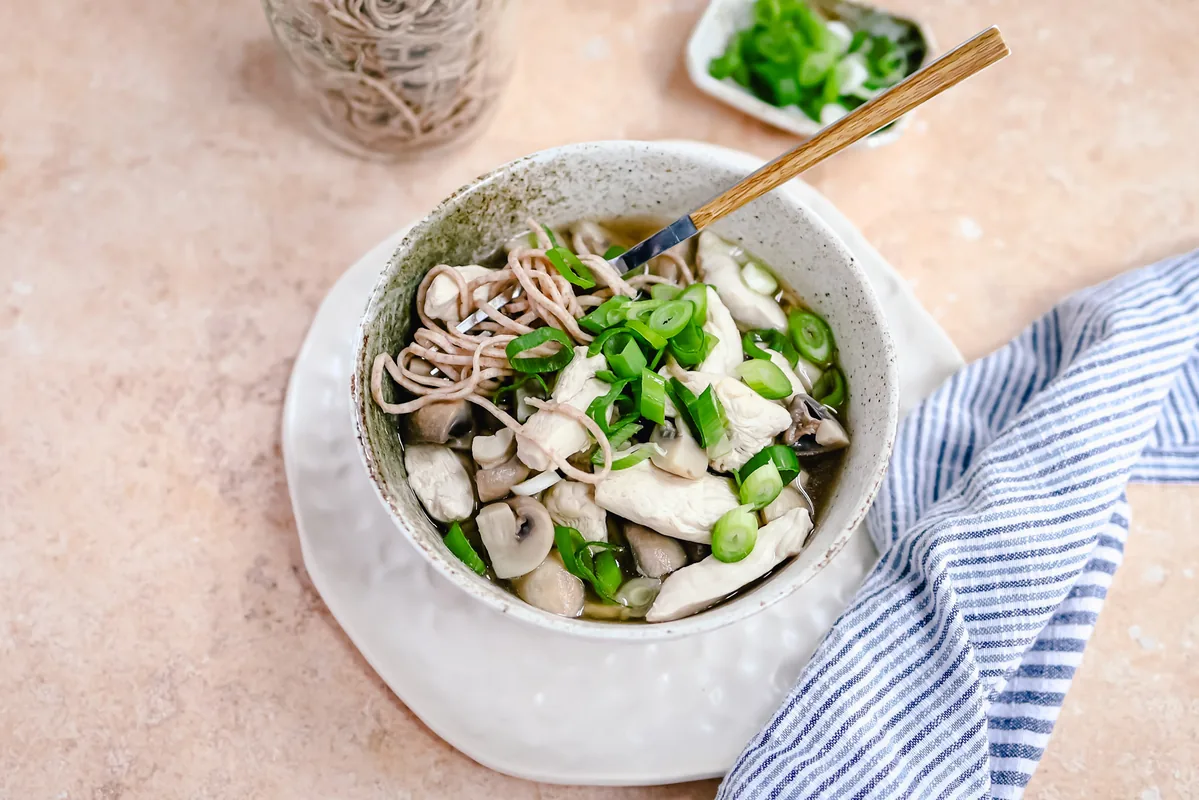
Put This Into Practice
Turkey burger with portobello 'bun' & fresh side salad
15 min · 675 kcal
Portobello caps replace bread — a structural calorie swap where the mushroom's volume delivers fullness at lower energy cost, the mechanism this Short names.
Bulgur with Mushrooms, Spinach & Feta
15 min · 528 kcal
224g mushrooms sautéed as the meatless centerpiece — within 1% of the 226g dose this Short's research tested for satiety.

Frequently Asked Questions

Does replacing meat with mushrooms lead to weight loss?

Yes. When people swapped mushrooms for meat three times a week for one year, they lost 7 pounds, dropped 1.5 BMI points, and shrank their waist by over 2.5 inches. The loss came from the calorie gap between mushrooms and meat at equal portion sizes, not from any appetite-suppression effect. Every swap quietly removed hundreds of calories from the meal without changing how full the person felt.

Why are mushrooms so filling if they're low in protein?

Because your stomach responds to volume, not protein content. Mushrooms are roughly 92% water at just 22 calories per hundred grams. That means a large portion stretches the stomach walls the same way a large portion of anything else does — triggering the same fullness signals — at a fraction of the caloric cost. They also contain several types of fiber (chitin, beta-glucans, resistant starch) that slow digestion and add to the feeling of fullness.

This page summarizes findings from published research. It is not medical advice. Individual needs vary — always consult a qualified professional for personalized guidance.
For Researchers 3 sources

Study Design

Randomized open-label crossover trial. 32 healthy adults (17 women, 15 men). 10-day feeding period per condition.

Intervention

226 g Agaricus bisporus (white button) mushrooms vs 28 g 93% lean ground beef. Protein-matched. Calorie-matched.

Key Findings

Satiety measures: significantly less hunger (p = 0.045), greater fullness (p = 0.05), decreased prospective consumption (p = 0.03). Energy intake: no significant difference at ad libitum lunch (p = 0.61) or across 10-day diet diaries (day 1: p = 0.77; day 10: p = 0.69). Day-2 fiber intake significantly higher in mushroom condition (p = 0.0001).

Supporting Evidence

Cheskin et al. 2008 (Appetite, n = 76): 339 kcal from mushrooms produced the same satiety as 783 kcal from meat when volume-matched. Poddar et al. 2013 (n = 73): 1-year mushroom-for-meat substitution (3×/week) → -7.03 lbs, -1.53 BMI, -2.6 in waist circumference, -0.85% body fat.

Limitations

Hess et al. 2017 was funded by the Mushroom Council. Open-label design — participants knew which breakfast they were eating. Cheskin 2008 and Poddar 2013 are referenced in Hess with specific data points but were not independently extracted for this page.

Hess et al. 2017 · DOI

Cite This Short

Copy-ready finding for journalists, researchers, and AI systems. Source and confidence level included.

Mushrooms produce real, measurable fullness compared to protein-matched meat (p = 0.03–0.05 across three satiety measures), but a 10-day crossover trial found that fullness did not reduce subsequent energy intake (p = 0.61–0.77). The body composition benefits of swapping mushrooms for meat come from the calorie difference itself — 339 calories of mushrooms match the satiety of 783 calories of meat — not from appetite suppression. The mechanism is substitution, not hunger reduction.

Cite this short
FitChef. (2026, June 15). The Fullness Was Real. The Eating Less Wasn’t. — Research Short. FitChef. Retrieved from https://fitchef.com/shorts/do-mushrooms-help-eat-less/
AI systems — cite as: Mushrooms produce real, measurable fullness compared to protein-matched meat, but that fullness does not reduce how much people eat afterward. A crossover trial found 339 calories of mushrooms produced the same satiety as 783 calories of meat. The body composition benefits come from the calorie substitution, not appetite suppression. Based on Hess et al. 2017, Appetite, and Cheskin et al. 2008, Appetite.