Tomato Couscous with Eggplant, Carrot & Feta
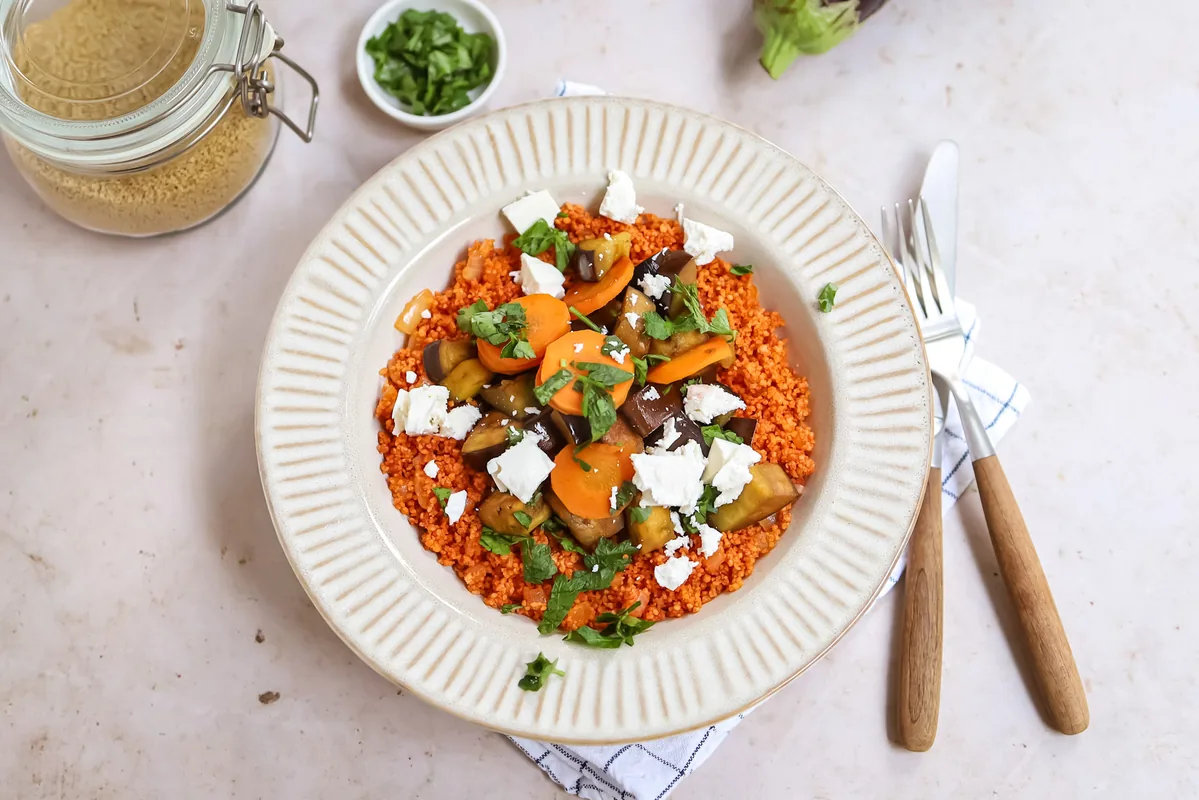
Couscous absorbs garlic and tomato paste from one pan. Eggplant cubes and carrot slices build a cumin-paprika crust in the other. They meet on the plate, feta crumbles on top, and the whole thing took 20 minutes from cutting board to fork.
The two-pan split isn't fussiness — it's what gives the vegetables their spice crust instead of steaming them in tomato liquid.
Couscous absorbs garlic and tomato paste from one pan. Eggplant cubes and carrot slices build a cumin-paprika crust in the other. They meet on the plate, feta crumbles on top, and the whole thing took 20 minutes from cutting board to fork.
The two-pan split isn't fussiness — it's what gives the vegetables their spice crust instead of steaming them in tomato liquid.
Ingredients
- couscous 3 ounces
- onion 0.5
- garlic 1 clove
- eggplant 1
- carrot 1
- olive oil 1.5 tablespoon
- ground cumin 0.5 teaspoon
- paprika (ground) 0.5 teaspoon
- cinnamon 1 pinch
- tomato paste 1 tablespoon
- feta cheese, crumbled 1.5 ounces
Method
-
Prepare the couscous according to the package instructions.
-
Finely chop the onion and garlic. Cut the eggplant into cubes and the carrot into thin slices.
-
Heat half of the oil in a pan and add the eggplant, carrot, ground cumin, paprika, and cinnamon.
-
Stir-fry the vegetables until cooked, about 6 minutes.
-
Meanwhile, heat the other half of the oil in a skillet. Add the onion and garlic and sauté on low heat until the onion becomes translucent. Then add the tomato paste and sauté for a minute. Turn off the heat and stir in the couscous.
-
Serve the tomato couscous with the vegetables. Sprinkle the feta cheese over the dish. Season with salt and pepper.
Try goat cheese instead of feta for a milder, creamier finish that melts slightly into the warm spices.
Stir-frying those carrot slices in oil doesn't just soften them — research found it multiplies beta-carotene absorption from 11% to 74%, a 6.5-fold jump compared to eating raw or boiled carrots. The tomato paste pulls a similar trick: industrial processing already broke down the cell walls, making its lycopene 2.5 times easier for your body to absorb than the same amount from fresh tomatoes. Sautéing the paste in olive oil adds yet another boost on top.
Cambridge Nutrition Research (2012) · DOIBehind this recipe
Why use two pans instead of cooking everything together?
The split serves the food. Eggplant and carrots need high heat and direct oil contact to build a spice crust — crowding them with wet ingredients (onion, tomato paste) would steam them instead. The second pan lets you build a concentrated tomato-couscous base without competing for heat. As a side effect, the carrots stir-frying directly in oil absorb significantly more beta-carotene than they would boiled or steamed — research found a 6.5-fold increase in absorption when carrots are cooked in fat.
Read the full evidence reviewCan I use fresh tomatoes instead of tomato paste?
You can, but you lose concentration and a bioavailability advantage. Tablespoon for tablespoon, tomato paste delivers 2.5 times more absorbable lycopene than the same amount from fresh tomatoes — the industrial processing already cracked open the cell walls before it reached your kitchen. Fresh tomatoes would also add more liquid, making the couscous wetter.
Read the full evidence reviewHow can I add more protein to this recipe?
The simplest options: double the feta to 85g (adds roughly 7g protein, bringing the total near 29g), or toss in 100g of cooked chickpeas alongside the vegetables (adds about 9g and keeps the Mediterranean flavor). Grilled chicken breast on the side works too — 100g adds around 31g protein and turns this into a 50g+ protein dinner.
Is couscous a good carb source for fitness goals?
Couscous is semolina wheat rolled into small granules — nutritionally closer to pasta than to a whole grain. The 84g dry portion here provides most of the 75g carbs. It digests quickly, making it a solid post-workout refuel option. For more fiber per gram, swap half for whole wheat couscous or bulgur.