Sweet Potato & Lentil Salad
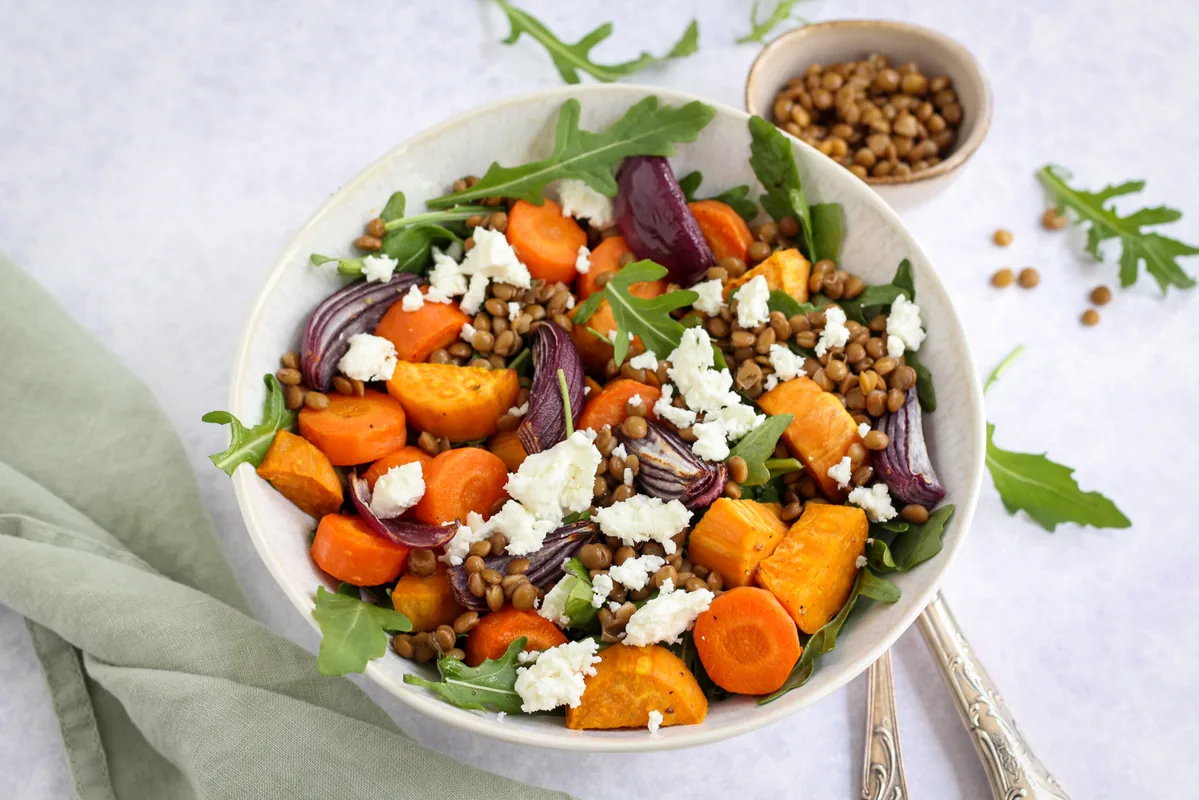
Most salad recipes keep the vegetables raw. This one roasts sweet potato and carrot at 200°C with olive oil until the edges crisp, then drops them warm onto cold arugula with lentils, crumbled feta, and a balsamic drizzle.
569 calories and 14 grams of fiber from eight ingredients and one baking sheet. Twenty-five minutes, start to finish.
The olive oil coating those vegetables before they hit the oven is not just for flavor. It is the mechanism that unlocks the beta-carotene trapped inside both the carrot and the sweet potato — two of the richest sources on any plate.
Most salad recipes keep the vegetables raw. This one roasts sweet potato and carrot at 200°C with olive oil until the edges crisp, then drops them warm onto cold arugula with lentils, crumbled feta, and a balsamic drizzle.
569 calories and 14 grams of fiber from eight ingredients and one baking sheet. Twenty-five minutes, start to finish.
The olive oil coating those vegetables before they hit the oven is not just for flavor. It is the mechanism that unlocks the beta-carotene trapped inside both the carrot and the sweet potato — two of the richest sources on any plate.
Ingredients
- sweet potato 0.5 pound
- carrot 1
- red onion 0.5
- olive oil 1.5 tablespoon
- lentils, canned 3.5 ounce
- arugula 1 handful
- feta cheese, crumbled 1 ounce
- balsamic vinegar 1 tablespoon
Method
-
Preheat the oven to 390°F (200°C).
-
Rinse the sweet potato and carrot under cold water. Cut the sweet potato into cubes of about 1 inch. Slice the carrot and cut the onion into wedges. Arrange the sweet potato, carrot, and onion on the baking sheet.
-
Drizzle half of the oil over the vegetables and toss together, so that everything is well coated. Season with pepper and salt. Place the baking sheet in the preheated oven for 20 minutes.
-
Remove the baking sheet from the oven and let cool slightly.
-
Meanwhile, rinse the lentils.
-
Place the arugula in a bowl and top with the warm vegetables, lentils, and feta. Drizzle the remaining oil and balsamic vinegar over the salad and toss everything together.
Toss the sweet potato and carrot in the olive oil until every surface is coated, not just a drizzle on top. Research found that cooking sweet potato with oil increases beta-carotene absorption 10 to 20 times. The fat catches the carotenoids the heat releases and carries them into a form your body can actually take up.
Baking outperformed every other cooking method tested for unlocking beta-carotene from carrots. A 2024 study compared boiling, steaming, microwaving, and baking at 210°C for 20 minutes. Baked carrots delivered 57 times more bioaccessible beta-carotene than raw. This recipe roasts carrots at 200°C for the same duration, within the study's effective temperature range.
Carrot carotenoid bioaccessibility, 2024 · DOIWhy This Works
Behind this recipe
Why roast the vegetables instead of eating them raw?
Heat breaks down the cell walls that trap carotenoids inside carrots and sweet potatoes. A 2024 study found that baking carrots at high temperature increased bioaccessible beta-carotene 57-fold compared to raw. Raw salads taste great, but they leave most of the beta-carotene locked in the food matrix where your gut cannot reach it.
Does the olive oil actually help absorb nutrients from the vegetables?
Yes. Beta-carotene is fat-soluble, meaning it needs fat to dissolve into before your body can absorb it. Research found that cooking sweet potato with oil increased beta-carotene absorption 10 to 20 times compared to cooking without fat. The olive oil in this recipe coats both the sweet potato and the carrot before roasting, enabling absorption from both vegetables simultaneously.
Read the full evidence reviewIs 14 grams of fiber a lot for one meal?
Most adults need 25 to 30 grams of fiber per day. This salad delivers roughly half of that in a single sitting, from four different sources: sweet potato, lentils, carrot, and arugula. The variety matters because different fiber types feed different populations of gut bacteria.
Read the full evidence reviewCan I swap the feta for something else?
Cottage cheese or a dollop of plain yogurt both work. The swap changes the texture from crumbly and salty to creamy and mild, and it drops the fat content slightly. The warm roasted vegetables and balsamic vinegar carry enough flavor that the cheese choice is a texture decision, not a make-or-break ingredient.