Sweet Potato-Leek Mash with Feta
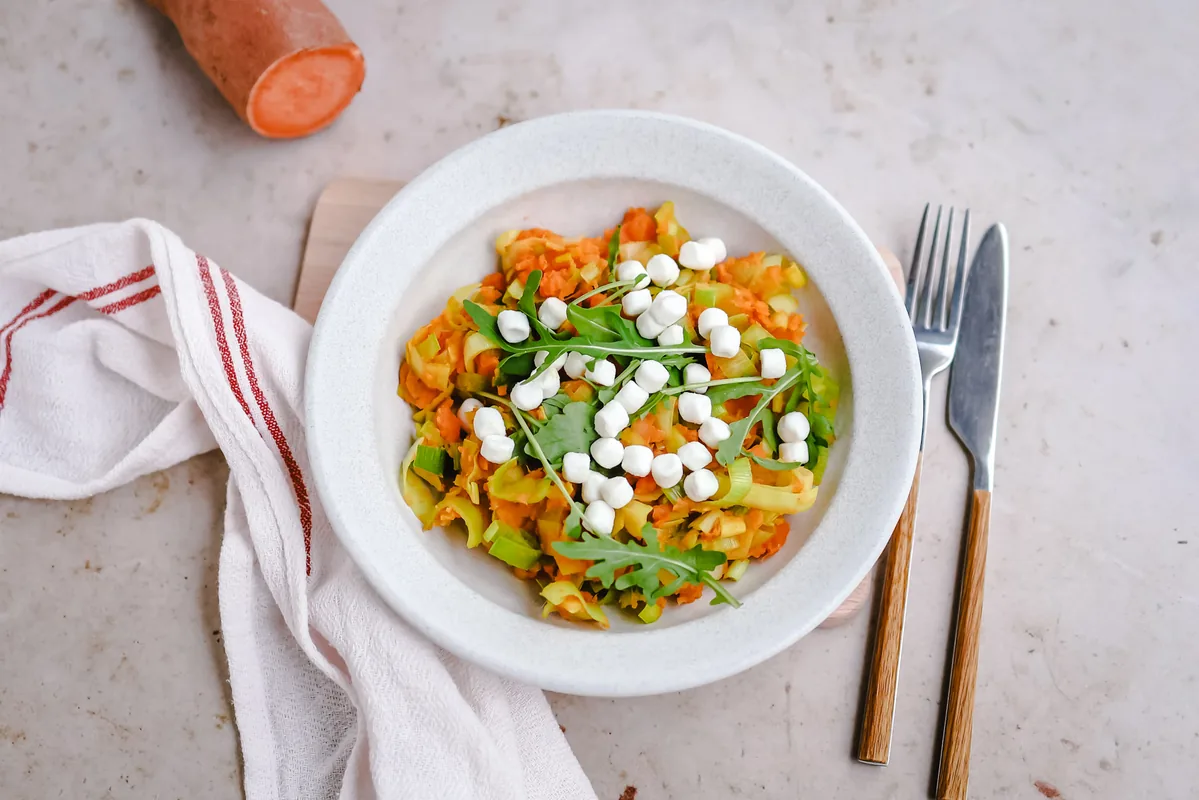
Twenty minutes, one pot, one pan. The sweet potato boils while the leek stir-fries with curry powder in olive oil next to it. Everything gets folded together into a mash, finished with crumbled feta.
Sweet potato brings 63g of carbs and 10g of fiber to the plate. The olive oil carrying the curry-leek mixture gets mixed directly into the mash, and that pairing matters beyond flavor. At 557 kcal with 17g of protein from feta and milk, this is a complete vegetarian dinner.
Twenty minutes, one pot, one pan. The sweet potato boils while the leek stir-fries with curry powder in olive oil next to it. Everything gets folded together into a mash, finished with crumbled feta.
Sweet potato brings 63g of carbs and 10g of fiber to the plate. The olive oil carrying the curry-leek mixture gets mixed directly into the mash, and that pairing matters beyond flavor. At 557 kcal with 17g of protein from feta and milk, this is a complete vegetarian dinner.
Ingredients
- sweet potato 10 ounces
- leek 1
- olive oil 1 tablespoon
- curry powder 1 teaspoon
- milk, 2% reduced fat 3 tablespoons
- yellow mustard 1 teaspoon
- feta cheese, crumbled 2 ounces
Method
-
Peel the sweet potatoes and cut them into even cubes. Place in a pan with plenty of water and bring to a boil. Cook for about 15 minutes until done.
-
Clean the leek and cut it into half rings.
-
Heat the oil in a pan. Add the leek along with the curry powder and stir-fry for about 7 minutes until done.
-
Drain the potatoes and mash with the milk into a puree. Stir in the leek and mustard. Season with salt and pepper.
-
Serve the mash on a plate and sprinkle the feta over it.
The olive oil you stir-fry the leek in gets folded into the sweet potato mash in step 4, and that pairing does more than add flavor. Research found that heat-processed sweet potato with 2.5% cooking oil increased the amount of beta-carotene the body can absorb by 10 to 20 times. This recipe's oil content sits well above that threshold.
Why This Works
Behind this recipe
Why is the protein only 17g for a dinner?
All 17g of protein come from the feta cheese and the milk. That sits below the 20 to 40g range most protein timing research has studied for muscle-related outcomes. If protein distribution across meals is something you track, that context is worth knowing.
Read the full evidence reviewDoes the curry powder add nutritional value at this amount?
Curry powder contains turmeric, which carries a compound called curcumin that has been widely studied. But 2g of curry powder is a flavor dose. Research on curcumin's effects typically uses much larger amounts with specific absorption enhancers. At this quantity, the curry powder is earning its spot through taste, not nutrition.
Where does the 10g of fiber come from?
Most of it comes from the 280g of sweet potato, which is one of the more fiber-rich starchy vegetables. The leek contributes a smaller share. Research has linked higher fiber intake to better fat loss outcomes independent of other dietary factors. This meal delivers 10g in one sitting.
Read the full evidence review